
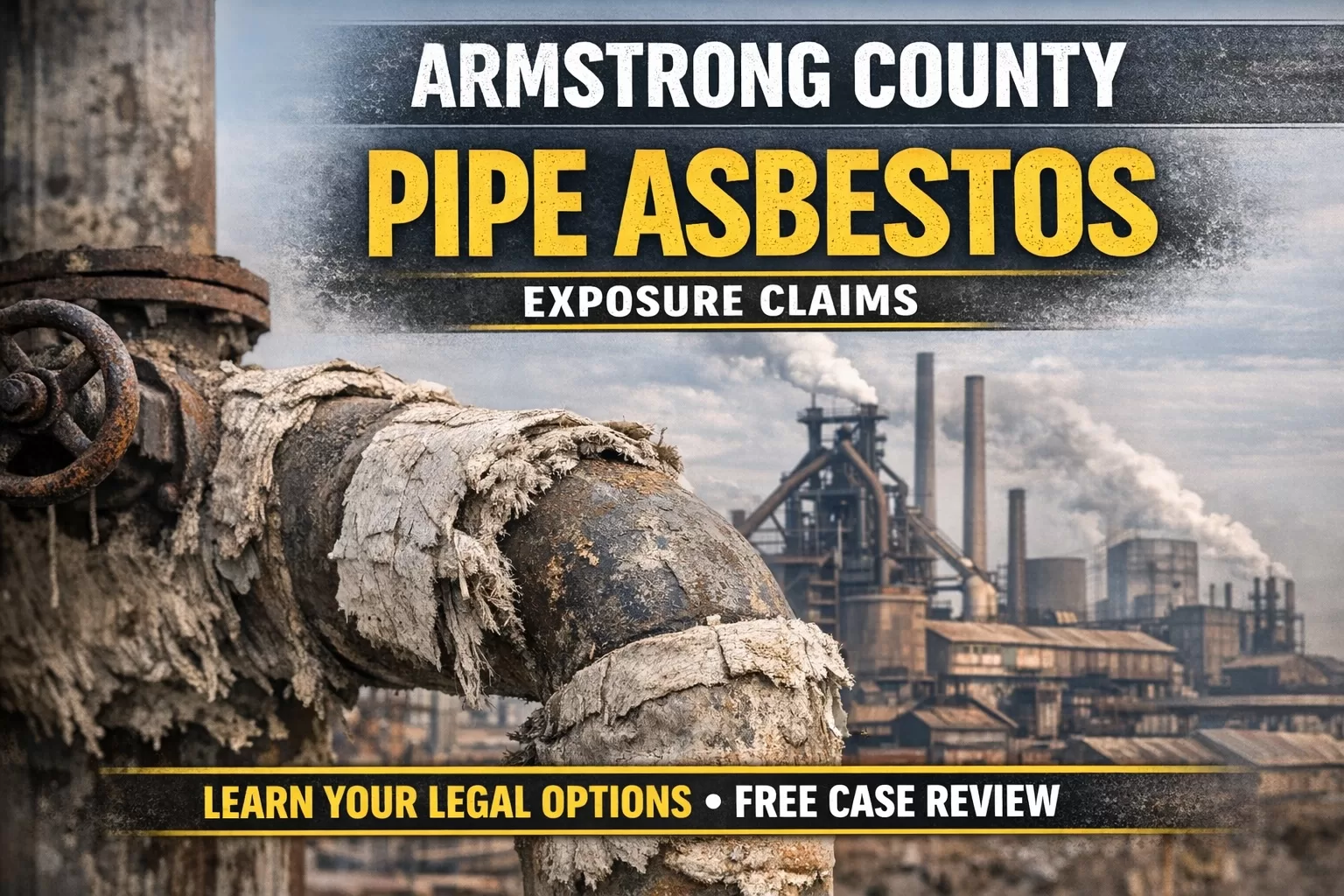
Armstrong County Pipe Asbestos exposure has caused serious illnesses among workers who spent years around insulated piping, steam lines, valves, and boilers in mills, schools, and industrial facilities throughout the county. Many workers were never warned that the pipe materials they handled every day contained asbestos.
If you or a family member worked around industrial piping in Armstrong County and later developed mesothelioma, lung cancer, or another asbestos-related disease, you may have legal options.
How Pipe Asbestos Exposure Occurred in Armstrong County
For decades, asbestos was heavily used to insulate pipes because it resisted heat and fire. In Armstrong County, asbestos-containing pipe materials were commonly found in:
- Steel and metal fabrication facilities
- Powerhouses and boiler rooms
- Municipal buildings and schools
- Industrial maintenance shops
- Manufacturing plants and warehouses
Pipe insulation, gaskets, and cement released asbestos fibers when they were cut, repaired, removed, or disturbed during routine maintenance.
Workers often inhaled these fibers unknowingly.
Workers Most at Risk from Pipe Asbestos
Pipe asbestos exposure in Armstrong County most often affected:
- Pipefitters and steamfitters
- Maintenance and repair workers
- Millwrights
- Electricians working near insulated pipes
- Laborers and utility workers
- Boiler operators and maintenance staff
Even workers who were not directly installing insulation were exposed simply by working nearby while others cut or removed asbestos-containing pipe materials.
Diseases Linked to Pipe Asbestos Exposure
Asbestos fibers lodge deep in the lungs and can cause serious diseases years or even decades later. Common diagnoses include:
- Mesothelioma
- Lung cancer
Many Armstrong County workers were diagnosed long after retirement, making it difficult to connect the illness back to jobsite exposure without experienced legal help.
Armstrong County Pipe Asbestos Claims
Asbestos claims are often filed against manufacturers of pipe insulation, gaskets, valves, and related materials — not against former employers. These cases frequently involve:
- Jobsite and work-history reconstruction
- Identifying asbestos-containing pipe products used decades ago
- Claims against asbestos trust funds or manufacturers
You do not need to remember specific brand names to have a valid claim.
👉 Search Asbestos Job Sites Western Pennsylvania
Why Local Experience Matters
Asbestos cases are not generic. Armstrong County pipe asbestos claims depend on understanding:
- Where industrial pipe systems were installed
- What materials were commonly used in the region
- How maintenance work exposed workers over time
Generic national firms often miss these details. Local knowledge matters.
Free Armstrong County Pipe Asbestos Case Review
If you worked around pipes, steam systems, or boilers in Armstrong County and were later diagnosed with mesothelioma or lung cancer, you should speak with an attorney who handles asbestos cases.
There is no cost to talk.
You pay nothing unless a recovery is made.
📞 Call Lee W. Davis at (412) 781-0525 and Speak Directly with Lee, not a Call Center or Intake Specialist
📍 Serving Armstrong County and Western Pennsylvania
📄 Free, confidential consultation
Check If Your Family Was Exposed
Get your free guide instantly + a confidential case review.
🔒 100% Confidential. No obligations.
Frequently Asked Questions
What if I worked around pipes but never installed insulation?
You may still have been exposed. Many workers inhaled asbestos fibers simply by working near insulated pipes during repairs or renovations.
Can a family file a claim if the worker has passed away?
Yes. Wrongful death asbestos claims are common and often filed by spouses or children.
How long do asbestos cases take?
Some claims resolve quickly through asbestos trust funds, while others take longer depending on exposure history and diagnosis.
Do I need proof of asbestos exposure?
No. Experienced asbestos attorneys reconstruct exposure using work history, jobsite records, and industry data.