
Pittsburgh Plant Engineer Asbestos Exposure

Pittsburgh Plant Engineer Asbestos Exposure

If you worked as a plant engineer at a Pittsburgh area industrial facility and you’ve been diagnosed with mesothelioma or lung cancer, Pittsburgh plant engineer asbestos exposure is a legitimate and frequently overlooked occupational history that has supported successful claims for industrial engineers and their families in Allegheny County and throughout the Pittsburgh metro region. Pittsburgh’s steel mills, coke plants, chemical facilities, power generating stations, and glass works employed generations of plant engineers whose careers took them into every corner of facilities saturated with asbestos-containing materials — not as trades workers handling insulation directly but as the engineers whose role required continuous physical presence throughout those environments across decades of industrial employment.

Mesothelioma/Asbestos Legal Help – WV, MI & PA

Speak directly with attorney Lee W. Davis. No call centers. Free, confidential review.

Pittsburgh’s Industrial Legacy and the Plant Engineer’s Role

Pittsburgh’s industrial identity was built on the Mon Valley steel corridor, the Ohio River chemical and manufacturing operations, the Allegheny Valley specialty steel and power generation facilities, and the glass and chemical works that defined Allegheny County’s industrial geography for most of the twentieth century. Every one of those facilities relied heavily on asbestos-containing materials throughout its operations — in the insulation on steam and process piping, in the refractory materials lining furnaces and coke ovens, in the gaskets and packing throughout mechanical systems, and in the construction and maintenance materials used across decades of continuous plant operation.

Plant engineers at Pittsburgh area facilities were not peripheral to that environment. They were the people responsible for it. Their role required walking every department, supervising every maintenance function, overseeing every outage, and inspecting every mechanical system throughout their facilities — in the same spaces, breathing the same air, as the trades workers whose direct contact with asbestos-containing materials is most commonly associated with mesothelioma and lung cancer claims.

The Pittsburgh Plant Engineer’s Specific Exposure Pathways

Maintenance oversight at Pittsburgh steel facilities — Plant engineers at facilities like US Steel Homestead Works, the Mon Valley steel operations, and the Pittsburgh-area US Steel complex supervised the maintenance and repair work that involved the most intensive disturbance of asbestos-containing materials at those facilities. Standing in the blast furnace area during hot repair work, walking the rolling mill during equipment maintenance, reviewing boiler systems during service outages — each of those supervisory activities placed the plant engineer in direct proximity to active asbestos fiber release throughout a career at a Pittsburgh steel facility.

Coke plant engineering — Plant engineers at Clairton Coke Works and Koppers Clairton oversaw operations in one of the most asbestos-intensive industrial environments in western Pennsylvania. The coke battery operations, the by-products recovery systems, and the mechanical infrastructure throughout a coke facility of Clairton’s scale required continuous engineering oversight — and continuous exposure to asbestos-containing materials throughout every production and maintenance phase.

Chemical and glass facility engineering — Plant engineers at Pittsburgh Plate Glass / PPG and Neville Island chemical operations oversaw process engineering in environments where asbestos-containing insulation covered virtually every pipe, reactor, and piece of process equipment throughout the facility. The engineering inspection and oversight role at a chemical facility required walking those spaces continuously — accumulating ambient fiber exposure from the insulated environment itself in addition to exposure during active maintenance work.

Power plant engineering — Plant engineers at Pittsburgh area power generating stations including Cheswick Power Station oversaw the turbine systems, boiler operations, and mechanical infrastructure in environments with some of the heaviest asbestos insulation concentrations of any industrial facility type. Power plant engineering required detailed technical knowledge of those systems and regular hands-on inspection of the equipment — bringing engineers into direct proximity with the insulated turbines, boilers, and steam systems that defined the power plant asbestos exposure environment.

Outage engineering oversight — Major maintenance outages at Pittsburgh area facilities represented the most intensive asbestos exposure periods of any phase of plant operation — and plant engineers were present throughout. Overseeing the shutdown, coordinating the maintenance contractors, approving progress on furnace rebuilds and boiler overhauls, and conducting engineering acceptance inspections of completed work all required continuous plant presence during the period of maximum asbestos fiber disturbance.

Pittsburgh Area Facilities Where Plant Engineer Exposure Was Most Significant

How Pittsburgh Plant Engineer Claims Differ From Trades Claims

The documentation and investigative approach for a Pittsburgh plant engineer asbestos claim differs from a skilled trades claim in important ways that an experienced asbestos attorney needs to understand from the outset.

Salaried plant engineers typically have more complete individual employment records than union trades workers — personnel files, engineering department records, pension documentation — but lack the union dispatch records that provide the multi-facility exposure timeline for skilled trades claimants. The exposure narrative for an engineer is built differently — from the engineer’s own detailed account of their supervisory responsibilities, the facilities and departments they managed, the maintenance and outage work they oversaw, and the specific conditions they worked in throughout their career.

The product identification work for plant engineer claims also differs. Rather than identifying specific products that the engineer personally handled, the claim requires establishing which asbestos-containing products were in use throughout the facilities the engineer supervised — and demonstrating that the engineer’s supervisory presence in those facilities created the kind of sustained fiber exposure that has caused mesothelioma and lung cancer in Pittsburgh’s industrial workforce.


What Evidence Supports a Pittsburgh Plant Engineer Asbestos Claim

  • Diagnosis records — pathology reports, imaging, treatment summaries confirming mesothelioma or lung cancer
  • Employment history at Pittsburgh area industrial facilities — job titles, engineering responsibilities, departments supervised, years worked
  • Memory of specific maintenance work, outage periods, and plant areas you oversaw throughout your career
  • Names of trades workers, maintenance contractors, and supervisors you worked with at specific Pittsburgh facilities
  • Personnel records, engineering documentation, or pension records confirming employment timeline
  • Social Security earnings records confirming employers and time periods

For a broader overview of Pennsylvania mesothelioma claims see our Pennsylvania resource. For workers with lung cancer diagnoses see the Pittsburgh asbestos lung cancer resource. For the broader western PA plant engineer page see Pennsylvania plant engineer asbestos. You can search the full list of asbestos job sites in Pennsylvania to review all documented Pittsburgh area exposure sites.

Knowledge of Pittsburgh Industrial Asbestos Cases Since 1989

I first began researching Pittsburgh area asbestos cases in 1989, working on asbestos mass trials across Pennsylvania and West Virginia. I returned to Pittsburgh in 1999 to handle mesothelioma and lung cancer cases individually, applying decades of product identification work and facility knowledge — tracking the contractors, manufacturers, and asbestos product lines specific to Pittsburgh area facilities — directly to every case evaluation. That includes plant engineer and supervisory role cases where the exposure arose from engineering oversight rather than direct trades work.

When you call, you speak directly with me. No call centers. No case managers.

If you worked as a plant engineer at a Pittsburgh area industrial facility and have been diagnosed with mesothelioma or lung cancer, your supervisory role does not disqualify your claim. Pennsylvania’s statute of limitations runs from the date of diagnosis.

Call (412) 781-0525 or start your confidential case review online now.

Check If Your Family Was Exposed

Get your free guide instantly + a confidential case review.

🔒 100% Confidential. No obligations.


Frequently Asked Questions

Q: I was a plant engineer at the Homestead Works for over twenty years overseeing maintenance and outage work. I never handled asbestos directly. Do I have a mesothelioma claim?

A: Possibly yes. Direct physical contact with asbestos-containing materials is not a legal requirement for a mesothelioma claim. A twenty-year career at the Homestead Works overseeing maintenance and outage work placed you continuously in the environments where asbestos fiber concentrations were highest — during furnace repair work, boiler maintenance, pipe system overhauls, and the major outage periods when multiple maintenance activities were occurring simultaneously throughout the plant. That sustained engineering presence in the most active asbestos disturbance environments at one of western Pennsylvania’s largest industrial facilities constitutes a significant cumulative exposure history that warrants careful legal evaluation.

Q: I was a shift engineer at a Pittsburgh area power plant and spent every shift walking the turbine floor, boiler room, and mechanical areas. Is that enough asbestos exposure to support a claim?

A: Yes, potentially. Shift engineers at Pittsburgh area power plants spent their working careers in the most asbestos-intensive spaces in those facilities — the turbine hall with its heavily insulated steam systems, the boiler room with its insulated boiler and feedwater systems, and the mechanical areas housing the pumps, valves, and heat exchangers that carried asbestos-containing gaskets and packing throughout their service lives. Walking those spaces every shift for a career spanning decades represents sustained ambient exposure that has supported successful mesothelioma and lung cancer claims independent of any direct insulation contact.

Q: How long do I have to file a mesothelioma claim in Pennsylvania connected to Pittsburgh plant engineering work?

A: Pennsylvania’s statute of limitations runs from the date of diagnosis, not the date of your exposure. Wrongful death claims carry different and sometimes shorter deadlines running from the date of death. Do not assume it is too late — call as soon as a diagnosis is confirmed so we can evaluate your engineering career history and identify all responsible parties.

Mesothelioma/Asbestos Legal Help – WV, MI & PA

Speak directly with attorney Lee W. Davis. No call centers. Free, confidential review.

Pennsylvania Plant Engineer Asbestos

Pennsylvania Plant Engineer Asbestos Exposure

If you worked as a plant engineer at a western Pennsylvania industrial facility and you’ve been diagnosed with mesothelioma or lung cancer, Pennsylvania plant engineer asbestos exposure is a well-documented but frequently overlooked occupational history that has supported successful claims for industrial engineers and their families. Plant engineers occupy a unique position in the asbestos exposure landscape — not because they worked with asbestos-containing materials directly as a function of their trade, but because their role took them into every corner of the facilities they managed, throughout every phase of maintenance and outage work, across careers that often spanned thirty or more years at facilities saturated with asbestos-containing materials.

Mesothelioma/Asbestos Legal Help – WV, MI & PA

Speak directly with attorney Lee W. Davis. No call centers. Free, confidential review.
Why Plant Engineers Are Overlooked in Asbestos Litigation

The workers most commonly associated with asbestos mesothelioma claims are the skilled trades — pipefitters, insulators, boilermakers, millwrights. Their exposure is easy to describe because it arose from specific tasks involving specific materials. Plant engineers don’t fit that pattern, and as a result they and their families frequently assume that supervisory and engineering roles don’t support asbestos claims.

That assumption is wrong and it has caused viable claims to go unfiled.

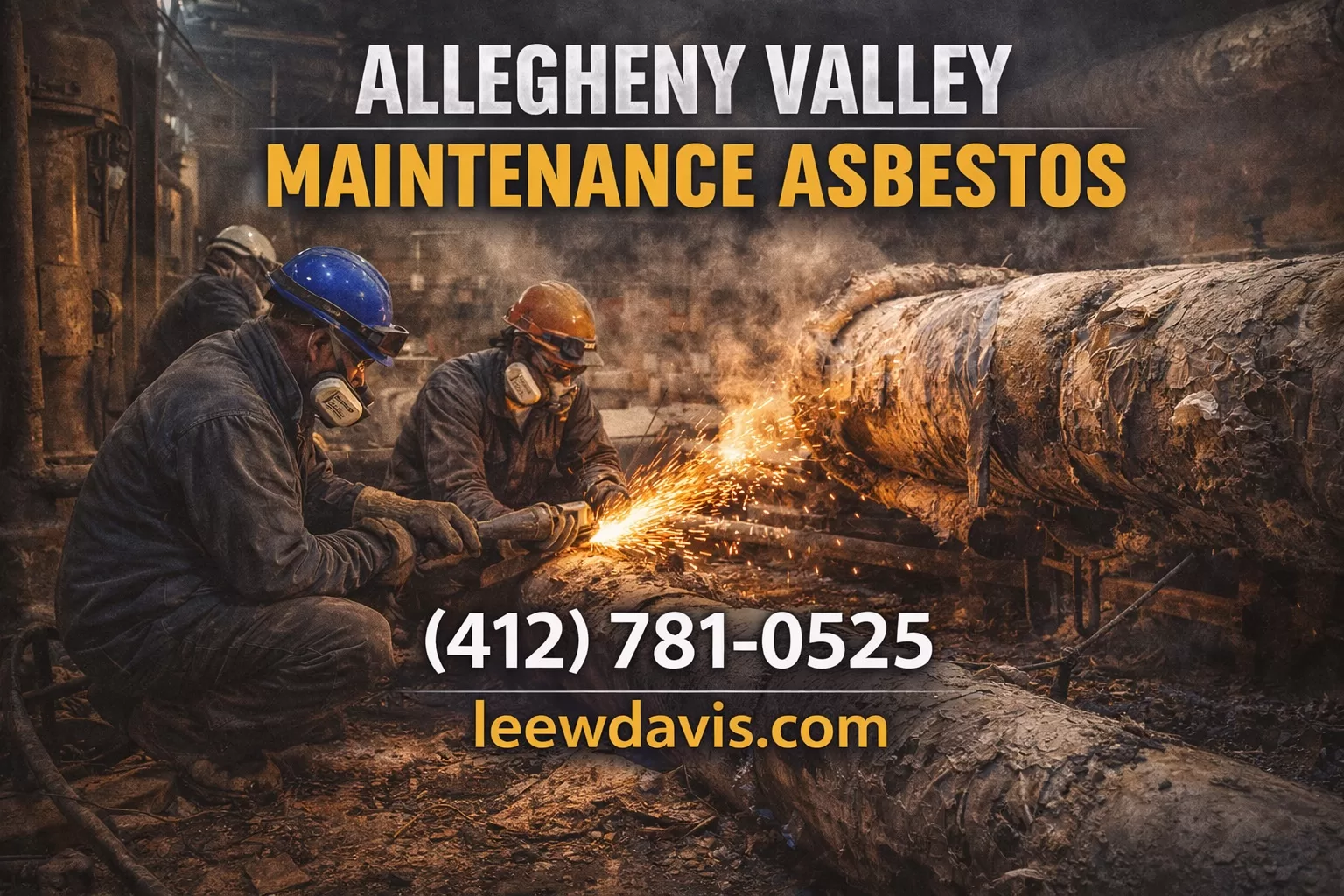
Plant engineers at western Pennsylvania industrial facilities were not office workers. They walked the plant floor continuously. They were present during every major maintenance outage. They supervised the skilled trades workers who were disturbing asbestos-containing insulation, refractory, and gasket materials throughout every department. They inspected the equipment being maintained — standing over pipefitters replacing gaskets, walking through furnace rebuilds in progress, reviewing boiler maintenance in mechanical spaces where airborne fiber concentrations were at their highest.

The plant engineer’s role required physical presence in the most active asbestos exposure environments in the facility, continuously, across an entire career. That is a significant cumulative asbestos exposure history regardless of whether the engineer ever touched a piece of insulation directly.

The Plant Engineer’s Exposure Profile at Western PA Industrial Facilities

The specific ways in which plant engineers at western Pennsylvania facilities accumulated asbestos exposure were distinct from the trades but no less real:

Supervision of insulation and maintenance work — Plant engineers directed and supervised the insulation, pipefitting, millwright, and boilermaker work throughout their facilities. Supervising that work meant standing in the work area while asbestos-containing materials were being cut, stripped, and replaced — breathing the same air as the workers doing the hands-on work.

Plant-wide inspection and walkthrough — The plant engineer’s inspection role required walking every department on a regular basis. In western PA industrial facilities of the 1950s through 1980s, that meant walking through spaces where asbestos-containing insulation lined every pipe, covered every piece of equipment, and shed fibers continuously into the ambient air. The accumulated dust in those spaces — in pipe chases, mechanical rooms, boiler areas, and production departments — was a continuous low-level exposure source throughout every working day.

Outage oversight — During major maintenance outages at facilities like US Steel Homestead Works, Allegheny Ludlum Brackenridge, Clairton Coke Works, PPG, and other major western PA facilities, plant engineers were present throughout the outage period — overseeing the work, approving progress, walking the facility continuously while the most intensive asbestos disturbance work was occurring. Outage periods represented the highest ambient fiber concentrations of any phase of plant operation, and plant engineers were present throughout.

Review of mechanical spaces and confined areas — Inspecting boiler systems, reviewing equipment in mechanical rooms, and conducting engineering assessments of pipe systems and process equipment required entering the same confined spaces — boiler rooms, pipe chases, utility corridors — where asbestos-containing insulation created the highest fiber concentrations in the facility.

Contractor oversight — Plant engineers at western PA facilities often served as the primary point of contact for outside contractors brought in for major projects and shutdowns. Overseeing outside contractors — the workers who generated the heaviest asbestos dust through tear-out and replacement work — placed plant engineers in the most intensive exposure environments at the facility during the most intensive exposure periods.


Western PA Industrial Facilities Where Plant Engineer Exposure Was Most Significant

Plant engineers working western Pennsylvania’s major industrial facilities accumulated asbestos exposure across the full range of the region’s steel mills, chemical plants, coke facilities, and power generating stations:

The Documentation Challenge and How It Is Overcome

Plant engineer asbestos claims present documentation characteristics that differ from skilled trades claims. Engineers typically worked as salaried employees rather than union members, which means union dispatch records are not available. However, salaried employment at a single major western PA facility often creates a more complete employment record than a multi-employer union trades career — personnel files, engineering records, pension documentation, and Social Security earnings history can all establish the employment timeline with precision.

The more important documentation challenge for plant engineer claims is the exposure narrative. Because exposure arose from presence and supervision rather than direct material contact, establishing the intensity and consistency of that exposure requires specific description of the engineer’s role, the facilities and departments they supervised, the maintenance and outage work they oversaw, and the conditions they worked in throughout their career.

That narrative — built from the engineer’s own memory, from co-worker testimony from trades workers who were supervised, and from historical documentation of the facilities’ maintenance practices and asbestos-containing product usage — is the foundation of a viable plant engineer asbestos claim.

What Evidence Supports a Pennsylvania Plant Engineer Asbestos Claim

  • Diagnosis records — pathology reports, imaging, treatment summaries confirming mesothelioma or lung cancer
  • Employment history at western PA industrial facilities — job titles, departments supervised, years worked, scope of engineering responsibilities
  • Memory of the specific maintenance work, outage periods, and plant areas you oversaw throughout your career
  • Names of trades workers, contractors, and supervisors you worked with at specific facilities
  • Any personnel records, engineering documentation, or pension records confirming employment timeline
  • Social Security earnings records confirming employers and time periods

For a broader overview of how Pennsylvania mesothelioma claims work see our Pennsylvania resource. For workers with lung cancer diagnoses see the Pittsburgh asbestos lung cancer resource. You can search the full list of asbestos job sites in Pennsylvania to review documented western PA exposure sites.

Knowledge of Western PA Industrial Asbestos Cases Since 1989

I first began researching western Pennsylvania asbestos cases in 1989, working on asbestos mass trials across Pennsylvania and West Virginia. I returned to Pittsburgh in 1999 to handle mesothelioma and lung cancer cases individually across western Pennsylvania and West Virginia, applying decades of product identification and facility knowledge directly to every case evaluation. Plant engineer and supervisory role claims require a different investigative approach than skilled trades claims but the underlying exposure in many of these cases is genuine and the legal basis for recovery is sound.

When you call, you speak directly with me. No call centers. No case managers.

If you worked as a plant engineer at a western Pennsylvania industrial facility and have been diagnosed with mesothelioma or lung cancer, do not assume your supervisory role disqualifies your claim. Pennsylvania’s statute of limitations runs from the date of diagnosis.

Call (412) 781-0525 or start your confidential case review online now.

Check If Your Family Was Exposed

Get your free guide instantly + a confidential case review.

🔒 100% Confidential. No obligations.


Frequently Asked Questions

Q: I was a plant engineer at a western PA steel mill for thirty years but I never worked directly with asbestos. Does my supervisory role still support a mesothelioma claim?

A: Yes, potentially. Direct physical contact with asbestos-containing materials is not a legal requirement for a mesothelioma or lung cancer claim. The legal question is whether you were exposed to asbestos fibers in sufficient quantity over sufficient time to contribute to your diagnosis. A thirty-year career walking the plant floor, supervising maintenance and outage work, and conducting engineering inspections throughout a facility saturated with asbestos-containing materials constitutes a significant cumulative exposure history. The exposure pathway is different from a pipefitter or insulator but it is legally recognized and has supported successful claims.

Q: I supervised outside contractors during major outages at multiple western PA facilities. Does that multi-facility contractor oversight history strengthen my claim?

A: Yes. Overseeing outside contractors during major outages — the work periods when the most intensive asbestos disturbance was occurring throughout the facility — placed you in the highest fiber concentration environments at each facility during the highest exposure periods. A career spent supervising major outage work at multiple western PA facilities accumulates exposure from each facility’s distinct asbestos-containing product set and represents a multi-defendant claim profile similar to a skilled trades worker with a multi-facility career history.

Q: How long do I have to file a mesothelioma claim in Pennsylvania connected to plant engineer work at western PA facilities?

A: Pennsylvania’s statute of limitations runs from the date of diagnosis, not the date of your exposure. Wrongful death claims carry different and sometimes shorter deadlines running from the date of death. Do not assume it is too late — call as soon as a diagnosis is confirmed so we can evaluate your engineering career history and identify all responsible parties.

Mesothelioma/Asbestos Legal Help – WV, MI & PA

Speak directly with attorney Lee W. Davis. No call centers. Free, confidential review.

Allegheny Valley Asbestos Sites

Allegheny Valley Asbestos Sites

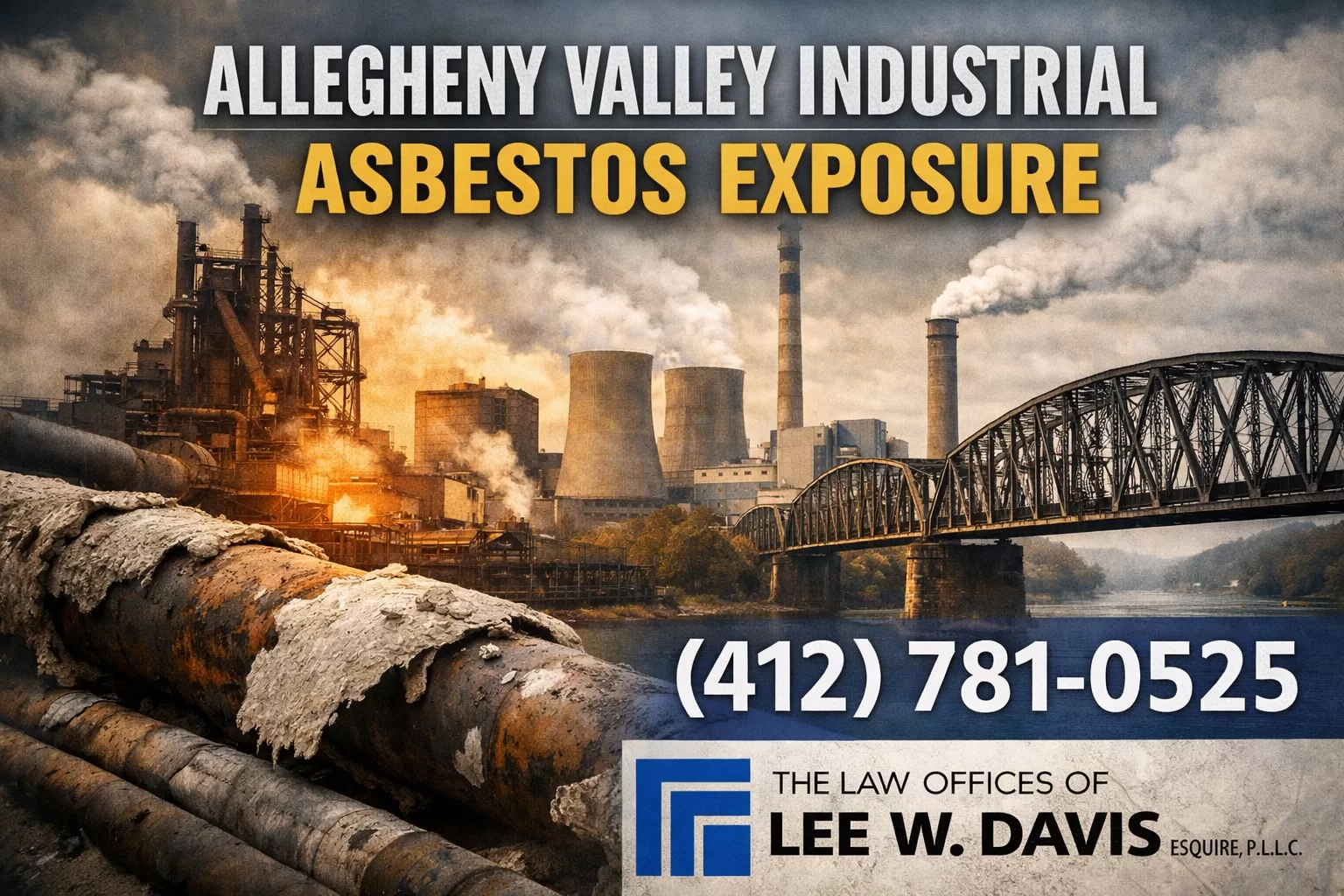
Allegheny Valley asbestos sites include power plants, steel facilities, and industrial locations where asbestos-containing materials were used for decades. These sites created repeated exposure risks for workers across multiple trades and job roles.

If you worked in the Allegheny Valley, your exposure likely occurred at more than one location.


Mesothelioma/Asbestos Legal Help – WV, MI & PA

Speak directly with attorney Lee W. Davis. No call centers. Free, confidential review.
Key Asbestos Sites in the Allegheny Valley

Workers were exposed at major industrial locations such as:

These sites relied heavily on asbestos for insulation, heat resistance, and durability.


Where Exposure Happened

At these asbestos sites, exposure commonly came from:

  • Pipe insulation
  • Boilers and turbines
  • Gaskets and packing materials
  • Refractory systems
  • Electrical components

When these materials were disturbed, asbestos fibers were released into the air.


Why Asbestos Sites Matter in a Case

Identifying asbestos sites is critical because:

  • Exposure often occurred across multiple locations
  • Different manufacturers supplied asbestos products
  • Multiple companies may be responsible

This increases the number of potential claims and compensation sources.


You Don’t Need to Remember Every Site

Many workers do not remember every job site where exposure occurred—and that’s normal.

Cases are built using:

  • Work history
  • Union or contractor records
  • Coworker testimony
  • Known asbestos site data

The goal is to reconstruct exposure over time.


Time Limits in Pennsylvania

The statute of limitations begins at diagnosis—not exposure.

Even if your work occurred decades ago, your claim may still be valid.


Experience With Allegheny Valley Cases

I’ve handled asbestos and Mesothelioma cases involving western Pennsylvania workers since 1989, including cases involving multiple industrial sites across the Allegheny Valley.

When you call, you speak directly with me.

📞 (412) 781-0525

🌐 https://leewdavis.com

Check If Your Family Was Exposed

Get your free guide instantly + a confidential case review.

🔒 100% Confidential. No obligations.


FAQ

Q: What are asbestos sites?

Locations where asbestos-containing materials were used and workers were exposed.

Q: Do multiple sites matter in a case?

Yes. Exposure across multiple sites can increase the number of responsible parties.

Q: Can I file if I don’t remember all locations?

Yes. Exposure can be reconstructed using records and testimony.

Mesothelioma/Asbestos Legal Help – WV, MI & PA

Speak directly with attorney Lee W. Davis. No call centers. Free, confidential review.
Allegheny Valley Maintenance Asbestos Exposure

Allegheny Valley Maintenance Asbestos Exposure

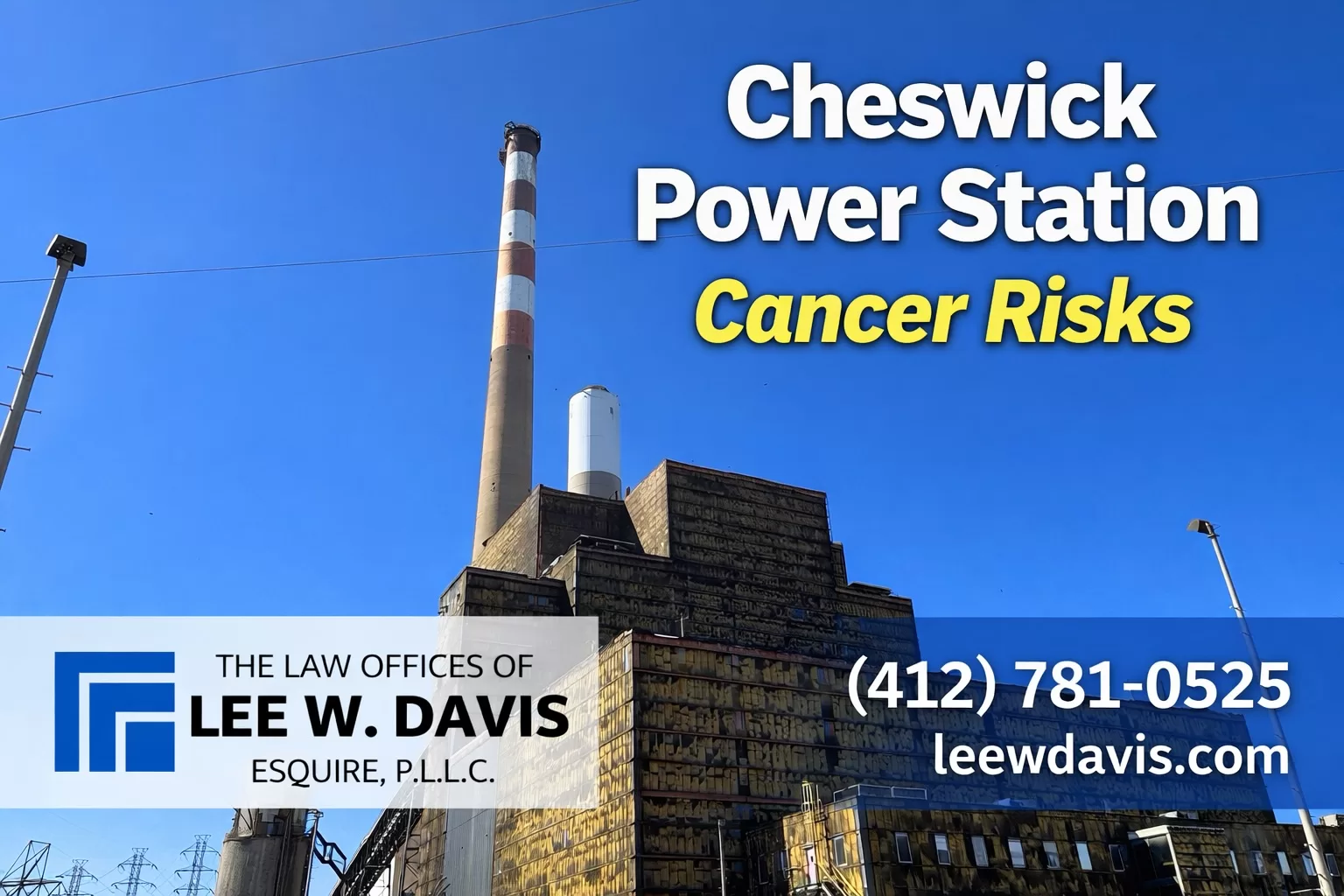
Allegheny Valley Maintenance Asbestos exposure was among the most dangerous forms of industrial exposure in western Pennsylvania. Maintenance workers were not just around asbestos—they directly handled it during repairs, removals, and equipment rebuilds.

That direct contact created repeated and concentrated exposure.


Mesothelioma/Asbestos Legal Help – WV, MI & PA

Speak directly with attorney Lee W. Davis. No call centers. Free, confidential review.

Why Maintenance Work Was High Risk

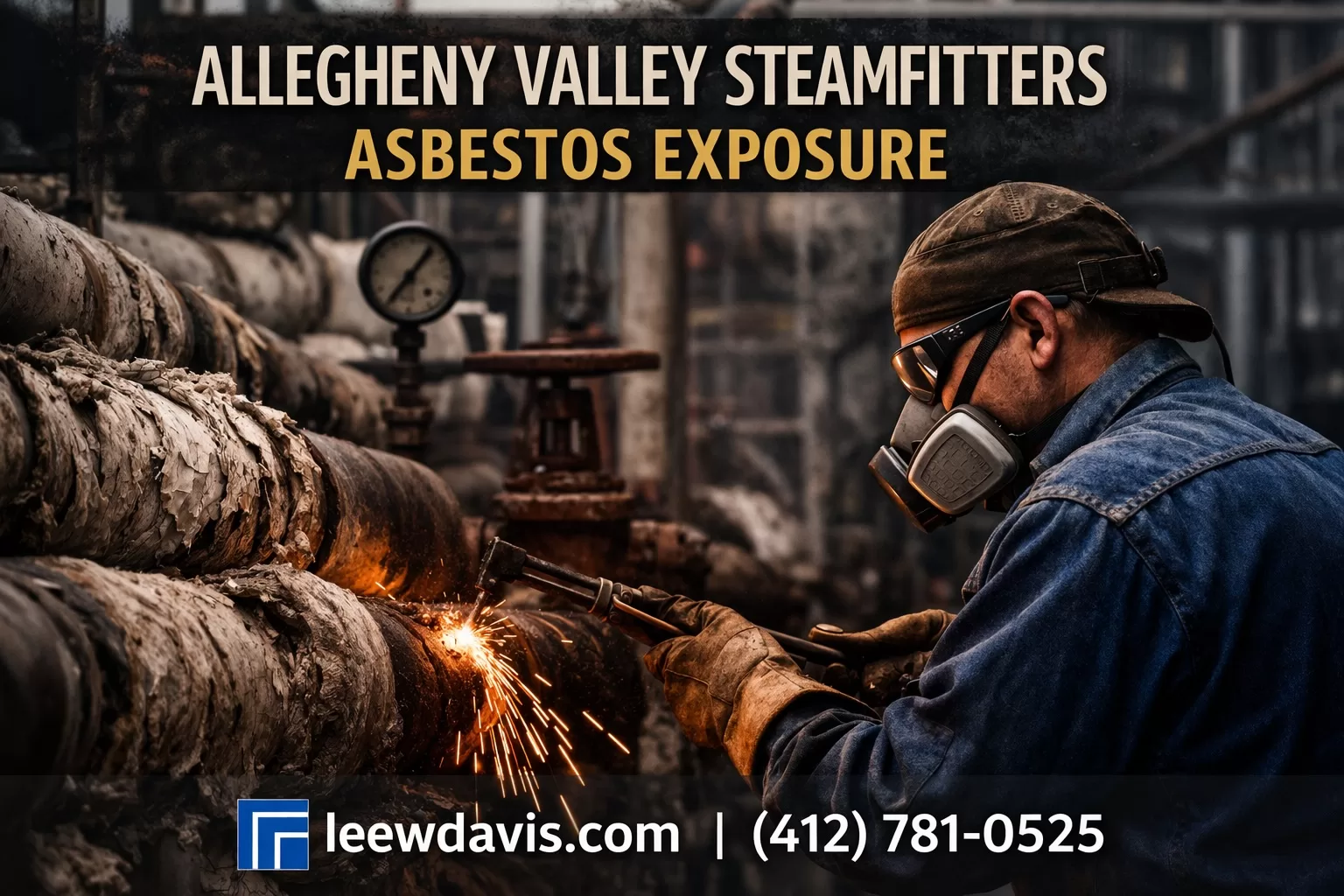
Maintenance crews were responsible for working on the exact systems that contained asbestos:

  • Removing pipe insulation
  • Repairing boilers and turbines
  • Replacing gaskets and packing
  • Handling refractory materials in high-heat systems

These tasks disturbed asbestos fibers and released them into the air—often in enclosed spaces where exposure levels were highest.

Read more about exposure to Asbestos at Industrial Sites


Shutdowns Created Peak Exposure Conditions

The most dangerous exposure periods occurred during:

  • Planned outages
  • Emergency shutdowns
  • Major repair projects

During these events, multiple crews worked simultaneously, tearing out insulation and rebuilding equipment. Dust levels increased significantly, and maintenance workers were at the center of it.


Multiple Job Sites Across the Allegheny Valley

Maintenance workers often moved between:

This created a pattern of cumulative exposure across multiple facilities, which is critical in mesothelioma claims.


Why Maintenance Cases Are Strong

From a legal standpoint, these cases are strong because:

  • Workers directly handled asbestos-containing materials
  • Exposure occurred across multiple job sites
  • Multiple manufacturers may be responsible

Claims are typically filed against asbestos product manufacturers and trust funds—not employers.


Evidence in Maintenance Asbestos Cases

These cases rely on:

  • Work history and job duties
  • Maintenance and outage assignments
  • Coworker testimony
  • Medical diagnosis

You do not need perfect records to begin a claim.


Pennsylvania Time Limits

The statute of limitations begins at diagnosis—not exposure. Even if your work occurred decades ago, your claim may still be valid.


Experience Handling Maintenance Worker Cases

I’ve handled asbestos cases involving industrial maintenance workers since 1989, including work throughout the Allegheny Valley.

When you call, you speak directly with me.

📞 (412) 781-0525

🌐 https://leewdavis.com

Check If Your Family Was Exposed

Get your free guide instantly + a confidential case review.

🔒 100% Confidential. No obligations.


FAQ

Q: Why were maintenance workers heavily exposed to asbestos?

Because they directly handled insulation, piping, and equipment that contained asbestos.

Q: Are outage jobs more dangerous?

Yes. Shutdown work created higher concentrations of airborne asbestos fibers.

Q: Can I file a claim after years of exposure?

Yes. Claims are based on diagnosis, not when exposure occurred.

Mesothelioma/Asbestos Legal Help – WV, MI & PA

Speak directly with attorney Lee W. Davis. No call centers. Free, confidential review.
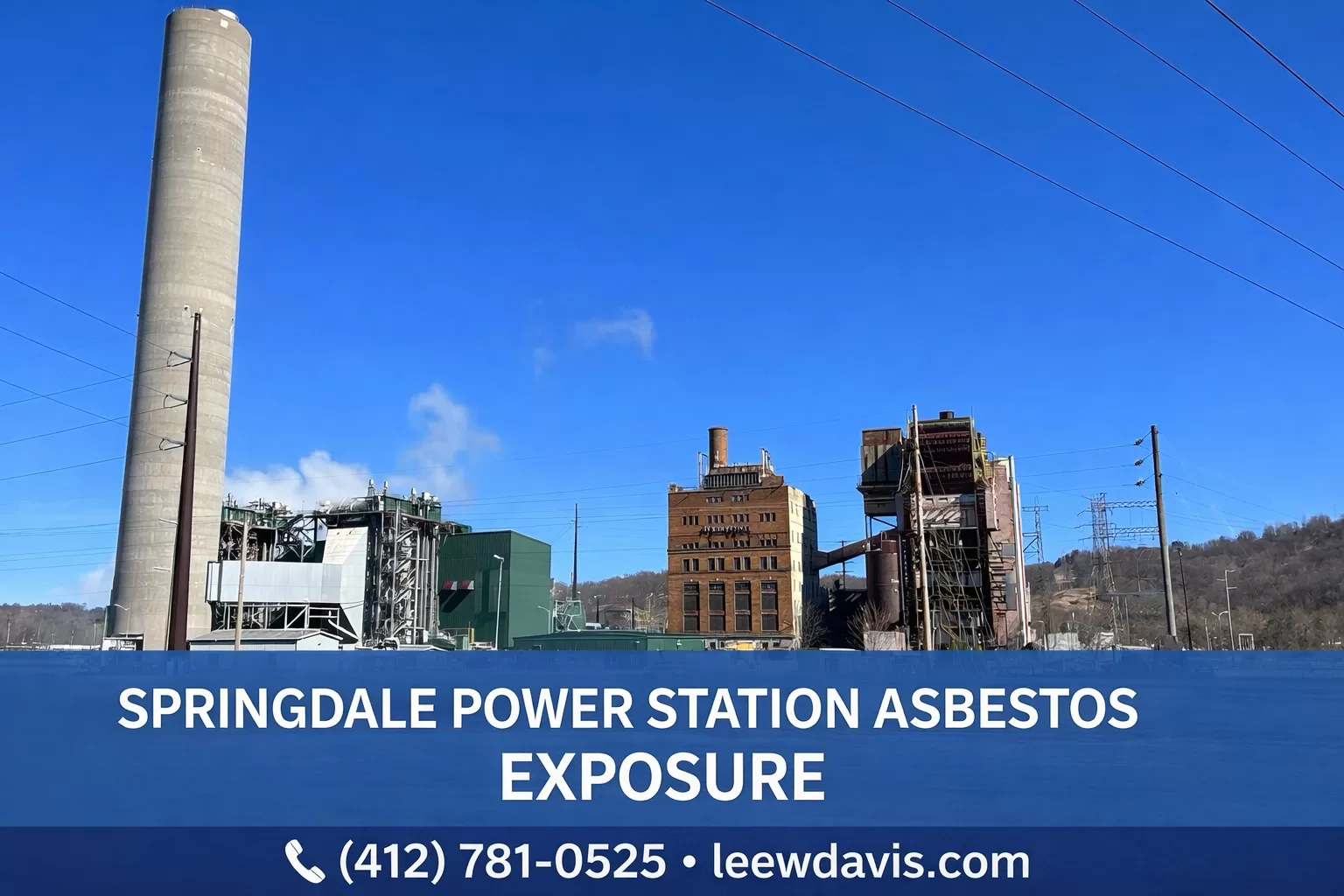
Allegheny Valley Asbestos Contractor Exposure

Allegheny Valley Asbestos Contractor

Allegheny Valley Asbestos Contractors were often exposed to asbestos across multiple job sites—not just one plant or one employer. Unlike workers tied to a single facility, contractors moved between power stations, steel mills, and industrial projects where asbestos was already present.

That mobility dramatically increased exposure risk.


Why Allegheny Valley Asbestos Contractor Faced Higher Exposure Risk

Contractors were brought in specifically for the most hazardous work:

  • Maintenance shutdowns
  • Boiler repairs and rebuilds
  • Insulation removal and replacement
  • Pipe and valve work
  • Emergency repairs

These were the exact tasks that disturbed asbestos-containing materials.

Unlike permanent employees, contractors often entered environments where asbestos had already deteriorated—creating airborne exposure conditions that were far more dangerous.


Multiple Job Sites, Repeated Exposure

Allegheny Valley contractors frequently worked at:

  • Cheswick Power Station
  • Springdale Power Station
  • Steel and fabrication facilities throughout the region
  • Industrial maintenance projects along the Allegheny River corridor

This created a pattern of repeated, cumulative exposure across different locations and employers.


Why Allegheny Valley Asbestos Contractor Are Strong

From a legal standpoint, contractor cases are often stronger because:

  • Exposure occurred across multiple job sites
  • Multiple asbestos-containing products were involved
  • Multiple manufacturers may be liable
  • Liability is not limited to a single employer

This expands the number of potential recovery sources, including:

  • Asbestos trust funds
  • Product manufacturers
  • Contractors and subcontractors in certain circumstances

Evidence in Contractor Asbestos Cases

Even without perfect records, these cases can be built using:

  • Work history across multiple job sites
  • Contractor and union records
  • Coworker testimony
  • Medical diagnosis documentation

The key is reconstructing exposure over time—not relying on one document.


Time Limits for Pennsylvania Claims

Pennsylvania law measures the statute of limitations from diagnosis—not exposure.

That means even if your work occurred decades ago, you may still have a valid claim today.


Experience Handling Industrial Contractor Cases

I’ve handled asbestos and mesothelioma cases involving industrial workers since 1989, including contractors who worked across multiple facilities in western Pennsylvania.

These cases require understanding how exposure occurred across job sites—not just within one employer.

When you call, you speak directly with me.

📞 (412) 781-0525

🌐 https://leewdavis.com/


Frequently Asked Questions

Q: Were contractors more exposed to asbestos than employees?

Yes. Contractors were often assigned to maintenance and repair work that disturbed asbestos materials, increasing exposure levels.


Q: Can I file a claim if I worked at multiple sites?

Yes. Multi-site exposure often strengthens a case by identifying multiple responsible parties.


Q: What if I don’t remember every job site?

That’s common. Work history can be reconstructed using records and testimony.

Allegheny Valley Industrial Asbestos

Allegheny Valley Industrial Asbestos Exposure

Allegheny Valley Industrial Asbestos exposure developed within a dense industrial corridor along the Allegheny River, where power generation facilities, steel production, and manufacturing operations connected multiple communities across western Pennsylvania

Workers frequently moved between:

This overlapping work environment created continuous exposure to asbestos-containing materials across multiple job sites.


Mesothelioma/Asbestos Legal Help – WV, MI & PA

Speak directly with attorney Lee W. Davis. No call centers. Free, confidential review.
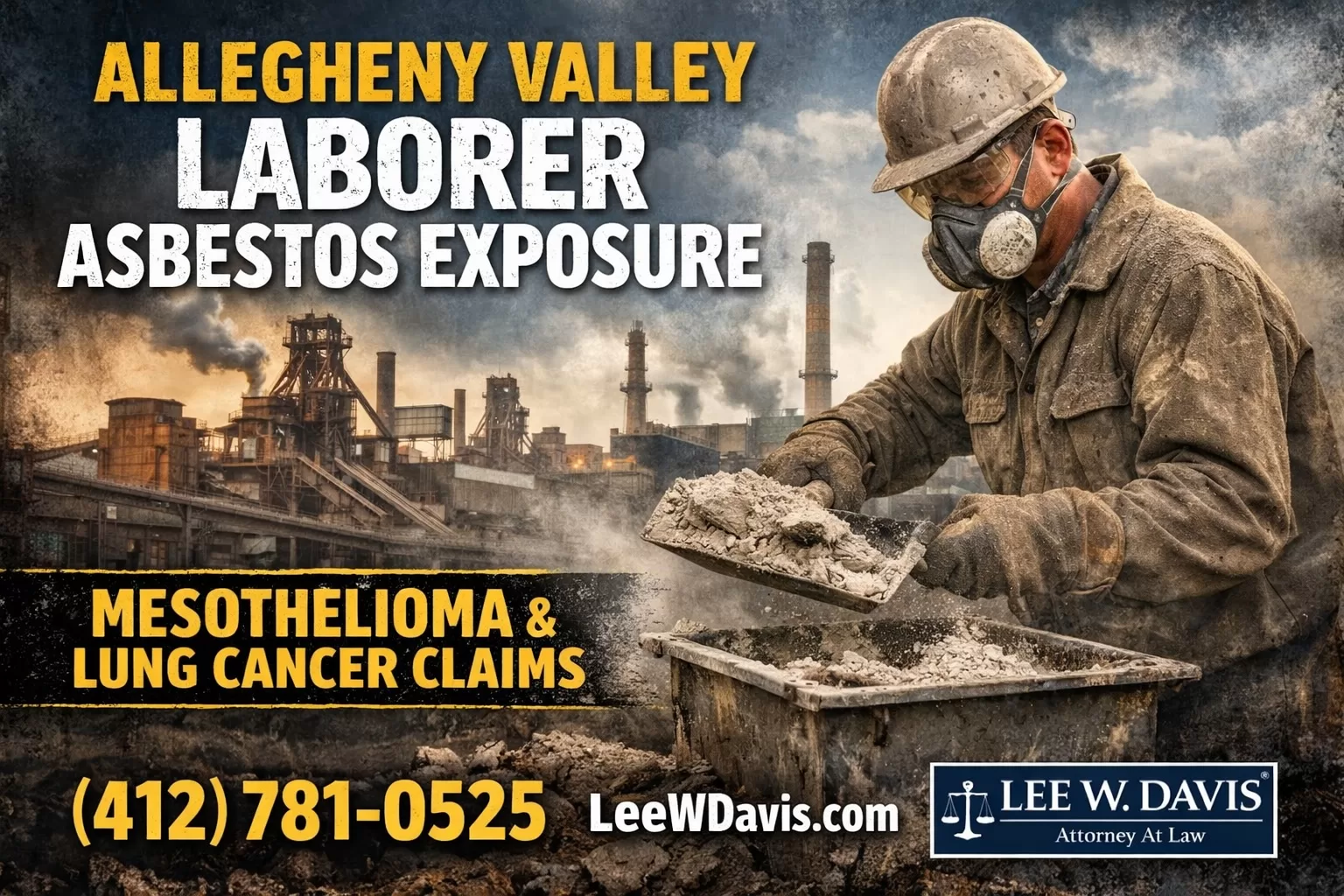

How Industrial Asbestos Exposure Occurred

Allegheny Valley industrial asbestos exposure followed consistent patterns across facilities:

Insulation systems — Steam lines, boilers, turbines, and high-temperature piping were insulated with asbestos-containing materials that deteriorated and released fibers over time.

Refractory materials — Furnaces and high-heat equipment used refractory products that often contained asbestos, especially during maintenance and rebuild work.

Gaskets and packing — Mechanical systems relied on asbestos-containing gaskets and packing materials that were replaced regularly during routine maintenance.

Shutdown and outage work — The most intense exposure often occurred during plant shutdowns, when insulation and equipment were removed and replaced, releasing concentrated asbestos dust into the work environment.


A Career of Exposure — Not a Single Event

Unlike single-event injuries, asbestos exposure in the Allegheny Valley typically occurred over years or decades.

Workers often:

  • Rotated between multiple job sites
  • Worked across different trades and contractors
  • Performed maintenance on systems that had accumulated asbestos materials over long periods

This cumulative exposure history is a defining characteristic of mesothelioma and lung cancer cases arising from industrial work in western Pennsylvania.


Why Industrial Exposure Strengthens Mesothelioma Claims

From a legal standpoint, Allegheny Valley industrial asbestos exposure often strengthens a claim because it identifies multiple sources of liability.

Claims may involve:

  • Manufacturers of asbestos-containing insulation
  • Suppliers of refractory materials used in high-heat equipment
  • Producers of gaskets and packing materials used plant-wide
  • Companies whose products were present across multiple facilities

Many of these companies have established asbestos trust funds, which continue to pay compensation to workers diagnosed with mesothelioma or lung cancer today.

For a broader overview of how claims work, see our Pennsylvania mesothelioma lawyer resource and the Allegheny Valley mesothelioma claims page for region-specific guidance.

Read about Allegheny Ludlum asbestos at the Brackenridge Plant

👉 Search Asbestos Job Sites in Pennsylvania


What Evidence Matters in Industrial Asbestos Cases

You do not need perfect records to begin your claim. The most important evidence includes:

  • Medical diagnosis confirming mesothelioma or lung cancer
  • Work history across Allegheny Valley facilities
  • Job descriptions and daily tasks
  • Names of coworkers, supervisors, or contractors
  • Union or Social Security records confirming employment

These cases are built by reconstructing exposure history—not by relying on a single document.


Time Limits for Pennsylvania Asbestos Claims

Pennsylvania law imposes strict deadlines. The statute of limitations typically begins at the time of diagnosis—not when the exposure occurred.

Because of that, early evaluation of your case is critical.


Experience Handling Allegheny Valley Asbestos Cases

I began working on asbestos litigation in 1989 and have handled cases involving workers throughout western Pennsylvania ever since. That includes power plant workers, steelworkers, and contractors whose exposure histories span the entire Allegheny Valley.

When you call, you speak directly with me. No call centers. No case managers.

If you or a family member has been diagnosed with mesothelioma or lung cancer, your case deserves immediate attention.

Call (412) 781-0525 or start your confidential case review today.

Check If Your Family Was Exposed

Get your free guide instantly + a confidential case review.

🔒 100% Confidential. No obligations.


Frequently Asked Questions

Q: What is industrial asbestos exposure in the Allegheny Valley?

Industrial asbestos exposure refers to repeated contact with asbestos-containing materials across multiple job sites, including power plants, steel facilities, and industrial operations throughout the region.


Q: Can I file a claim if I worked at several different facilities?

Yes. Multi-site exposure often strengthens a claim by identifying multiple responsible asbestos product manufacturers.


Q: Do I still have a claim if the facility has closed?

Yes. Claims are typically filed against product manufacturers and asbestos trust funds, not the facility itself. However after Tooey v AK Steel employers may be liable.

Mesothelioma/Asbestos Legal Help – WV, MI & PA

Speak directly with attorney Lee W. Davis. No call centers. Free, confidential review.

Employer Liability After Tooey

Under Pennsylvania law, the landscape of asbestos claims changed significantly after the Pennsylvania Supreme Court’s decision in Tooey v. AK Steel Corp.

Before Tooey, workers’ compensation was often treated as the exclusive remedy against an employer—even in asbestos cases where the disease developed decades after exposure.

That changed.

In Tooey, the Court recognized that mesothelioma and other latent occupational diseases often do not manifest within the time limits required under the Workers’ Compensation Act. As a result, when a worker’s disease falls outside that statutory framework, the employer may no longer be shielded by workers’ compensation exclusivity.

In practical terms, that means:

  • Workers (and their families) may be able to bring direct lawsuits against former employers
  • Claims are not limited to product manufacturers or asbestos trust funds
  • Employer conduct, safety practices, and exposure conditions become directly relevant

For Allegheny Valley industrial workers, this matters. Many exposures occurred decades ago—at power plants, steel facilities, and industrial sites where asbestos was a routine part of operations. When a diagnosis occurs years later, Tooey opens the door to holding those employers accountable in court.

That said, employer liability is highly fact-specific. The timing of exposure, the nature of the disease, and the applicable statutory framework all matter. Evaluating whether a Tooey-based claim applies requires a careful review of your work history and medical timeline.

Mesothelioma/Asbestos Legal Help – WV, MI & PA

Speak directly with attorney Lee W. Davis. No call centers. Free, confidential review.

Cheswick Power Station Cancer

Cheswick Power Station Cancer

Cheswick Power Station Cancer claims are a recognized path to compensation for Allegheny Valley workers exposed to asbestos and have been diagnosed with mesothelioma or lung cancer.

The Cheswick Power Station, located along the Allegheny River near Springdale, Pennsylvania, was one of the region’s major coal-fired power plants. Like other power generation facilities built during that era, it relied heavily on asbestos-containing materials throughout its boilers, turbines, and piping systems. Those materials created long-term exposure risks for workers across multiple trades.

Mesothelioma/Asbestos Legal Help – WV, MI & PA

Speak directly with attorney Lee W. Davis. No call centers. Free, confidential review.

Cheswick Power Station Cancer Exposure History

Cheswick Power Station Cancer cases typically arise from years of repeated exposure to asbestos in high-heat environments. Power plants required extensive insulation to maintain efficiency and safety, and asbestos was the material of choice for decades.

At Cheswick, asbestos exposure commonly occurred in:

  • Boiler systems – Insulation, refractory materials, and boiler components contained asbestos and were regularly repaired or replaced
  • Steam piping systems – Pipe insulation and coverings were disturbed during maintenance and outages
  • Turbine and generator work – Gaskets, packing, and insulation exposed mechanics and maintenance workers
  • Outage and shutdown work – Large-scale tear-out projects created concentrated airborne asbestos dust

Workers did not need to handle asbestos directly. Being in the area during maintenance, repair, or demolition was enough to create significant exposure.

Trades Affected by Cheswick Power Station Cancer

The workers most commonly involved in claims include:

These trades worked in close proximity to asbestos-containing materials throughout the plant’s operation.


Why Cheswick Power Station Cancer Claims Are Strong

Power plant cases are among the most well-documented asbestos claims because:

  • The use of asbestos insulation and refractory materials is widely established
  • Maintenance and outage work repeatedly disturbed those materials
  • Multiple product manufacturers supplied asbestos-containing components
  • Workers often have identifiable job duties tied directly to exposure

Even if the plant changed ownership or operations over time, liability typically falls on the manufacturers of the asbestos-containing products—not just the facility itself.

Evidence Needed for a Claim

You do not need perfect records to begin a claim. The most important evidence includes:

  • Medical diagnosis confirming mesothelioma or lung cancer
  • Work history at Cheswick Power Station
  • Job duties and departments
  • Names of coworkers or contractors
  • Union or Social Security records

Each of these helps establish exposure and identify responsible parties.

Decades of Experience in Allegheny Valley Cases

I began working on asbestos cases in western Pennsylvania in 1989 as a paralegal and have handled mesothelioma and lung cancer claims for industrial workers since 1996. That includes power plant workers throughout the Allegheny Valley, where exposure histories are often well-established but require careful legal development.

Read More about Allegheny Valley Lung Cancer Claims

When you call, you speak directly with me. No call centers. No case managers.

If you or a family member worked at Cheswick Power Station and have been diagnosed with cancer, do not wait. Pennsylvania’s statute of limitations runs from the date of diagnosis.

Call (412) 781-0525 or start your confidential case review at leewdavis.com today.

Check If Your Family Was Exposed

Get your free guide instantly + a confidential case review.

🔒 100% Confidential. No obligations.


Frequently Asked Questions

Q: Can I file a claim if I worked outages at Cheswick Power Station?

A: Yes. Outage and shutdown workers often had some of the highest exposure levels due to demolition and repair of asbestos materials.

Q: What types of cancer are linked to asbestos exposure?

A: Mesothelioma is the most directly linked cancer, but asbestos exposure is also associated with lung cancer.

Q: Do I need to know the exact asbestos products I worked with?

A: No. Your work history and job duties are often enough to identify the responsible manufacturers through established evidence and prior cases.

Mesothelioma/Asbestos Legal Help – WV, MI & PA

Speak directly with attorney Lee W. Davis. No call centers. Free, confidential review.

Read More about the nearby Springdale Power Station

Allegheny Valley Steamfitters Asbestos Exposure

Allegheny Valley Steamfitter Asbestos Exposure

If you worked as a steamfitter in the Allegheny Valley and have been diagnosed with mesothelioma or lung cancer, Allegheny Valley steamfitters asbestos exposure is one of the most consistent and well-documented occupational risks in western Pennsylvania. Steamfitters worked directly on high-pressure piping systems insulated with asbestos-containing materials across power plants, steel mills, and industrial facilities throughout the region.

Mesothelioma/Asbestos Legal Help – WV, MI & PA

Speak directly with attorney Lee W. Davis. No call centers. Free, confidential review.

Steamfitters were not just present around asbestos—they worked on the systems where asbestos was most heavily used and most frequently disturbed.


Where Steamfitters Encountered Asbestos

Allegheny Valley steamfitters asbestos exposure occurred in multiple high-risk environments:

Steam and High-Pressure Piping Systems

Steamfitters installed, repaired, and replaced piping systems insulated with asbestos. Cutting into insulation, removing pipe covering, and reinstalling systems released fibers into the air on a daily basis.

Valves, Flanges, and Mechanical Connections

Gaskets and packing materials used in valves and flanges frequently contained asbestos. Steamfitters replaced these components regularly, often in confined spaces where dust accumulated.

Power Plants and Industrial Facilities

Facilities like Springdale Power Station and other Allegheny Valley industrial sites relied on steam systems operating under extreme heat and pressure. These systems required constant maintenance, exposing steamfitters to asbestos throughout their careers.

Outage and Shutdown Work

The most intense Allegheny Valley steamfitters asbestos exposure often occurred during outages. Large-scale removal and replacement of insulation created heavy airborne asbestos conditions affecting entire crews.


Steamfitters Local 449 Experience

I have represented members of Steamfitters Local 449 in asbestos and mesothelioma cases going back to 1996. That experience matters.

Local 449 steamfitters worked throughout the Allegheny Valley and surrounding western Pennsylvania industrial corridor, often moving between facilities over the course of their careers. That means exposure histories frequently involve multiple job sites, multiple product manufacturers, and multiple sources of liability.

Understanding how those work histories fit together—and how to identify the specific asbestos-containing products involved—is critical to building a successful claim.


Why Steamfitters Face High Risk

Steamfitters are consistently among the highest-risk trades because:

  • They worked directly with insulated piping systems
  • They handled asbestos-containing gaskets and packing
  • Their work required cutting, removal, and replacement of materials
  • They worked in confined mechanical areas where fibers accumulated

Even steamfitters who did not directly handle insulation were exposed through surrounding work environments.


Building an Allegheny Valley Steamfitters Claim

A successful Allegheny Valley steamfitters asbestos claim focuses on identifying the products and systems you worked on:

  • Insulated piping systems
  • Valve and flange components
  • Gasket and packing materials
  • Equipment manufacturers and suppliers

You do not need perfect documentation. The key evidence includes:

  • Diagnosis of mesothelioma or lung cancer
  • Work history across Allegheny Valley facilities
  • Description of job duties and outage work
  • Identification of systems and equipment
  • Union records or coworker information

For additional context, see our Pennsylvania mesothelioma lawyer page and Springdale Power Station asbestos exposure resource.


Experience That Matters

I began working on asbestos cases in 1996 and have represented industrial workers across western Pennsylvania for decades—including steamfitters.

When you call, you speak directly with me.

If you or a family member worked as a steamfitter in the Allegheny Valley and has been diagnosed with mesothelioma or lung cancer, act now.

Call (412) 781-0525 for a confidential case review.

Check If Your Family Was Exposed

Get your free guide instantly + a confidential case review.

🔒 100% Confidential. No obligations.


Frequently Asked Questions

Q: Are steamfitters at high risk for mesothelioma?

Yes. Steamfitters worked directly with asbestos-insulated piping systems and asbestos-containing components.

Q: Can I file a claim if I worked at multiple job sites?

Yes. Multiple job sites often strengthen a claim by identifying additional exposure sources.

Q: What compensation is available?

Compensation may include medical costs, lost income, and damages depending on your diagnosis.

Mesothelioma/Asbestos Legal Help – WV, MI & PA

Speak directly with attorney Lee W. Davis. No call centers. Free, confidential review.

Springdale Power Station Asbestos Exposure

Springdale Power Station asbestos exposure

If you worked at the Springdale Power Station and have been diagnosed with mesothelioma or lung cancer, Springdale Power Station asbestos exposure is a well-documented source of occupational disease for workers in the Allegheny Valley. Power plants like Springdale relied heavily on asbestos-containing materials for decades, creating dangerous conditions for workers across multiple trades.

Located along the Allegheny River near Springdale, Pennsylvania, the Springdale Power Station served as a major energy producer supplying electricity to western Pennsylvania. Like other coal-fired power plants of its era, the facility operated under extreme heat conditions requiring extensive insulation, refractory materials, and industrial sealing products — many of which contained asbestos.


Mesothelioma/Asbestos Legal Help – WV, MI & PA

Speak directly with attorney Lee W. Davis. No call centers. Free, confidential review.

Where Asbestos Exposure Occurred at Springdale Power Station

Springdale Power Station asbestos exposure occurred in several predictable high-risk areas throughout the plant:

Boilers and turbines

The boilers and turbine systems operated at extreme temperatures and required heavy insulation. Asbestos was used in insulation blankets, block insulation, and internal components. Maintenance and repair work in these areas routinely disturbed asbestos fibers.

Steam and pipe systems

Extensive piping networks throughout the facility were insulated with asbestos-containing materials. Pipefitters and steamfitters working on these systems were regularly exposed during installation, repair, and removal.

Refractory and combustion systems

Furnace linings and combustion areas used refractory materials that often contained asbestos. Boilermakers and outage crews working on rebuilds faced intense exposure.

Valves, pumps, and mechanical systems

Gaskets and packing materials used throughout the plant frequently contained asbestos. Routine maintenance activities released fibers into the air.

Outages and shutdown work

The highest exposure often occurred during planned outages when insulation and refractory materials were removed and replaced in large quantities.


Workers Most at Risk

The following trades commonly experienced Springdale Power Station asbestos exposure:

  • Boilermakers working on boilers and combustion systems
  • Pipefitters and steamfitters handling insulated piping
  • Millwrights maintaining turbines and mechanical systems
  • Electricians working around insulated systems
  • Laborers involved in demolition and cleanup
  • Outside contractors performing outage and rebuild work

Workers were often exposed even if they did not directly handle asbestos, due to airborne dust circulating through enclosed plant environments.


Building a Springdale Power Station Claim

A successful claim involving Springdale Power Station asbestos exposure does not require perfect records. The most important elements include:

  • A confirmed diagnosis of mesothelioma or lung cancer
  • Work history at the Springdale Power Station or nearby facilities
  • Description of job duties and work areas
  • Identification of equipment, systems, or maintenance tasks
  • Coworker or union information supporting employment

Most claims focus on the manufacturers of asbestos-containing products used at the facility, many of which have established trust funds to compensate victims today.

For a broader overview, see our Pennsylvania mesothelioma lawyer page or review additional asbestos job sites in Pennsylvania.


Experienced Pennsylvania Asbestos Representation

I began working on asbestos cases in 1989 and have handled claims involving power plants and industrial facilities throughout western Pennsylvania for decades. That includes identifying the specific asbestos products used at facilities like Springdale Power Station and holding the responsible companies accountable.

When you call, you speak directly with me — not a call center.

If you or a family member worked at Springdale Power Station and has been diagnosed with mesothelioma or lung cancer, do not wait.

Call (412) 781-0525 today for a confidential case review.

Check If Your Family Was Exposed

Get your free guide instantly + a confidential case review.

🔒 100% Confidential. No obligations.


Frequently Asked Questions

Q: Can I file a claim if Springdale Power Station is no longer operating?

Yes. Claims are typically filed against the manufacturers of asbestos-containing products used at the plant, not the facility itself.

Q: How long after exposure does mesothelioma develop?

Mesothelioma often develops 20 to 50 years after exposure, which is why many workers are diagnosed decades later.

Q: What compensation is available?

Compensation may include medical costs, lost income, pain and suffering, and wrongful death damages depending on the case.

Mesothelioma/Asbestos Legal Help – WV, MI & PA

Speak directly with attorney Lee W. Davis. No call centers. Free, confidential review.

Allegheny Valley Laborer Asbestos Exposure

Allegheny Valley Laborer Asbestos Exposure

If you worked as a laborer in the Allegheny Valley and you’ve been diagnosed with mesothelioma or lung cancer, Allegheny Valley laborer asbestos exposure may be the foundation of a viable legal claim — even though laborers are among the most frequently overlooked claimants in asbestos litigation. The reason laborers are overlooked is also the reason their exposure was often the most intense of anyone on the job site: laborers were assigned to the work nobody else wanted to do, in the spaces where everyone else’s dust had settled, at the moments when the most asbestos fiber was in the air.

Mesothelioma/Asbestos Legal Help – WV, MI & PA

Speak directly with attorney Lee W. Davis. No call centers. Free, confidential review.

The Laborer’s Position in the Asbestos Exposure Hierarchy

Skilled trades workers — pipefitters, insulators, boilermakers, electricians — are the claimants most people associate with asbestos mesothelioma cases. Their exposure is well documented, their union records are detailed, and their specific contact with asbestos-containing materials is easy to describe. Laborers don’t always fit that pattern, and as a result they and their families often assume no claim exists.

That assumption is wrong. In many cases it is the laborer who was most heavily exposed.

Consider what laborers actually did during industrial outages and maintenance work at Allegheny Ludlum Brackenridge, the PPG Tarentum chemical plant, Cheswick Power Station, and throughout the Allegheny Valley industrial corridor. While the skilled trades were removing and replacing asbestos-containing materials, laborers were sweeping up the debris they left behind. While insulators were cutting pipe covering and generating asbestos dust in the air, laborers were carrying away the offcuts and cleaning the work area. While boilermakers were breaking out old furnace refractory, laborers were shoveling the rubble — the most fiber-saturated material on the job site — into containers and hauling it out.

Laborers worked at the bottom of the chain of command and at the top of the asbestos dust exposure curve. They moved constantly between work areas, they worked in the aftermath of the highest-exposure tasks, and they rarely had the protective equipment or the awareness of risk that might have prompted a skilled trades worker to take precautions. They were also, more often than not, the youngest and least experienced workers on the site — the people with the longest post-exposure lives in which mesothelioma could develop.


What Laborer Work Actually Looked Like at Allegheny Valley Industrial Facilities

Outage cleanup crews — During major maintenance outages at facilities like Cheswick Power Station or Allegheny Ludlum, laborers were assigned to cleanup crews working behind the skilled trades. As insulators stripped asbestos-containing pipe covering, laborers swept and shoveled the material. As boilermakers broke out furnace refractory, laborers hauled the rubble. The cleanup work happened while fibers were still airborne — in spaces where the air had not cleared — and laborers performed it without respiratory protection across decades of industrial outage work throughout the Allegheny Valley.

Demolition and teardown work — When sections of Allegheny Valley facilities were demolished, renovated, or modified, laborers performed the physical work of breaking down old structures — walls, ceilings, mechanical spaces — that had been built with and insulated by asbestos-containing materials over decades of plant operation. Swinging a hammer through an asbestos-insulated wall generates more fiber release than almost any other single act of physical labor.

General facility maintenance — Laborers assigned to general facility maintenance throughout Allegheny Valley plants swept floors, cleaned mechanical rooms, and maintained the physical plant in areas where asbestos-containing insulation was present on every pipe and piece of equipment in the space. The accumulated dust in those spaces — disturbed by sweeping, blowing, and routine maintenance activity — contained asbestos fibers that laborers breathed throughout every working day.

Material handling — Laborers moved asbestos-containing materials throughout Allegheny Valley facilities — carrying bags of insulating cement, moving blocks of pipe covering from storage to work areas, loading and unloading trucks delivering insulation products to the job site. That material handling work involved direct physical contact with products containing significant concentrations of asbestos.

Support for skilled trades — Laborers assigned to support skilled trades workers — holding materials, passing tools, clearing work spaces — spent their days in the immediate vicinity of the highest-exposure insulation and refractory work happening on the job site. They breathed the same air as the pipefitters, insulators, and boilermakers without the trade-specific awareness of risk that those workers sometimes had.

Why Laborer Claims Are Often Harder to Build — and How We Overcome That

Laborer asbestos claims present documentation challenges that skilled trades claims do not. Laborers often worked for multiple employers over short periods. Union membership was less universal than in the skilled trades. Employment records are harder to locate. The specific asbestos-containing products a laborer encountered are harder to identify because laborers moved between work areas rather than working within a defined trade discipline.

These challenges are real but they are not insurmountable. The evidence that matters most in laborer asbestos claims includes memory — what job sites you worked, what outage and cleanup work you did, who you worked alongside, what the conditions were like — combined with whatever employment documentation exists, Social Security earnings records confirming employer histories, and coworker testimony from skilled trades workers who can confirm the conditions and practices at specific Allegheny Valley facilities during the relevant periods.

An experienced asbestos attorney knows how to build a laborer claim from that combination of evidence. The claim is harder to construct than a pipefitter claim but it is viable, and the underlying exposure in many laborer cases was genuinely severe.

Allegheny Valley Facilities Where Laborer Asbestos Exposure Was Most Significant

  • Allegheny Ludlum Brackenridge — major outage and maintenance work requiring cleanup labor throughout the specialty steel facility
  • Tarentum PPG Chemical Plant — chemical plant maintenance and outage work with laborer cleanup crews throughout the facility
  • Cheswick Power Station — power plant outage work with extensive laborer involvement in cleanup and demolition behind the skilled trades
  • Keystone Power Station — additional generating facility in the corridor with equivalent laborer exposure profile
  • Industrial construction projects throughout the Allegheny Valley corridor — new construction and major renovation work drawing laborer crews from throughout the region

What Evidence Supports an Allegheny Valley Laborer Asbestos Claim

  • Diagnosis records — pathology reports, imaging, treatment summaries confirming mesothelioma or lung cancer
  • Work history at Allegheny Valley facilities — employers, job sites, types of work performed, years worked
  • Memory of the specific tasks you performed — cleanup, demolition, material handling, outage support work
  • Names of contractors, foremen, coworkers, or skilled trades workers you remember from specific job sites
  • Any union records, benefit statements, or Social Security earnings records confirming employment history
  • Coworker testimony from skilled trades workers who can confirm conditions at specific facilities

For a broader overview of Allegheny Valley asbestos claims and compensation pathways see our dedicated guide. For the full Allegheny Valley mesothelioma lawyer resource see our hub page. For workers with lung cancer diagnoses see the Allegheny Valley lung cancer resource. For the broader Pennsylvania mesothelioma lawyer resource see our Pennsylvania guide.

Knowledge of Allegheny Valley Laborer Asbestos Cases Since 1989

I first began researching Allegheny Valley and western Pennsylvania asbestos cases in 1989, working on asbestos mass trials across Pennsylvania and West Virginia. I have been licensed to practice law since 1996. Laborer claims require more investigative work than skilled trades claims, but the underlying exposure in many of these cases is severe and the legal basis for recovery is sound. If you worked laborer jobs at Allegheny Valley industrial facilities and have a mesothelioma or lung cancer diagnosis, your case deserves a careful evaluation — not an assumption that laborers don’t qualify.

When you call, you speak directly with me. No call centers. No case managers.

Pennsylvania’s statute of limitations runs from the date of diagnosis, not from the date of your exposure decades ago.

Call (412) 781-0525 or start your confidential case review online now.

Check If Your Family Was Exposed

Get your free guide instantly + a confidential case review.

🔒 100% Confidential. No obligations.


Frequently Asked Questions

Q: I worked laborer jobs at several Allegheny Valley plants during outages but I was never a union member and I don’t have any paperwork. Can I still build an asbestos claim?

A: Possibly yes. The absence of union records and formal employment documentation is a challenge but not an automatic bar to a laborer asbestos claim. Social Security earnings records can often establish which employers you worked for and when. Your own memory of job sites, contractors, and working conditions — combined with coworker testimony from skilled trades workers who were on the same job sites — can establish the exposure history even without formal documentation. The earlier you begin preserving that memory and identifying potential witnesses, the stronger the foundation for your claim. Call to discuss what we can build from your specific situation.

Q: I worked cleanup during outages at Cheswick Power Station for years. The insulators and pipefitters were the ones handling the asbestos. Do I have a claim even though I didn’t touch the insulation myself?

A: Yes. Cleanup crew work during outages at a facility like Cheswick Power Station is one of the clearest laborer asbestos exposure scenarios. Sweeping and shoveling asbestos insulation debris — the offcuts, the strippings, the dust — in spaces where that material had just been disturbed by skilled trades workers puts the cleanup worker in direct contact with the highest fiber concentrations on the job site. The insulation workers generated the dust. You breathed it while cleaning it up. That exposure pathway is legally recognized and has supported successful mesothelioma claims.

Q: How long do I have to file a mesothelioma claim in Pennsylvania if I worked laborer jobs at Allegheny Valley industrial facilities?

A: Pennsylvania’s statute of limitations runs from the date of diagnosis, not the date of your exposure. Wrongful death claims carry different and sometimes shorter deadlines running from the date of death. Do not assume it is too late — call as soon as a diagnosis is confirmed so we can evaluate your work history and begin identifying the evidence available to support your claim.

Mesothelioma/Asbestos Legal Help – WV, MI & PA

Speak directly with attorney Lee W. Davis. No call centers. Free, confidential review.