Allegheny Valley Electrician Asbestos

Allegheny Valley Electrician Asbestos Exposure

If you worked as an electrician in the Allegheny Valley and you’ve been diagnosed with mesothelioma or lung cancer, Allegheny Valley electrician asbestos exposure is a well-documented occupational history that has supported successful claims for western Pennsylvania electrical workers and their families. Electricians working the Allegheny Valley’s industrial facilities, such as Allegheny Ludlum Brackenridge, PPG Tarentum, Cheswick Power Station, and the broader corridor, encountered asbestos-containing materials throughout their careers in ways that are not always immediately obvious but are medically and legally significant.

Mesothelioma/Asbestos Legal Help – WV, MI & PA

Speak directly with attorney Lee W. Davis. No call centers. Free, confidential review.
Why Electricians in the Allegheny Valley Were Exposed to Asbestos

Electricians are sometimes overlooked in asbestos exposure discussions because their trade is not directly associated with insulation or refractory work. That oversight has caused legitimate claims to go unfiled. Allegheny Valley electricians worked in environments saturated with asbestos-containing materials — not as the people installing or removing insulation, but as the workers who operated in those environments daily, worked in the spaces where insulation was being disturbed, and handled electrical components that themselves contained asbestos.

The asbestos exposure pathways for industrial electricians in the Allegheny Valley included several distinct sources:

Electrical panels and switchgear — Older electrical panels, arc chutes, and switchgear components used in Allegheny Valley industrial facilities contained asbestos as an arc-suppression and heat-resistance material. Electricians who opened, serviced, and repaired those panels worked in direct contact with asbestos-containing components throughout their careers. The arc chutes in older circuit breakers were particularly significant sources of asbestos fiber release during maintenance.

Wire and cable insulation — Electrical wire and cable used in high-temperature industrial environments was historically insulated with asbestos-containing materials. Cutting, stripping, and working with that wire released asbestos fibers directly into the breathing zone of the electrician doing the work.

Bystander exposure during maintenance and outage work — Electricians working in industrial facilities during maintenance outages worked in the same spaces as pipefitters, insulators, and millwrights who were actively disturbing asbestos-containing insulation and refractory materials. The dust generated by that work affected everyone in the area — including electricians whose own tasks did not involve touching insulation directly.

Conduit and wiring in insulated spaces — Running conduit and pulling wire through pipe chases, mechanical rooms, and utility corridors in Allegheny Valley facilities meant working in spaces where asbestos-containing insulation lined the walls, covered the pipes, and coated the surfaces. Disturbing that environment — cutting through walls, drilling through insulated panels, working in confined spaces — released accumulated asbestos dust that electricians breathed throughout the workday.

Motor and equipment work — Electric motors, generators, and associated control equipment used in Allegheny Valley industrial facilities contained asbestos-containing insulation and gasket materials in their construction. Electricians who serviced and rebuilt that equipment worked in direct contact with those materials during repair and maintenance operations.

Allegheny Valley Facilities Where Electricians Were Most Heavily Exposed

Electricians working the Allegheny Valley corridor accumulated asbestos exposure across the full range of the region’s industrial facilities:

Allegheny Ludlum Brackenridge — The specialty steel facility at Brackenridge was one of the most electrically intensive industrial operations in the Allegheny Valley. Electricians maintaining the arc furnaces, rolling mill drives, annealing furnace controls, and plant-wide electrical systems worked throughout a facility saturated with asbestos-containing insulation and electrical components.

Tarentum PPG Chemical Plant — Chemical plant electrical work at PPG Tarentum involved maintaining control systems, process equipment drives, and the plant-wide electrical infrastructure in an environment where asbestos-containing insulation was present on virtually every pipe and piece of process equipment throughout the facility.

Cheswick Power Station — Power plant electricians at Cheswick worked in one of the most asbestos-intensive electrical environments in the Allegheny Valley. Turbine generator systems, switchgear rooms, control buildings, and the plant-wide electrical distribution systems at a generating station of Cheswick’s size contained asbestos-containing components throughout and required regular maintenance by electricians who worked in close proximity to ongoing insulation and mechanical maintenance work.

Keystone Power Station — Additional generating facility in the broader corridor with similar electrical exposure profile to Cheswick.

Allegheny Valley construction electrical trades — Electricians working industrial construction and shutdown work throughout the Allegheny Valley corridor accumulated exposure across multiple facilities, often working alongside insulators and pipefitters during the outage and retrofit work that generated the heaviest asbestos dust exposure at any of these facilities.


Union Records and Documentation for Allegheny Valley Electrician Claims

Allegheny Valley electricians were typically members of the International Brotherhood of Electrical Workers and dispatched to industrial job sites through their local union hall. IBEW dispatch records, dues payment histories, benefit statements, and pension records establish which facilities an electrician was dispatched to and during what periods — valuable documentation even when direct employment records from specific facilities are no longer available.

If you were a union electrician in the Allegheny Valley, your IBEW records are among the most important documentation for building your asbestos exposure history. An experienced asbestos attorney can help you locate and preserve those records early in the claim evaluation process.

What Evidence Supports an Allegheny Valley Electrician Asbestos Claim

  • Diagnosis records — pathology reports, imaging, treatment summaries confirming mesothelioma or lung cancer
  • Work history at Allegheny Valley facilities — job titles, years worked, specific tasks, facilities where you were dispatched
  • Memory of the electrical systems, panels, and equipment you worked on throughout the corridor
  • Names of coworkers, foremen, or supervisors from your time at specific Allegheny Valley facilities
  • IBEW union records — referral logs, dues records, benefit statements from your local
  • Social Security earnings records confirming employers and time periods across your career

For a broader overview of Allegheny Valley asbestos claims and compensation pathways see our dedicated guide. For the full Allegheny Valley mesothelioma lawyer resource see our hub page. For workers with lung cancer diagnoses see the Allegheny Valley lung cancer resource. For a broader overview of how Pennsylvania mesothelioma claims work see our Pennsylvania resource.

Knowledge of Allegheny Valley Electrician Asbestos Cases Since 1989

I first began researching Allegheny Valley and western Pennsylvania asbestos cases in 1989, working on asbestos mass trials across Pennsylvania and West Virginia. I have been licensed to practice law since 1996 and have handled mesothelioma and lung cancer cases from electrical workers throughout the Allegheny Valley industrial corridor ever since. That includes cases where the electrician’s exposure arose from electrical panel components, wire insulation, and bystander exposure during outage work — not just direct insulation contact.

When you call, you speak directly with me. No call centers. No case managers.

If you or a family member worked as an electrician in the Allegheny Valley and has been diagnosed with mesothelioma or lung cancer, time matters. Pennsylvania’s statute of limitations runs from the date of diagnosis, not from the date of your exposure decades ago.

Call (412) 781-0525 or start your confidential case review online now.

Check If Your Family Was Exposed

Get your free guide instantly + a confidential case review.

🔒 100% Confidential. No obligations.


Frequently Asked Questions

Q: I worked as an electrician at Allegheny Ludlum but I never touched insulation. Can I still have an asbestos mesothelioma claim?

A: Yes. Direct contact with insulation is not required for a viable mesothelioma or lung cancer claim. Electricians at Allegheny Ludlum encountered asbestos-containing materials through electrical panel and switchgear components, wire insulation, motor and equipment work, and bystander exposure during maintenance and outage work when insulators, pipefitters, and millwrights were actively disturbing asbestos-containing materials throughout the plant. Any of those exposure pathways can support a viable claim.

Q: The arc chutes in the circuit breakers I worked on throughout my career at Cheswick contained asbestos. Is that enough to support a mesothelioma claim?

A: Arc chute asbestos exposure is a well-documented and legally recognized exposure pathway for industrial electricians. The asbestos-containing arc suppression material in older circuit breakers and switchgear released fibers when those components were serviced, cleaned, or replaced. A career spent maintaining switchgear and circuit breakers at a facility like Cheswick Power Station represents sustained exposure to arc chute asbestos over many years — a meaningful contribution to cumulative fiber dose that has supported successful claims.

Q: How long do I have to file a mesothelioma claim in Pennsylvania connected to Allegheny Valley electrician work?

A: Pennsylvania’s statute of limitations runs from the date of diagnosis, not the date of your exposure. Wrongful death claims carry different and sometimes shorter deadlines running from the date of death. Do not assume it is too late — call as soon as a diagnosis is confirmed so we can evaluate your full Allegheny Valley work history and identify all responsible parties.

Mesothelioma/Asbestos Legal Help – WV, MI & PA

Speak directly with attorney Lee W. Davis. No call centers. Free, confidential review.
Allegheny Valley Lung Cancer Claims

Allegheny Valley Lung Cancer Claims | Asbestos Lawyer Lee W. Davis

If you have been diagnosed with lung cancer and worked in the Allegheny Valley, Allegheny Valley lung cancer claims may apply to your case even if you were a smoker or had other risk factors. Workers throughout Tarentum, Brackenridge, Natrona Heights, Cheswick, and the surrounding Allegheny River corridor were exposed to asbestos across multiple facilities and multiple decades — and that exposure has been directly linked to lung cancer diagnoses.

Mesothelioma/Asbestos Legal Help – WV, MI & PA

Speak directly with attorney Lee W. Davis. No call centers. Free, confidential review.
Lung Cancer and Asbestos Exposure in the Allegheny Valley

Lung cancer caused by asbestos exposure is one of the most frequently misunderstood asbestos-related conditions. Many workers assume that only mesothelioma cases qualify for legal claims. That is incorrect.

Under Pennsylvania law, asbestos exposure does not need to be the sole cause of lung cancer — it only needs to be a contributing factor. That means workers who were exposed to asbestos in the Allegheny Valley and later developed lung cancer may still have valid claims even if they also smoked or had other risk factors.

Read about Pittsburgh Asbestos Lawyer

Where Lung Cancer Exposure Occurred in the Allegheny Valley

Workers in the Allegheny Valley were exposed to asbestos in some of the most insulation-heavy industrial environments in western Pennsylvania:

  • Steel operations at Allegheny Ludlum Brackenridge
  • Chemical manufacturing at the PPG Tarentum plant
  • Power generation at Cheswick Power Station
  • Additional industrial facilities throughout the river corridor

These environments contained asbestos in pipe insulation, boilers, turbines, valves, gaskets, and packing materials — all of which were regularly disturbed during maintenance and repair work.

Trades Most Affected by Allegheny Valley Lung Cancer Claims

  • Pipefitters and steamfitters working on insulated piping systems
  • Boilermakers maintaining high-heat equipment
  • Millwrights servicing mechanical systems
  • Electricians working around insulated systems
  • Laborers involved in demolition and shutdown work

Workers in these trades were repeatedly exposed to airborne asbestos fibers throughout their careers, often without adequate protection.


Why Allegheny Valley Lung Cancer Claims Are Strong

One of the defining features of Allegheny Valley lung cancer claims is multi-facility exposure. Workers often moved between multiple plants over decades, encountering asbestos-containing materials from numerous manufacturers.

This creates:

  • Multiple sources of exposure
  • Multiple responsible defendants
  • Multiple compensation pathways

An experienced asbestos attorney identifies each exposure source and pursues all available claims simultaneously.

Evidence Needed for an Allegheny Valley Lung Cancer Claim

  • Medical records confirming lung cancer diagnosis
  • Work history across Allegheny Valley facilities
  • Union records and dispatch history
  • Social Security earnings records
  • Witness or coworker identification where available

You do not need perfect records to begin. The evaluation process starts with your work history and diagnosis.

Knowledge of Western Pennsylvania Asbestos Cases Since 1989

I began working on asbestos cases in 1989 as a paralegal and have handled mesothelioma and lung cancer claims across western Pennsylvania ever since. That includes identifying the specific asbestos-containing products used at Allegheny Valley facilities and building claims against the manufacturers responsible for those exposures.

When you call, you speak directly with me. No call centers. No case managers.

About Lee

If you have been diagnosed with lung cancer and worked in the Allegheny Valley, time matters. Pennsylvania’s statute of limitations runs from the date of diagnosis.

Call (412) 781-0525 or start your confidential case review online now.

Check If Your Family Was Exposed

Get your free guide instantly + a confidential case review.

🔒 100% Confidential. No obligations.


Frequently Asked Questions

Q: Can I file a claim if I smoked and have lung cancer?

A: Yes. Under Pennsylvania law, asbestos exposure only needs to be a contributing factor, not the sole cause. Many successful lung cancer claims involve individuals with a history of smoking.

Q: How do I know if my lung cancer is related to asbestos exposure?

A: Your work history is the starting point. If you worked in steel mills, chemical plants, power plants, or industrial trades in the Allegheny Valley, your exposure history may support a claim.

Q: How long do I have to file a lung cancer claim in Pennsylvania?

A: The statute of limitations generally begins at diagnosis. It is critical to act quickly to preserve your rights and identify all responsible parties.

Mesothelioma/Asbestos Legal Help – WV, MI & PA

Speak directly with attorney Lee W. Davis. No call centers. Free, confidential review.
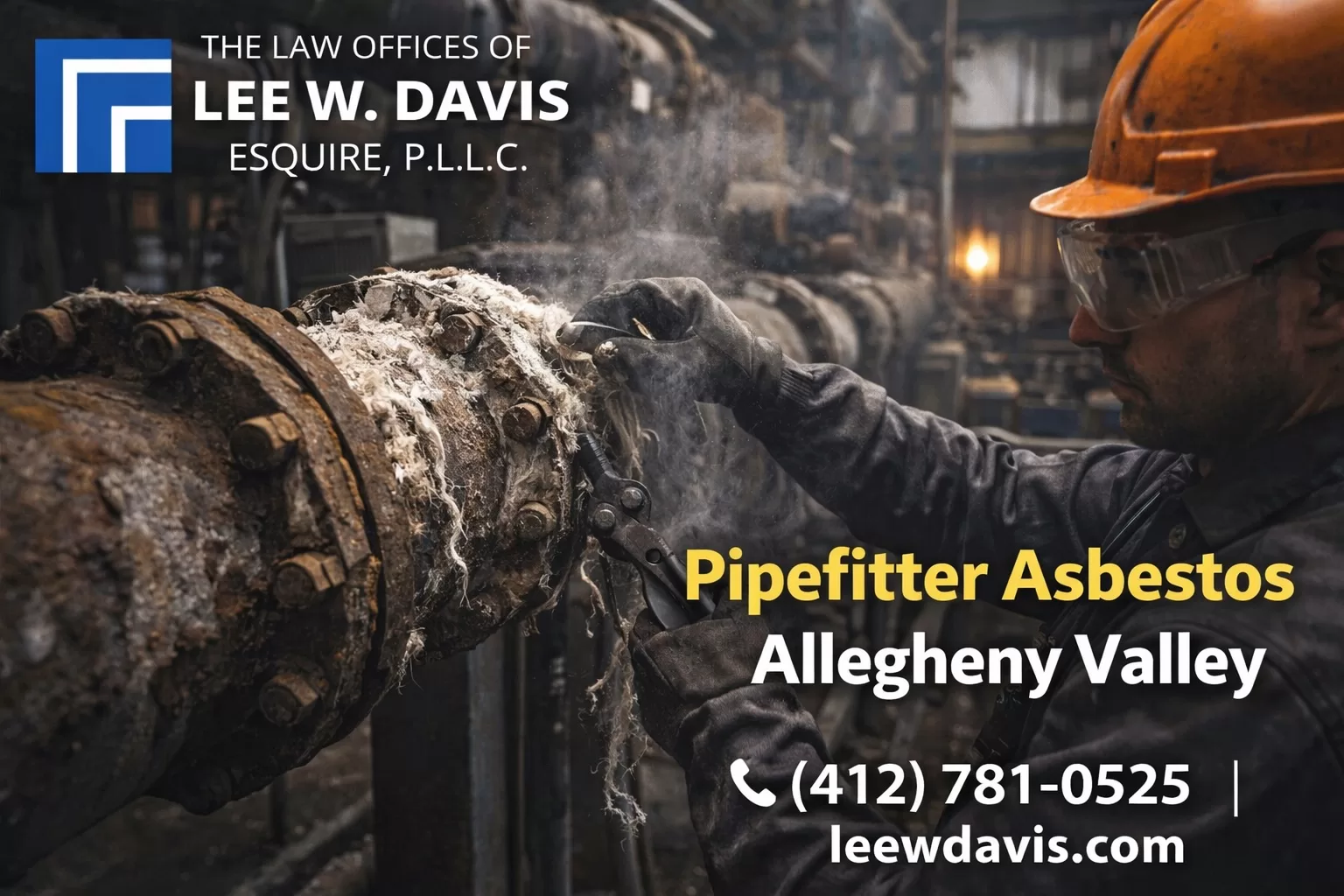
Natrona Heights Asbestos Exposure

Natrona Heights asbestos exposure

If you lived or worked in Natrona Heights and you’ve been diagnosed with mesothelioma or lung cancer, Natrona Heights asbestos exposure is a well-documented occupational and community history that has supported successful claims for Allegheny Valley workers and their families. Natrona Heights sits at the center of one of the most industrially dense stretches of the Allegheny River corridor — directly adjacent to the Allegheny Ludlum Brackenridge works, within the employment and residential orbit of the PPG Tarentum chemical plant, and surrounded by the broader industrial base that defined this section of the valley for most of the twentieth century.

Mesothelioma/Asbestos Legal Help – WV, MI & PA

Speak directly with attorney Lee W. Davis. No call centers. Free, confidential review.
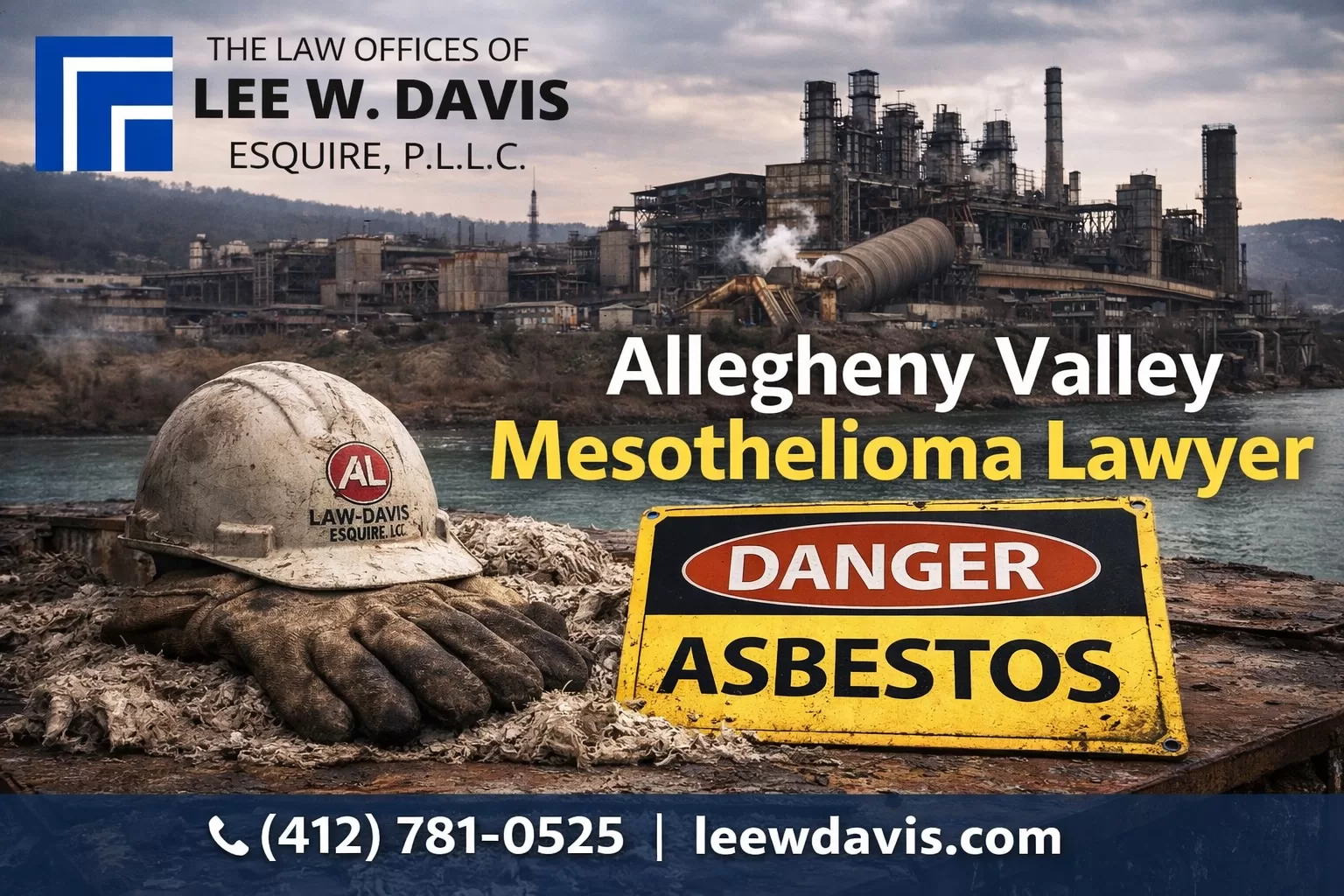
Natrona Heights and the Allegheny Ludlum Connection

The industrial identity of Natrona Heights was shaped primarily by its proximity to the Allegheny Ludlum Brackenridge Works — the specialty stainless steel facility that operated along the Allegheny River immediately adjacent to the Natrona Heights community. Generations of Natrona Heights residents worked at the Brackenridge facility as pipefitters, millwrights, boilermakers, electricians, insulators, and laborers — accumulating asbestos exposure from the refractory materials, insulation, gaskets, and packing used throughout the plant’s steelmaking, annealing, rolling, and finishing operations.

The physical proximity of the Brackenridge works to the Natrona Heights residential community also created take-home exposure pathways. Workers carried asbestos dust home on their clothing, hair, and vehicles at the end of every shift — exposing family members who never set foot inside the plant. Take-home asbestos cases arising from the Allegheny Ludlum Brackenridge operations have supported successful mesothelioma claims for Natrona Heights families for decades.

The PPG Tarentum Plant and Natrona Heights Workers

The PPG Tarentum chemical plant — located in the neighboring community of Tarentum — was the second major industrial employer drawing workers from the Natrona Heights community. The chemical manufacturing operations at PPG Tarentum required extensively insulated process piping, reactors, and heat exchangers throughout the facility, and the workers who maintained those systems accumulated significant asbestos exposure across careers at the plant.

Natrona Heights pipefitters, millwrights, and maintenance mechanics who worked at both Allegheny Ludlum and PPG Tarentum over their careers accumulated exposure from two distinct industrial environments with two separate sets of asbestos-containing product manufacturers — creating the multi-facility, multi-defendant claim profile that characterizes the strongest Allegheny Valley asbestos cases.

Additional Exposure Sources in the Natrona Heights Area

Beyond Allegheny Ludlum and PPG Tarentum, Natrona Heights workers participated in the broader Allegheny Valley industrial economy through construction and maintenance trades work throughout the corridor:

  • Cheswick Power Station in neighboring Springdale employed Natrona Heights workers in an environment with heavy asbestos insulation on turbines, boilers, and steam systems throughout the generating station
  • Keystone Power Station drew skilled trades workers from the Allegheny Valley community for major outage and maintenance work
  • Industrial construction and shutdown trades throughout the Allegheny Valley corridor employed Natrona Heights residents at facilities from Pittsburgh through Kittanning over the course of their careers

Trades Most Commonly Involved in Natrona Heights Asbestos Claims

  • Pipefitters and steamfitters — working the steam and process piping systems at Allegheny Ludlum, PPG Tarentum, Cheswick, and throughout the Allegheny Valley industrial corridor
  • Millwrights — maintaining industrial equipment throughout the Brackenridge works and neighboring facilities
  • Boilermakers — furnace, boiler, and heat exchanger maintenance at multiple Allegheny Valley facilities
  • Insulators — direct handlers of asbestos-containing insulation throughout the corridor
  • Electricians — working around asbestos-containing electrical and control systems
  • Laborers and outside contractors — outage and shutdown work at Allegheny Valley facilities
  • Family members — take-home exposure from workers at Allegheny Ludlum and PPG Tarentum


What Evidence Supports a Natrona Heights Asbestos Claim

You do not need complete records or perfect memory to begin evaluating your claim. The evidence that matters most includes:

  • Diagnosis records — pathology reports, imaging, treatment summaries confirming mesothelioma or lung cancer
  • Work history at Allegheny Ludlum, PPG Tarentum, Cheswick, or other Allegheny Valley facilities
  • Memory of the specific departments, equipment, and work areas where you spent your career
  • Names of coworkers, supervisors, foremen, or contractors you remember from those facilities
  • Union records confirming employment and dispatch history across the Allegheny Valley corridor
  • Social Security earnings records confirming employers and time periods
  • For take-home claims — documentation of the household relationship to the Allegheny Ludlum or PPG Tarentum worker

For a broader overview of Allegheny Valley asbestos claims and the compensation pathways available see our dedicated guide. For the full Allegheny Valley mesothelioma lawyer resource see our hub page. For a broader overview of how Pennsylvania mesothelioma claims work see our Pennsylvania mesothelioma resource. You can also search the full list of asbestos job sites in Pennsylvania to review all documented Allegheny Valley exposure sites.

Knowledge of Natrona Heights and Allegheny Valley Asbestos Cases Since 1989

I first began researching Allegheny Valley and western Pennsylvania asbestos cases in 1989, working on asbestos mass trials across Pennsylvania and West Virginia. I returned to Pittsburgh in 1999 to handle mesothelioma and lung cancer cases individually across western Pennsylvania and West Virginia. That includes cases from workers and families in the Natrona Heights and Brackenridge community whose exposure histories are tied to Allegheny Ludlum, PPG Tarentum, and the broader Allegheny Valley industrial corridor.

When you call, you speak directly with me. No call centers. No case managers.

If you or a family member lived or worked in Natrona Heights and has been diagnosed with mesothelioma or lung cancer, time matters. Pennsylvania’s statute of limitations runs from the date of diagnosis, not from the date of your exposure decades ago.

Call (412) 781-0525 or start your confidential case review online now.

Check If Your Family Was Exposed

Get your free guide instantly + a confidential case review.

🔒 100% Confidential. No obligations.


Frequently Asked Questions

Q: I grew up in Natrona Heights and my father worked at Allegheny Ludlum. I never worked at the plant but I have mesothelioma. Can I file a claim?

A: Yes. Take-home asbestos exposure cases are well established in Pennsylvania law. If you developed mesothelioma from asbestos dust carried home by a family member who worked at the Allegheny Ludlum Brackenridge facility, that secondary exposure history can support a viable claim against the manufacturers of the asbestos-containing products used at the plant. Your father’s work history and your household relationship to him are the foundation of that claim. Call to discuss what documentation we would need to evaluate it.

Q: I worked at both Allegheny Ludlum and PPG Tarentum over my career. Does that strengthen my mesothelioma claim?

A: Yes. A career spanning both facilities means exposure from two distinct industrial environments with two separate sets of asbestos-containing product manufacturers. Each facility and each set of products represents a separate thread in your exposure narrative and potentially a separate defendant in your claim. Multi-facility Allegheny Valley careers typically produce the strongest claim profiles because the total exposure is greatest and the number of potentially responsible parties is largest.

Q: How long do I have to file a mesothelioma claim in Pennsylvania connected to Natrona Heights asbestos exposure?

A: Pennsylvania’s statute of limitations runs from the date of diagnosis, not the date of your exposure. Wrongful death claims carry different and sometimes shorter deadlines running from the date of death. Do not assume it is too late — call as soon as a diagnosis is confirmed so we can evaluate your full exposure history and identify all responsible parties.

Mesothelioma/Asbestos Legal Help – WV, MI & PA

Speak directly with attorney Lee W. Davis. No call centers. Free, confidential review.
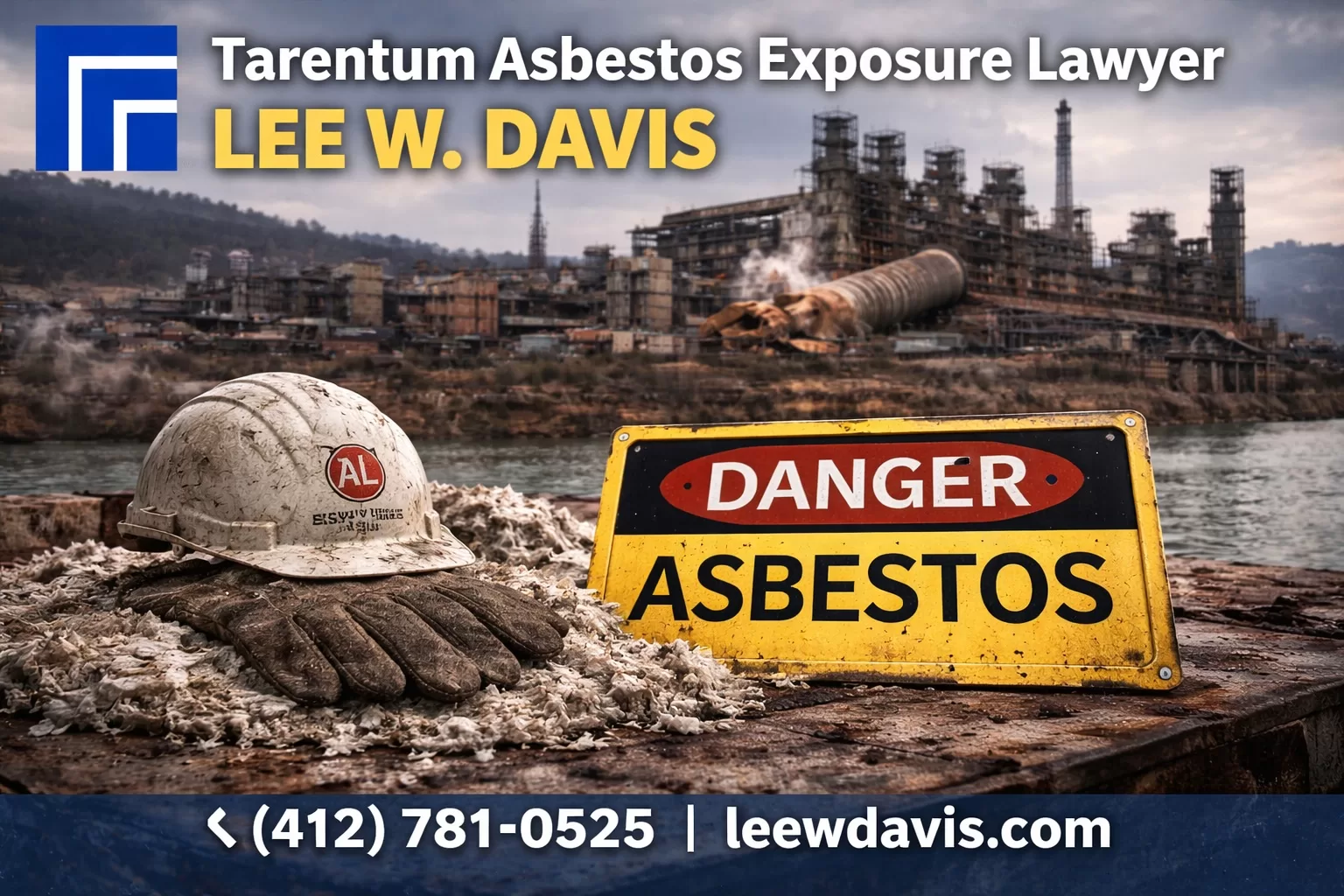
Allegheny Valley Asbestos Claims

Allegheny Valley Asbestos Claims | Mesothelioma Lawyer Lee W. Davis

If you or a family member worked in the Allegheny Valley and has been diagnosed with mesothelioma or lung cancer, Allegheny Valley asbestos claims are among the most consistently viable occupational exposure cases in western Pennsylvania. The industrial corridor stretching northeast from Pittsburgh along the Allegheny River produced one of the most concentrated asbestos exposure environments in the region — and the claims arising from that exposure continue to be filed and resolved successfully decades after the exposure occurred.

Mesothelioma/Asbestos Legal Help – WV, MI & PA

Speak directly with attorney Lee W. Davis. No call centers. Free, confidential review.
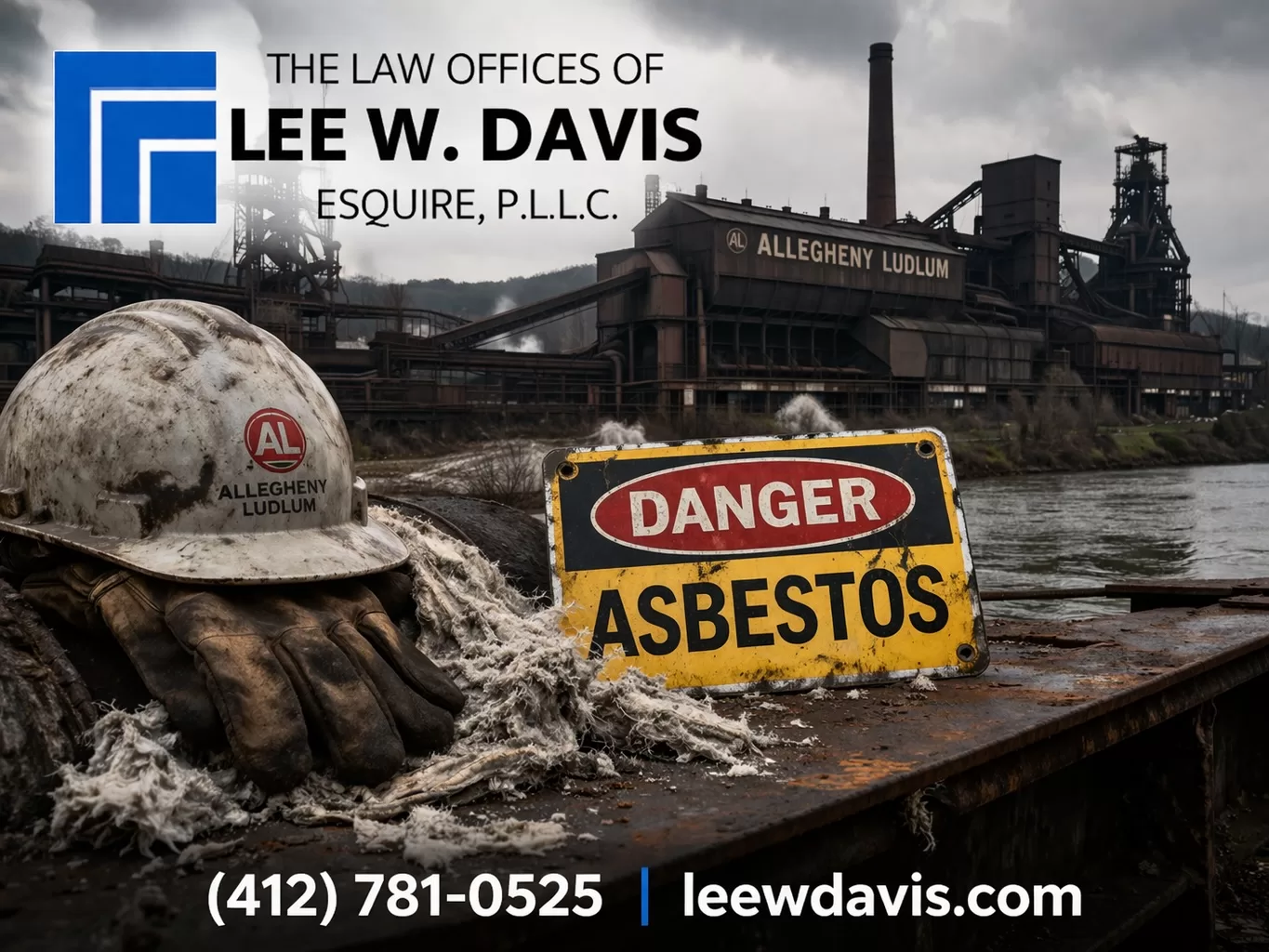
What Makes Allegheny Valley Asbestos Claims Distinctive

Allegheny Valley asbestos claims differ from claims arising from other western PA industrial regions in several important ways.

The first is the concentration and variety of industrial employers in a compact geographic area. Workers in Tarentum, Brackenridge, Natrona Heights, Cheswick, Springdale, and the surrounding communities had access to employment at specialty steel facilities, chemical plants, power generating stations, and the full range of construction and maintenance trades that serviced all of them — often without ever leaving the valley. That geographic concentration meant that asbestos exposure for Allegheny Valley workers was rarely limited to a single facility or a single product defendant.

The second is the specialty industrial character of the valley’s primary employers. Allegheny Ludlum Brackenridge produced stainless and specialty steel requiring higher heat tolerances than conventional carbon steel — which meant more refractory, more insulation, and more sustained asbestos exposure than comparable carbon steel operations. The PPG Tarentum chemical plant ran continuous chemical processes requiring heavily insulated piping and equipment throughout the facility. Cheswick Power Station operated turbines, boilers, and steam systems carrying the kind of sustained high-pressure, high-temperature conditions that demanded the heaviest asbestos insulation.

The third is the strength of the documentation trail available to Allegheny Valley claimants. The valley’s industrial workforce was heavily unionized, and union records — dispatch logs, dues histories, benefit statements, pension records — provide some of the most reliable documentation available for establishing which facilities a worker was employed at and during what periods.


Types of Allegheny Valley Asbestos Claims

Personal injury mesothelioma claims — Workers diagnosed with mesothelioma during their lifetimes can pursue personal injury claims against the manufacturers of the asbestos-containing products used at Allegheny Valley facilities. Pennsylvania’s statute of limitations runs from the date of diagnosis.

Personal injury lung cancer claims — Workers diagnosed with asbestos-related lung cancer can pursue claims on the same legal basis as mesothelioma claims. The contributing cause standard in Pennsylvania allows recovery where asbestos exposure contributed to the development of lung cancer even where other risk factors including smoking were also present. See the Pittsburgh asbestos lung cancer resource for a full discussion of lung cancer claims.

Wrongful death claims — Family members of workers who died from mesothelioma or asbestos-related lung cancer can pursue wrongful death claims on behalf of the estate and surviving family. West Virginia wrongful death deadlines run from the date of death. Pennsylvania wrongful death deadlines are separate from personal injury deadlines and can move quickly — call as soon as possible if a family member has passed.

Take-home exposure claims — Family members who developed mesothelioma from asbestos dust carried home on a worker’s clothing, hair, or vehicle can pursue take-home exposure claims. See the take-home asbestos cases resource for a full discussion.

Trust fund claims — Many of the manufacturers of asbestos-containing products used at Allegheny Valley facilities filed for bankruptcy under the weight of asbestos litigation and established dedicated compensation trusts. Those trusts continue to pay claims today and represent a significant — sometimes primary — source of compensation for Allegheny Valley claimants.

The Compensation Landscape for Allegheny Valley Claims

Allegheny Valley asbestos claims typically proceed on multiple tracks simultaneously. Product liability lawsuits against solvent defendants proceed in Pennsylvania courts while trust fund claims are filed with the applicable bankruptcy trusts. An experienced asbestos attorney pursues all available compensation pathways in parallel rather than sequentially — maximizing the total recovery for the claimant and their family.

The value of an individual Allegheny Valley asbestos claim depends on the specific exposure history, the diagnosis, the work history documentation available, and the specific defendants whose products caused the exposure. General settlement figures cited online are not a reliable guide to the value of any individual claim — that evaluation requires a careful review of your specific facts by an experienced attorney.

Allegheny Valley Facilities Covered by Our Practice

Our practice covers the full range of Allegheny Valley industrial facilities and the workers and families whose mesothelioma and lung cancer diagnoses arise from exposure at those sites:

For workers whose careers extended beyond the Allegheny Valley into the broader western PA industrial corridor see also Armco Steel Butler Works, Sharon Steel Shenango Valley, Crucible Steel Midland Works, and US Steel Homestead Works.

What Evidence Supports an Allegheny Valley Asbestos Claim

  • Diagnosis records — pathology reports, imaging, treatment summaries confirming mesothelioma or lung cancer
  • Work history at Allegheny Valley facilities — departments, job titles, years worked, specific tasks
  • Memory of the facilities, equipment, and work areas where you or your family member spent their career
  • Names of coworkers, supervisors, foremen, or contractors from your time at those facilities
  • Union records confirming employment and dispatch history across the corridor
  • Social Security earnings records confirming employers and time periods
  • For take-home claims — documentation of the household relationship to the worker and the diagnosis

Knowledge of Allegheny Valley Asbestos Cases Since 1989

I first began researching Allegheny Valley and western Pennsylvania asbestos cases in 1989, working on asbestos mass trials across Pennsylvania and West Virginia. I returned to Pittsburgh in 1999 to handle mesothelioma and lung cancer cases individually across western Pennsylvania and West Virginia, applying decades of product identification and exposure history work directly to every case evaluation.

When you call, you speak directly with me. No call centers. No case managers.

If you or a family member worked in the Allegheny Valley and has been diagnosed with mesothelioma or lung cancer, Pennsylvania’s statute of limitations runs from the date of diagnosis. Do not wait.

Call (412) 781-0525 or start your confidential case review online now.

Check If Your Family Was Exposed

Get your free guide instantly + a confidential case review.

🔒 100% Confidential. No obligations.


Frequently Asked Questions

Q: What is the difference between a mesothelioma claim and a trust fund claim for an Allegheny Valley worker?

A: These are not mutually exclusive and they are parallel compensation pathways that an experienced asbestos attorney pursues simultaneously. A mesothelioma lawsuit is filed in Pennsylvania civil court against solvent product manufacturer defendants who are still operating and have not filed for bankruptcy. A trust fund claim is filed directly with the bankruptcy trust established by a manufacturer that did file for bankruptcy. Most Allegheny Valley mesothelioma claims involve both pathways because the exposure history typically involves products from multiple manufacturers and some still solvent, some trust-funded.

Q: I’m a family member of someone who worked at Allegheny Ludlum and died of mesothelioma. What claims are available to our family?

A: Your family may have both a wrongful death claim and survival claims available depending on the specific circumstances. Pennsylvania wrongful death claims can be filed by the personal representative of the estate on behalf of surviving family members. The statute of limitations for wrongful death runs from the date of death rather than the date of diagnosis. Call as soon as possible andthe earlier we can evaluate the work history and identify responsible defendants, the stronger the position your family will be in.

Q: How long does an Allegheny Valley asbestos claim typically take to resolve?

A: The timeline varies significantly depending on the specific defendants, the documentation available, whether the claim proceeds through litigation or trust fund filing or both, and the individual circumstances of the diagnosis. Trust fund claims can sometimes be resolved in months. Litigation against solvent defendants typically takes longer. An experienced asbestos attorney can give you a realistic timeline assessment after reviewing your specific work history and diagnosis.

Mesothelioma/Asbestos Legal Help – WV, MI & PA

Speak directly with attorney Lee W. Davis. No call centers. Free, confidential review.
Pipefitter Asbestos Allegheny Valley

Pipefitter Asbestos Allegheny Valley

If you worked as a pipefitter in the Allegheny Valley and you’ve been diagnosed with mesothelioma or lung cancer, pipefitter asbestos Allegheny Valley exposure is one of the strongest occupational claim profiles in western Pennsylvania. Pipefitters throughout the Allegheny Valley corridor worked in direct and sustained contact with asbestos-containing insulation, gaskets, and packing materials across every industrial facility along the river — from Pittsburgh through Tarentum, Brackenridge, Natrona Heights, Cheswick, and beyond. That plant-wide, multi-facility exposure history is precisely what asbestos mesothelioma claims are built from.

Why Allegheny Valley Pipefitters Faced Severe Asbestos Exposure

Pipefitters occupy a unique position in the asbestos exposure hierarchy at industrial facilities. Where other trades encountered asbestos-containing materials in specific areas or during specific tasks, pipefitters worked across the entire facility — following the steam lines, process piping, and utility systems that ran through every department, every building, and every corner of every plant they worked in.

In the Allegheny Valley, that plant-wide exposure meant that a pipefitter at Allegheny Ludlum Brackenridge worked with asbestos-containing insulation in the melting shop, the annealing department, the rolling mills, the finishing lines, and the utility systems connecting them. A pipefitter at the PPG Tarentum chemical plant worked the process piping, the steam systems, and the reactor and heat exchanger systems throughout the facility. A pipefitter at Cheswick Power Station worked the turbine steam lines, the boiler systems, and the condensate and feedwater piping throughout the generating station.

Each of those environments contained asbestos-containing insulation on virtually every pipe, valve, flange, and fitting that required service. And pipefitters serviced all of it — removing old insulation to access pipe and fittings beneath, replacing gaskets and packing in valves and flanges, fitting new insulation after completing mechanical work. Every one of those tasks disturbed asbestos-containing materials and released fibers into the air.

The Specific Tasks That Created Pipefitter Asbestos Exposure

The asbestos exposure profile for Allegheny Valley pipefitters was tied directly to the core tasks of the trade:

Pipe insulation removal and replacement — Accessing pipe for repair or replacement required removing the insulation surrounding it. Old pipe insulation — particularly materials installed before the late 1970s — contained asbestos in high concentrations. Cutting, pulling, and stripping that insulation released fibers directly into the breathing zone of the pipefitter doing the work.

Gasket removal and replacement — Flanged connections throughout industrial piping systems used asbestos-containing gaskets to seal against heat and pressure. Removing old gaskets — scraping them from flange faces after years of heat cycling — released asbestos fibers in concentrated form. This task was performed thousands of times over the course of a career by every working pipefitter in the Allegheny Valley.

Valve packing replacement — Steam and process valves throughout the Allegheny Valley facilities used asbestos-containing packing material to prevent leakage around valve stems. Replacing that packing was routine maintenance work performed regularly by pipefitters throughout every facility.

Work in confined spaces — Much of the pipefitting work in Allegheny Valley industrial facilities occurred in pipe chases, utility corridors, mechanical rooms, and other confined spaces where asbestos dust had no outlet. The concentration of fibers in those environments during active maintenance work was significantly higher than in open plant areas.

Outage and shutdown work — Major maintenance outages at Allegheny Valley facilities involved simultaneous disturbance of insulation, gaskets, and packing across large areas of the plant. Pipefitters working outages were exposed to the cumulative dust of multiple simultaneous maintenance activities throughout the shutdown period.

Allegheny Valley Facilities Where Pipefitters Were Most Heavily Exposed

Pipefitters working the Allegheny Valley corridor accumulated asbestos exposure across the full range of the corridor’s industrial facilities:

  • Allegheny Ludlum Brackenridge — specialty stainless steel production with extensive steam and process piping throughout every department
  • Tarentum PPG Chemical Plant — chemical manufacturing with heavily insulated process piping, reactors, and heat exchangers throughout the facility
  • Cheswick Power Station — power generation with turbine steam systems, boiler piping, and condensate systems throughout the plant
  • Keystone Power Station — additional generating facility in the broader Allegheny Valley corridor
  • Supporting industrial facilities throughout Allegheny County and the river corridor

Pipefitters who worked across multiple Allegheny Valley facilities over their careers accumulated exposure from each facility’s distinct piping systems and each facility’s distinct set of asbestos-containing product manufacturers. That multi-facility, multi-defendant exposure history is the foundation of the strongest pipefitter mesothelioma and lung cancer claims.

Union Records and Their Value for Allegheny Valley Pipefitter Claims

Pipefitters working the Allegheny Valley corridor were typically members of the United Association of Plumbers and Pipefitters and dispatched to job sites through their local union hall. Those dispatch records — referral logs, dues payment histories, benefit statements, and pension records — can establish which facilities a pipefitter worked at and during what periods, even when direct employment records from individual facilities no longer exist.

If you were a union pipefitter in the Allegheny Valley, your union records are among the most valuable documentation available for building your asbestos exposure history. Locating and preserving those records early in the claim evaluation process is a critical step that an experienced asbestos attorney can help facilitate.

What Evidence Supports an Allegheny Valley Pipefitter Asbestos Claim

  • Diagnosis records — pathology reports, imaging, treatment summaries confirming mesothelioma or lung cancer
  • Work history at Allegheny Valley facilities — job titles, years worked, specific tasks, facilities where you were dispatched
  • Memory of the pipe systems, valves, and equipment you worked on throughout the corridor
  • Names of coworkers, foremen, or supervisors you remember from your time at specific facilities
  • Union records from your pipefitters local — referral logs, dues records, benefit statements
  • Social Security earnings records confirming employers and time periods across your career

For a broader overview of how Pennsylvania mesothelioma claims work see our Pennsylvania mesothelioma resource. For workers with lung cancer diagnoses see the Pittsburgh asbestos lung cancer resource. See also the Allegheny Valley mesothelioma lawyer hub page for the full picture of Allegheny Valley industrial exposure sites and claims.

Knowledge of Allegheny Valley Pipefitter Cases Since 1989

I first began researching Allegheny Valley and western Pennsylvania asbestos cases in 1989, working on asbestos mass trials across Pennsylvania and West Virginia. I have been licensed to practice law since 1996 and have handled mesothelioma and lung cancer cases from pipefitters throughout the Allegheny Valley industrial corridor ever since. That includes the product identification work — tracking which insulation manufacturers, gasket suppliers, and packing product companies supplied materials to specific Allegheny Valley facilities during specific periods — that is essential to building a viable multi-defendant pipefitter claim.

When you call, you speak directly with me. No call centers. No case managers.

If you or a family member worked as a pipefitter in the Allegheny Valley and has been diagnosed with mesothelioma or lung cancer, time matters. Pennsylvania’s statute of limitations runs from the date of diagnosis, not from the date of your exposure decades ago.

Call (412) 781-0525 or start your confidential case review online now.


Frequently Asked Questions

Q: I worked as a pipefitter at multiple Allegheny Valley facilities over my career. Does that multi-facility history strengthen my mesothelioma claim?

A: Yes significantly. A pipefitter whose career took them through Allegheny Ludlum, the PPG Tarentum plant, Cheswick, and other Allegheny Valley facilities accumulated exposure from multiple distinct piping systems and multiple sets of asbestos-containing product manufacturers. Each facility and each product encountered there represents a separate thread in the exposure narrative and potentially a separate defendant in your claim. Multi-facility pipefitter careers in the Allegheny Valley typically produce the strongest claim profiles because the total exposure is greatest and the number of potentially responsible defendants is largest.

Q: I replaced gaskets and valve packing throughout my pipefitting career but never did insulation work directly. Does that support a mesothelioma claim?

A: Yes. Gasket and valve packing replacement is one of the most well-documented sources of asbestos exposure for pipefitters. The asbestos-containing gaskets used in flanged connections on high-temperature and high-pressure piping systems at Allegheny Valley facilities released fibers during removal — particularly after years of heat cycling had bonded the gasket material to the flange face. That exposure profile has supported numerous successful mesothelioma and lung cancer claims independent of any insulation work.

Q: How long do I have to file a mesothelioma claim in Pennsylvania connected to Allegheny Valley pipefitter work?

A: Pennsylvania’s statute of limitations runs from the date of diagnosis, not the date of your exposure. Wrongful death claims carry different and sometimes shorter deadlines running from the date of death. Do not assume it is too late — call as soon as a diagnosis is confirmed so we can evaluate your full Allegheny Valley work history and identify all responsible parties before records and witnesses become harder to locate.

Allegheny Valley Mesothelioma Lawyer

Allegheny Valley Mesothelioma Lawyer

If you worked in the Allegheny Valley corridor and you’ve been diagnosed with mesothelioma or lung cancer, an Allegheny Valley mesothelioma lawyer with direct knowledge of this region’s industrial facilities can evaluate your claim with the specificity it requires. The Allegheny Valley — stretching northeast from Pittsburgh through Tarentum, Brackenridge, Natrona Heights, Cheswick, Springdale, and up toward Kittanning — was one of the most industrially dense river corridors in western Pennsylvania, and the asbestos exposure its workers accumulated over decades of industrial employment continues to produce mesothelioma and lung cancer diagnoses today.

Mesothelioma/Asbestos Legal Help – WV, MI & PA

Speak directly with attorney Lee W. Davis. No call centers. Free, confidential review.
The Allegheny Valley Industrial Corridor

The communities along the Allegheny River northeast of Pittsburgh developed as an extension of the Pittsburgh industrial base — specialty steel production, chemical manufacturing, power generation, and the full range of supporting industrial trades that kept those operations running. The facilities that defined this corridor employed generations of workers from Allegheny County and the surrounding communities, and virtually every one of those facilities relied on asbestos-containing materials throughout its operations.

What distinguishes the Allegheny Valley exposure history from Pittsburgh proper is the density and variety of industrial employers in a relatively compact geographic area. A worker who spent a career in the Allegheny Valley might have worked at Allegheny Ludlum in Brackenridge, the PPG chemical plant in Tarentum, the Cheswick Power Station in Springdale, and any number of supporting industrial operations — accumulating asbestos exposure from multiple facilities and multiple product defendants over the course of a single career.

Allegheny Valley Facilities With Significant Asbestos Exposure

The facilities most commonly associated with mesothelioma and lung cancer claims from the Allegheny Valley corridor include:

Allegheny Ludlum Brackenridge — The specialty stainless steel facility at Brackenridge was one of the most significant industrial employers in the Allegheny Valley, with asbestos exposure across its melting operations, annealing furnaces, rolling mills, steam and process piping systems, and mechanical maintenance operations throughout the plant. Workers across every major trade — pipefitters, millwrights, boilermakers, insulators, electricians, and outside contractors — worked with or around asbestos-containing materials throughout their careers at the Brackenridge facility.

Tarentum PPG Chemical Plant — The Pittsburgh Plate Glass chemical manufacturing operations in Tarentum produced chemicals through processes requiring extensive insulated piping, reactors, and mechanical systems throughout the facility. The insulation on those systems historically contained asbestos, and the workers who maintained and serviced them accumulated significant exposure across careers at the plant.

Cheswick Power Station — The Springdale generating station employed Allegheny Valley workers in an environment with heavy asbestos insulation on turbines, boilers, steam lines, and mechanical systems throughout the plant. Power plant workers at Cheswick faced sustained exposure across the full range of generation and maintenance operations.

Natrona Heights industrial operations — The Natrona Heights community adjacent to Brackenridge shared the industrial employment base of the broader Allegheny Ludlum corridor, with workers moving between facilities throughout the valley over their careers.

Allegheny Valley construction and maintenance trades — Heavy construction workers, insulators, pipefitters, and other trades who worked the Allegheny Valley industrial corridor on shutdown and outage work accumulated exposure across multiple job sites over careers that spanned the entire river corridor from Pittsburgh to Kittanning.


The Multi-Facility Exposure Pattern

The most important legal characteristic of Allegheny Valley mesothelioma claims is the frequency of multi-facility exposure histories. A former Allegheny Valley industrial worker rarely worked at only one facility over a thirty or forty year career. The geographic proximity of Allegheny Ludlum, PPG Tarentum, Cheswick, and the broader Allegheny Valley industrial base meant that workers, especially those in construction and maintenance trades, moved between facilities regularly.

Each facility in the exposure history represents a separate set of asbestos-containing products and a separate group of product manufacturer defendants. A mesothelioma or lung cancer claim arising from a multi-facility Allegheny Valley career may involve claims against numerous manufacturers whose products were encountered at different job sites across that career — and identifying the full scope of that exposure requires the kind of regional knowledge that comes from decades of handling these specific cases.

Trades Most Commonly Involved in Allegheny Valley Asbestos Claims

  • Pipefitters and steamfitters on process and utility piping at Allegheny Ludlum, PPG Tarentum, Cheswick, and supporting facilities
  • Millwrights maintaining industrial equipment throughout the corridor
  • Boilermakers on furnace, boiler, and heat exchanger maintenance and repair
  • Insulators — direct handlers of asbestos-containing insulation at every facility in the valley
  • Electricians working around asbestos-containing electrical and control systems
  • Ironworkers and heavy construction trades on shutdown and rebuild work throughout the corridor
  • Laborers on demolition, teardown, and outage crews
  • Outside contractors dispatched to Allegheny Valley facilities for major shutdowns and capital projects

Connecting the Allegheny Valley to the Broader Western PA Claim Landscape

Allegheny Valley workers whose careers extended beyond the immediate corridor — into Pittsburgh proper, into the Mon Valley, or into the broader western PA specialty steel corridor — may have exposure histories spanning multiple geographic regions and dozens of facilities. For workers in the broader western PA industrial corridor see also Armco Steel Butler Works, Sharon Steel and the Shenango Valley, Crucible Steel Midland Works, and US Steel Homestead Works.

For workers with lung cancer diagnoses see the Pittsburgh asbestos lung cancer resource. You can search the full list of asbestos job sites in Pennsylvania to review all documented Allegheny Valley and western PA exposure sites.

For a broader overview of how Pennsylvania mesothelioma claims work and what compensation options are available see our Pennsylvania mesothelioma resource.

What Evidence Supports an Allegheny Valley Mesothelioma Claim

  • Diagnosis records — pathology reports, imaging, treatment summaries confirming mesothelioma or lung cancer
  • Work history at Allegheny Valley facilities — departments, job titles, years worked, specific tasks
  • Memory of the facilities, equipment, and work areas where you spent your career in the corridor
  • Names of coworkers, supervisors, foremen, or contractors you remember from your time at those facilities
  • Union records confirming employment and dispatch history across the corridor
  • Social Security earnings records confirming employers and time periods across your career

Knowledge of Allegheny Valley Asbestos Cases Since 1989

I first began researching western Pennsylvania and Allegheny Valley asbestos cases in 1989, working on asbestos mass trials across Pennsylvania and West Virginia. I returned to Pittsburgh in 1999 to handle mesothelioma and lung cancer cases individually, applying decades of product identification work — tracking the contractors, manufacturers, and asbestos product lines specific to Allegheny Valley facilities — directly to every case evaluation.

When you call, you speak directly with me. No call centers. No case managers.

If you or a family member worked in the Allegheny Valley industrial corridor and has been diagnosed with mesothelioma or lung cancer, time matters. Pennsylvania’s statute of limitations runs from the date of diagnosis, not from the date of your exposure decades ago.

Call (412) 781-0525 or start your confidential case review online now.

Check If Your Family Was Exposed

Get your free guide instantly + a confidential case review.

🔒 100% Confidential. No obligations.


Frequently Asked Questions

Q: I worked at both Allegheny Ludlum and the PPG plant in Tarentum over my career. Does that multi-facility history help my mesothelioma claim?

A: Yes. A career spanning both Allegheny Ludlum Brackenridge and PPG Tarentum represents two distinct exposure environments with two separate sets of asbestos-containing products and two separate groups of product manufacturer defendants. Workers with multi-facility exposure histories in the Allegheny Valley typically have stronger claims than single-facility workers because the total exposure is greater and the number of potentially responsible defendants is larger. Identifying the full scope of your Allegheny Valley exposure history is one of the first steps in a thorough claim evaluation.

Q: I worked construction and maintenance trades throughout the Allegheny Valley — not at any single facility for a long period. Can I still build a mesothelioma claim?

A: Yes. Construction and maintenance trades workers who moved between Allegheny Valley facilities over their careers often have some of the strongest asbestos exposure histories because their work involved the tear-out and replacement of asbestos-containing materials at multiple sites. Union dispatch records, Social Security earnings histories, and your own recollection of the job sites where you worked can establish the exposure history across the corridor even without long-term employment at any single facility.

Q: How long do I have to file a mesothelioma claim in Pennsylvania connected to Allegheny Valley asbestos exposure?

A: Pennsylvania’s statute of limitations runs from the date of diagnosis, not the date of your exposure. Wrongful death claims carry different and sometimes shorter deadlines running from the date of death. Do not assume it is too late — call as soon as a diagnosis is confirmed so we can evaluate your full Allegheny Valley work history and identify all responsible parties before records and witnesses become harder to locate.

Mesothelioma/Asbestos Legal Help – WV, MI & PA

Speak directly with attorney Lee W. Davis. No call centers. Free, confidential review.

Tarentum Asbestos Exposure Lawyer

Tarentum Asbestos Exposure Lawyer

If you worked in Tarentum or the surrounding Allegheny Valley corridor and you’ve been diagnosed with mesothelioma or lung cancer, a Tarentum asbestos exposure lawyer with direct knowledge of this region’s industrial history can evaluate whether your work history supports a viable claim. Tarentum and the neighboring communities of Natrona Heights, Brackenridge, and Cheswick formed one of the most industrially dense stretches of the Allegheny River corridor — and the asbestos exposure that resulted from decades of industrial operations there has produced mesothelioma and lung cancer diagnoses that continue to emerge today.

Mesothelioma/Asbestos Legal Help – WV, MI & PA

Speak directly with attorney Lee W. Davis. No call centers. Free, confidential review.

The Tarentum Industrial Corridor

Tarentum’s industrial history was anchored by the Pittsburgh Plate Glass Company chemical plant — one of PPG’s most significant chemical manufacturing operations — which produced chlorine, caustic soda, and related chemicals through processes that required extensive thermal insulation throughout its piping, equipment, and mechanical systems. That insulation historically contained asbestos, and the workers who maintained and serviced those systems throughout the plant’s operational life were exposed to asbestos fibers on a sustained basis across their careers.

The PPG Tarentum chemical operations are distinct from the PPG glass manufacturing history covered elsewhere. Chemical plant workers at the Tarentum facility faced an exposure profile tied specifically to the chemical process equipment, the steam and utility systems supporting those processes, and the maintenance and repair work required to keep the plant running continuously.

Beyond PPG, Tarentum’s position in the Allegheny Valley placed it at the center of a broader industrial corridor that included Allegheny Ludlum’s Brackenridge Works directly downriver, the Cheswick Power Station nearby, and the broader network of industrial employers that defined the Allegheny Valley from Pittsburgh through Kittanning. Workers who spent careers in this corridor often accumulated asbestos exposure across multiple facilities and multiple product defendants.

Where Asbestos Exposure Occurred in the Tarentum Area

PPG Tarentum Chemical Plant — The chemical manufacturing processes at the PPG Tarentum facility required sustained high heat and extensive piping systems throughout the plant. Insulation on process piping, steam lines, reactors, and heat exchangers historically contained asbestos. Pipefitters, millwrights, and maintenance mechanics servicing those systems worked with asbestos-containing materials as a routine feature of their work. Outside contractors brought in for major maintenance and shutdown work performed the tear-out and replacement of that insulation, generating the heaviest asbestos dust exposure at the facility.

Allegheny Ludlum Brackenridge — The specialty stainless steel operations at the Brackenridge works directly adjacent to Tarentum employed workers from both communities and created asbestos exposure through the refractory, insulation, and mechanical systems throughout the facility. Workers who crossed between the PPG plant and Allegheny Ludlum over their careers accumulated exposure from both environments.

Cheswick Power Station — The Springdale generating station nearby employed workers from the Tarentum and Natrona Heights communities in an environment with extensive asbestos insulation on turbines, boilers, steam lines, and mechanical systems throughout the plant.

Allegheny Valley construction and maintenance trades — Heavy construction workers, insulators, pipefitters, and other trades who worked the Allegheny Valley industrial corridor on shutdown and outage work moved between facilities throughout the region, accumulating exposure across multiple job sites over their careers.

Trades Most Commonly Involved in Tarentum Area Asbestos Claims

  • Pipefitters and steamfitters on process and utility piping at PPG and other Allegheny Valley facilities
  • Millwrights maintaining chemical process equipment, rolling equipment, and mechanical systems
  • Insulators — direct handlers of asbestos-containing insulation throughout the corridor
  • Boilermakers on furnace, boiler, and heat exchanger maintenance
  • Electricians working around asbestos-containing electrical and control systems
  • Laborers on demolition, teardown, and outage crews
  • Outside contractors on industrial shutdowns and major construction projects throughout the Allegheny Valley

The Multi-Facility Exposure History

One of the distinctive features of Tarentum area asbestos claims is the frequency of multi-facility exposure histories. Workers who lived in Tarentum, Natrona Heights, or Brackenridge often worked at the PPG plant, Allegheny Ludlum, Cheswick, and potentially other Allegheny Valley facilities over the course of their careers. Each facility represents a separate exposure environment and potentially a separate set of product manufacturer defendants whose asbestos-containing materials were used there.

A mesothelioma or lung cancer diagnosis in a former Tarentum area worker may involve claims arising from multiple facilities and multiple product lines — and identifying the full scope of that exposure history is one of the most important things an experienced asbestos attorney does in the early stages of case evaluation.

What Evidence Supports a Tarentum Area Asbestos Claim

  • Diagnosis records — pathology reports, imaging, treatment summaries confirming mesothelioma or lung cancer
  • Work history at PPG Tarentum, Allegheny Ludlum, Cheswick, or other Allegheny Valley facilities
  • Memory of the specific equipment, piping systems, and work areas where you spent your career
  • Names of coworkers, supervisors, foremen, or contractors you remember from your time at those facilities
  • Union records confirming employment and dispatch history
  • Social Security earnings records confirming employers and time periods

For a broader overview of how Pennsylvania mesothelioma claims work see our Pennsylvania mesothelioma resource. For workers with lung cancer diagnoses see the Pittsburgh asbestos lung cancer resource. You can search the full list of asbestos job sites in Pennsylvania to review other Allegheny Valley facilities in the documented exposure database.

For related western PA specialty steel facility pages see Allegheny Ludlum Brackenridge, Armco Steel Butler Works, Sharon Steel Shenango Valley, and Crucible Steel Midland Works.

Knowledge of Allegheny Valley Asbestos Cases Since 1989

I first began researching Allegheny Valley and western Pennsylvania asbestos cases in 1989, working on asbestos mass trials across Pennsylvania and West Virginia. I have been licensed to practice law since 1996 and have handled mesothelioma and lung cancer cases from workers throughout the Allegheny Valley industrial corridor — including the Tarentum and Natrona Heights communities — ever since.

When you call, you speak directly with me. No call centers. No case managers.

If you or a family member worked in the Tarentum area and has been diagnosed with mesothelioma or lung cancer, time matters. Pennsylvania’s statute of limitations runs from the date of diagnosis, not from the date of your exposure decades ago.

Call (412) 781-0525 or start your confidential case review online now.

Check If Your Family Was Exposed

Get your free guide instantly + a confidential case review.

🔒 100% Confidential. No obligations.


Frequently Asked Questions

Q: I worked at the PPG plant in Tarentum for twenty years as a pipefitter. Is that enough to support a mesothelioma claim?

A: A twenty-year career as a pipefitter at the PPG Tarentum chemical plant is a significant asbestos exposure history. Pipefitters at chemical plants worked in direct contact with asbestos-containing pipe insulation, gaskets, and valve packing throughout their careers. The length of your service and the nature of pipefitting work — involving regular removal and replacement of insulation and mechanical components — creates the kind of cumulative exposure history that has supported successful mesothelioma and lung cancer claims. Call to discuss your specific work history and medical situation.

Q: I worked at both PPG Tarentum and Allegheny Ludlum Brackenridge over my career. Does multi-facility exposure strengthen my claim?

A: A career spanning both PPG Tarentum and Allegheny Ludlum Brackenridge typically strengthens rather than complicates your claim. Each facility represents a separate exposure environment with its own set of asbestos-containing products and its own product manufacturer defendants. Workers with multi-facility exposure histories may have claims against numerous manufacturers whose products they encountered at each site — and each of those defendants may have liability for contributing to your diagnosis.

Q: How long do I have to file a mesothelioma claim in Pennsylvania connected to Tarentum area asbestos exposure?

A: Pennsylvania’s statute of limitations runs from the date of diagnosis, not the date of your exposure. Wrongful death claims carry different and sometimes shorter deadlines running from the date of death. Do not assume it is too late — call as soon as a diagnosis is confirmed so we can evaluate your full work history across the Allegheny Valley facilities and identify all responsible parties.

Mesothelioma/Asbestos Legal Help – WV, MI & PA

Speak directly with attorney Lee W. Davis. No call centers. Free, confidential review.

Allegheny Ludlum Brackenridge Asbestos

Allegheny Ludlum Brackenridge Asbestos Exposure

If you worked at Allegheny Ludlum in Brackenridge and you’ve been diagnosed with mesothelioma or lung cancer, Allegheny Ludlum asbestos exposure is a well-documented occupational history that has supported successful claims for Allegheny Valley workers and their families. The Brackenridge facility was one of the most significant specialty stainless steel producers in American history, and the asbestos-containing materials used throughout its operations created sustained exposure for workers across every major trade and department over decades of continuous production.

Allegheny Ludlum Brackenridge — Facility History

The Allegheny Ludlum Steel Corporation operated its primary western Pennsylvania facility in Brackenridge, along the Allegheny River in Allegheny County. The Brackenridge works specialized in stainless and specialty steel production — a manufacturing process that required even more demanding heat management than conventional carbon steel production, which in turn meant more refractory, more insulation, and more sustained asbestos exposure for the workers who maintained and operated those systems.

The facility employed generations of workers from Brackenridge, Natrona Heights, Tarentum, and the broader Allegheny Valley corridor. Its specialty steel production made it a critical employer in the region and a significant source of asbestos-related disease among its workforce and the families of those workers.

Allegheny Ludlum’s corporate history — through various ownership structures and eventually into Allegheny Technologies Incorporated — is relevant to understanding which entities carry liability for workers’ asbestos exposure during specific periods of the plant’s operation. The primary defendants in Brackenridge asbestos claims are typically the manufacturers of the asbestos-containing products used at the facility rather than the corporate successors to Allegheny Ludlum directly. Many of those manufacturers have established asbestos bankruptcy trusts that continue to pay claims today.

Where Asbestos Exposure Occurred at the Brackenridge Works

The specialty steel production environment at Allegheny Ludlum Brackenridge created significant asbestos exposure across multiple departments and operations:

Melting and furnace operations — Specialty stainless steel production required electric arc furnaces and associated high-heat equipment operating at extreme temperatures. The refractory materials used in furnace construction and maintenance — the blocks, boards, ramming materials, and cements used near the furnace shell — were asbestos-containing products. Maintenance crews and outside contractors doing furnace rebuilds and hot repairs faced direct and sustained exposure to these materials.

Annealing and heat treatment — Stainless steel production requires extensive annealing and heat treatment operations. The annealing furnaces at Brackenridge carried insulation that historically contained asbestos, and the maintenance and repair of those systems involved regular disturbance of asbestos-containing materials.

Rolling and finishing operations — The specialty rolling mills and finishing lines at Brackenridge required sustained heat and continuous mechanical maintenance. Insulation on rolling equipment, reheating furnaces, and mechanical drives throughout the finishing departments was present throughout workers’ careers and disturbed regularly during maintenance.

Steam and process piping — Extensive steam and process piping throughout the Brackenridge facility carried insulation that historically contained asbestos. Pipefitters and steamfitters maintaining those systems worked in direct contact with asbestos-containing insulation on a daily basis across every area of the plant.

Mechanical systems plant-wide — Gaskets and packing in the valves, pumps, and flanges throughout the facility were asbestos-containing products replaced regularly during routine maintenance. Millwrights, pipefitters, and mechanics throughout Brackenridge handled these materials as a standard part of their work.

Shutdown and construction work — Outside contractors brought in for major shutdowns, equipment rebuilds, and capital projects performed the tear-out and replacement work that generated the heaviest asbestos exposure at the facility.

Trades Most Commonly Involved in Allegheny Ludlum Brackenridge Asbestos Claims

Workers across every major industrial trade at the Brackenridge Works faced asbestos exposure. The trades most commonly involved in Allegheny Ludlum mesothelioma and lung cancer claims include:

  • Pipefitters and steamfitters on process and utility piping systems throughout the plant
  • Millwrights maintaining rolling equipment, drives, and mechanical systems
  • Boilermakers on furnace and boiler maintenance and repair
  • Insulators — direct handlers of asbestos-containing insulation materials throughout the facility
  • Electricians working around asbestos-containing electrical and control systems
  • Ironworkers and heavy construction trades on shutdown and rebuild work
  • Laborers on demolition, teardown, and outage crews
  • Outside contractors brought in for plant shutdowns and major construction projects

The Allegheny Valley Industrial Corridor

Workers from the Allegheny Valley often worked at multiple facilities over their careers — the Brackenridge works alongside other Allegheny Valley industrial employers. A mesothelioma or lung cancer diagnosis in a former Allegheny Valley worker may involve an exposure history that spans the Brackenridge facility and other industrial sites along the river corridor.

For workers in the broader western PA specialty steel corridor see also Crucible Steel Midland Works, Sharon Steel and the Shenango Valley, and Armco Steel Butler Works.

For workers with lung cancer diagnoses see the Pittsburgh asbestos lung cancer resource. You can also search the full list of asbestos job sites in Pennsylvania to review other Allegheny Valley facilities in the documented exposure database.

What Evidence Supports an Allegheny Ludlum Asbestos Claim

You do not need complete records or perfect memory to begin evaluating your claim. The evidence that matters most includes:

  • Diagnosis records — pathology reports, imaging, treatment summaries confirming mesothelioma or lung cancer
  • Work history at Allegheny Ludlum Brackenridge — department, job title, years worked, specific tasks and equipment
  • Memory of the areas of the plant where you worked and what maintenance and repair activity occurred around you
  • Names of coworkers, supervisors, foremen, or contractors you remember from your time at the facility
  • Union records confirming employment and dispatch history at the Brackenridge works
  • Social Security earnings records confirming employers and time periods

For a broader overview of how Pennsylvania mesothelioma claims work and what compensation options are available see our Pennsylvania mesothelioma resource. For the Pennsylvania asbestos lawyer overview see our dedicated guide.

Knowledge of Allegheny Valley Asbestos Cases Since 1989

I first began researching Allegheny Valley and western Pennsylvania asbestos cases in 1989, working on asbestos mass trials across Pennsylvania and West Virginia. I have been licensed to practice law since 1996 and have handled mesothelioma and lung cancer cases from workers throughout the Allegheny Valley industrial corridor — including the Brackenridge specialty steel operations — ever since.

When you call, you speak directly with me. No call centers. No case managers.

If you or a family member worked at Allegheny Ludlum in Brackenridge and has been diagnosed with mesothelioma or lung cancer, time matters. Pennsylvania’s statute of limitations runs from the date of diagnosis, not from the date of your exposure decades ago.

Call (412) 781-0525 or start your confidential case review online now.


Frequently Asked Questions

Q: Allegheny Ludlum became Allegheny Technologies. Who is responsible for my asbestos exposure at the Brackenridge Works?

A: The corporate succession from Allegheny Ludlum through Allegheny Technologies is relevant context but is typically not the primary focus of Brackenridge asbestos claims. The more significant defendants are the manufacturers of the asbestos-containing insulation, refractory, gasket, and packing materials used at the facility during your years of employment — companies whose products caused your exposure regardless of who owned the plant at the time. Many of those manufacturers have established asbestos bankruptcy trusts that continue to pay claims today. An experienced asbestos attorney can identify which defendants and trust funds apply to your specific work history at the Brackenridge facility.

Q: I worked at Allegheny Ludlum Brackenridge as an outside contractor during shutdowns. Do I have a mesothelioma claim?

A: Yes. Outside contractors who worked Brackenridge shutdowns and major rebuild projects often faced heavier asbestos exposure than direct employees because their work involved the tear-out and replacement of asbestos-containing materials. Your status as a contractor rather than a direct Allegheny Ludlum employee does not disqualify your claim. The product manufacturer defendants whose materials caused your exposure are the primary targets in these cases regardless of who signed your paycheck.

Q: How long do I have to file a mesothelioma claim in Pennsylvania connected to Allegheny Ludlum Brackenridge?

A: Pennsylvania’s statute of limitations runs from the date of diagnosis, not the date of your exposure. Wrongful death claims carry different and sometimes shorter deadlines running from the date of death. Do not assume it is too late — call as soon as a diagnosis is confirmed so we can evaluate your work history and identify the responsible parties while records and witnesses are still available.

Armco Steel Butler Asbestos Exposure

Armco Steel Butler Asbestos Exposure | Mesothelioma Lawyer Lee W. Davis

If you worked at the Armco Steel Butler Works and you’ve been diagnosed with mesothelioma or lung cancer, Armco Steel Butler asbestos exposure is a well-documented occupational history that has supported successful claims for Butler County workers and their families. The Butler Works was one of western Pennsylvania’s most significant specialty steel facilities, and the asbestos-containing materials used throughout its operations created sustained exposure for workers across every major trade and department.

The Armco Steel Butler Works — Facility History and Corporate Succession

The Armco Steel Butler Works operated in Butler County, Pennsylvania as a major specialty steel producer serving markets that required high-grade steel products. The facility employed generations of Butler County workers across its steelmaking, rolling, finishing, and maintenance operations over decades of continuous production.

The corporate history of the Butler Works is important to understanding the liability landscape for asbestos claims. Armco Steel Corporation became Armco Inc. and subsequently merged with Kawasaki Steel Corporation to form AK Steel Holding Corporation. AK Steel was later acquired by Cleveland-Cliffs Inc. That chain of corporate succession — and the question of which entities carry liability for workers’ asbestos exposure during specific periods of the plant’s operation — is exactly the kind of legal complexity that requires an experienced asbestos attorney familiar with the specific history of this facility.

The primary defendants in Butler Works asbestos claims are typically the manufacturers of the asbestos-containing products used at the facility — not necessarily the corporate successors to Armco Steel directly. Many of those product manufacturers have established asbestos bankruptcy trusts that continue to pay claims today.

Where Asbestos Exposure Occurred at the Armco Steel Butler Works

Asbestos-containing materials were present throughout the Butler Works operations. The most significant exposure environments included:

Steelmaking and furnace operations — The Butler Works operated electric arc furnaces and associated high-heat steelmaking equipment requiring refractory materials for construction and ongoing maintenance. The blocks, boards, ramming materials, and cements used in furnace repair and maintenance near the shell were asbestos-containing products. Maintenance crews and outside contractors doing furnace rebuilds and hot repairs faced direct and sustained exposure.

Steam and process piping — Extensive steam and process piping throughout the facility carried insulation that historically contained asbestos. Pipefitters and steamfitters who maintained those systems worked with asbestos-containing insulation as a routine feature of their daily work throughout the plant.

Rolling and finishing operations — The Butler Works’ specialty steel rolling and finishing operations required sustained high heat and continuous mechanical maintenance. Insulation on rolling equipment, reheating furnaces, and mechanical drives was present throughout and disturbed regularly during maintenance and outage work.

Mechanical systems plant-wide — Gaskets and packing in the valves, pumps, and flanges servicing the plant’s mechanical systems were asbestos-containing products replaced regularly during routine maintenance. Millwrights, pipefitters, and mechanics throughout the facility handled these materials as a standard part of their work.

Shutdown and construction work — Outside contractors brought in for major shutdowns, equipment rebuilds, and capital projects performed the tear-out and replacement work that generated the heaviest asbestos dust at the facility.

Trades Most Commonly Involved in Armco Butler Works Asbestos Claims

Workers across every major industrial trade at the Butler Works faced asbestos exposure. The trades most commonly involved in Butler Works mesothelioma and lung cancer claims include:

  • Pipefitters and steamfitters on process and utility piping systems throughout the plant
  • Millwrights maintaining rolling equipment, drives, and mechanical systems
  • Boilermakers on furnace and boiler maintenance and repair
  • Insulators — direct handlers of asbestos-containing insulation materials throughout the facility
  • Electricians working around asbestos-containing electrical and control systems
  • Ironworkers and heavy construction trades on shutdown and rebuild work
  • Laborers on demolition, teardown, and outage crews
  • Outside contractors brought in for plant shutdowns and major construction projects

Butler County’s Broader Industrial Context

Workers who spent careers in Butler County often worked at multiple facilities over their lifetimes — not just the Armco Butler Works but the broader industrial base of Butler County and surrounding counties. A mesothelioma or lung cancer diagnosis in a former Butler County industrial worker may involve an exposure history spanning multiple facilities and multiple product defendants.

For workers in the broader western PA steel and industrial corridor see also Sharon Steel and the Shenango Valley, Crucible Steel Midland Works, and the Pittsburgh asbestos lung cancer resource for workers with lung cancer diagnoses.

You can search the full list of asbestos job sites in Pennsylvania to review other Butler County and western PA facilities in the documented exposure database.

What Evidence Supports an Armco Butler Works Asbestos Claim

You do not need complete records or perfect memory to begin evaluating your claim. The evidence that matters most includes:

  • Diagnosis records — pathology reports, imaging, treatment summaries confirming mesothelioma or lung cancer
  • Work history at the Armco Butler Works — department, job title, years worked, specific tasks and equipment
  • Memory of the areas of the plant where you worked and what maintenance and repair activity occurred around you
  • Names of coworkers, supervisors, foremen, or contractors you remember from your time at the plant
  • Union records confirming employment and dispatch history at the Butler Works
  • Social Security earnings records confirming employers and time periods

For a broader overview of how Pennsylvania mesothelioma claims work and what compensation options are available see our Pennsylvania mesothelioma resource. For the Pennsylvania asbestos lawyer overview see our dedicated guide.

Knowledge of Western PA Asbestos Cases Since 1989

I first began researching western Pennsylvania asbestos cases in 1989, working on asbestos mass trials across Pennsylvania and West Virginia. I have been licensed to practice law since 1996 and have handled mesothelioma and lung cancer cases from workers throughout the western PA industrial corridor — including Butler County facilities — ever since. That includes the product identification work — tracking which manufacturers supplied asbestos-containing materials to specific facilities during specific periods — that is essential to building a viable claim against the right defendants.

When you call, you speak directly with me. No call centers. No case managers.

If you or a family member worked at the Armco Steel Butler Works and has been diagnosed with mesothelioma or lung cancer, time matters. Pennsylvania’s statute of limitations runs from the date of diagnosis, not from the date of your exposure decades ago.

Call (412) 781-0525 or start your confidential case review online now.


Frequently Asked Questions

Q: Armco Steel became AK Steel and then Cleveland-Cliffs. Who is liable for my asbestos exposure at the Butler Works?

A: The corporate succession from Armco Steel through AK Steel to Cleveland-Cliffs is relevant to the employer liability analysis but is typically not the primary focus of Butler Works asbestos claims. The more significant defendants are the manufacturers of the asbestos-containing insulation, refractory, gasket, and packing materials used at the facility during your years of employment — companies whose products caused your exposure regardless of who owned the plant at the time. Many of those manufacturers have established asbestos bankruptcy trusts that continue to pay claims today. An experienced asbestos attorney can identify which defendants and trust funds apply to your specific work history and exposure timeline at the Butler Works.

Q: I worked at the Armco Butler Works as an outside contractor during major shutdowns. Do I have a mesothelioma claim?

A: Yes. Outside contractors who worked Butler Works shutdowns and major rebuild projects often faced heavier asbestos exposure than direct employees because their work involved the tear-out and replacement of asbestos-containing materials that had accumulated over years of plant operation. Your status as a contractor rather than a direct Armco employee does not disqualify your claim. The product manufacturer defendants whose materials caused your exposure are the primary targets in these cases regardless of who signed your paycheck.

Q: How long do I have to file a mesothelioma claim in Pennsylvania connected to Armco Steel Butler Works exposure?

A: Pennsylvania’s statute of limitations runs from the date of diagnosis, not the date of your exposure. Wrongful death claims carry different and sometimes shorter deadlines running from the date of death. Do not assume it is too late — call as soon as a diagnosis is confirmed so we can evaluate your work history and identify the responsible parties before records and witnesses become harder to locate.

Sharon Steel Asbestos Exposure

Sharon Steel Asbestos Exposure

If you worked at Sharon Steel or in the broader Shenango Valley industrial corridor and you’ve been diagnosed with mesothelioma or lung cancer, Sharon Steel asbestos exposure is a well-documented occupational history that has supported successful claims for Mercer County workers and their families for decades. The Shenango Valley was one of western Pennsylvania’s most significant steel and industrial corridors, and the asbestos exposure that workers experienced there was real, sustained, and consequential.

Mesothelioma/Asbestos Legal Help – WV, MI & PA

Speak directly with attorney Lee W. Davis. No call centers. Free, confidential review.

Sharon Steel and the Shenango Valley Industrial Corridor

Sharon Steel Corporation operated in Sharon, Mercer County, Pennsylvania as one of the region’s major specialty steel producers. The Shenango Valley — stretching through Sharon, Farrell, Hermitage, and the surrounding communities — developed as a dense industrial corridor with steel production, metal fabrication, and related heavy industry employing generations of workers from across Mercer County and the broader western PA region.

Like every major steel facility of its era, Sharon Steel relied heavily on asbestos-containing materials throughout its operations — in the insulation on steam and process piping, in the refractory materials used in furnaces and high-heat equipment, in the gaskets and packing used throughout mechanical systems, and in the construction and maintenance materials that kept the plant running across decades of continuous operation.

Sharon Steel’s corporate history adds a layer of legal complexity to claims from that facility. The company went through bankruptcy proceedings, and understanding the liability landscape — which entities carried responsibility for workers’ asbestos exposure during specific periods and which compensation mechanisms remain available today — requires an experienced asbestos attorney familiar with the specific history of this facility and its corporate successors.


Where Asbestos Exposure Occurred at Sharon Steel

The asbestos exposure environment at Sharon Steel followed the same pattern as other major western PA steel facilities, with specific exposure points tied to the plant’s particular operations:

Steelmaking and furnace operations — The electric arc furnaces and associated high-heat equipment at Sharon Steel required refractory materials for construction and ongoing maintenance. The blocks, boards, ramming materials, and cements used in furnace repair near the shell were asbestos-containing products. Maintenance crews and outside contractors doing furnace rebuilds and hot repairs faced direct and sustained exposure.

Steam and process piping — Extensive steam and process piping throughout the facility carried insulation that historically contained asbestos. Pipefitters and steamfitters maintaining those systems worked with asbestos-containing insulation as a routine feature of their daily work.

Rolling and finishing operations — Sharon Steel’s specialty steel rolling and finishing operations required sustained heat and continuous mechanical maintenance of the equipment keeping the lines running. Insulation on rolling equipment, reheating furnaces, and mechanical drives was present throughout and disturbed regularly during maintenance.

Mechanical systems plant-wide — Gaskets and packing in the valves, pumps, and flanges throughout the facility were asbestos-containing products that were replaced regularly during routine maintenance. Millwrights, pipefitters, and mechanics throughout the plant handled these materials as a routine part of their work.

Shutdown and construction work — Outside contractors brought in for major shutdowns, equipment rebuilds, and capital projects at Sharon Steel performed the tear-out and replacement work that generated the heaviest asbestos exposure at the facility.

The Broader Shenango Valley Exposure History

Workers in the Shenango Valley were not limited to Sharon Steel in their industrial exposure history. The corridor’s broader industrial base — including metal fabrication, chemical processing, and supporting industrial operations throughout Mercer County — created multiple exposure environments for workers who moved between facilities over their careers.

A former Shenango Valley industrial worker with a mesothelioma or lung cancer diagnosis may have an exposure history that spans multiple facilities and multiple product defendants. Each job site and each set of asbestos-containing products used there represents a separate thread in the overall exposure narrative and potentially a separate avenue for compensation.

Trades Most Commonly Involved in Sharon Steel Asbestos Claims

The trades with the strongest asbestos claim profiles from Sharon Steel and the Shenango Valley industrial corridor include:

  • Pipefitters and steamfitters on process and utility piping systems
  • Millwrights maintaining rolling equipment, drives, and mechanical systems
  • Boilermakers on furnace and boiler maintenance and repair
  • Insulators — direct handlers of asbestos-containing insulation throughout the plant
  • Electricians working around asbestos-containing electrical and control systems
  • Ironworkers and heavy construction trades on shutdown and rebuild work
  • Laborers on demolition, teardown, and outage crews
  • Outside contractors brought in for plant shutdowns and major construction projects

What Evidence Supports a Sharon Steel Asbestos Claim

You do not need complete records or perfect memory to begin evaluating your claim. The evidence that matters most includes:

  • Diagnosis records — pathology reports, imaging, treatment summaries confirming mesothelioma or lung cancer
  • Work history at Sharon Steel or other Shenango Valley facilities — department, job title, years worked, specific tasks
  • Memory of the equipment, piping systems, and work areas where you spent your career
  • Names of coworkers, supervisors, foremen, or contractors you remember from your time at the plant
  • Union records confirming employment and dispatch history
  • Social Security earnings records confirming employers and time periods

For a broader overview of how Pennsylvania mesothelioma claims work and what compensation options are available see our Pennsylvania mesothelioma resource. You can also search the full list of asbestos job sites in Pennsylvania to review other Mercer County and western PA facilities in the documented exposure database.

For workers in the broader western PA steel corridor see also Crucible Steel Midland Works and the Pittsburgh asbestos lung cancer resource for workers who also have lung cancer diagnoses.

Knowledge of Western PA Asbestos Cases Since 1989

I first began researching western Pennsylvania asbestos cases in 1989, working on asbestos mass trials across Pennsylvania and West Virginia. I have been licensed to practice law since 1996 and have handled mesothelioma and lung cancer cases from workers throughout the western PA industrial corridor — including the Shenango Valley — ever since.

When you call, you speak directly with me. No call centers. No case managers.

If you or a family member worked at Sharon Steel or in the Shenango Valley industrial corridor and has been diagnosed with mesothelioma or lung cancer, time matters. Pennsylvania’s statute of limitations runs from the date of diagnosis, not from the date of your exposure decades ago.

Call (412) 781-0525 or start your confidential case review online now.

Check If Your Family Was Exposed

Get your free guide instantly + a confidential case review.

🔒 100% Confidential. No obligations.


Frequently Asked Questions

Q: Sharon Steel went through bankruptcy. Can I still file a mesothelioma claim connected to working there?

A: Yes. Sharon Steel’s bankruptcy history affects the corporate liability landscape but does not eliminate your ability to recover compensation. The primary defendants in Sharon Steel mesothelioma and lung cancer cases are typically the manufacturers of the asbestos-containing products used at the facility — insulation manufacturers, refractory suppliers, gasket and packing manufacturers — many of whom have established asbestos bankruptcy trusts that continue to pay claims today. An experienced asbestos attorney can evaluate which defendants and trust funds apply to your specific work history and exposure timeline.

Q: I worked at multiple Shenango Valley facilities over my career, not just Sharon Steel. Does that affect my claim?

A: A multi-facility career history in the Shenango Valley typically strengthens rather than complicates your claim. Each facility represents a separate exposure environment and potentially a separate set of product manufacturer defendants. Workers who moved between Sharon Steel, related fabrication facilities, and other Shenango Valley industrial sites over their careers may have claims arising from multiple exposure sites and multiple product lines.

Q: How long do I have to file a mesothelioma claim in Pennsylvania connected to Sharon Steel?

A: Pennsylvania’s statute of limitations runs from the date of diagnosis, not the date of your exposure. Wrongful death claims carry different and sometimes shorter deadlines running from the date of death. Do not assume it is too late — call as soon as a diagnosis is confirmed so we can evaluate your work history and identify the responsible parties before records and witnesses become harder to locate.

Mesothelioma/Asbestos Legal Help – WV, MI & PA

Speak directly with attorney Lee W. Davis. No call centers. Free, confidential review.