PA Asbestos Expansion Joints

PA Asbestos Expansion Joints Claims

PA Asbestos Expansion Joints were used everywhere in older Pennsylvania industrial facilities—power plants, steel mills, refineries, paper mills, chemical plants, and large institutional boiler rooms. They were installed to absorb heat, vibration, and movement in piping, ductwork, boilers, turbines, and high-temperature systems.

Mesothelioma/Asbestos Legal Help – WV, MI & PA

Speak directly with attorney Lee W. Davis. No call centers. Free, confidential review.

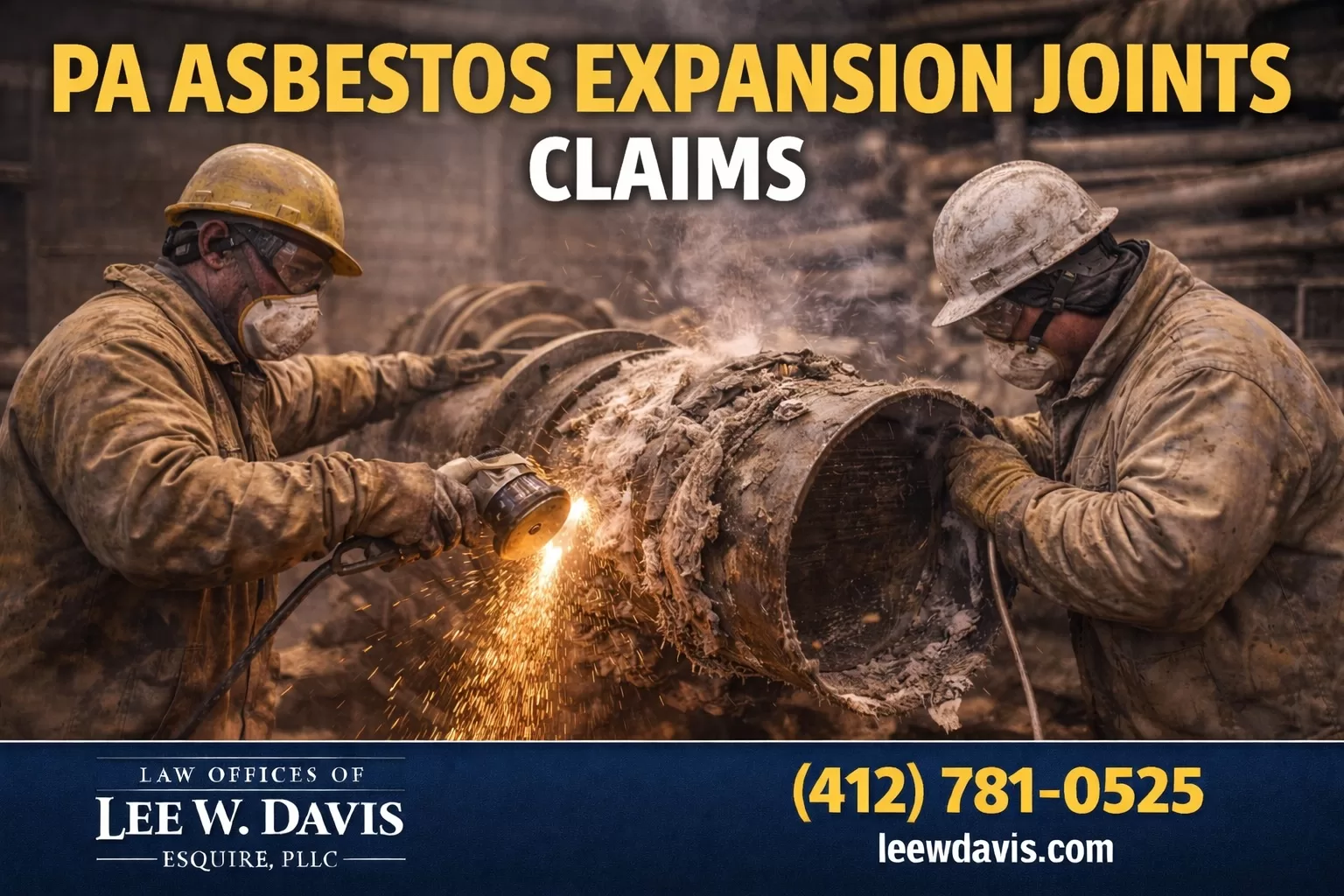
The problem is simple: when a crew had to remove, cut out, scrape, or replace an old expansion joint, the work could release asbestos dust—especially during outages, shutdowns, and emergency repairs. If you worked maintenance, mechanical, or shutdown work in Pennsylvania and you’ve been diagnosed with mesothelioma, lung cancer, or another asbestos-related disease, you may have a valid claim.

Where expansion joints showed up in Pennsylvania facilities

Expansion joints were often found in:

  • Steam and hot-water piping runs
  • Turbine and boiler systems
  • Ductwork and exhaust systems
  • High-heat process equipment
  • Flanges and connections near pumps, valves, and elbows
  • Large building mechanical rooms in older schools, hospitals, and public facilities

In many older installations, expansion joints were paired with other asbestos materials—insulation, gaskets, packing, refractory, and cement products—so the exposure picture is often layered.

If you’re building the broader proof record for a Pennsylvania claim, start with Pennsylvania Asbestos Work History.

How exposure typically happened

Most people weren’t exposed because the joint “sat there.” Exposure usually occurred when a crew disturbed it, including:

  • Cutting or grinding to remove old joint material
  • Scraping or chiseling hardened material off metal surfaces
  • Pulling out deteriorated joint fabric or filler
  • Sweeping and cleanup after removal
  • Working in confined areas where dust had nowhere to go

This kind of work frequently happened under time pressure—during outages, plant turnarounds, or emergency breakdowns—when multiple trades were stacked into the same area.

To show when the highest-risk work occurred (shutdowns, outages, specific years), use Pennsylvania Asbestos Exposure Timeline.


Who was most at risk

PA Asbestos Expansion Joints claims often involve workers such as:

  • Pipefitters and steamfitters
  • Millwrights
  • Boilermakers
  • Maintenance mechanics
  • Turbine and outage crews
  • Insulators working around disturbed material
  • Foremen and supervisors who were physically present during removal

Even if you didn’t personally “do the cutting,” being in the work area during removal, cleanup, or reassembly can still be enough to support exposure.

If coworkers can confirm the type of shutdown work and materials being removed, see PA Asbestos Jobsite Witnesses.

What proof matters most in an expansion-joint case

These cases are not won with vague statements. They are won with credible detail that matches how asbestos exposure actually occurred.

The strongest proof usually includes:

  • The facility and the years you worked there
  • Your job title and the tasks you performed
  • The type of equipment you worked on (boilers, turbines, ducting, piping)
  • The kind of joint work you saw or did (remove, scrape, replace, clean up)
  • Supporting employment, union, or jobsite documentation
  • Medical documentation confirming diagnosis

What compensation may cover

Depending on the facts, a Pennsylvania asbestos case may seek compensation for:

  • Medical treatment and related costs
  • Lost wages and loss of earning capacity
  • Pain and suffering
  • Household services and family impact
  • Wrongful death damages (where applicable)

Some claims also involve trust submissions depending on the product identification and exposure history.

If you’re also dealing with asbestos gaskets and related removal work, read PA Asbestos Gasket Removal

Call for a real case review

Expansion-joint cases come down to details—where you worked, what equipment you worked around, and when the removal work happened. If you have an asbestos-related diagnosis, I’ll evaluate your Pennsylvania work history and give you a straight answer about claim options and what evidence matters.

Start here: Pennsylvania asbestos lawyer — free case review.

Call (412) 781-0525 or reach me through leewdavis.com.

Check If Your Family Was Exposed

Get your free guide instantly + a confidential case review.

🔒 100% Confidential. No obligations.
PA Asbestos Turbine Maintenance

PA Asbestos Turbine Maintenance Claims

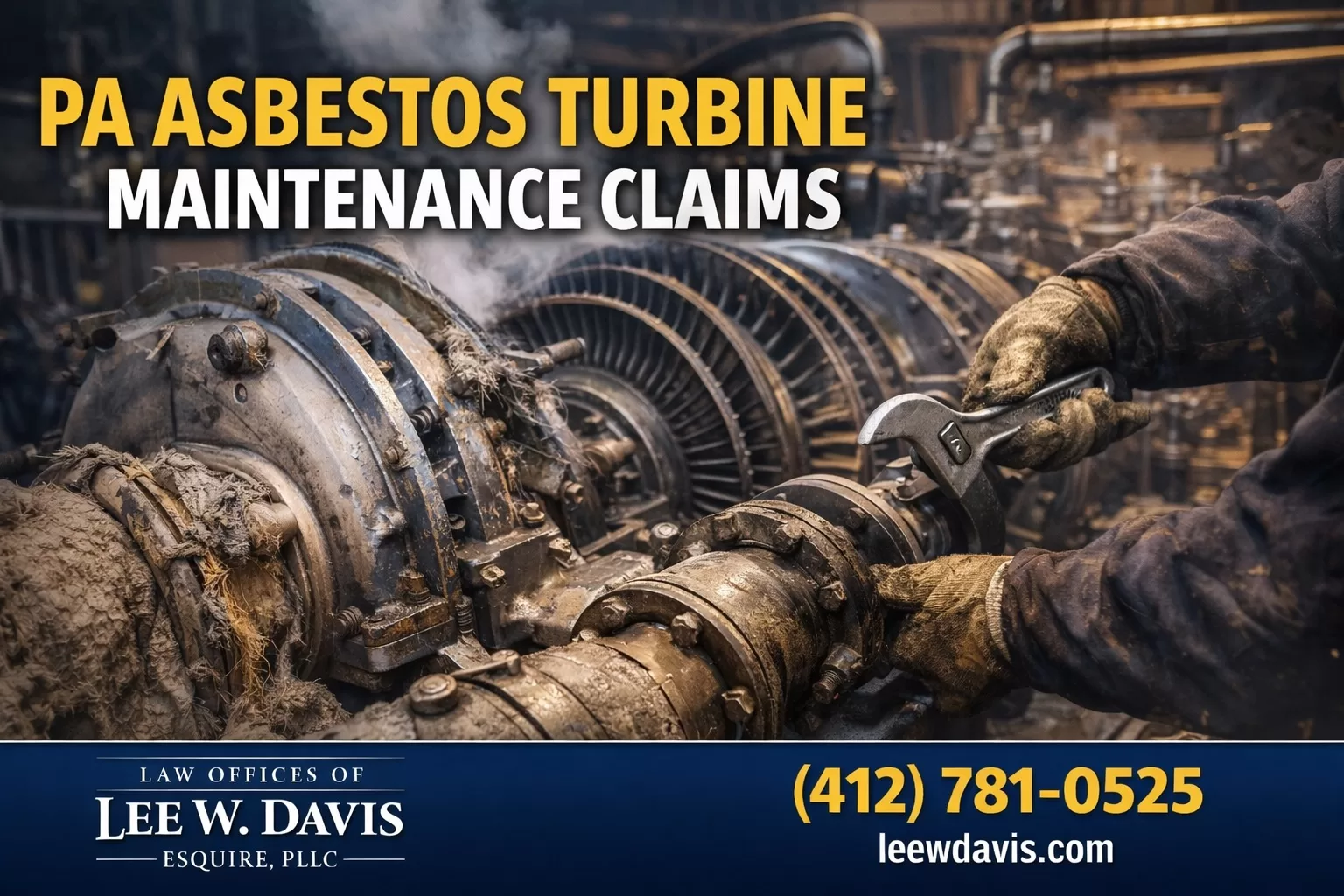
PA Asbestos Turbine Maintenance work is one of the most common industrial exposure patterns I see in Pennsylvania: outages, tight schedules, heavy insulation, and repeated hands-on contact with materials that historically contained asbestos. Turbine work often overlaps with boiler rooms, pump rooms, valve stations, and high-heat mechanical spaces—exactly where asbestos products were used for decades because they handled heat and pressure.

Mesothelioma/Asbestos Legal Help – WV, MI & PA

Speak directly with attorney Lee W. Davis. No call centers. Free, confidential review.

If you worked maintenance on turbines—steam or power generation—or you supported turnarounds as a millwright, mechanic, electrician, pipefitter, or boilermaker, you may have a valid claim if you later developed mesothelioma, asbestos lung cancer, or another asbestos disease.

Where turbine asbestos exposure usually happened

Turbine maintenance isn’t one task—it’s a cluster of jobs done in the worst possible environment for dust control:

  • Opening turbine casings during outages and overhauls
  • Scraping, wire-brushing, and cleaning flange faces
  • Removing and replacing gaskets and packing
  • Working around insulation on steam lines, turbine blankets, and adjacent piping
  • Cutting, grinding, or disturbing old lagging during access work
  • Rebuilding or servicing connected components (valves, pumps, condensate systems)

The exposure risk isn’t “mystery.” It’s usually the same few product categories showing up repeatedly in turbine areas.

Read more: Pennsylvania asbestos lawyer

What products matter in turbine claims


Most turbine cases come down to proving the asbestos-containing products you were around. The usual suspects:

  • High-temperature insulation (pipes, turbine areas, adjacent steam systems)
  • Gaskets on flanges and access covers
  • Valve packing / pump packing in connected systems
  • Cement and refractory materials in industrial settings (depending on the plant)
  • Thermal blankets and insulation wraps in some facilities

You don’t have to know brand names on day one. The goal is to narrow what you worked on, where you worked, and which product types were being used at that site and time.

The proof that actually moves a turbine case

A turbine case gets stronger when the proof package is built around work reality:

  • Job title(s) and date ranges
  • Plant/location history and departments
  • Outage/turnaround work details (what you touched, how often, where)
  • Coworker confirmation when available (even one credible witness helps)
  • Medical diagnosis documentation (pathology and treating records)
  • Any work history documents you still have (union, pension, W-2, Social Security, pay stubs, etc.)

Read more about Pennsylvania Asbestos Work History

If you have none of that in hand right now, that does not kill the case. It just tells us what we need to request and how to frame the work history so it’s consistent and provable.

👉 Search Asbestos Job Sites in Pennsylvania

What damages and defendants can look like

Turbine cases often involve multiple responsible parties, depending on the site and era:

  • Premises/plant operators (varies by facts and state law)
  • Product manufacturers (gaskets/packing/insulation/refractory)
  • Contractors or maintenance companies tied to specific work
  • Bankruptcy trusts, when applicable (for certain product lines)

A good turbine claim isn’t “one defendant.” It’s usually a layered recovery strategy that matches the exposure history.

Deadlines and timing

Pennsylvania asbestos claims are deadline-driven. In most cases, the clock is tied to diagnosis (and wrongful death has its own deadline structure). If you’re reading this because a diagnosis is fresh—or a family member has passed—move sooner rather than later. Evidence gets harder with time, not easier.

Pennsylvania Asbestos Exposure Timeline

Who this is for

This page is for Pennsylvania workers (and families) who were around turbines in:

  • Power plants and generation facilities
  • Steel mills and heavy industrial plants
  • Chemical and refinery-adjacent operations
  • Large institutional boiler/turbine systems

If your work included outages, turnarounds, or mechanical maintenance in high-heat areas, you’re exactly the kind of work history that fits turbine exposure.


Talk to a Pennsylvania asbestos lawyer who knows plant work

I’ve handled asbestos cases since 1988, and I’ve seen the same maintenance exposures repeat across decades—especially in turbine and outage work. If you have a diagnosis (or you’re calling for your family), we’ll talk through your work history, identify the most likely product exposures, and lay out a claim strategy that fits your facts.

Call (412) 781-0525 or use the contact form below to get started.

Check If Your Family Was Exposed

Get your free guide instantly + a confidential case review.

🔒 100% Confidential. No obligations.
PA Asbestos Pump Asbestos

PA Asbestos Pump Asbestos | Claim Evidence Help

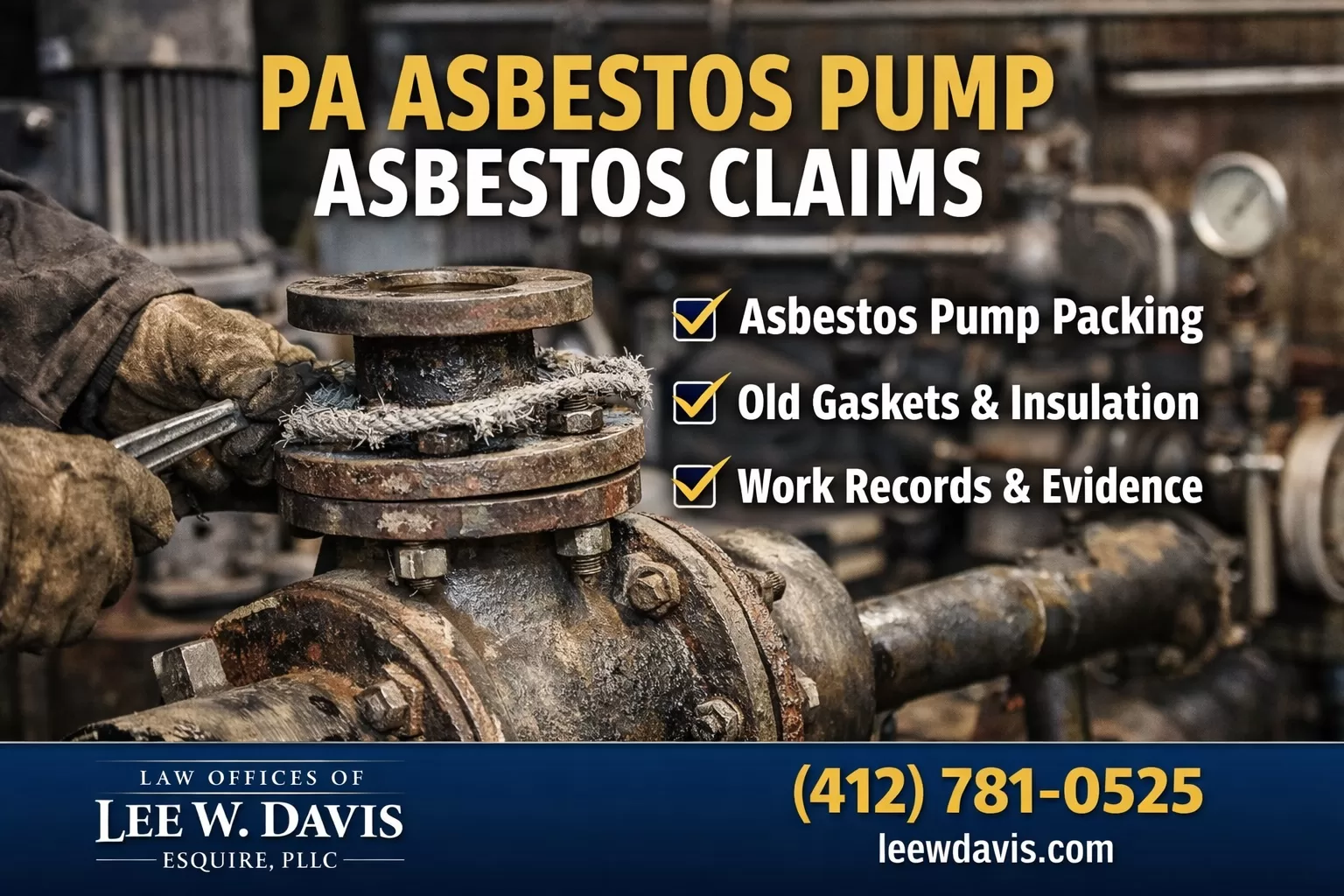
PA Asbestos Pump Asbestos exposure is one of the most common—and most overlooked—sources of occupational asbestos exposure in Pennsylvania’s industrial and utility workplaces. Pumps weren’t “just pumps.” They were systems wrapped in asbestos-containing parts that had to be opened, scraped, rebuilt, and sealed back up—often in tight boiler rooms, mechanical spaces, basements, and plant maintenance shops.

Mesothelioma/Asbestos Legal Help – WV, MI & PA

Speak directly with attorney Lee W. Davis. No call centers. Free, confidential review.

If you worked around pumps in a steel mill, power station, refinery, paper mill, chemical plant, water facility, or large commercial building, asbestos exposure may have come from the components you handled, not just the room you worked in.

For broader guidance on Pennsylvania asbestos claims, visit our Pennsylvania asbestos lawyer page

Where PA pump workers were exposed to asbestos

Asbestos exposure during pump work typically came from routine maintenance tasks—exactly the jobs that created dust:

  • Opening flanges and housings that were sealed with asbestos gaskets
  • Removing old packing from pump glands and stuffing boxes
  • Scraping, wire-brushing, or sanding residue off metal surfaces
  • Blowing out parts with air or sweeping settled debris
  • Working beside insulated piping and valves that released dust when disturbed

This is why pump work shows up across so many Pennsylvania asbestos cases: maintenance work repeats, parts fail, and the same dusty steps happen over and over.

You can also search known locations on our Asbestos Job Sites in Pennsylvania directory.

The asbestos products that show up in pump jobs

In pump-related exposure cases, the evidence often traces back to the same categories of materials:

  • Pump packing (often braided) used to seal moving shafts
  • Sheet and flange gaskets used to seal connections
  • Insulation on nearby lines and equipment in pump rooms and mechanical areas
  • Valve packing and gaskets used on related equipment in the same system

Even when the pump itself wasn’t “asbestos,” the surrounding repair materials frequently were.


Pump work often overlaps with PA Asbestos Gasket Removal and PA Asbestos Valve Packing exposures.

What makes a pump-asbestos claim strong

Most people don’t have a receipt for a gasket they scraped off 30 years ago. Real asbestos cases are built the way they’ve always been built—through credible work history and corroborating proof.

A strong claim typically includes:

  • A clear work history (who you worked for, where, and what you did)
  • A timeframe showing long-term exposure and medically consistent latency
  • Jobsite context (type of facility, department, maintenance schedule)
  • Supporting records (union, pension, Social Security, personnel, or contractor logs)
  • Medical confirmation (diagnosis and supporting imaging/pathology)

You don’t need perfection. You need credibility and enough detail to make the exposure story real.

Pump work doesn’t have to be “heavy industry” to count

Some of the most common pump exposure work happened outside mills and refineries:

  • Large commercial buildings with boiler rooms and mechanical systems
  • Hospitals, universities, and schools with legacy mechanical plants
  • Municipal water and wastewater facilities
  • Facilities maintenance for property management companies

If you were the person who got called when a pump leaked, seized, or failed, you may have been exposed—especially if you were the one scraping out old packing or cutting gasket material.

Timing matters in PA asbestos cases

Pennsylvania asbestos claims are typically driven by diagnosis-based deadlines, not the date of exposure. The legal clock often starts when you learn you have an asbestos disease—not when the work happened decades earlier. That said, waiting can still hurt a case because records disappear and witnesses become harder to find.

If you’ve been diagnosed—or you’re being evaluated—protect the evidence early.

See how latency and diagnosis timing matters on our Pennsylvania Asbestos Exposure Timeline page


Call Now

If you or a loved one has been diagnosed with mesothelioma, lung cancer, or another asbestos-related disease and your work involved pumps, I can evaluate whether PA Asbestos Pump Asbestos exposure fits your work history and what proof is realistically available.

If you’re also exploring trust options, start with Pennsylvania Asbestos Trust Claims Help

Call (412) 781-0525 or contact me through leewdavis.com for a confidential case review.

Check If Your Family Was Exposed

Get your free guide instantly + a confidential case review.

🔒 100% Confidential. No obligations.
PA Asbestos Pump Repair

PA Asbestos Pump Repair | Exposure Risks

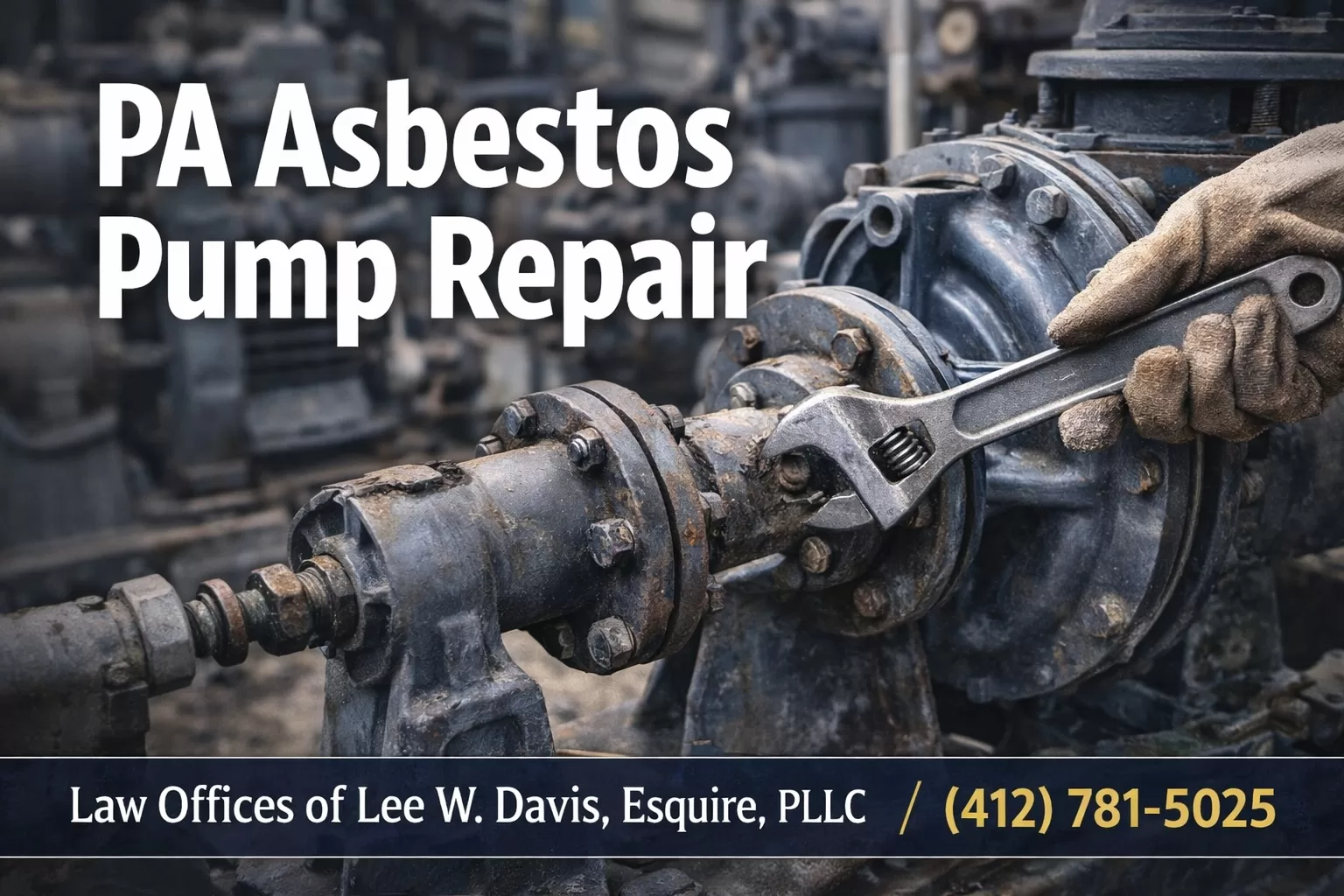
PA Asbestos Pump Repair is one of the most common ways industrial workers get hit with asbestos exposure—because pumps are serviced constantly, often under time pressure, and the work routinely disturbs old sealing materials and insulation nearby.

Mesothelioma/Asbestos Legal Help – WV, MI & PA

Speak directly with attorney Lee W. Davis. No call centers. Free, confidential review.

In Pennsylvania plants, power stations, refineries, steel facilities, and water operations, pump repair typically means opening equipment that has been sealed for years. That’s when asbestos-containing packing, gaskets, and adjacent high-heat materials can release dust—especially during tear-down, scraping, wire-brushing, or compressed-air cleanup.

Read more: Pittsburgh asbestos lawyer

Where asbestos shows up during pump work

Pump work rarely happens in a clean, isolated area. Asbestos exposure can come from:

  • Valve and pump packing removed from stuffing boxes and glands
  • Flange gaskets cut, scraped, or sanded off mating surfaces
  • Insulation and refractory nearby (hot lines, elbows, boiler room areas) disturbed during access and rigging
  • Old maintenance debris swept, vacuumed improperly, or blown out with air

High-risk pump repair tasks

If you’ve done pump work in PA, these are the moments that matter:

  • Pulling old packing rings and cleaning the stuffing box
  • Scraping gasket material off flanges (especially “baked-on” gasket faces)
  • Wire-wheeling, sanding, or using a gasket remover wheel
  • Seal swaps and teardown during shutdowns
  • Sweeping/cleanup after repair work or insulation removal nearby


What makes a pump-repair asbestos claim credible

Pump exposure cases win on specifics. The strongest proof usually comes from:

  • Work history (where you worked, what you maintained, what years)
  • Task detail (packing removal, gasket scraping, seal work, shutdown work)
  • Product/brand identification when available (even partial is useful)
  • Coworker confirmation for the same tasks and areas
  • Medical proof tying disease to occupational exposure history

Learn More: Pennsylvania Asbestos Product Identification

I’ve been building product-and-task identification the hard way since I started as a paralegal in 1988—through high-volume foundry litigation in Saginaw, and then through years of direct client work developing legitimate exposure proof in individual asbestos cases. Pump repair work is not “generic.” It’s concrete. It leaves a pattern. And when the evidence is built correctly, it holds up.

Link Western Pennsylvania Pump Asbestos → https://leewdavis.com/western-pennsylvania-pump-asbestos/

FAQs

1) Is pump packing always asbestos?

Not always. But older installations and older maintenance cycles frequently involved asbestos-containing packing and gasket materials—especially in high-heat or industrial settings.

2) Does it count if I didn’t handle insulation?

Yes. Pump repair exposure often comes from packing and gasket work, and from dust in the immediate maintenance area—even if you weren’t the insulation crew.

3) What if I can’t remember product names?

That’s common. Claims can still be proven through task detail, facility type, time period, maintenance routines, and coworker confirmation.


Call to talk it through

If you worked pump maintenance or shutdown repairs and you’re now facing mesothelioma, lung cancer, or another asbestos disease, call my office. I’ll evaluate whether your pump repair tasks and work history support a legitimate Pennsylvania asbestos claim.

Law Offices of Lee W. Davis, Esquire, PLLC

(412) 781-0525 | leewdavis.com

PA Asbestos Valve Packing

PA Asbestos Valve Packing Claims Help

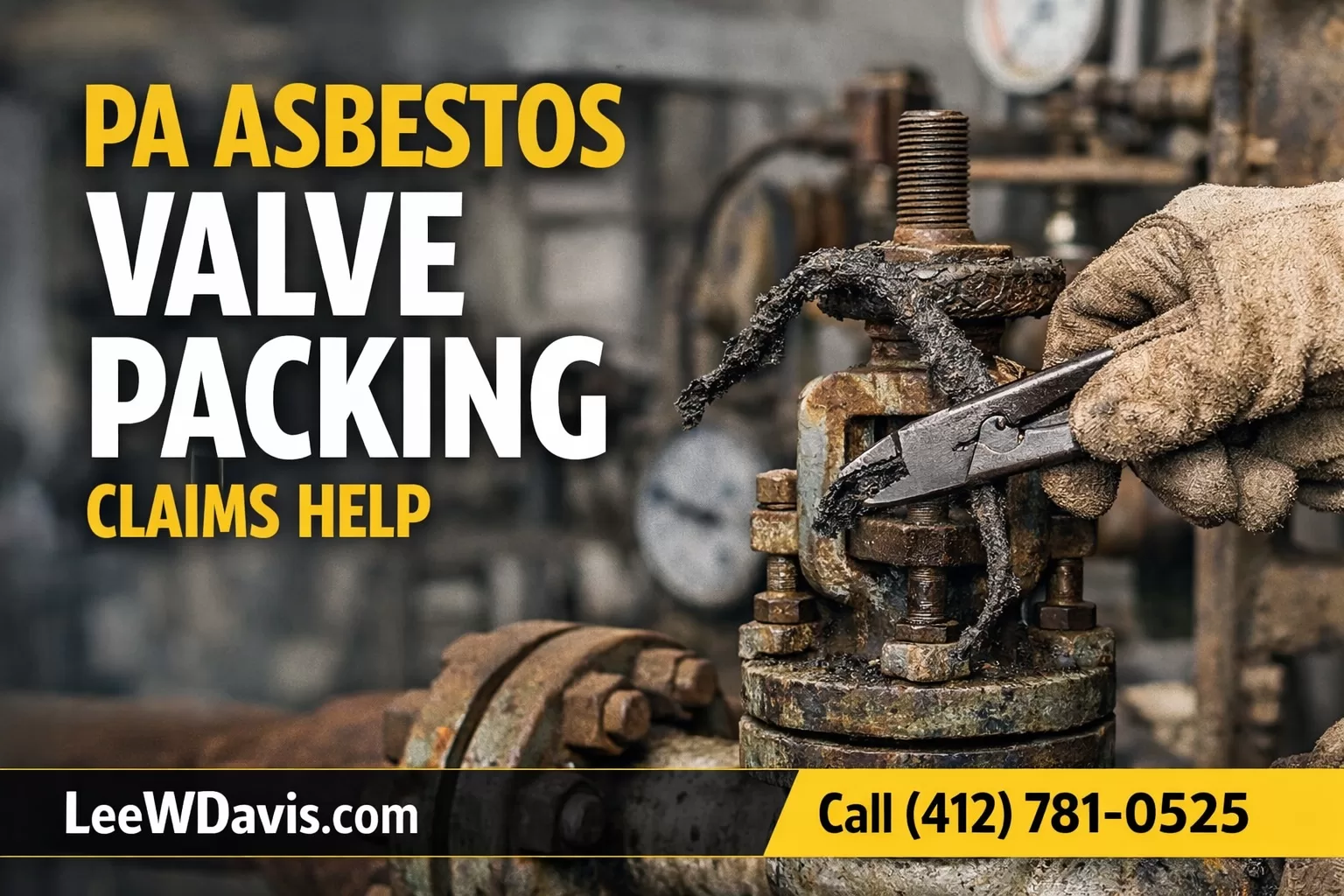
PA Asbestos Valve Packing exposure is a real issue for Pennsylvania workers who maintained pumps, valves, turbines, boilers, and high-heat piping systems in mills, power plants, refineries, and industrial facilities. If you handled rope packing, braided packing, or “stem packing” during tear-downs and rebuilds—especially dry, brittle material that crumbled when pulled—you may have inhaled asbestos fibers without ever being warned.

Mesothelioma/Asbestos Legal Help – WV, MI & PA

Speak directly with attorney Lee W. Davis. No call centers. Free, confidential review.

Read More: Pennsylvania asbestos lawyer

Where asbestos valve packing shows up in Pennsylvania work

Asbestos packing was used because it handled heat, pressure, and chemicals. The problem is what happens during maintenance: packing gets scraped out, pulled, cut, wire-brushed, and replaced—exactly the kind of work that creates dust.

Pennsylvania Asbestos Job Sites include:

  • Powerhouses, boiler rooms, and turbine decks
  • Steel mills, coke plants, and foundries
  • Chemical plants and refineries
  • Paper mills, glass plants, and heavy manufacturing shops
  • Shipyards and rail-related industrial maintenance facilities

The tasks that create the exposure

Most people don’t get exposed because the packing “exists.” They get exposed when it’s disturbed.

High-risk tasks:

  • Pulling old packing from valve stems or pump housings
  • Cutting packing rings to size (especially dry rope packing)
  • Scraping out hardened residue and cleaning the stuffing box
  • Blowing out dust with compressed air
  • Grinding or wire-brushing flanges and valve surfaces nearby

Why valve packing cases are often provable

These cases can be proven with practical evidence that real workers can actually produce—work history, jobsite proof, and task descriptions that match how maintenance is done in the field. You don’t need perfect records to build a legitimate claim, but you do need a coherent proof package.

The proof usually comes from:

  • Your work history (where you worked, what you did, what you serviced)
  • Jobsite context (industrial setting, departments, maintenance routines)
  • Product identification (packing type, brands you remember, equipment you serviced)
  • Medical proof (diagnosis and causation evidence from treating providers)

FAQs

1) Is valve packing the same thing as a gasket?

No. Packing is typically rope/braided material used around rotating or moving parts (like valve stems or pump shafts). Gaskets seal between flanges.

2) What if I don’t remember the brand name of the packing?

That’s common. We can often build credible product identification through the jobsite, the equipment you worked on, and how the maintenance was done.

3) What diseases are linked to asbestos exposure from maintenance work?

Mesothelioma, asbestos-related lung cancer, and other serious asbestos diseases have been linked to repeated inhalation exposure during industrial maintenance tasks.


Call Now

If you worked industrial maintenance in Pennsylvania and you were the person pulling packing, rebuilding valves, or cleaning out old equipment, I know exactly what that work looked like—because I’ve been building asbestos product identification proof since 1988, long before digital records were easy to get. That same product-and-task evidence model carried through the Saginaw foundry casework and into individual Pennsylvania and West Virginia mesothelioma and lung cancer cases where the details actually decide whether a claim gets paid.

If you want a straight answer on whether your valve packing exposure supports a claim, call (412) 781-0525 or visit leewdavis.com for a confidential case review.

Check If Your Family Was Exposed

Get your free guide instantly + a confidential case review.

🔒 100% Confidential. No obligations.
Read More: Pittsburgh asbestos lawyer

PA Asbestos Cement Pipe

PA Asbestos Cement Pipe Claims Help

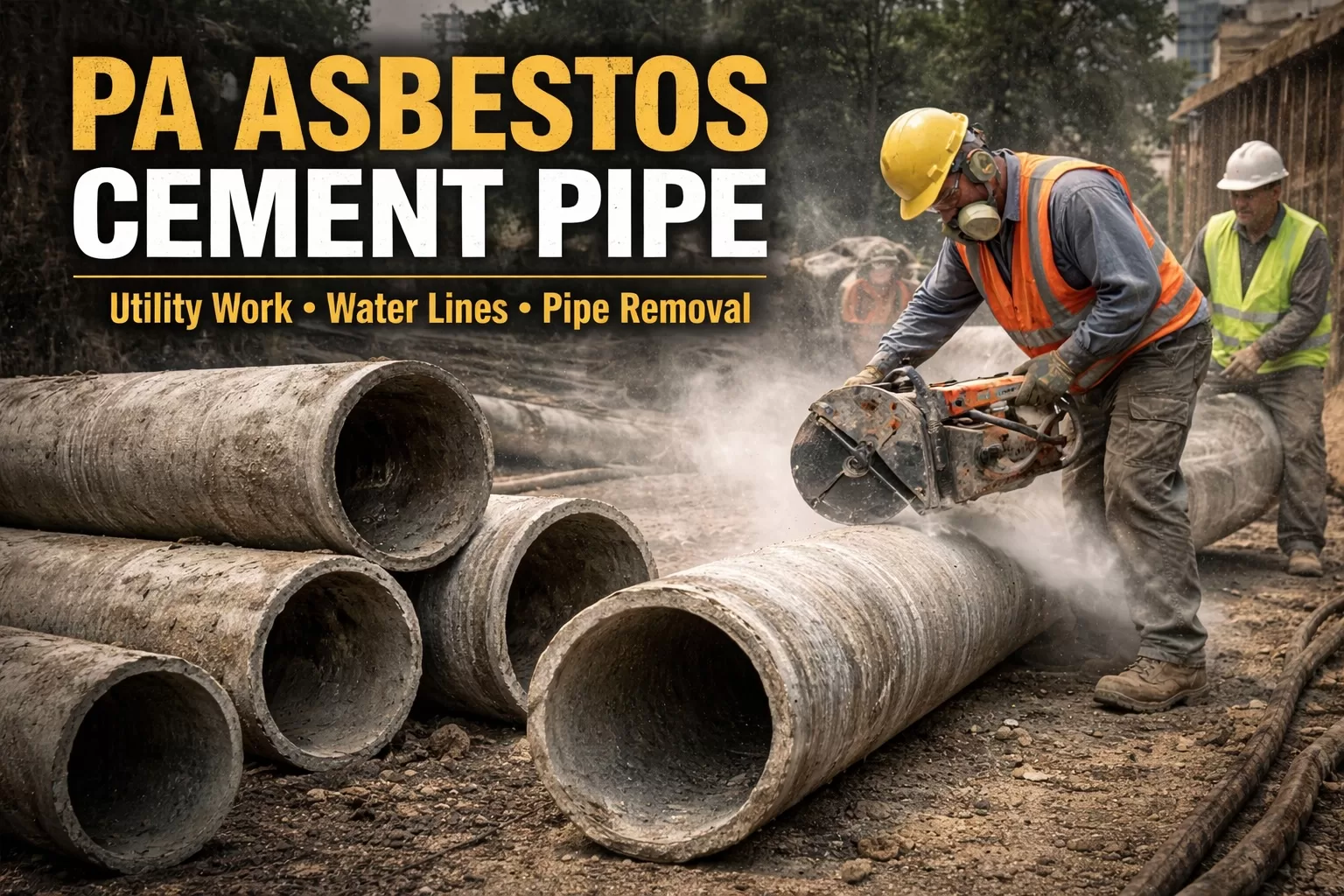
PA Asbestos Cement Pipe shows up in the exact places Pennsylvania workers didn’t expect asbestos to be hiding: buried utility lines, water systems, industrial service lines, older municipal projects, and maintenance work where dust control was never part of the plan. If you cut it, drilled it, tapped it, sawed it, ground it, or removed it, you may have inhaled asbestos fibers even if nobody ever called it “asbestos” on the job.

Mesothelioma/Asbestos Legal Help – WV, MI & PA

Speak directly with attorney Lee W. Davis. No call centers. Free, confidential review.

This isn’t a “maybe” exposure product. When asbestos cement pipe is disturbed, it can release respirable fibers—especially during dry cutting, core drilling, breaking, snapping, sanding, and disposal.

PA Asbestos Product Identification

What is asbestos cement pipe?

Asbestos cement pipe (often abbreviated AC pipe) was commonly used for water and utility applications because it was durable, corrosion-resistant, and inexpensive. The problem is what it was made with: asbestos fibers were incorporated into the cement matrix. The material can hold together when intact and undisturbed—but work that creates dust is where the danger starts.

Where PA workers typically ran into asbestos cement pipe

If you worked in any of the roles below, PA Asbestos Cement Pipe should be on your radar:

  • Municipal water department and water authority crews
  • Sewer and stormwater crews
  • Utility contractors and laborers
  • Excavation and trenching crews
  • Heavy equipment operators working around pipe replacement
  • Plumbers and pipefitters on older lines or tie-ins
  • Road crews and public works employees encountering buried pipe during projects
  • Industrial maintenance crews dealing with service lines and plant piping

And yes—some workers were exposed without “installing pipe” at all: you can get hit just being near the cut zone, handling debris, cleaning up, loading broken sections, or working downwind of dust.


The tasks that matter most in a claim

In asbestos cases, it’s rarely the job title that wins the case. It’s the task. If you did any of the following, that’s the proof pathway:

  • Cutting AC pipe with a saw (especially dry cutting)
  • Drilling/tapping for service connections
  • Breaking or snapping pipe during removal
  • Grinding ends or beveling sections to fit
  • Handling broken pipe and sweeping/cleanup
  • Bagging, loading, hauling, or dumping debris
  • Working in trenches where dust collected

These are the activities that generate the kind of airborne dust that shows up in real-world exposure histories.

What you need to prove a Pennsylvania asbestos cement pipe claim

A strong claim is built the same way every time: credible work history + credible product exposure + credible medical proof.

1) Work history

Where you worked, what you did, and when. Dates matter because latency matters.


For the foundation of the case—where you worked and what you did—see 
Pennsylvania Asbestos Work History

2) Product identification

You don’t need a perfect memory of brand names to start. But you do need a credible description of the product and the work:

  • AC pipe used for water lines
  • How it was cut/removed
  • What dust conditions were like
  • Whether PPE or wet methods were used (often “no”)

If you need a clean way to lock in your exposure facts, use Pennsylvania Asbestos Exposure Affidavit

3) Medical documentation

Diagnosis drives the claim. Mesothelioma is the clearest, but lung cancer and other asbestos-related disease claims may be viable depending on exposure and medical records.
To explain latency and why diagnosis timing matters, review Pennsylvania Asbestos Exposure Timeline

Who is responsible?

In these cases, liability often traces to:

  • Manufacturers and sellers of asbestos cement pipe and related products
  • Contractors who repeatedly installed/removed it across PA projects
  • Other asbestos-containing materials used alongside the work (packing, gaskets, insulation, cement products)

You don’t guess your way through that. You build it from records, witness proof, and jobsite pattern evidence.

Don’t guess on timing—read PA Asbestos Claim Deadlines.

The time limit question

Pennsylvania asbestos claims usually turn on when you were diagnosed—not when you were exposed decades ago. That’s why people who worked around asbestos in the 1970s, 1980s, or 1990s can still have valid claims today after a diagnosis. If you’re reading this because you or your family just got life-changing medical news, don’t wait around for “later.”

Call to talk through PA Asbestos Cement Pipe exposure

I’ve been doing product identification work since I started in this field as a paralegal in 1988—long before “asbestos databases” and canned checklists. I’ve handled heavy-volume industrial work, including the Saginaw foundry cases, and I’ve worked directly with people in real-world Pennsylvania cases to build exposure proof that holds up—work history, tasks, products, witnesses, and medical documentation. That’s what decides whether a claim gets paid or gets discounted.

For broader guidance and a case review, visit Pittsburgh asbestos lawyer

If you believe PA Asbestos Cement Pipe dust was part of your work—and you’re now facing mesothelioma, lung cancer, or another asbestos-related diagnosis—call me. We’ll talk straight about whether you have a claim and what proof matters most.

(412) 781-0525leewdavis.com

Check If Your Family Was Exposed

Get your free guide instantly + a confidential case review.

🔒 100% Confidential. No obligations.
PA Asbestos Gasket Removal

PA Asbestos Gasket Removal

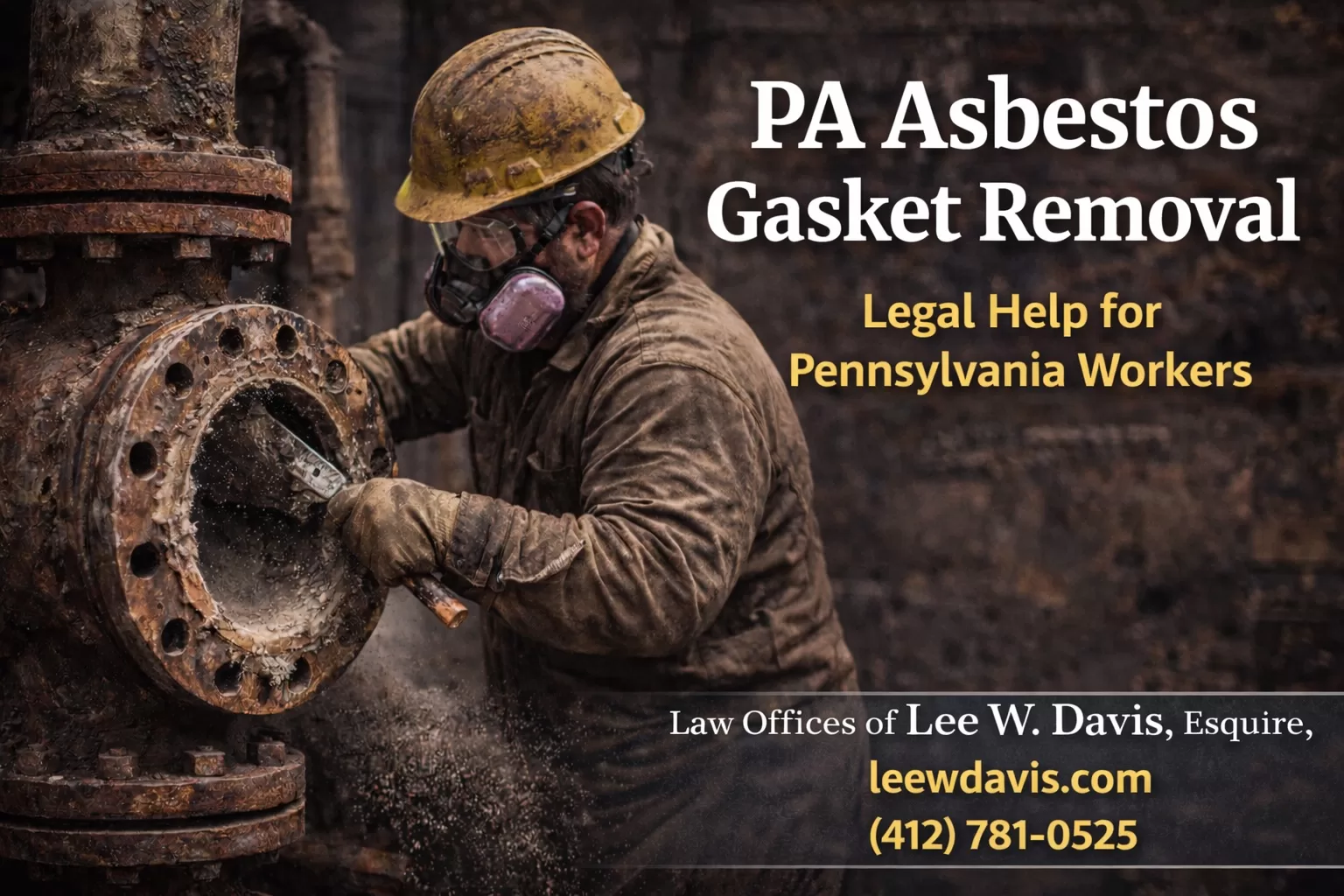
PA Asbestos Gasket Removal is one of the most common (and most provable) sources of occupational asbestos exposure in Pennsylvania industrial work. The risk isn’t “standing near asbestos.” The risk is the task: scraping, wire-brushing, cutting, grinding, or pulling old gaskets off flanges, valves, pumps, compressors, heat exchangers, and boiler doors—especially when the material is dry, brittle, and stuck like concrete. That is when the fibers release.

Mesothelioma/Asbestos Legal Help – WV, MI & PA

Speak directly with attorney Lee W. Davis. No call centers. Free, confidential review.

I’ve built cases around this exact exposure pattern for decades—because gasket work leaves a recognizable footprint in the work history, the jobsite, the equipment, and the product universe that was actually used.

Where gasket exposure happens in Pennsylvania

Gasket removal shows up across Pennsylvania in places that run hot, pressurized, or corrosive systems:

  • Powerhouses and boiler rooms (steam, feedwater, blowdown, condensate)
  • Steel mills, coke works, and fabrication shops
  • Chemical plants and refineries (process piping, exchangers, pumps, reactors)
  • Paper mills and food plants (maintenance shutdowns, washdowns, rebuilds)
  • Municipal and institutional plants (schools, hospitals, universities)

If you did “maintenance,” “shutdowns,” “turnarounds,” “overhauls,” or “outage work,” gasket removal is usually part of it—even if nobody called it that.

Who is most at risk

The highest-risk roles are the trades that are actually hands-on with flanges and equipment:

  • Pipefitters / steamfitters
  • Millwrights and industrial maintenance mechanics
  • Boiler operators and stationary engineers (when they help on outages)
  • Machinists and pump/valve rebuilders
  • Welders and riggers (when they prep or clean flanges)
  • Laborers assigned to tear-out and cleanup

And the risk isn’t limited to one day. Gasket exposure is often repeated, routine, and spread across years, which matters when you’re proving dose and causation.


What “gasket removal” really looks like (and why it matters)

In real life, it’s not a neat “remove gasket” checkbox. It’s:

  • Breaking flanges and popping old gaskets loose
  • Scraping gasket faces with a razor scraper or gasket scraper
  • Wire brushing residue off flange faces
  • Using a grinder, Roloc disc, or emery cloth to clean the surface
  • Sweeping up dust after the fact (often dry sweeping)

That last part—cleanup—often generates as much exposure as removal.

How to prove a PA gasket case without guessing

A strong PA Asbestos Gasket Removal claim is built like a workmanlike proof package, not a story.

1) Lock down the work history (where and when).

You want job titles, employers, worksites, and date ranges. If you worked through halls, locals, contractors, or outages, you want that too. Start with your base timeline and then fill gaps job-by-job.

Read More: Pennsylvania asbestos exposure timeline

2) Identify the equipment and tasks (what you touched).

Pumps, valves, turbines, compressors, boilers, exchangers, and piping systems matter because they narrow the product universe. “Worked in the powerhouse” is vague. “Rebuilt pumps and changed flange gaskets during outages” is proof.

3) Product identification: narrow it to what was actually used.

This is where most cases are won or lost. Not every gasket was asbestos—but plenty were, and many facilities used the same gasket sheet materials, packing, and brands for years. A credible case identifies the kinds of gasket materials used, the brands people actually saw, and the departments where it happened.

Read More: Pennsylvania asbestos product identification

4) Pick the right defendants and match them to the exposure.

Once you know the task + equipment + jobsite + time frame, you can identify likely manufacturers and suppliers tied to that work. This avoids “kitchen sink” pleading and keeps the case credible.

Read More: Pittsburgh asbestos lawyer

5) Decide whether an asbestos trust claim is part of the strategy.

Some gasket/product exposures line up with trust pathways depending on jobsite, era, and product. Trust claims can also provide documentation leverage and additional recovery, depending on the overall case.

Read More: Pennsylvania asbestos trust claims

Mesothelioma/Asbestos Legal Help – WV, MI & PA

Speak directly with attorney Lee W. Davis. No call centers. Free, confidential review.

Common fact patterns that are strong

If you recognize any of these, that’s usually a solid starting point:

  • Outage work in a powerhouse, steel mill, or chemical plant with repeated flange breaks
  • Maintenance mechanic work involving pumps/valves and shutdown cleanup
  • “Gasket scraping” paired with packing removal on valves and pumps
  • Work in tight mechanical rooms with poor ventilation and dust control
  • Long-term trade work across multiple sites where the same tasks repeat

What to do next

If you were diagnosed with mesothelioma, lung cancer, or another asbestos-related disease and your history includes gasket removal work, don’t wait around hoping the paperwork magically appears. The claim is built by reconstructing the real work, then matching it to the right product and defendant proof.

If the case involves a death in the family, the timeline is even more critical and the claim structure changes: mesothelioma wrongful death claim


Free Case Review

If your background includes PA Asbestos Gasket Removal work—pipe, valves, pumps, boiler doors, shutdowns, scraping and cleanup—call my office and we’ll evaluate it directly and tell you what the claim needs and whether it’s viable.

Law Offices of Lee W. Davis, Esquire, PLLC

(412) 781-0525

leewdavis.com

Check If Your Family Was Exposed

Get your free guide instantly + a confidential case review.

🔒 100% Confidential. No obligations.
PA Insulation Asbestos Exposure

PA Insulation Asbestos Exposure Claims

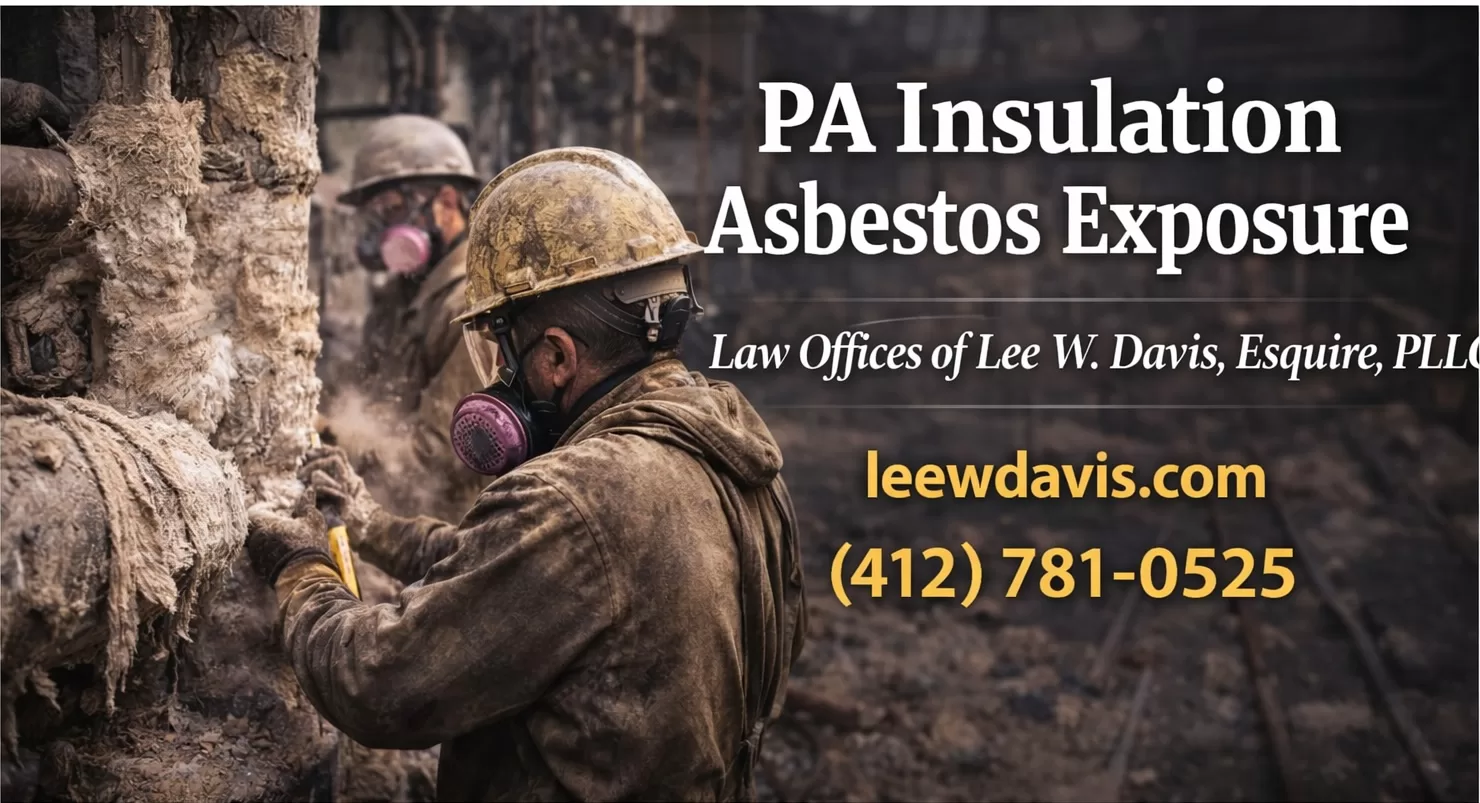
PA Insulation Asbestos Exposure is one of the most common pathways to mesothelioma and asbestos-related lung cancer in Pennsylvania industrial work. For decades, insulation was treated as “standard protection” in boilers, pipe runs, turbines, pumps, furnaces, heaters, and high-heat equipment—especially in steel, power generation, rail, chemical, and heavy manufacturing. The problem is simple: much of that insulation contained asbestos, and it was often cut, mixed, removed, scraped, or disturbed without warning and without adequate protection.

Read about Pittsburgh asbestos lawyer

If you worked maintenance, operations, millwright work, pipefitting, electrical, boiler work, or shutdown/turnaround crews, you may have been around asbestos insulation even if your job title never said “insulation” and even if you didn’t handle it every day. In real cases, exposure comes from routine tasks—opening a valve, pulling a line, replacing a gasket, tearing out old lagging, or working beside another trade while insulation is disturbed and dust spreads into the air.

Where insulation exposure happens in Pennsylvania

Insulation-related exposure shows up again and again in the same environments:

  • Boiler rooms and mechanical rooms (schools, hospitals, factories, municipal buildings)
  • Steel mills and coke works (hot equipment, lines, and high-heat containment)
  • Power plants (turbines, boilers, piping systems, maintenance outages)
  • Refineries and chemical plants (process lines, heat tracing, high-temperature operations)
  • Shipyards, rail facilities, and industrial repair shops (equipment rebuilds and retrofits)
  • Shutdowns and turnarounds where old materials get disturbed quickly, often under pressure

Even “minor” insulation disturbance can matter. Cutting, sanding, pulling, or breaking aged insulation often releases fibers. And exposure is rarely a single event—most people with serious disease were exposed repeatedly over years.

What “asbestos insulation” can look like

In Pennsylvania cases, “insulation” can mean several asbestos-containing materials, including:

  • Pipe insulation and block insulation (often white/gray, brittle when aged)
  • Lagging and wrap around lines, elbows, and fittings
  • Boiler and tank insulation used to hold heat and protect surfaces
  • Cement and insulating mud used at joints and fittings
  • Thermal blankets and high-heat barriers in industrial settings
  • Associated materials like gaskets and packing used in the same systems

If you’re not sure what you saw, that’s normal. The question is not whether you can identify a brand name from memory today. The real question is whether your work put you around the kinds of systems and maintenance tasks where asbestos insulation was commonly used.

When an insulation case becomes a real claim

A legitimate PA insulation case is built around three basic pillars:

  1. Diagnosis (mesothelioma, asbestos-related lung cancer, or another asbestos disease)
  2. Work history showing credible exposure opportunities
  3. Product/company identification tied to the worksite and time period

Pennsylvania asbestos product identification

That last part—identification—is where many firms get sloppy. I don’t. I’ve been doing product identification work since I started in this field in 1988. That skill carried through large-scale foundry work (including the Saginaw GM foundry docket) and into years of Pennsylvania and West Virginia mesothelioma and lung cancer cases where the only way to win is to build credible proof that holds up.

What you should do if you suspect insulation exposure

If you or a family member has been diagnosed and the work history includes high-heat industrial environments, don’t talk yourself out of it because you “weren’t an insulator.” Many of the strongest cases involve other trades who worked in and around insulation every week.

Start by pulling together:

  • A basic list of jobsites, dates, and job titles
  • The types of work you did (maintenance, outage work, boiler work, pipe work, equipment rebuilds)
  • Names of coworkers who remember how the work was done
  • Any documents you already have (union history, medical records, employment records)

You do not need a perfect file to call. You need a starting point.

👉 Search Asbestos Job Sites in Pennsylvania


If you were exposed in a Pennsylvania plant, mill, power station, shop, or boiler room and you’ve now been diagnosed with mesothelioma or asbestos-related lung cancer, you need a lawyer who knows how to prove exposure—not someone who just “collects paperwork.” Product identification has been my focus since 1988, through major industrial dockets and decades of hands-on casework. Call (412) 781-0525 or visit leewdavis.com to get a direct case review.

Pennsylvania Asbestos Plant Shutdowns

Pennsylvania Asbestos Plant Shutdowns | Claim Help

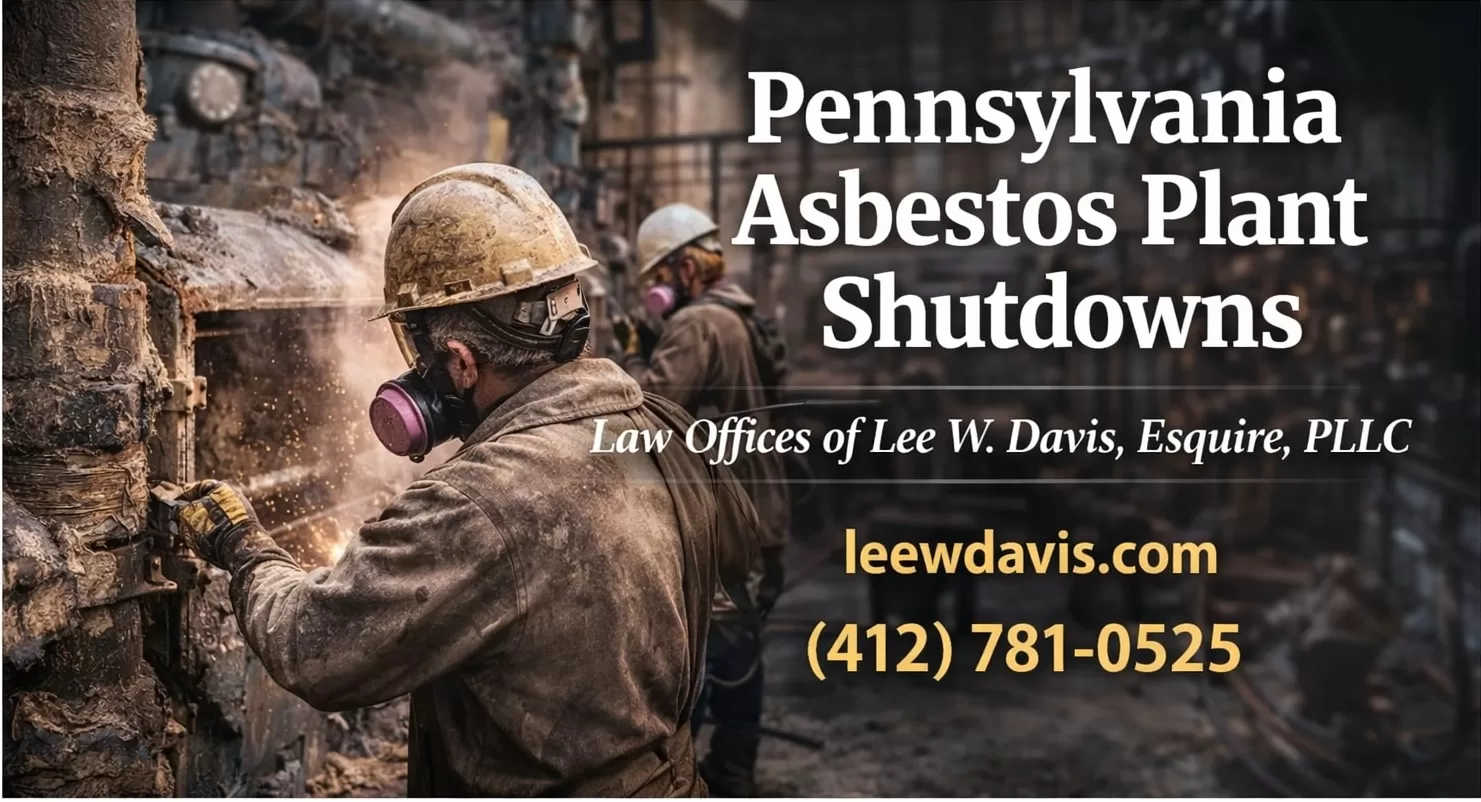
Pennsylvania asbestos plant shutdowns are one of the most common times workers get hit with the heaviest exposure. When a mill, refinery, power station, or manufacturing plant goes offline for a turnaround, everything that’s normally sealed up gets opened—insulation comes off, gaskets get scraped, refractory gets chipped out, valves and pumps are rebuilt, and old equipment gets torn down fast. If asbestos was anywhere in that system, a shutdown can turn it into dust.

Mesothelioma/Asbestos Legal Help – WV, MI & PA

Speak directly with attorney Lee W. Davis. No call centers. Free, confidential review.

If you worked shutdowns in Western Pennsylvania—or traveled job-to-job as a contractor, union trade, or maintenance worker—and later developed mesothelioma, lung cancer, or another asbestos disease, you may have a valid claim.

For broader guidance and a case review, start here: Pittsburgh asbestos lawyer


Why shutdown work is a high-exposure moment

Shutdowns create the perfect storm:

  • High heat systems get opened up. Boilers, steam lines, turbines, exchangers, ovens, and process piping often had asbestos insulation or refractory nearby.
  • Old parts get disturbed. Gaskets, packing, rope, cloth, cement, board, and insulation are removed and replaced.
  • Multiple trades work in the same space. Even if you weren’t the person cutting insulation, you can breathe what someone else disturbed.
  • Speed matters more than safety. Outages run on tight deadlines. Dust control and containment often come second.

The risk isn’t theoretical. A shutdown job can concentrate exposure into a short period—days or weeks—especially in enclosed areas like boiler rooms, pipe chases, mechanical rooms, or around process units.


What counts as a “plant shutdown” for claim purposes?

In plain English: if the facility went offline to do major work, it likely counts. That includes:

  • Turnarounds / outages
  • Maintenance shutdowns
  • Rebuilds / retrofits
  • Demolition and tear-out
  • Emergency repairs after failures

The label doesn’t matter as much as what happened: materials were disturbed, and you were there.


How shutdown claims are proven

The key isn’t just “I worked there.” It’s what you worked on and what products/materials were in play.

Strong evidence usually comes from a combination of:

  • Work history (where you worked, dates, job titles, trades, contractors)
  • Union records or dispatch logs
  • Coworker statements from people who remember the job and the materials
  • Plant/jobsite documentation (maintenance records, outage schedules, contractor rosters)
  • Product identification (brands and types of insulation, gaskets, packing, refractory, cement, etc.)
  • Medical proof (pathology, imaging, diagnosis records)

If you want to understand the “product side” of the proof, see Pennsylvania Asbestos Product Identification. If you’re gathering sworn statements, see Pennsylvania Asbestos Exposure Affidavit. If trust claims are part of your recovery path, see Pennsylvania Asbestos Trust Claims Help.


Common shutdown exposure scenarios I see in Pennsylvania

These patterns repeat across decades of industrial work:

  • Pipefitters and welders working around insulated piping and steam systems
  • Millwrights and mechanics rebuilding pumps, compressors, turbines, and rotating equipment
  • Electricians in dusty mechanical spaces with old insulation and panel components nearby
  • Boilermakers doing tear-out and rebuild work around boilers, refractory, and insulation
  • Laborers and cleanup crews sweeping, bagging, and hauling debris after tear-out

Often the person most exposed is the one doing the dirty “support work,” not the person whose name is on the work order.


Call if you worked shutdowns and were later diagnosed

I have focused on asbestos product identification and proof since I started in this field as a paralegal in 1988, through the Saginaw foundry cases, and then through years of West Virginia mesothelioma and lung cancer cases—working directly with clients to build credible exposure evidence that holds up.

If you or a loved one has been diagnosed and shutdown work is part of the history, call my office. We’ll talk through where you worked, what you did, and what evidence still exists.

Law Offices of Lee W. Davis, Esquire, PLLC

Call (412) 781-0525 for a confidential case review.

Check If Your Family Was Exposed

Get your free guide instantly + a confidential case review.

🔒 100% Confidential. No obligations.

FAQs

What if I only worked a few shutdowns years ago?

Short shutdown jobs can still matter. A concentrated exposure during a tear-out or rebuild can be enough to support a claim, especially when the work involved insulation, gaskets, packing, or refractory.

Do I need to remember exact product names?

Not always. Product identification can be developed through job records, union records, coworker proof, and known materials used in similar systems during the same era.

Can I file a claim if the plant is closed or the company is gone?

Yes. Many cases involve bankrupt manufacturers and asbestos trust claims, and others involve successor liability or remaining solvent defendants depending on the facts.

Mesothelioma/Asbestos Legal Help – WV, MI & PA

Speak directly with attorney Lee W. Davis. No call centers. Free, confidential review.

PA Asbestos Pay Stubs: When Payroll Records Prove Exposure

PA Asbestos Pay Stubs | Proof for Claims

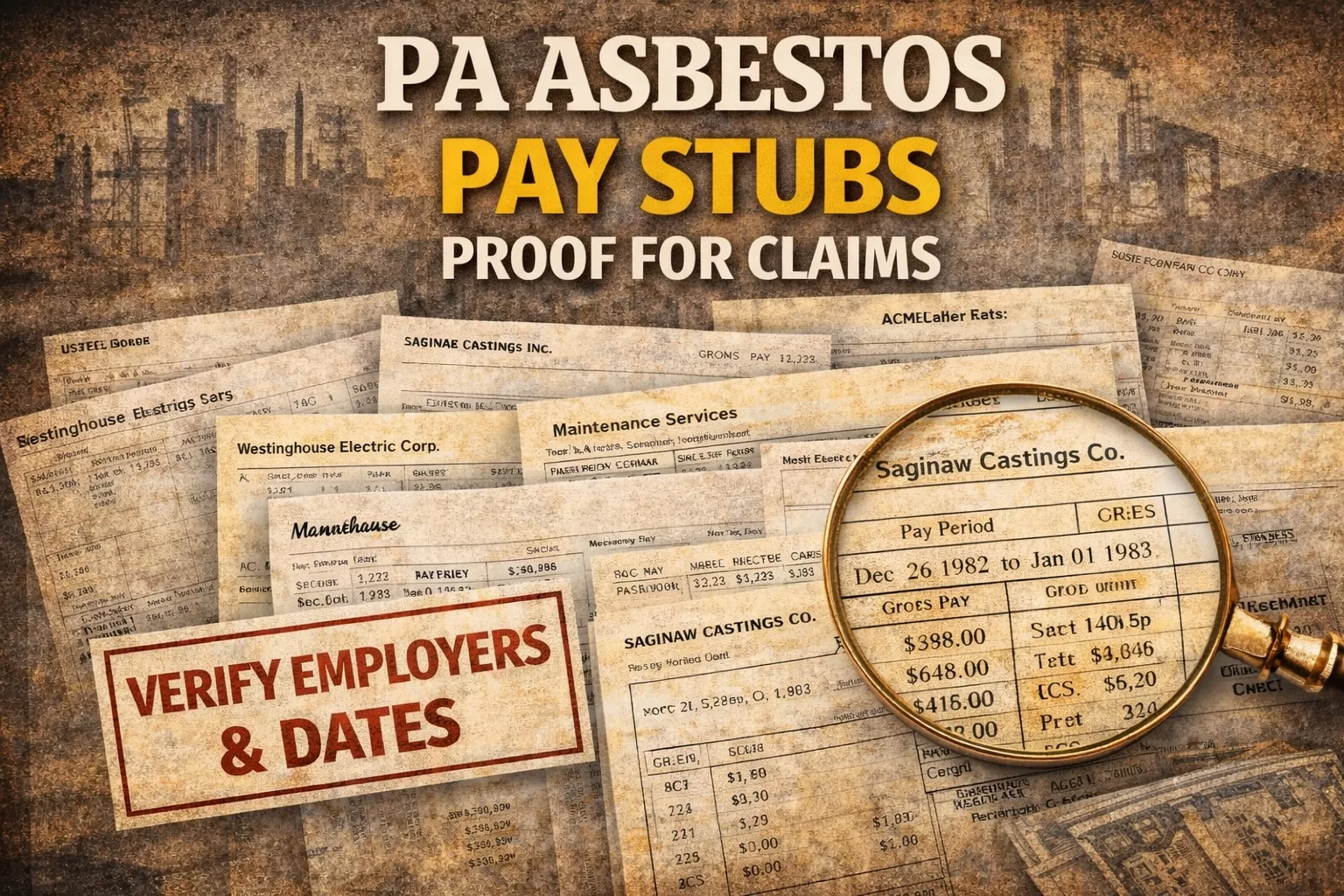
PA Asbestos Pay Stubs can be one of the most overlooked pieces of evidence in a Pennsylvania asbestos case—especially when the company is gone, the jobsite has changed hands, or your official personnel file “can’t be found.” Pay stubs don’t list “asbestos,” but they can lock down the facts that matter: who paid you, when you worked, and sometimes where you worked.

Mesothelioma/Asbestos Legal Help – WV, MI & PA

Speak directly with attorney Lee W. Davis. No call centers. Free, confidential review.

If you’re building a claim after a mesothelioma or asbestos lung cancer diagnosis, proof is everything. The strongest cases are the ones that can be documented, not just described.

What pay stubs can prove in a Pennsylvania asbestos case

Pay stubs can help confirm:

  • Employer identity (including corporate names that differ from the “nickname” everyone used)
  • Work dates (start/stop windows that match product use and job phases)
  • Job classifications (sometimes listed on payroll systems or union wage lines)
  • Overtime and shutdown periods (often when exposure was highest—tear-outs, rebuilds, maintenance)

Even a partial set of stubs can establish a reliable work timeline when memories are fuzzy or records are incomplete.

Where to find old pay stubs

Depending on the employer and era, pay stubs may be available from:

  • The employer’s payroll provider (current HR/payroll department if the company still exists)
  • A successor company after a sale/merger
  • Union benefit offices or pension administrators (sometimes they retain wage documentation)
  • Your personal files (tax folders, bank records, old envelopes)
  • Social Security earnings history (not stubs, but useful for confirming employers and years)

If your pay stubs are missing, you still have options. The key is knowing which record source is most likely to exist for your job and time period.


How pay stubs fit into the overall proof package

Pay stubs are not the whole case. They are one piece that can strengthen the foundation of the claim by confirming employment facts—so the medical evidence and exposure evidence have a solid base.

For related Pennsylvania proof guides, you can also review:

FAQs

Do I need every pay stub to file an asbestos claim?

No. A complete set is helpful, but even partial stubs can confirm the employer and the time period. Other records can fill gaps.

What if my employer closed years ago?

That’s common in asbestos litigation. We look for successor entities, payroll vendors, benefit administrators, and alternate sources like SSA earnings history.

Are pay stubs enough to prove asbestos exposure?

Pay stubs usually prove employment and dates. Exposure proof typically comes from jobsite/product evidence, coworker testimony, and work details.

Call for a proof-driven review

I’ve been building credible exposure records since 1988, when I started doing this work as a paralegal—long before everything was digital. I carried that discipline through the Saginaw foundry asbestos cases and into decades of individual Pennsylvania and West Virginia mesothelioma and lung cancer cases, working directly with clients to develop evidence that holds up.

If you’ve been diagnosed and you’re trying to prove where the exposure happened, call (412) 781-0525. You can also start at leewdavis.com for a confidential review.

Check If Your Family Was Exposed

Get your free guide instantly + a confidential case review.

🔒 100% Confidential. No obligations.