Pittsburgh Industrial Asbestos Exposure

Pittsburgh Industrial Asbestos Exposure – What Workers Should Know

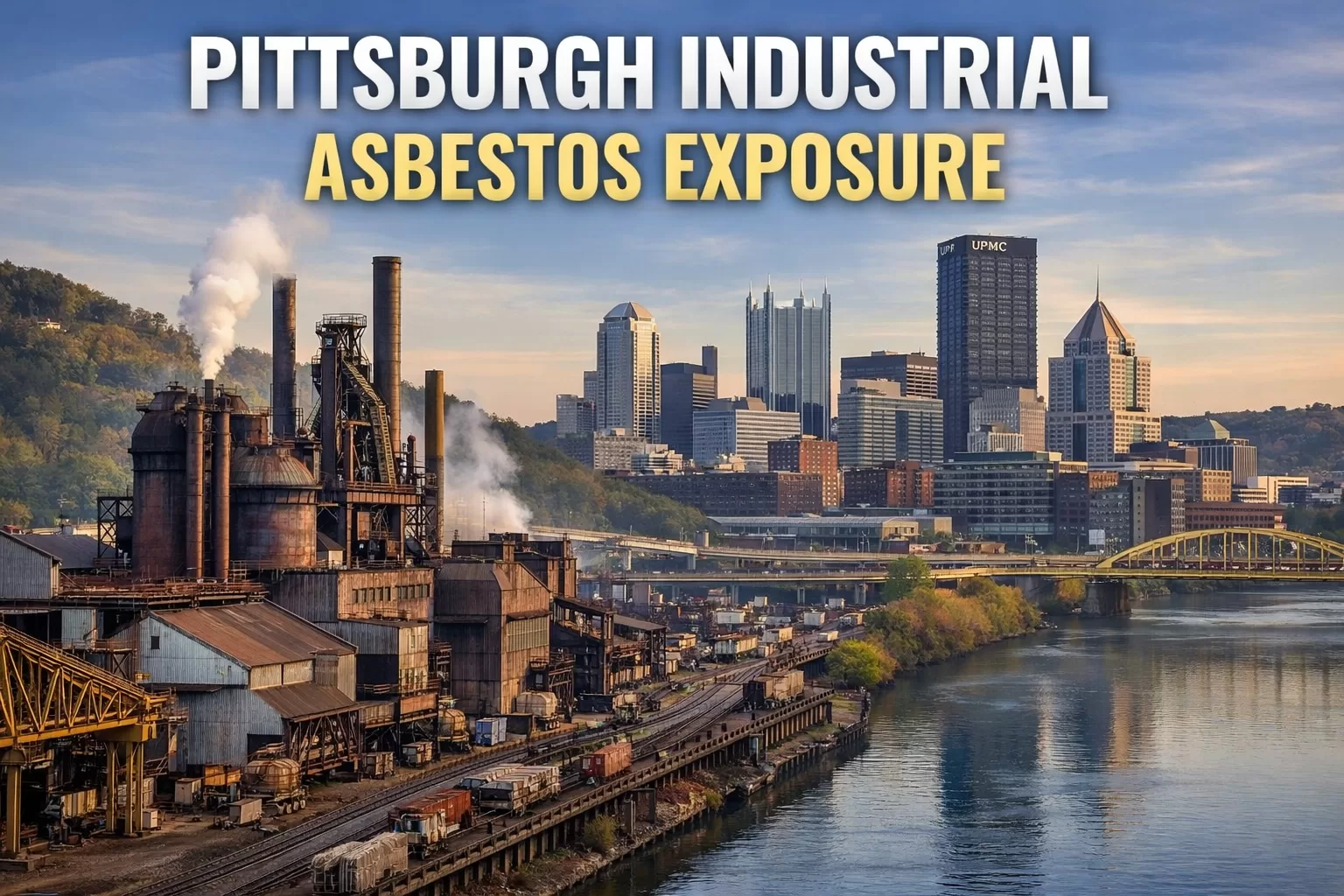
Pittsburgh Industrial Asbestos Exposure has impacted workers across steel mills, power plants, chemical facilities, refineries, and manufacturing sites throughout Western Pennsylvania. For decades, asbestos was widely used in industrial settings because of its heat resistance and durability.

Many Pittsburgh-area facilities relied on asbestos-containing materials in:

  • Steam lines and pipe insulation
  • Boilers and turbines
  • Gaskets and packing materials
  • Pumps and valves
  • Fireproofing and refractory products
  • Protective clothing

Workers often encountered visible dust during maintenance, repairs, shutdowns, and demolition projects. At the time, the health risks were frequently minimized or not fully disclosed.

Mesothelioma/Asbestos Legal Help – WV, MI & PA

Speak directly with attorney Lee W. Davis. No call centers. Free, confidential review.
Where Exposure Commonly Occurred

Industrial exposure in Pittsburgh typically occurred in heavy industry environments such as:

  • Steel production facilities
  • Coke works
  • Power generation plants
  • Riverfront manufacturing sites
  • Chemical processing plants

Multiple trades often worked side by side, including pipefitters, boilermakers, electricians, laborers, and maintenance crews. In many cases, asbestos materials were disturbed during routine repair work.

👉 Search Asbestos Job Sites in Pennsylvania

Exposure did not always come from a single source. It could result from:

  • Removing old insulation
  • Cutting asbestos gaskets
  • Handling packing materials
  • Working near contractors performing insulation removal


Why Diagnosis Happens Decades Later

Mesothelioma and asbestos-related lung cancer typically develop 20 to 50 years after exposure. Many Pittsburgh workers were exposed in the 1960s, 70s, and 80s but were not diagnosed until much later.

This long latency period often means:

  • Records are incomplete
  • Facilities have closed
  • Companies have merged or restructured
  • Co-workers are retired

Despite these challenges, industrial asbestos cases can still be built through employment records, testimony, and historical documentation.

Legal Options After Pittsburgh Industrial Asbestos Exposure

Legal claims may involve:

  • Product manufacturers
  • Contractors
  • Premises owners
  • Corporate successors

Each case depends on the specific work history and exposure timeline.

If you or a family member worked at an industrial facility in Pittsburgh and later received a mesothelioma or asbestos-related lung cancer diagnosis, it is important to evaluate the history of exposure carefully.

Read More: Pittsburgh Asbestos Lawyer


Call Now

If you are facing a diagnosis connected to Pittsburgh Industrial Asbestos Exposure, early legal review can help preserve evidence and identify responsible parties.

📞 (412) 781-0525

🌐 https://leewdavis.com/

Check If Your Family Was Exposed

Get your free guide instantly + a confidential case review.

🔒 100% Confidential. No obligations.


FAQs

How long after exposure does mesothelioma appear?

Symptoms often appear 20 to 50 years after initial asbestos exposure.

What if the Pittsburgh facility is closed?

Claims may still be pursued through product manufacturers, contractors, or corporate successors.

Do I need employment records to file a claim?

Employment records help, but co-worker testimony and other documentation can also support exposure history.

Mesothelioma/Asbestos Legal Help – WV, MI & PA

Speak directly with attorney Lee W. Davis. No call centers. Free, confidential review.
Pittsburgh Asbestos Pension Records: Why They Matter

Pittsburgh Asbestos Pension Records | Proof Help

Pittsburgh Asbestos Pension Records can be one of the strongest “quiet” proof sources in an asbestos case—especially when the exposure happened decades ago and the jobsite is gone, the employer merged, or coworkers are no longer available.

A pension file often contains the exact details that insurers and defendants fight over: who your employer was, where you were dispatched, your covered job classifications, and the time periods you worked. For union trades and industrial workers around Pittsburgh, those records can anchor your work history when payroll stubs, tax returns, or personnel files have disappeared.

Why your complete Work History is important: Asbestos Work Records

Mesothelioma/Asbestos Legal Help – WV, MI & PA

Speak directly with attorney Lee W. Davis. No call centers. Free, confidential review.
What pension records can show

Depending on the plan, you may see:

  • Employer contribution histories (which employers paid into the plan and when)
  • Hours and covered employment periods
  • Job classifications (trade title / craft)
  • Work location or local information tied to dispatch or contributions
  • Plan documents or correspondence that confirms employment continuity

Why that proof helps in asbestos claims

Pittsburgh asbestos cases are frequently built from work history + jobsite identification + product/operation linkage. Pension records can:

  • Confirm exposure time windows (key for liability and damages)
  • Corroborate jobsite presence when memories are fuzzy
  • Identify employer entities that changed names, merged, or dissolved
  • Support claims involving shutdown crews, maintenance rosters, and contractor work

Learn about other records that may be helpful: Asbestos Badge Records


What to request (practical list)

When requesting pension documentation, ask for:

  • Participant statement / work history printout
  • Employer contribution history
  • Benefit calculation worksheets
  • Covered employment periods and job classifications
  • Any dispatch-related records held by the plan (if applicable)

Preserve it early

These records can take time to obtain. If you’re diagnosed with mesothelioma or another serious asbestos disease, get the request started early so the proof trail is preserved while other evidence is still recoverable.

If you want help identifying what to request and how to use it to prove a Pittsburgh exposure history, call (412) 781-0525.

Check If Your Family Was Exposed

Get your free guide instantly + a confidential case review.

🔒 100% Confidential. No obligations.


FAQs

1) If I don’t remember every jobsite, can pension records still help?

Yes. They often supply dates and employer identifiers that help rebuild a reliable timeline.

2) Are pension records enough by themselves to win a case?

They’re usually not the only proof, but they can be a core “anchor” record that supports the rest of the exposure evidence.

3) What if my employer no longer exists?

Pension contribution histories can still identify the employer name used at the time and help trace successor entities or insurers.

Mesothelioma/Asbestos Legal Help – WV, MI & PA

Speak directly with attorney Lee W. Davis. No call centers. Free, confidential review.
Pittsburgh Asbestos Badge Records

Pittsburgh Asbestos Badge Records

Pittsburgh asbestos badge records are one of the most underrated pieces of exposure proof—because they don’t rely on memory, and they don’t require a brand name on an insulation box from 1978.

Learn More at Pittsburgh Asbestos Lawyer

Mesothelioma/Asbestos Legal Help – WV, MI & PA

Speak directly with attorney Lee W. Davis. No call centers. Free, confidential review.
If you worked at (or moved through) industrial facilities in the Pittsburgh area—steel, glass, power generation, coke works, chemical operations, refineries, hospitals, schools, or large commercial sites—there’s a decent chance you were issued some kind of access credential at some point:

  • plant badge / ID badge
  • contractor badge
  • security gate log / entry roster
  • sign-in sheets for outages or special projects
  • electronic access logs (turnstiles, gates, doors)
  • visitor management logs (especially post-2001)

These records can do something that a lot of “work history” paperwork can’t: prove physical presence inside a specific facility during a specific timeframe—which is often exactly what a claim needs when the exposure happened during shutdowns, rebuilds, tear-outs, and maintenance surges.

How long does a case take? Read Pittsburgh Asbestos Case Timeline

What badge and access records can prove

Badge and access records may show:

  • dates of entry and exit (daily logs, shift windows, outage periods)
  • which gates or buildings you accessed (depending on the system)
  • contractor affiliation or crew assignment tied to a vendor
  • repeated access patterns that match recurring work (outages, maintenance cycles)


That matters because many Pittsburgh exposure cases aren’t “one employer for 30 years.” They’re:

  • contractor rotations
  • multi-site work
  • short high-exposure periods during projects
  • jobs where HR files exist but don’t prove where you actually worked inside the facility

Where badge records usually live

Depending on the site and the era, badge/access records may be held by:

  • the facility owner (security/HR/risk)
  • a third-party security vendor
  • an on-site contractor management platform
  • corporate archives (especially after acquisitions/mergers)
  • IT/security departments (for electronic logs)

A key practical point: these records can be deleted on routine retention schedules. If you suspect they exist, it’s worth moving quickly.

Read why a Work History is important in an Asbestos case HERE

What to request

You’re looking for records like:

  • badge issuance logs (badge number, issue date, expiration)
  • gate entry logs / access reports for your name and known variations
  • contractor rosters tied to your vendor/employer
  • outage sign-in sheets, safety orientation logs, site-specific training logs
  • visitor management exports (if you were “non-employee” onsite)

Even if the records don’t show every day, a partial set can still corroborate the core facts: you were there, in the window that matters.

Bottom line

When a case stalls because someone says “prove you were inside the facility,” badge and access records can be the cleanest answer. They don’t argue. They timestamp.

If you want help identifying which Pittsburgh-area facilities and owners are most likely to have retained access records—and how to target the request efficiently—call (412) 781-0525.

Check If Your Family Was Exposed

Get your free guide instantly + a confidential case review.

🔒 100% Confidential. No obligations.


FAQs

What if I don’t remember the badge number?

That’s common. Badge issuance logs are often searchable by name, date of birth, employer/vendor, or Social Security last four digits (depending on the system).

Do old facilities still have these records?

Sometimes yes—especially if the site was acquired by a larger company that kept centralized security systems. Other times records are purged. The value is acting fast once you suspect they exist.

Can badge records help if I was a contractor, not an employee?

Yes. Contractor badges, gate logs, and orientation rosters often capture contractors more reliably than HR employment files.

Mesothelioma/Asbestos Legal Help – WV, MI & PA

Speak directly with attorney Lee W. Davis. No call centers. Free, confidential review.
Pittsburgh Asbestos Medical Proof: What Records Actually Move a Case

Pittsburgh Asbestos Medical Proof Guide

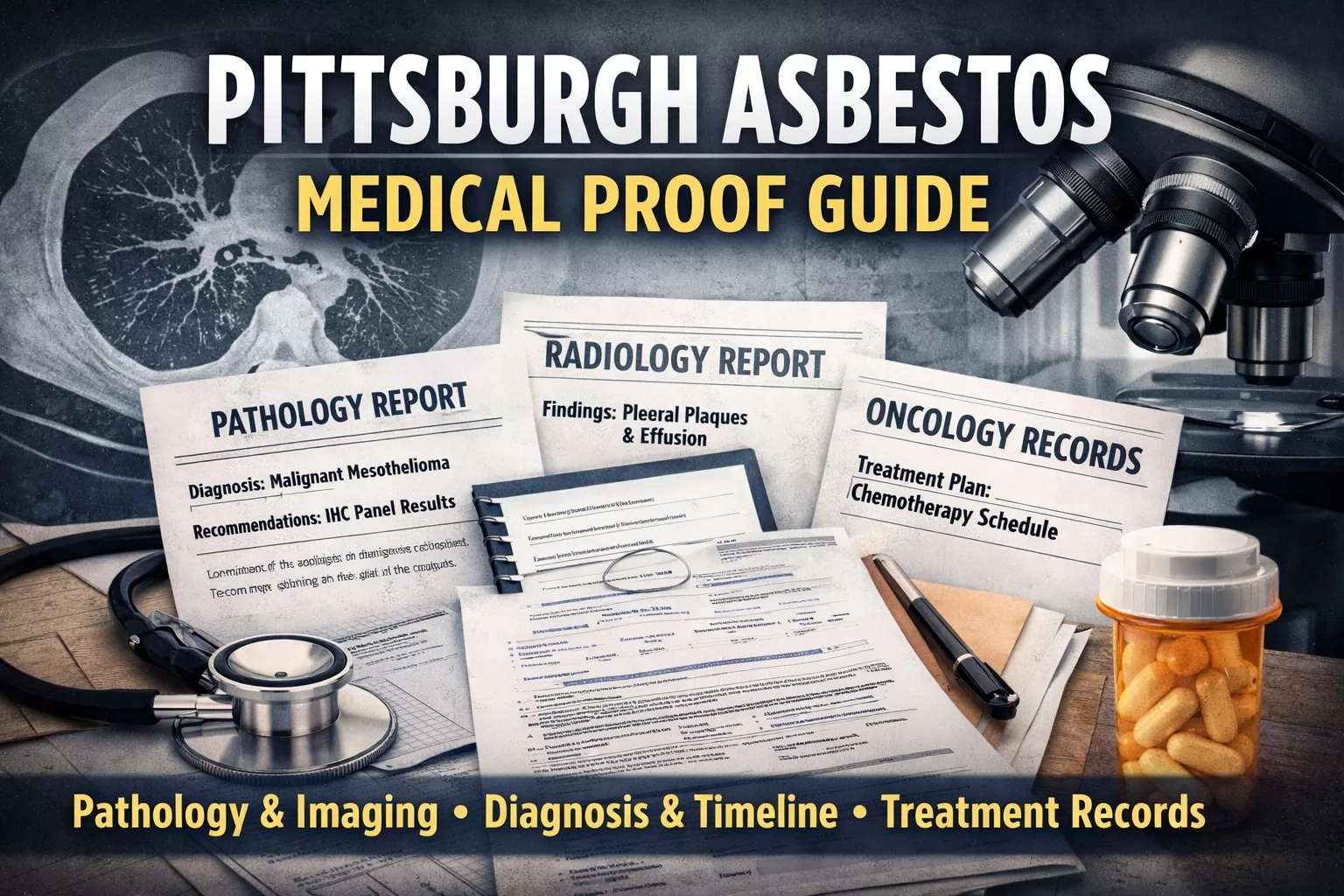
If you’re dealing with an asbestos-related diagnosis, the Pittsburgh Asbestos Medical Proof is what turns a story into a case file that insurers and defendants have to take seriously. People assume “proof” means a jobsite name or a dusty memory from decades ago. In reality, the strongest cases often start with the medical documentation—because it locks in diagnosis, timing, and causation before anyone argues over work history.

For legal representation, see Pittsburgh Asbestos Exposure Claims

Below is the medical proof that typically matters most in asbestos and mesothelioma cases tied to Pittsburgh-area work, plant maintenance, construction, steel operations, power generation, and industrial trades.

Mesothelioma/Asbestos Legal Help – WV, MI & PA

Speak directly with attorney Lee W. Davis. No call centers. Free, confidential review.
1) The pathology report (the anchor document)

A pathology report is often the single most important piece of medical proof. It can confirm:

  • Mesothelioma (pleural or peritoneal)
  • Asbestos-related lung cancer
  • Asbestosis or pleural disease (in certain contexts)

If there was a biopsy, surgery, thoracoscopy, or cytology (fluid) testing, get:

  • The final pathology report
  • Any addendum reports
  • The immunohistochemistry (IHC) panel results (the marker testing doctors use to confirm the diagnosis)

If you only have imaging or a preliminary note, don’t assume that’s “enough.” Get the actual pathology.

2) Imaging that shows the pattern doctors rely on

CT scans, PET scans, X-rays, and radiology reports matter because they document:

  • Pleural thickening or pleural plaques
  • Effusions (fluid)
  • Masses, nodules, or spread patterns
  • Progression over time

What helps your file move faster is not just the scan—it’s the radiology report that describes findings in medical terms that can’t be brushed off later.

3) Pulmonary records and function testing

If there’s lung impairment, obtain:

  • Pulmonary function tests (PFTs)
  • Pulmonology consult notes
  • Oxygen prescriptions and respiratory therapy records
  • Hospital discharge summaries tied to breathing compromise

These records help establish severity and day-to-day impact, which affects damages and settlement value.

4) Oncology records that lock in treatment history

For cancer and mesothelioma, treatment records show seriousness and provide a clean timeline:

  • Oncology consults
  • Chemotherapy/immunotherapy regimens
  • Radiation records
  • Surgical notes
  • Follow-up and progression notes

These records also help rebut defense arguments that the condition is “uncertain” or “unrelated.”

5) The timeline matters more than people think

A well-organized chart of:

  • first symptoms,
  • first imaging,
  • first specialist visit,
  • diagnosis date,
  • treatment start

…can keep your claim from getting bogged down in delay tactics. If a defendant tries to shift the clock, the medical records usually settle the timeline.

6) Smoking history doesn’t “defeat” medical proof—documentation matters

Defendants love to blur issues by focusing on smoking. The right medical proof keeps the analysis disciplined:

  • What was diagnosed?
  • What did pathology confirm?
  • What did imaging show?
  • What did the treating doctors conclude?

Your records should reflect what your physicians documented—especially when asbestos exposure is part of the differential diagnosis or causation analysis.

7) How to request records without getting stalled

When you request records, ask for complete sets:

  • “All records including pathology, imaging reports, lab results, and physician notes”
  • “All radiology reports and DICOM images for CT/PET/X-ray”
  • “All pathology slides and tissue blocks (if needed for review)”

Hospitals can produce summaries quickly, but the summaries are not the file. The file is the proof.

8) Why medical proof is the fastest way to reduce fight and increase leverage

In a Pittsburgh asbestos case, jobsite proof can take time. Medical proof is usually available now. Once the diagnosis and timeline are locked in, the case can move while employment, union, Social Security, and contractor records are gathered in parallel.

Learn more about how long a case takes here: Pittsburgh Asbestos Case Timeline


FAQs

What is the most important medical record in an asbestos case?

Usually the pathology report (and any IHC marker testing) confirming mesothelioma or asbestos-related cancer.

If I only have scans but no biopsy, can I still start?

Yes. Imaging, pulmonology notes, and oncology records can support early evaluation, but definitive diagnosis often depends on pathology.

Do I need the actual scan files, or just the radiology report?

Both help. The report matters immediately; the images can matter later for expert review.

Will smoking history ruin my case?

Not automatically. Diagnosis, pathology, imaging patterns, and physician documentation still control the medical proof analysis.

How long does it take to get records?

Many providers can produce records within days to a few weeks, but pathology materials and imaging discs can take longer—request them early.


Talk to a Pittsburgh asbestos lawyer about your medical proof

If you want a straightforward review of your records and what’s missing, call (412) 781-0525. You’ll speak directly with attorney Lee W. Davis about the documentation that can move your case forward.

Check If Your Family Was Exposed

Get your free guide instantly + a confidential case review.

🔒 100% Confidential. No obligations.

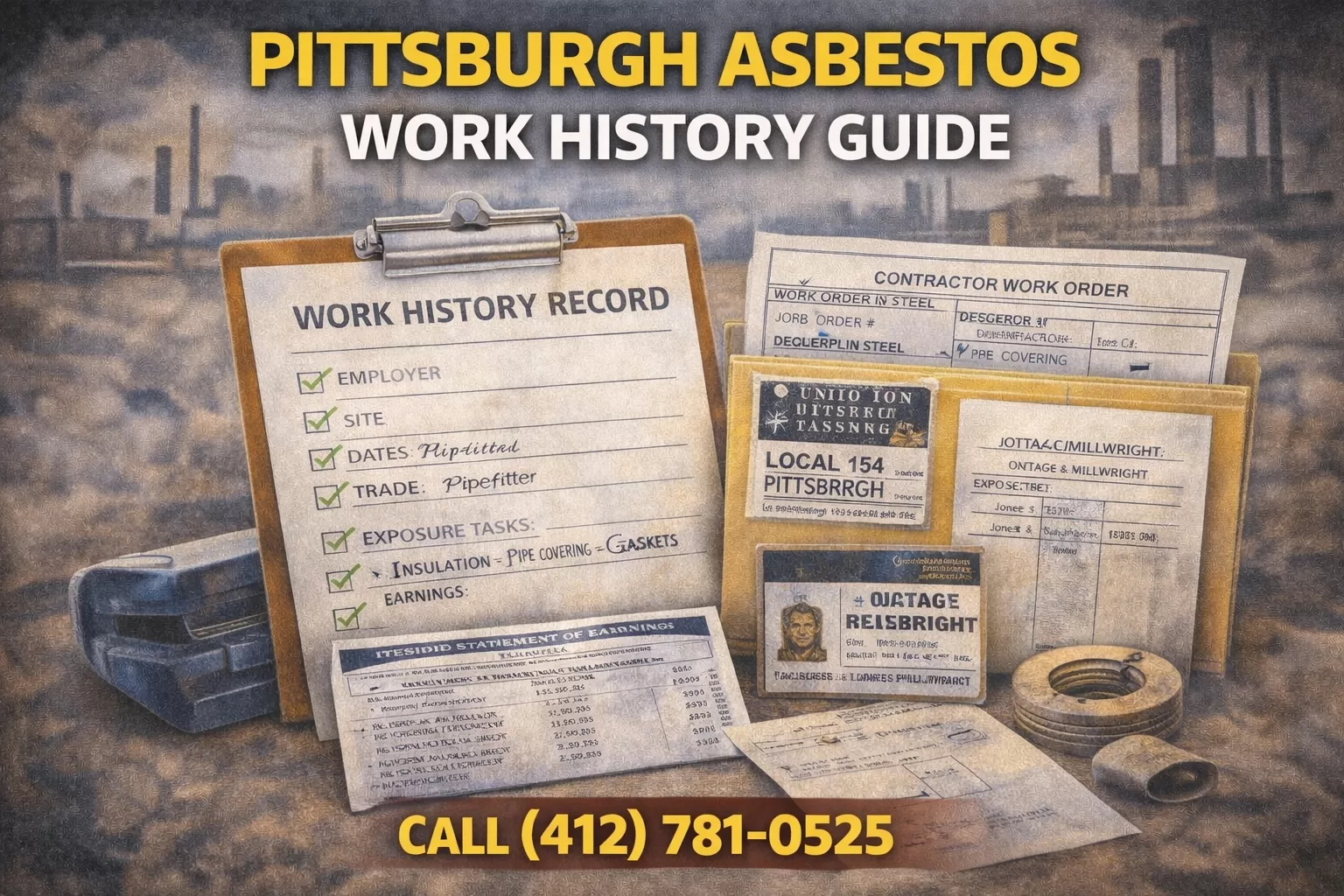
Pittsburgh Asbestos Work History Guide

Pittsburgh Asbestos Work History Guide

If you’re pursuing an asbestos-related claim in Pittsburgh or Western Pennsylvania, your work history is often the single most important piece of evidence. People assume the case turns on remembering a brand name. In reality, many strong claims are built by reconstructing where you worked, what you did, and what materials you handled—even if the product labels are long gone.

Mesothelioma/Asbestos Legal Help – WV, MI & PA

Speak directly with attorney Lee W. Davis. No call centers. Free, confidential review.

A Pittsburgh asbestos work history is more than a résumé. It’s a timeline that connects your job duties to asbestos-containing materials used in industrial settings across the region: power generation, steel, heavy manufacturing, rail, commercial construction, maintenance shutdowns, and equipment repair. When the work history is detailed and supported by records, claims move faster and defense arguments get weaker.

What “work history” really means in an asbestos claim

A usable work history has three parts:

  1. Employer + location (company name, plant/site, city, and dates).
  2. Your trade and tasks (pipefitter, boilermaker, electrician, millwright, mechanic, laborer, insulator, maintenance, etc.).
  3. Exposure context (where asbestos was likely disturbed: insulation, gaskets, packing, refractory, boilers, turbines, pumps, valves, pipe covering, electrical arc chutes, drywall/compound, floor tile/mastic, roofing, cement products).

The goal is not perfection. The goal is credibility and detail—enough that the story matches the way industrial work is actually performed.

👉 Search Asbestos Job Sites in Pennsylvania

How to rebuild a Pittsburgh-area work history when records are missing

If you don’t have a neat binder of documents, that’s normal. Here are the records that most often help reconstruct a clean work timeline:

  • Social Security “Itemized Statement of Earnings” (helps confirm employers and time periods)
  • Union records (locals, dispatch logs, referral slips, benefit statements)
  • W-2s / tax returns / pay stubs
  • Personnel files (HR records, job classifications, safety training)
  • Work orders / outage schedules / maintenance logs (especially for plant or industrial maintenance work)
  • Contractor badge logs / site access records
  • Old job notebooks, calendars, or photographs (even one photo can anchor a time period)
  • Coworker statements (who remembers the job, the areas, and the materials)

When you combine two or three sources—earnings records + union dispatch + a plant outage period—you can often lock in dates and locations tightly enough to make the exposure story hard to dispute.

The Pittsburgh details that matter most

Defense lawyers look for gaps: “Which building?” “Which unit?” “Which shutdown?” “What equipment?” The more specific you can be, the better. Helpful details include:

  • Unit numbers, departments, or line assignments
  • Names of equipment (boilers, turbines, heat exchangers, compressors, pumps, valves)
  • Types of work performed (tear-out, rebuilds, gasket changes, packing, insulation disturbance)
  • Whether the work was routine, seasonal, or tied to outages/turnarounds
  • Whether you worked alongside insulators or around newly cut/damaged insulation

This is why work history wins cases. It turns a broad claim into a defensible timeline.

What to do next

If you’re trying to build a Pittsburgh asbestos case, start with a simple timeline: employer, site, dates, trade, and tasks. Then add the documents you still have—one record at a time. If you want help organizing it into a claim-ready exposure narrative, call (412) 781-0525. You’ll speak directly with attorney Lee W. Davis.

Check If Your Family Was Exposed

Get your free guide instantly + a confidential case review.

🔒 100% Confidential. No obligations.


FAQs

What if I can’t remember exact dates for a Pittsburgh asbestos job?

That’s common. Earnings records, union dispatch documents, and project/outage schedules can often narrow time periods enough to support a claim.

Do I need to prove the exact asbestos product I handled?

Not always. Many claims are proven through jobsite/location evidence and task-based exposure—especially where asbestos use was routine in industrial maintenance.

What records should I gather first?

Start with Social Security earnings history, union/benefits records, and any pay/tax documents. Those usually create the quickest backbone timeline.

Mesothelioma/Asbestos Legal Help – WV, MI & PA

Speak directly with attorney Lee W. Davis. No call centers. Free, confidential review.

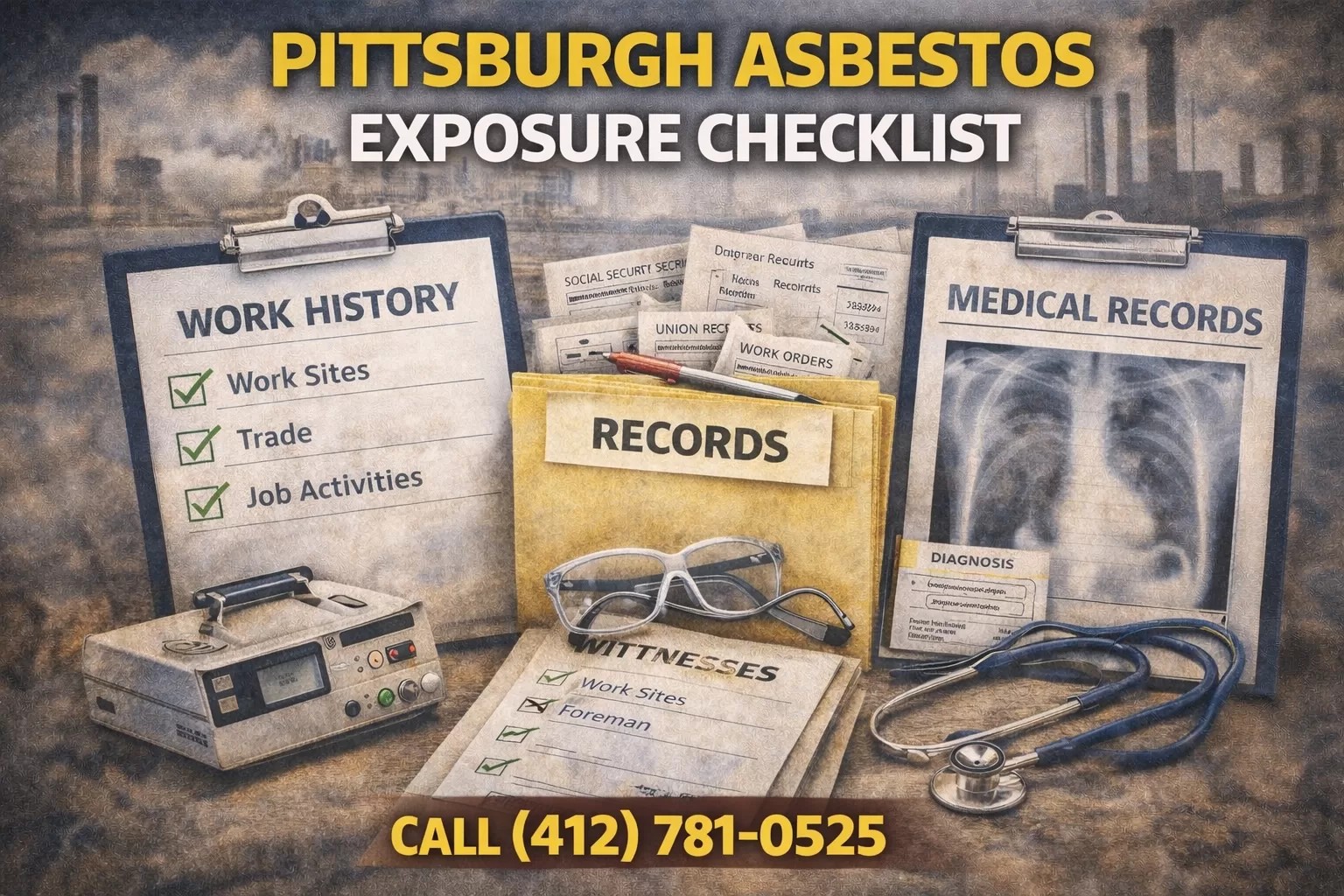
Pittsburgh Asbestos Exposure Checklist

Pittsburgh Asbestos Exposure Checklist

If you’re researching a possible asbestos claim in Pittsburgh or Western Pennsylvania, the hardest part is usually not the diagnosis — it’s proving where the exposure happened and what products or work activities caused it. A Pittsburgh Asbestos Exposure Checklist helps you organize the facts the way defendants and their insurers look at cases: work history, trades, sites, products, witnesses, and medical proof.

Mesothelioma/Asbestos Legal Help – WV, MI & PA

Speak directly with attorney Lee W. Davis. No call centers. Free, confidential review.

This post is a practical guide to what you should gather early so your claim doesn’t stall later.

Why a checklist matters in Pittsburgh cases

Pittsburgh-area exposure often involves long industrial timelines: mills, power plants, universities, hospitals, commercial buildings, and decades of maintenance work. Records get lost. Companies change names. Sites get demolished. A checklist forces the case into a proof-driven format that can be verified through documents.

Step 1: Start with the work history timeline

Write your work history like a timeline, not a resume.

Include:

  • Employer name (and any prior names)
  • Job title/trade (pipefitter, electrician, insulator, laborer, mechanic, millwright, etc.)
  • Dates (even approximate ranges)
  • Where the work happened (site name + city)
  • Whether it was new construction, maintenance, outage work, or demolition

If you did contractor work, list the contractor and the host facility. Both can matter.

👉 Search Asbestos Job Sites in Pennsylvania

👉 Search Asbestos Job Sites in West Virginia

Step 2: List Pittsburgh-area sites, one per line

Do not lump sites together. Put each on its own line.

Examples of the kind of locations that matter:

  • Steel and coke operations
  • Industrial power and steam facilities
  • Chemical and refinery-adjacent work
  • Hospitals, universities, and older public buildings
  • Boiler rooms, mechanical rooms, pump rooms, turbine decks
  • Union hall dispatch sites and shutdown/outage jobs

Even if you can’t remember product names, location specificity helps reconstruct exposure through records and co-worker proof.

Step 3: Identify the “dust work” tasks

Most asbestos exposure comes from repeat tasks that created dust.

Common examples:

  • Removing or disturbing insulation on piping/boilers
  • Cutting, sanding, or scraping thermal insulation
  • Replacing gaskets, packing, valves, pumps, turbines
  • Handling refractory, firebrick, cement, or insulation blankets
  • Tear-outs during outages and rebuilds
  • Cleanup work after insulation removal or demolition

Write what you actually did — not what the job description says.


Step 4: Gather the “paper trail” documents

These documents often prove the case when memory fades:

  • Work orders, job tickets, shutdown sheets
  • Contractor logs, badge/swipe logs, site orientation records
  • Union records, dispatch slips, benefit statements
  • Social Security earnings statements
  • Old tax returns, W-2s, pay stubs
  • Training certificates and safety meeting sign-in sheets

If the only proof you have is “I was there,” the case becomes harder than it needs to be.

Step 5: Collect product and equipment identifiers

Product names help — but equipment IDs and location proof can be just as strong.

Look for:

  • Equipment tags, pump/valve numbers, unit numbers
  • Piping lists, isometric drawings, maintenance logs
  • Material lists and procurement records
  • Old manuals for plant equipment
  • Abatement specs, bids, and industrial hygiene records

You don’t need to solve it alone. You just need to capture clues that can be traced.

Step 6: Witnesses and co-worker confirmation

Write down names now — not later.

Include:

  • Foremen, supervisors, maintenance leads
  • Co-workers on crews or outage teams
  • Anyone who saw the work or remembers the site conditions

A single corroborating witness can move a claim from “possible” to “provable.”

Step 7: Medical proof (keep it simple, get it organized)

For asbestos cases, the medical documentation needs to be clean:

  • Pathology (if applicable)
  • Imaging reports (CT/PET/X-ray)
  • Pulmonology/oncology records
  • Diagnosis date and treating facility

Organize it in a folder and keep a one-page summary: diagnosis, date, provider, and where you worked.

Step 8: Do not wait to preserve records

Older job sites often have disappearing evidence. Companies merge. Contractors dissolve. Records get archived or destroyed. If you suspect asbestos exposure and you’re in the Pittsburgh region, act early to preserve the work history proof.

Talk to a Pittsburgh asbestos lawyer about your proof

If you want a real evaluation, the quickest way is to start with your timeline and checklist. I can tell you what’s missing, what matters, and what can be proven based on Pittsburgh-area jobsite history and the records that still exist.

Read More: Pittsburgh Asbestos Lawyer

Call (412) 781-0525 or contact me through leewdavis.com to discuss your situation.

Check If Your Family Was Exposed

Get your free guide instantly + a confidential case review.

🔒 100% Confidential. No obligations.

FAQs

What if I can’t remember the asbestos product name?

That’s common. Many strong cases are built from site records, work orders, and task-based exposure evidence — not a product box.

What records are most helpful for proving exposure?

Work orders, union documentation, Social Security earnings statements, and any site-specific logs or maintenance paperwork are often the fastest proof builders.

Does Pittsburgh exposure only happen in steel mills?

No. Industrial maintenance, older commercial buildings, hospitals, schools, and power/steam facilities can all involve asbestos-containing materials depending on the timeframe and the work performed.

Mesothelioma/Asbestos Legal Help – WV, MI & PA

Speak directly with attorney Lee W. Davis. No call centers. Free, confidential review.

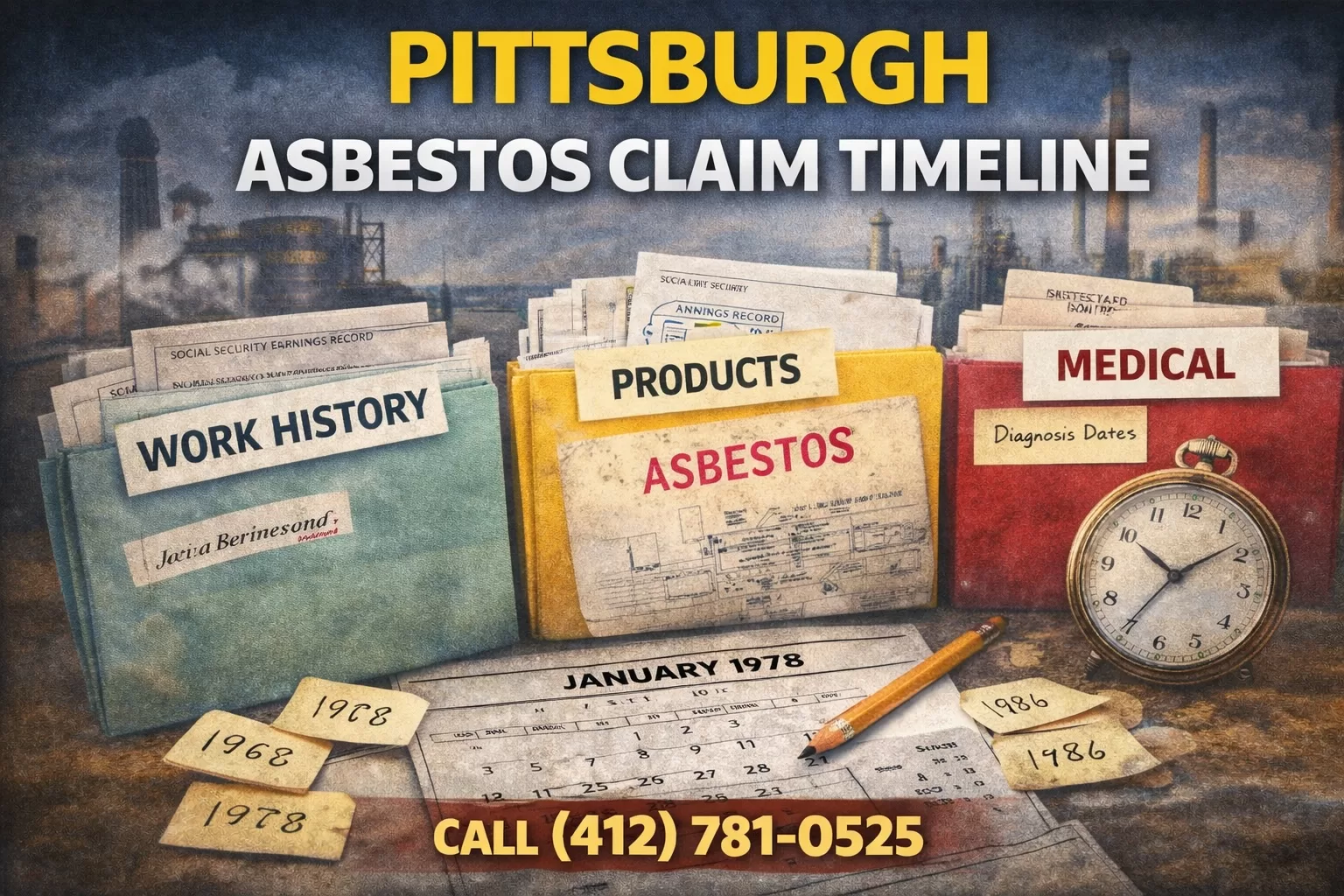
Pittsburgh Asbestos Claim Timeline

Pittsburgh Asbestos Claim Timeline Help

If you’re building a Pittsburgh Asbestos Claim Timeline, the goal is simple: turn a lifetime of work into a clear, dated exposure story that an insurer, trust, or defendant can’t ignore. Most people think “proof” is one perfect document with a product name. In real cases, the strongest claims are built from a timeline that matches where you were, what you did, and when you did it—then ties that to the kinds of materials that commonly contained asbestos during that era.

Mesothelioma/Asbestos Legal Help – WV, MI & PA

Speak directly with attorney Lee W. Davis. No call centers. Free, confidential review.

A good timeline also prevents delays. When the exposure story is organized and supported, the case moves faster, and the value is easier to justify.

What a timeline actually is

A timeline is a dated map of:

  • Jobs and employers
  • Worksites and departments
  • Trades and tasks
  • Products/materials likely encountered
  • Co-workers, supervisors, and witnesses
  • Medical dates (symptoms, scans, diagnosis, treatment)

Even if you can’t remember a product brand from 1978, you usually can remember your job, the plant, the unit, the type of work, and the time period. That’s enough to build the structure.

👉 Search Asbestos Job Sites in Pennsylvania

Start with the three anchor dates

  1. First known exposure window (earliest job with insulation/maintenance/industrial work)
  2. Peak exposure years (the period you were most hands-on with equipment, shutdowns, tear-outs, or repairs)
  3. Diagnosis date (and when symptoms started)

These anchors keep the timeline tight and stop it from turning into an unfocused biography.

The work details that matter most

In Pittsburgh-area industrial and commercial work, asbestos exposure often comes from repeated tasks, not a single incident. Your timeline should highlight:

  • Boiler, steam, and mechanical room work
  • Pipe insulation disturbance and removal
  • Gaskets, packing, valves, pumps, compressors
  • Refractory tear-outs and high-heat maintenance
  • Outages, shutdowns, rebuilds, and “hot work” periods
  • Contractor assignments and rotating job locations

If you worked across multiple sites, list them with approximate months/years and note which tasks were routine versus occasional.

Records that strengthen the timeline

If you have them, these records help confirm the dates and locations:

  • Social Security earnings history / union records
  • Personnel files, job badges, safety logs
  • Work orders, maintenance logs, shutdown schedules
  • Training cards, certifications, apprenticeship records
  • Old pay stubs, tax forms, or benefit statements
  • Co-worker contact info (even one good witness helps)

You don’t need everything. You need enough to corroborate your story and create a clean, credible chain of exposure.

Why the timeline increases case value

A clear timeline does three things:

  • Reduces “causation fog” (defense can’t claim it’s all speculation)
  • Narrows defendants/products (stronger targets, fewer dead ends)
  • Speeds evaluation (adjusters and trust reviewers can verify faster)

In short: a timeline turns “I think” into “Here’s the proof trail.”

Talk to a Pittsburgh asbestos lawyer

If you or a family member has mesothelioma or another asbestos-related disease, building the timeline early is one of the best ways to protect your claim and keep it moving.

Read about Wrongful death claims for families.

Call (412) 781-0525 or use the contact form on leewdavis.com to discuss your work history and the fastest way to assemble a strong exposure timeline.

Check If Your Family Was Exposed

Get your free guide instantly + a confidential case review.

🔒 100% Confidential. No obligations.


FAQs

1) What if I can’t remember the brand names of asbestos products?

That’s common. A timeline built around job sites, tasks, dates, and trade work often proves exposure even without perfect product recall.

Read More: Pennsylvania Mesothelioma Lawyer

2) What Pittsburgh-area work tends to create the strongest asbestos timelines?

Industrial maintenance, power/steam systems, mechanical rooms, shutdown work, pipe/boiler work, and repetitive gasket/packing/insulation disturbance tend to create the clearest patterns.

3) Do I need all my records before calling a lawyer?

No. Start with what you know. The timeline can be built from memory first, then supported with records and witnesses as they’re identified.

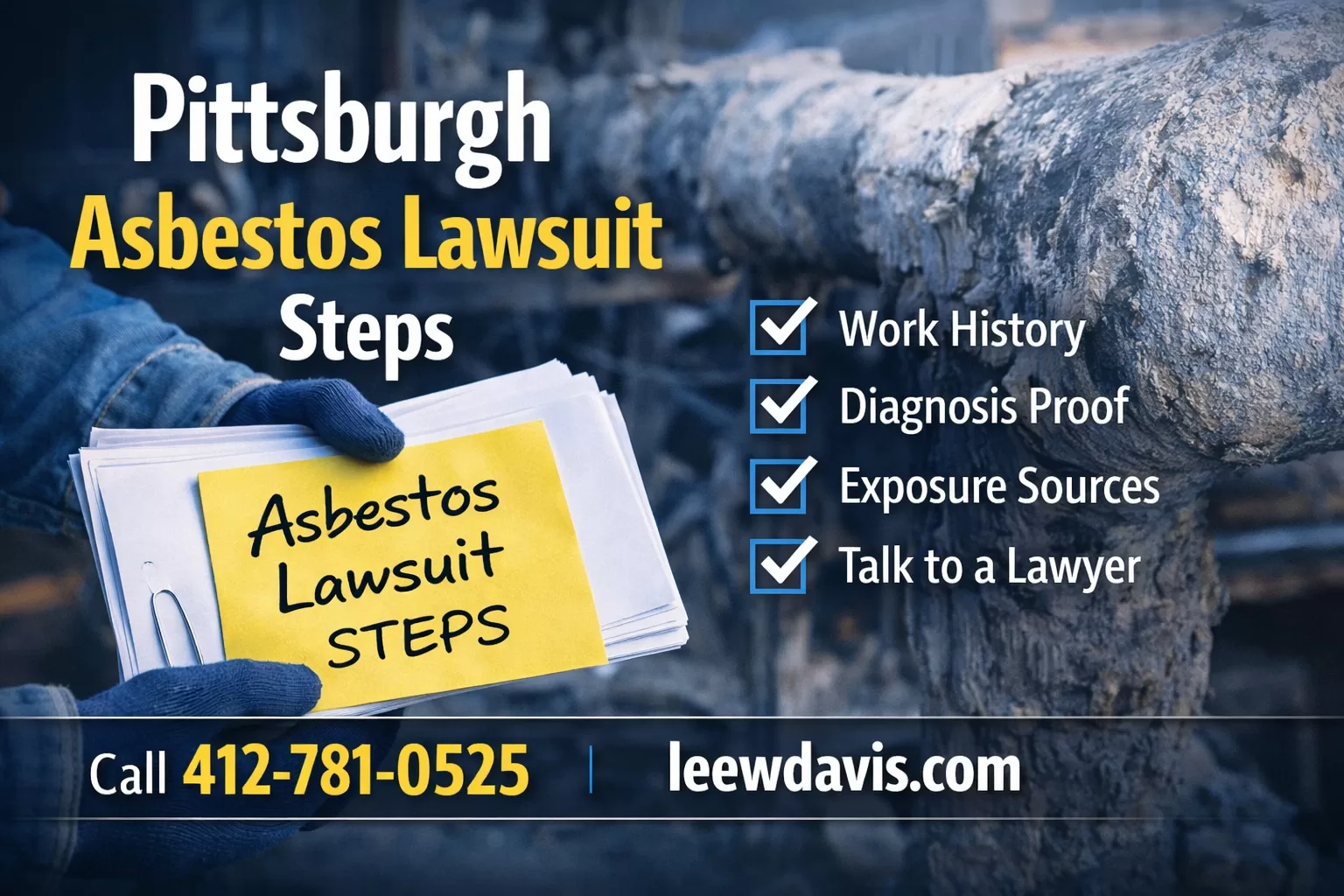
Pittsburgh Asbestos Lawsuit Steps

Pittsburgh Asbestos Lawsuit Steps | What to Do

If you’re searching for Pittsburgh Asbestos Lawsuit Steps, you’re not browsing—you’re trying to make a decision with the clock running. A diagnosis often comes first. Then the questions hit fast: What do I do now? Who do I call? What proof matters?

I’m Lee W. Davis, and I handle asbestos and mesothelioma cases for Pittsburgh-area workers and families. Below are the practical steps that protect your claim and prevent avoidable mistakes.

Read More:

Mesothelioma/Asbestos Legal Help – WV, MI & PA

Speak directly with attorney Lee W. Davis. No call centers. Free, confidential review.

Step 1: Write down your work history (don’t “guess later”)

Start a simple timeline: employer, job title, dates, and locations. Pittsburgh exposures often come from industrial and maintenance environments—mills, power generation, commercial mechanical work, boiler rooms, pipe systems, refineries, and heavy repair. Even “short” jobs can matter if the product exposure was heavy.

Step 2: Preserve the diagnosis proof

Your medical proof is the foundation. Gather what you already have (discharge summaries, imaging reports, biopsy/pathology reports, clinic notes). If you don’t have them, don’t panic—we can request them, but you should not delay getting started.

Step 3: Identify the “exposure sources,” not just the jobsite

Cases aren’t won by naming a plant. They’re won by proving exposure to asbestos-containing products: insulation, pipe covering, gaskets, packing, refractory materials, cement products, pumps/valves components, electrical/thermal equipment, and related industrial materials.

👉 Search Asbestos Job Sites in Pennsylvania

Step 4: Don’t talk yourself out of a claim

People minimize. “I wasn’t an insulator.” “I only did maintenance.” “I was around it, not handling it.” Those facts often describe valid asbestos exposure. The question is whether we can document and prove it.

Step 5: Choose the right path: lawsuit, trusts, or both

Depending on exposure history and defendants, compensation may involve:

The right strategy depends on proof, timing, and the strongest legal leverage—not guesswork.

Step 6: Make the consult focused and efficient

A good consultation isn’t a long intake call. It’s a case evaluation with a plan. You should leave knowing:

  • whether your claim is viable
  • what proof we can obtain quickly
  • what the next 30–60 days look like
  • what you should stop doing (and start doing) immediately

Step 7: Act before time and evidence disappear

Even when the legal deadline feels “far away,” evidence never is. Records get lost. Witnesses move. Companies restructure. The best time to act is when the facts are fresh and the paper trail is available.


Talk to a Pittsburgh asbestos lawyer now

If you or a loved one has been diagnosed with mesothelioma, asbestos lung cancer, or another serious asbestos disease, the next step is a targeted plan—not a general web search.

Call 412-781-0525 or contact me through leewdavis.com to discuss the next Pittsburgh Asbestos Lawsuit Steps for your case.

Check If Your Family Was Exposed

Get your free guide instantly + a confidential case review.

🔒 100% Confidential. No obligations.


FAQs

How long do I have to file an asbestos lawsuit in Pennsylvania?

Deadlines can depend on the diagnosis date and the type of claim (personal injury vs. wrongful death). A quick review of dates and records usually answers this immediately.

What if I worked at multiple jobsites around Pittsburgh?

That’s common. The goal is to build a clean timeline and connect it to likely asbestos-containing products at each site.

Do I need proof of the exact product name right now?

Not always. Many cases start with work history and duties, then product identification is built through records, testimony, and industry documentation.

What if the exposure was decades ago?

That’s normal in mesothelioma cases. The legal question is whether we can document a credible exposure history and responsible parties.

Is this consultation free?

In serious asbestos disease cases, yes. The consultation is designed to determine viability and next steps quickly.

Mesothelioma/Asbestos Legal Help – WV, MI & PA

Speak directly with attorney Lee W. Davis. No call centers. Free, confidential review.

Pittsburgh Asbestos Trust Claims

Pittsburgh Asbestos Trust Claims | 412-781-0525

If you’re searching for Pittsburgh Asbestos Trust Claims, you’re not looking for general background. You want to know if you qualify, what proof you need, how long it takes, and whether filing a trust claim affects a lawsuit.

I’m Lee W. Davis, and I help Pittsburgh-area workers and families pursue asbestos compensation through the right mix of trust claims and civil claims—without wasting time on the wrong path. Call 412-781-0525 for a focused review.

What an asbestos “trust claim” is (and why Pittsburgh cases often qualify)

Many asbestos manufacturers went bankrupt and were required to fund trusts to pay valid claims. A trust claim is an administrative compensation process—different from suing in court—but it still requires real proof of exposure, diagnosis, and work history.

Pittsburgh-area exposures commonly come from:

  • Pipe insulation and mechanical work
  • Boiler rooms, turbines, pumps, and valves
  • Steel mills and industrial maintenance
  • Power generation and refinery work
  • Commercial construction and shutdown/turnaround work

3 things that determine whether your trust claim is strong

1) Diagnosis and medical proof

Trusts require documentation (often pathology, imaging, physician reports). Mesothelioma is typically the most straightforward diagnosis for trust compensation, but asbestos lung cancer and other serious asbestos diseases may also qualify depending on the trust criteria.

2) Exposure proof that matches the trust’s “site/product” requirements

Trusts don’t pay because someone “worked around asbestos.” They pay when your work history can be mapped to:

  • A qualifying jobsite (or category of work)
  • A qualifying product exposure (insulation, gaskets, packing, refractory, cement, etc.)
  • A credible timeframe and trade role

3) Filing strategy that doesn’t undercut value

The big mistake is filing the wrong claims first, filing with weak exposure narratives, or treating trust claims like “easy money.” A good strategy:

  • Builds a clean exposure timeline
  • Preserves stronger civil defendants where appropriate
  • Avoids inconsistencies that can be used against you later

How long do Pittsburgh asbestos trust claims take?

Timelines vary by trust and by how complete the claim package is. Some claims move quickly; others slow down if proof is thin, exposure is unclear, or the trust pushes the claim into further review. The fastest route is a properly documented claim submission the first time.

Should you file trust claims, a lawsuit, or both?

Often, the answer is both—but not always, and not randomly. A good plan coordinates:

  • Trust claims that fit your product/work history
  • Civil claims where defendants remain viable
  • Wrongful death strategy if the victim has passed

If you want a realistic number, start with value drivers—diagnosis, age, wage loss, exposure strength, and defendant mix. (I cover valuation in detail here: Pittsburgh Asbestos Claim Value.)


Call Now

If you have mesothelioma, asbestos lung cancer, or another serious asbestos disease—and your work history involves Pittsburgh-area industrial or mechanical work—let’s do a targeted review.

Call 412-781-0525 or use the contact form. You’ll get straight answers on:

  • Whether your exposure history supports trust claims
  • Which trusts are likely in play
  • What proof you’ll need
  • Whether a lawsuit should be filed alongside trust claims

FAQs

1) Can I file Pittsburgh asbestos trust claims if I can’t remember the exact product names?

Yes. Most people don’t remember brand names. The key is reconstructing work sites, tasks, materials, and timeframes so exposure can be matched to known asbestos products.

2) Do trust claims reduce what I can recover in a lawsuit?

Sometimes they can affect allocation/credits depending on the case posture and jurisdiction. That’s why filing order and consistency matter—strategy first, filing second.

3) Are trust claims available for family members after a death?

Yes. Many trusts allow wrongful death claims with the right estate documentation and medical proof.

Read More: Pittsburgh Asbestos Lawyer Consultation

Pittsburgh Asbestos Claim Value: What It’s Really Worth (And Why)

Pittsburgh Asbestos Claim Value | What It’s Worth

If you’re searching Pittsburgh Asbestos Claim Value, you’re not looking for a generic range. You want to know what drives value in a real case—what facts move a claim from “maybe” to “serious money,” and what a lawyer will actually do with your work history and diagnosis.

Mesothelioma/Asbestos Legal Help – WV, MI & PA

Speak directly with attorney Lee W. Davis. No call centers. Free, confidential review.

I handle asbestos and mesothelioma cases for Pittsburgh-area workers and families. In my office, value comes down to proof, product identification, and how quickly we can lock down the evidence before it disappears.

1) Diagnosis is the biggest value driver

Asbestos cases are not all the same. A claim’s value depends heavily on the diagnosis and the medical record:

  • Mesothelioma cases typically have the highest value.
  • Asbestos lung cancer can also be substantial, especially with strong exposure evidence.
  • Other asbestos diseases (like pleural disease) may be compensable, but value is usually lower unless the facts are unusually strong.

The key is documentation: pathology, imaging, treating physician notes, and a clean timeline.

Read More: Pittsburgh Mesothelioma Claim Help

2) Exposure history: job duties beat job titles

In Pittsburgh, exposure often comes from maintenance and industrial work—not a label on a résumé. In a strong case, we can connect your day-to-day work to asbestos-containing materials, such as:

  • Pipe insulation and block insulation
  • Boiler and turbine insulation
  • Gaskets, packing, and rope
  • Refractory materials
  • Cement products and panels
  • Industrial adhesives and sealants

What matters is where you worked, what you touched, and how often—then we match it to manufacturers and suppliers.

👉 Search Asbestos Job Sites in Pennsylvania

3) Product identification and defendants drive leverage

A claim is worth more when we can identify specific asbestos-containing products and the companies behind them. Value increases when:

  • Multiple responsible defendants can be named
  • There are reliable co-worker/union/trade witnesses
  • Work sites have known asbestos product histories
  • The work was sustained and repeated (not a one-off)

This is where experience matters: building the story from records that exist even when a company says “we don’t have it.”

4) Damages: the human story still matters

Even in an evidence-heavy case, damages move the number. The value of a Pittsburgh asbestos claim can rise based on:

  • Severity of symptoms and treatment burden
  • Loss of income and household services
  • Family impact and caregiving load
  • Wrongful death damages for surviving family members

This isn’t “emotion for emotion’s sake.” It’s proving the loss in a way that defendants can’t minimize.

5) Timing and preservation can raise (or ruin) value

If you wait too long, value can collapse—not because the case is weak, but because evidence vanishes:

  • Witnesses become unavailable
  • Work sites close or change hands
  • Records get lost or “cleaned up”
  • Defendants exploit gaps you could have filled early

Getting the case moving early preserves leverage.


What happens in a consultation

A real consultation isn’t a pep talk. It’s a working session where we:

  1. Confirm diagnosis and get the right medical anchors
  2. Map work history to likely asbestos products
  3. Identify target defendants and proof sources
  4. Build a plan for filing and maximizing value

Read More: Pittsburgh Asbestos Lawyer Consultation


FAQs

How do I know if my Pittsburgh asbestos claim has real value?

If you have a serious diagnosis and a work history tied to known asbestos products, you may have a valuable claim. The strength is in the proof we can document quickly.

Do I need to know the exact product name to have a case?

Not always. Many cases start with job duties and work sites. Product identification can be built through records, coworker evidence, and known product histories.

Does a wrongful death asbestos claim have higher value?

It can. Wrongful death damages and survival claims can increase total value, especially when evidence is preserved early and exposure proof is strong.


Call to action

If you’re researching Pittsburgh Asbestos Claim Value, you’re at the point where details matter. I’ll tell you what you have, what’s missing, and what it will take to build a high-value case.

Call 412-781-0525 or contact me through leewdavis.com to schedule a consultation.

Check If Your Family Was Exposed

Get your free guide instantly + a confidential case review.

🔒 100% Confidential. No obligations.