
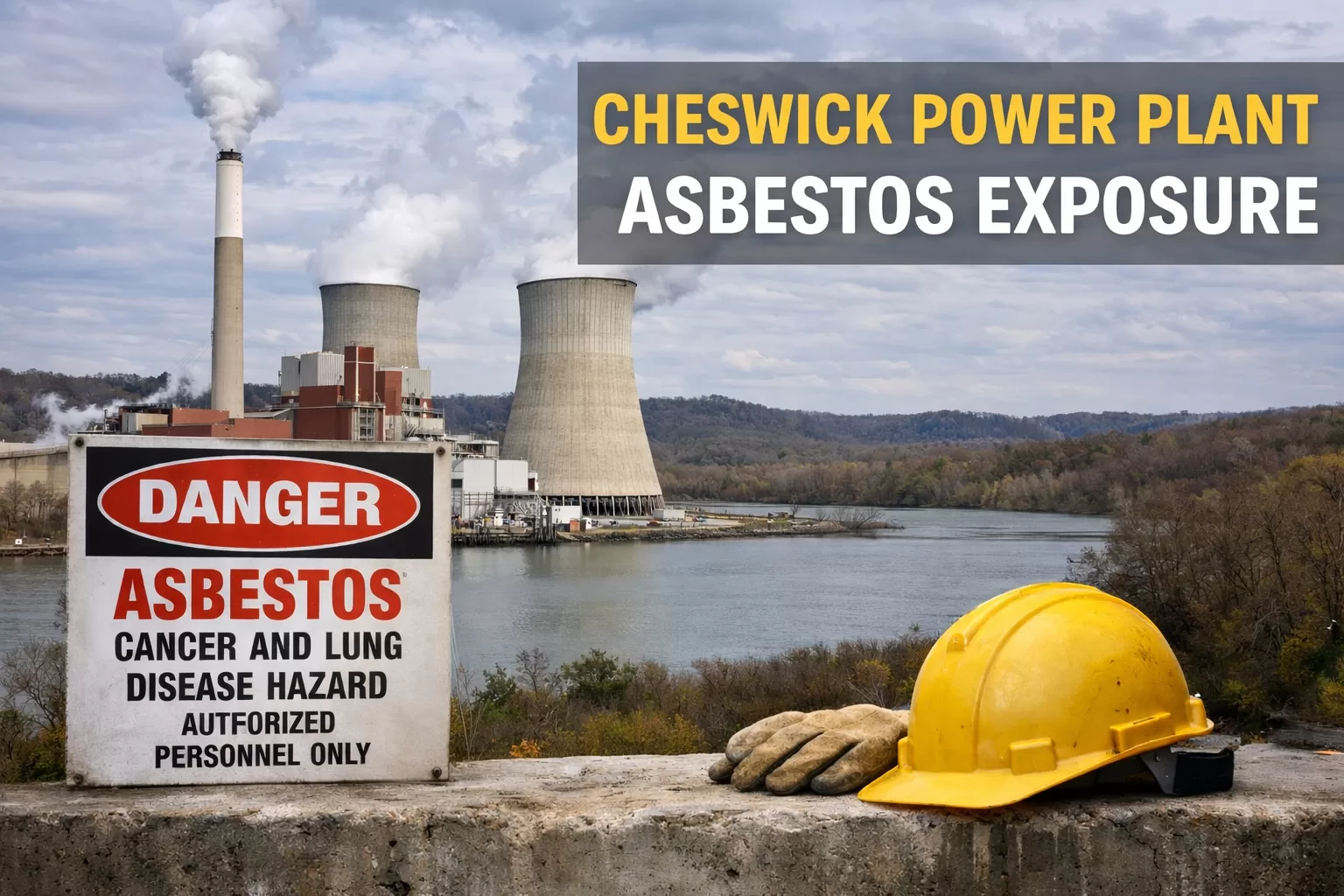
If you worked at Cheswick Power Plant, even for a short outage or a single turnaround, you may have been exposed to Cheswick Power Plant Asbestos. Power plants were built to run hot, stay insulated, and keep equipment online—conditions that historically meant heavy use of asbestos-containing insulation, gaskets, packing, refractory, and thermal coatings.
The risk often wasn’t one dramatic moment. It was the routine work: removing old insulation, cutting flange gaskets, opening pumps and valves, disturbing lagging around piping, or cleaning debris after tear-outs. And in many cases, it was the dust you didn’t even notice—until years later.
Mesothelioma/Asbestos Legal Help – WV, MI & PA
Speak directly with attorney Lee W. Davis. No call centers. Free, confidential review.
Who faced the highest exposure risk?
Power plants concentrate asbestos hazards because heat protection and sealing materials were everywhere. Trades and roles commonly associated with exposure include:
- Boilermakers and boiler room crews
- Pipefitters and steamfitters
- Millwrights and turbine crews
- Electricians working near insulated systems
- Maintenance mechanics
- Insulators and laborers on tear-outs
- Contractor crews brought in for outages
- Foremen and supervisors present in work zones
Even if your job wasn’t “insulation,” you could still be exposed if you worked near insulation disturbance or cleanup.
Common asbestos materials found in power-plant work
Asbestos wasn’t one product. It showed up in multiple systems and components, especially in older industrial environments:
- Pipe insulation and boiler insulation
- Turbine and generator insulation
- Gaskets and flange material
- Pump and valve packing
- Refractory cement and firebrick
- Thermal blankets and wraps
- Electrical cloth / heat-resistant barriers
- Old floor tile, ceiling materials, and building components
Exposure often increased during maintenance shutdowns, when systems were opened and old materials were removed quickly under time pressure.
Diseases linked to asbestos exposure
Asbestos exposure has been associated with serious illnesses including:
- Mesothelioma (pleural or peritoneal)
- Asbestos-related lung cancer
The time lag can be long—often decades—which is why many people don’t connect the dots until a diagnosis forces the question.
What proof matters most in a Cheswick claim
In asbestos cases, proof is often built from work history + product exposure + medical evidence. You do not need to have saved “perfect” records to start. What matters is getting the key pieces lined up early:
1) Work history
- Employer names (including contractors)
- Dates/years at the site (even approximate)
- Job title and trade
- Outage/shutdown assignments and areas worked
2) Exposure story
- Where you worked (boiler area, turbine deck, pipe chases, etc.)
- The tasks you did (cutting gaskets, opening pumps, insulation tear-out)
- Dust conditions and cleanup details
- Who you worked with (crew members can matter)
3) Medical documentation
- Pathology reports (for mesothelioma)
- Imaging results (CT, X-ray findings)
- Pulmonary function testing (when relevant)
4) Supporting documents (if you have them)
- Old W-2s / tax records showing employers
- Union records or referral slips
- Outage rosters / badge logs (sometimes obtainable)
- Training cards, safety logs, job tickets, purchase orders
The practical reality: records disappear, companies merge, and witnesses retire. The earlier the work history is captured, the easier it is to build a clean claim file.
If you only worked outages, does it still count?
Yes. Some of the highest-risk tasks happen during outages—when systems are opened, insulation is disturbed, and cleanup is rushed. Even a limited period at a power station can be significant depending on the work and the conditions.
👉 Search Asbestos Job Sites in PA and WV
What to do if you’re concerned now
If you or a family member has a diagnosis tied to asbestos exposure—or you worked at Cheswick and want to understand what the pathway looks like—start by documenting work history while it’s still fresh:
- List every employer and contractor you can remember
- Identify the years and the areas you worked
- Write down coworker names and the tasks you performed
- Gather medical records if there’s already a diagnosis
If you want to talk through it, call (412) 781-0525. I’ll ask a few focused questions, and you’ll leave the call knowing exactly what matters, what can be proven, and what the next step should be.
Check If Your Family Was Exposed
Get your free guide instantly + a confidential case review.
🔒 100% Confidential. No obligations.
FAQs
1) What if I can’t remember exact dates at Cheswick?
Approximate years are usually enough to begin. We can often reconstruct timelines using employment records, union history, and other sources.
2) Do I need proof of the exact asbestos product?
Not always at the start. Cases are often built through site history, trade role, task description, and corroborating evidence.
3) Can family members file claims too?
In some circumstances, families may have legal options—especially in wrongful death situations. The right approach depends on the facts and jurisdiction.
Mesothelioma/Asbestos Legal Help – WV, MI & PA
Speak directly with attorney Lee W. Davis. No call centers. Free, confidential review.