
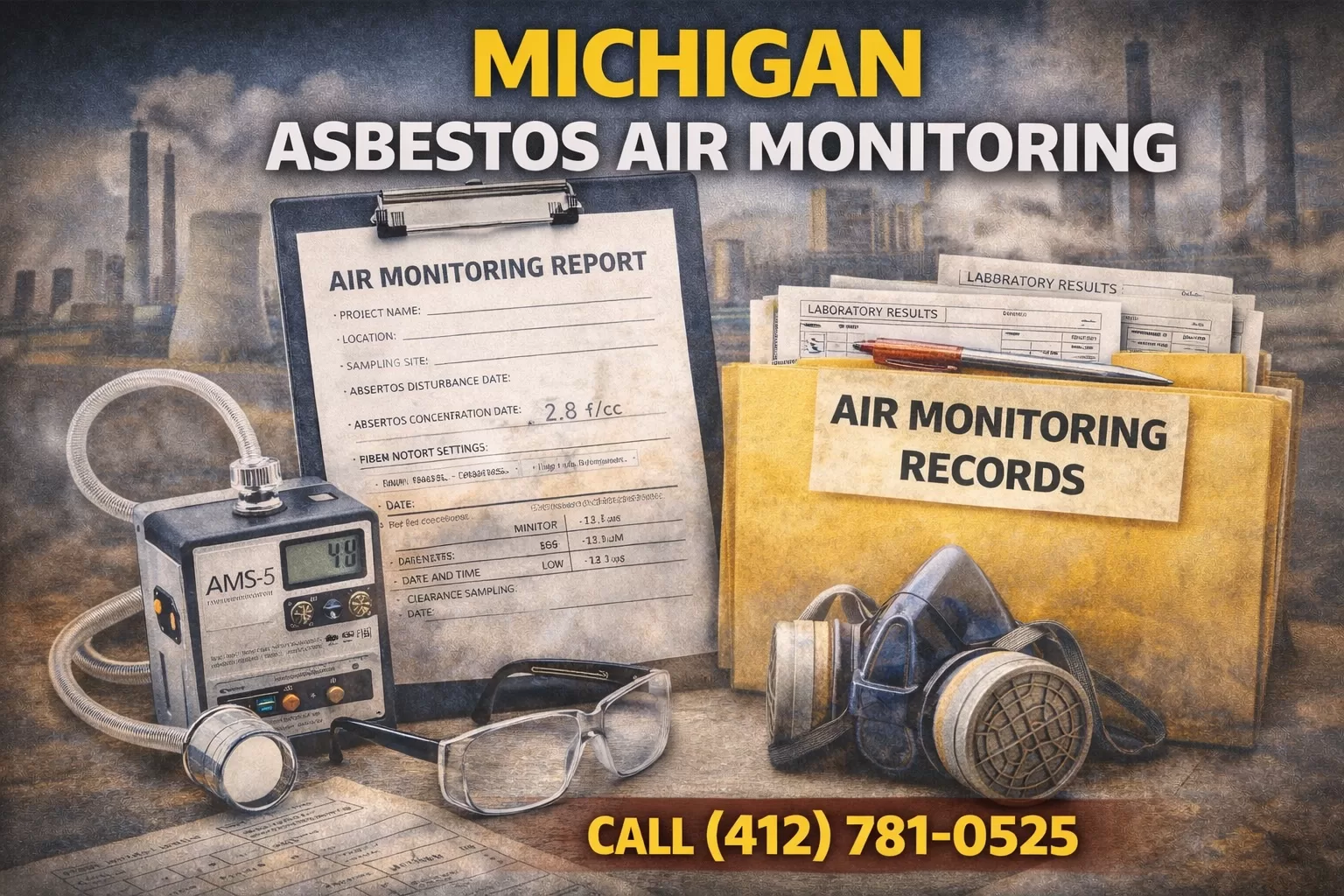
If you’re trying to prove asbestos exposure in Michigan, Michigan Asbestos Air Monitoring can be the missing link between “there was asbestos on site” and “it was disturbed while I worked there.” Air monitoring is what gets done during abatement, demolition, shutdowns, and maintenance projects—especially when pipe insulation, boiler insulation, refractory, gaskets, or flooring are being removed or disturbed.
👉 Search Asbestos Job Sites in Michigan
A lot of people assume their case lives or dies on a product name. In reality, many strong cases are built on records that show the conditions on the job: what was removed, what was in the air, and what the contractor was required to document. If you worked around industrial maintenance, construction, mechanical work, or large facility projects, air monitoring can help establish exposure even when no one remembers the brand from decades ago.
Mesothelioma/Asbestos Legal Help – WV, MI & PA
Speak directly with attorney Lee W. Davis. No call centers. Free, confidential review.
What Michigan asbestos air monitoring actually measures
Air monitoring typically means sampling airborne fibers during or after work that could release asbestos. Depending on the project, sampling can include:
- Background (pre-work) sampling
- Work area sampling during removal or disturbance
- Clearance sampling after abatement
- Personal sampling (worker-borne exposure monitoring), sometimes used on larger projects
The key point: these reports often show whether fiber counts spiked during the work, whether containment was effective, and whether the job was treated as an asbestos hazard or just handled casually.
Where air monitoring shows up in real Michigan job settings
Michigan Asbestos Air Monitoring is common in situations like:
- Plant shutdowns and rebuilds
- Boiler room and mechanical-room tear-outs
- Pipe insulation removal and replacement
- Demolition and renovation work in older buildings
- School, hospital, and municipal projects
- Industrial abatement projects involving insulation, floor tile, cement products, and equipment
If you were an industrial worker, electrician, pipefitter, laborer, millwright, mechanic, maintenance tech, or contractor, these documents can help tie you to a location and time period where airborne fibers were tested and recorded.
Learn More: Michigan Mesothelioma Lawyer
Who usually has the records
Air monitoring reports don’t always sit with the facility forever. They’re often held by:
- Abatement contractors
- Environmental consultants / industrial hygiene firms
- Project managers or construction managers
- Facilities departments (sometimes archived)
- General contractors (especially on large projects)
If you’re investigating an exposure history, you want to identify the contractor and consultant names because they frequently lead to the paper trail.
What to look for in the reports
Not all reports carry the same weight. Useful details include:
- Project location and dates
- Scope of work (what material was disturbed/removed)
- Sampling method and results (including clearance results)
- Containment methods and failure notes (if any)
- Names of contractors and consultants involved
Even if a report “passes” clearance, it can still confirm that asbestos work occurred, that insulation or materials were removed, and that the project treated the area as a fiber-risk environment.
What this can do for your Michigan claim
Michigan Asbestos Air Monitoring can help support:
- Proof the site had asbestos work during your time there
- Corroboration for exposure conditions (disturbance, tear-out, rebuilds)
- Identification of contractors and product categories
- A timeline that matches your work history to known asbestos projects
In many cases, it’s the difference between a vague work story and a documented exposure environment.
FAQs
1) What if I don’t know whether air monitoring was done?
Many workers don’t. Monitoring is typically done by consultants and recorded in project files. The jobsite, year range, and type of work often helps narrow where records exist.
2) Does “passing” clearance mean there was no exposure?
No. Clearance focuses on post-work conditions. The record can still confirm asbestos disturbance occurred and can identify the work scope and contractors.
3) Is air monitoring only done for big abatement projects?
No. It can appear in renovations, shutdown work, mechanical-room projects, and partial removals—especially where compliance required documentation.
If you have a Michigan work history and want to build a documented exposure timeline, call (412) 781-0525 or visit leewdavis.com.
Check If Your Family Was Exposed
Get your free guide instantly + a confidential case review.
🔒 100% Confidential. No obligations.