
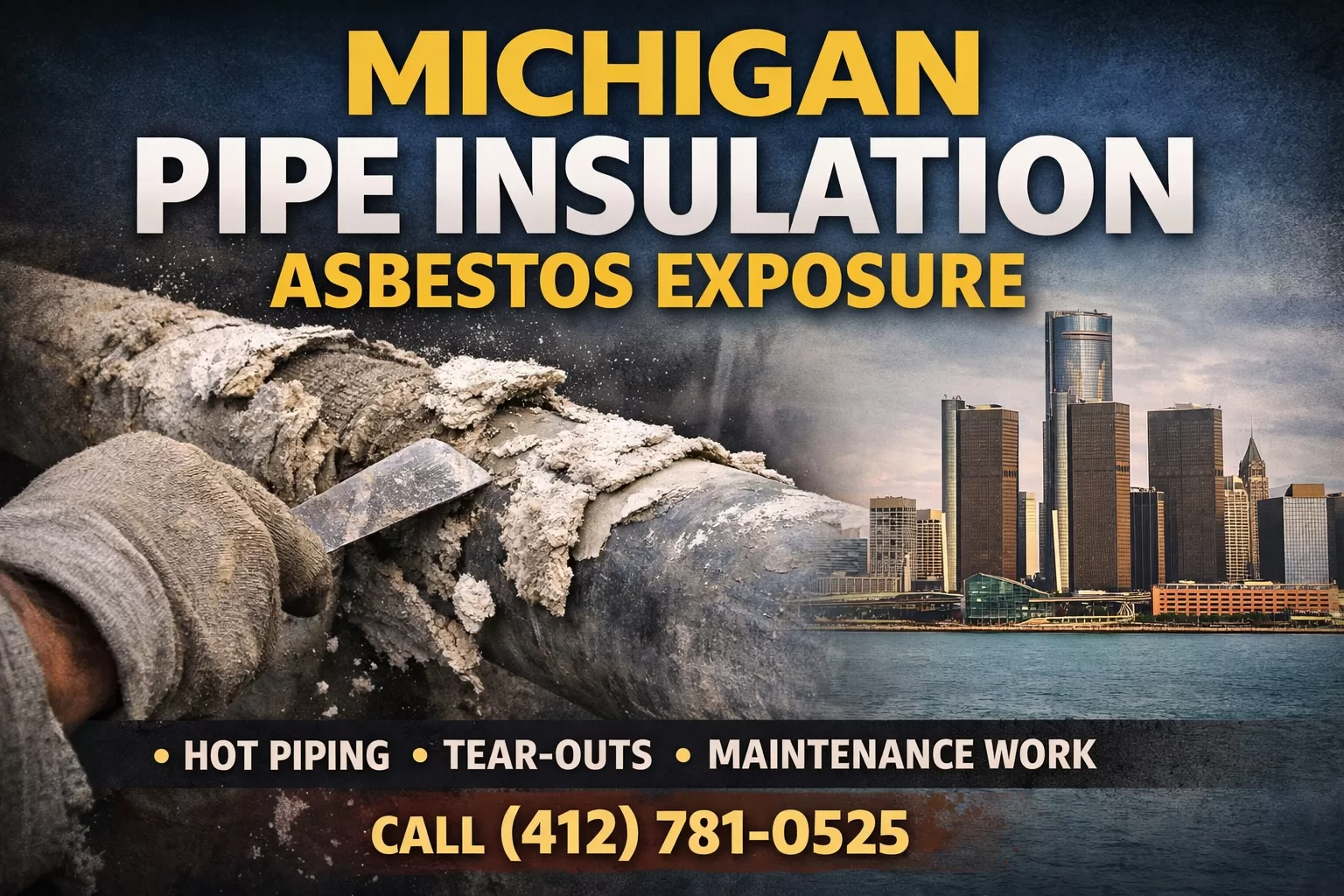
Michigan Pipe Insulation Asbestos exposure is one of the most common—and most underestimated—sources of asbestos disease in industrial work. For decades, insulation on hot piping was designed to handle extreme heat. The problem is that many of those insulation products contained asbestos, and when they were cut, removed, repaired, or disturbed, asbestos fibers could be released into the air.
Mesothelioma/Asbestos Legal Help – WV, MI & PA
Speak directly with attorney Lee W. Davis. No call centers. Free, confidential review.
This isn’t a “rare” scenario. It happened during ordinary work: shutting down lines, repairing leaks, replacing valves, rebuilding pumps, tearing out old wrap, or working around old, brittle insulation that crumbled when touched.
Why pipe insulation created dangerous exposure
Pipe insulation becomes a high-risk source of asbestos when it is:
- Aged and brittle from years of heat cycles
- Cut, torn, or removed during maintenance or renovations
- Disturbed during outages when crews move fast to restore operations
- Swept or brushed after tear-out, sending dust airborne again
Even if you weren’t the person “installing insulation,” you could still inhale dust if you worked nearby while insulation was being removed or repaired.
Where Michigan pipe insulation exposure commonly occurred
Pipe insulation was everywhere hot systems existed, including:
- Power plants and boiler rooms
- Automotive plants and heavy manufacturing
- Foundries and steel-related operations
- Chemical and refinery-type process facilities
- Paper mills and industrial processing plants
- Large institutional buildings with steam systems (schools, hospitals, government facilities)
If a facility had steam lines, hot water runs, or high-temperature process piping, insulation was likely part of the system.
👉 Search Asbestos job sites in Michigan
Trades most often affected
Michigan Pipe Insulation Asbestos exposure frequently shows up in the work histories of:
- Pipefitters and steamfitters
- Industrial maintenance mechanics
- Millwrights
- Boilermakers
- Electricians working around insulated runs
- Operating engineers and plant utility crews
- Contractors who handled shutdown and outage work
Many exposures were “incidental” but repeated—walking through the same areas, year after year, while insulation was patched, replaced, or torn out.
How exposure happens in real life
The highest-risk tasks tend to include:
- Tear-out of old pipe wrap during system repair
- Removing insulation to reach a valve, flange, or pump
- Scraping and cleanup after insulation disturbance
- Working in cramped mechanical spaces where dust concentrates (tunnels, chases, boiler rooms)
People remember the conditions: heat, tight space, urgency, dust on clothes and tools, and jobs where visibility changed when debris got kicked up.
What matters for a claim
A strong Michigan Pipe Insulation Asbestos case often centers on:
- The type of facility (plant, foundry, mill, process site, institutional steam system)
- Your job role and routine tasks (maintenance, repair, outage work, mechanical access)
- Time period (older insulation and lagging were commonly asbestos-containing)
- Repeated work near hot piping systems
You do not need perfect memory of product names. What matters is whether your work history realistically placed you around asbestos-containing insulation and repeated disturbance events.
Talk to a lawyer about Michigan industrial insulation exposure
If you or a family member has mesothelioma or another asbestos disease and your work history involved hot piping systems, maintenance work, or industrial repairs, you may have a viable claim.
Call (412) 781-0525 or visit leewdavis.com to discuss your Michigan work history.
Check If Your Family Was Exposed
Get your free guide instantly + a confidential case review.
🔒 100% Confidential. No obligations.
FAQs
What is Michigan Pipe Insulation Asbestos exposure?
It’s asbestos exposure from insulation on hot piping systems—especially when old insulation is cut, removed, repaired, or disturbed during maintenance.
Do I need to remember the insulation brand?
No. Many cases are supported by your job duties, facility type, and timeframe—especially if you worked around steam lines and insulation tear-outs.
I wasn’t an insulator. Can I still have exposure?
Yes. Pipefitters, electricians, mechanics, and other trades often worked near insulation disturbance and inhaled dust without being the installer.
What types of workplaces in Michigan had asbestos pipe insulation?
Any facility with steam or hot process piping—plants, foundries, mills, chemical/process sites, and older institutional buildings with boiler rooms and steam runs.
Mesothelioma/Asbestos Legal Help – WV, MI & PA
Speak directly with attorney Lee W. Davis. No call centers. Free, confidential review.