
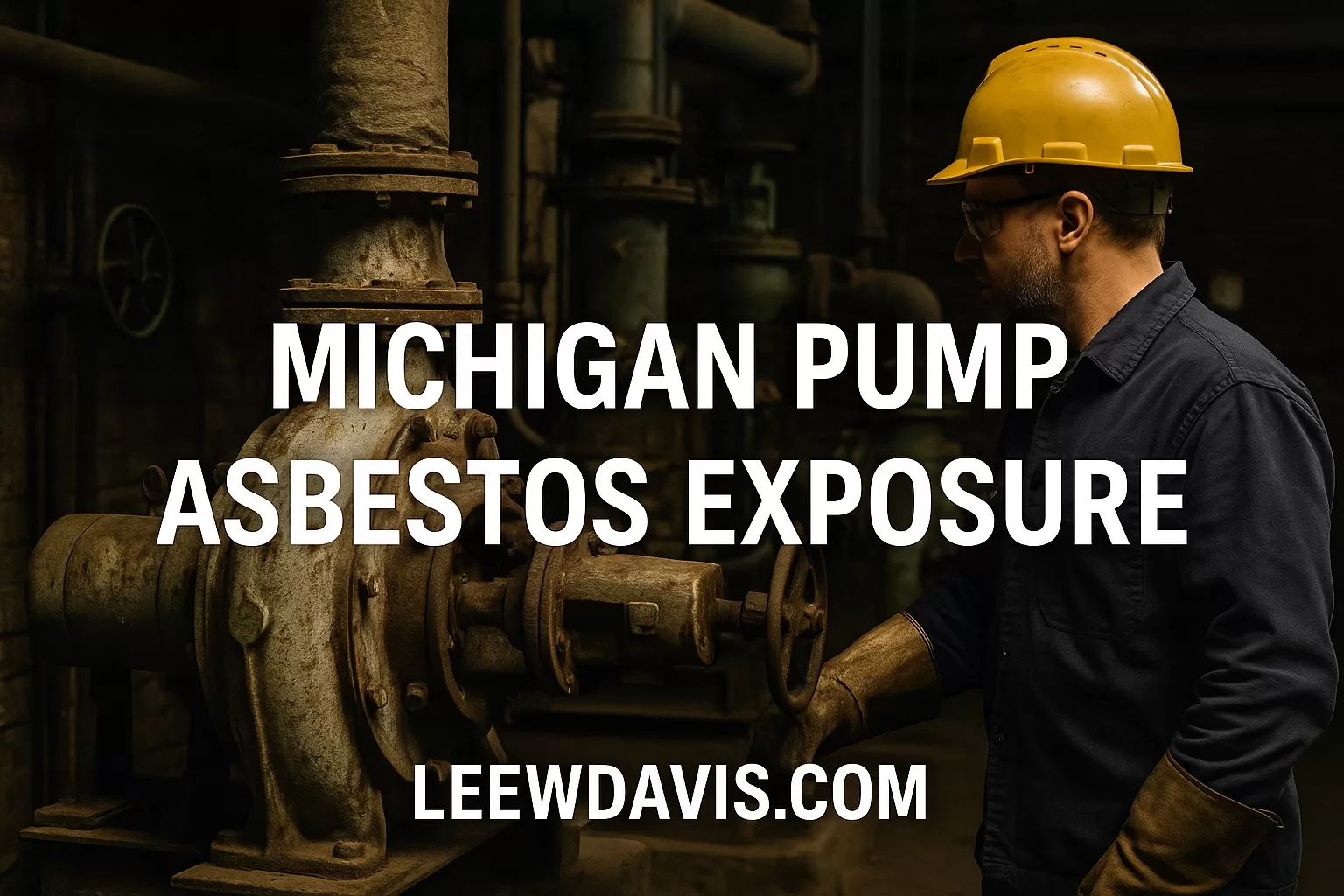
Michigan Pump Asbestos Exposure was widespread across auto manufacturing plants, steel facilities, refineries, foundries, and power stations throughout the state. Industrial pumps played a central role in moving hot water, steam, fuels, chemicals, lubricants, and industrial liquids across production lines and powerhouse systems. For decades, these pumps relied on asbestos-based components that exposed thousands of Michigan workers to airborne asbestos fibers.
Mesothelioma/Asbestos Legal Help – WV, MI & PA
Speak directly with attorney Lee W. Davis. No call centers. Free, confidential review.
Throughout the mid-20th century, major manufacturers used asbestos for its heat resistance, durability, and sealing strength. Workers who repaired, maintained, or worked near pumps often inhaled asbestos dust without knowing the long-term health risks.
Why Pumps in Michigan Contained Asbestos
In Michigan’s industrial and automotive facilities, pumps operated under high heat and extreme pressure. Asbestos materials were used because they prevented leaks and protected equipment from thermal breakdown. Common asbestos-containing pump components included:
- Pump gasket materials
- Valve and pump stem packing
- Pump housing insulation
- Flange gaskets on pump-connected systems
- Insulation boards and pads beneath pump bases
- Asbestos cement applied to joints and seals
Whenever workers removed or disturbed these materials, asbestos fibers were released into the air.
Where Michigan Pump Asbestos Exposure Occurred
Michigan plants with heavy pump usage included:
- Ford, GM, and Chrysler auto plants
- Detroit-area steel facilities
- Power stations across southeastern Michigan
- Chemical and refinery operations
- Foundries and casting plants in Saginaw, Flint, and Dearborn
These facilities used massive pump systems to move industrial fluids through production lines, cooling towers, boiler rooms, and chemical processing areas.
👉 Search Asbestos Job Sites in Michigan
Workers Most at Risk
Michigan Pump Asbestos Exposure affected a broad range of trades, especially:
- Pump mechanics
- Millwrights
- Pipefitters
- Maintenance crews
- Auto plant workers
- Welders and fabricators
- Boiler operators
- Powerhouse workers
Even employees who did not directly handle pumps were exposed by working nearby during maintenance shutdowns.
Diseases Linked to Pump Asbestos Exposure
Michigan workers exposed to asbestos around pump systems may later develop:
These diseases often emerge decades after the initial exposure.
How Michigan Workers Can Seek Compensation
Pump asbestos exposure claims typically involve:
- Manufacturers of asbestos-containing pump parts
- Industrial suppliers of gaskets, packing, and insulation
- Asbestos trust funds
- Lawsuits for mesothelioma and lung cancer
- Claims based on jobsite evidence and co-worker testimony
Compensation may be available even if the plant closed years ago.
Free Michigan Asbestos Case Review
If you or a loved one developed mesothelioma or lung cancer after Michigan Pump Asbestos Exposure, legal compensation may be available.
Call 412-781-0525 for a confidential consultation.
Check If Your Family Was Exposed
Get your free guide instantly + a confidential case review.
🔒 100% Confidential. No obligations.
No fee unless recovery is obtained.
Mesothelioma/Asbestos Legal Help – WV, MI & PA
Speak directly with attorney Lee W. Davis. No call centers. Free, confidential review.
FAQs – Michigan Pump Asbestos Exposure
1. What is Michigan Pump Asbestos Exposure?
Michigan Pump Asbestos Exposure refers to workers inhaling asbestos fibers released from pump gaskets, packing, insulation, and connected piping systems found in auto plants, steel facilities, refineries, and power stations across the state.
2. Why did industrial pumps in Michigan contain asbestos?
Asbestos materials were used because they resisted heat, pressure, and chemical corrosion. Michigan’s heavy industrial and automotive plants relied on asbestos-based gaskets, insulation, and packing to prevent leaks and protect pumps from thermal damage.
3. Which Michigan workers faced the highest pump asbestos exposure?
Pump mechanics, millwrights, pipefitters, boiler operators, auto plant maintenance crews, steelworkers, and powerhouse workers commonly encountered asbestos during pump repair, removal, or maintenance tasks.
4. What diseases are linked to asbestos exposure around industrial pumps?
Asbestos exposure near pump systems has been associated with mesothelioma and lung cancer, sometimes developing decades after workplace exposure.
5. Do workers still have a case if the plant has shut down?
Yes. Claims are typically made against the manufacturers of asbestos-containing pump components—not the current owner of the facility. Plant closures do not prevent workers from seeking compensation.
6. How is exposure documented in Michigan pump asbestos claims?
Attorneys use jobsite records, product identification, co-worker testimony, maintenance histories, and known asbestos usage patterns from Michigan auto, steel, chemical, and power facilities.
7. Can workers qualify for compensation even if symptoms appeared many years later?
Yes. Mesothelioma and lung cancer often appear decades after exposure, and these long-latency periods are well recognized in Michigan asbestos claims.