
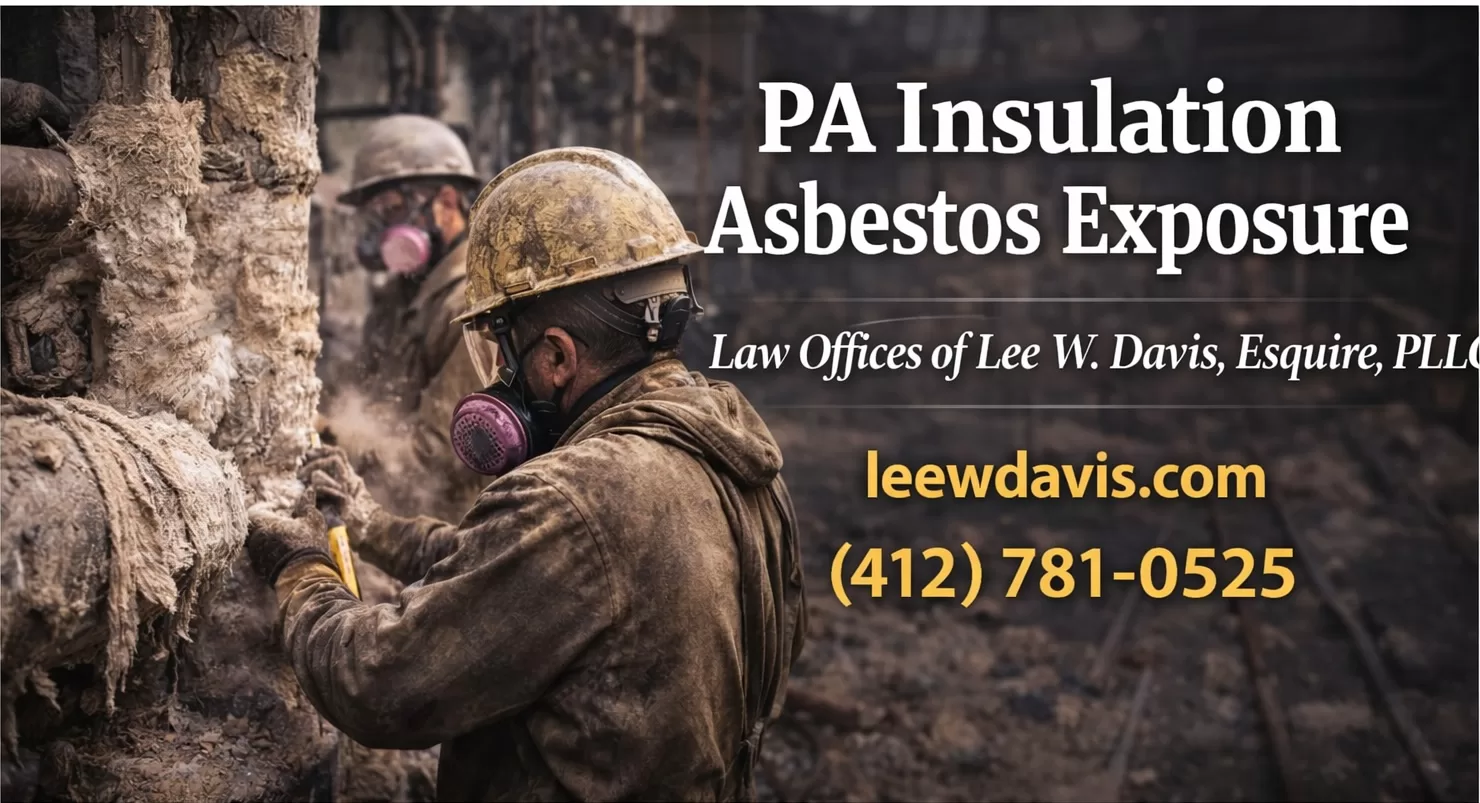
PA Insulation Asbestos Exposure is one of the most common pathways to mesothelioma and asbestos-related lung cancer in Pennsylvania industrial work. For decades, insulation was treated as “standard protection” in boilers, pipe runs, turbines, pumps, furnaces, heaters, and high-heat equipment—especially in steel, power generation, rail, chemical, and heavy manufacturing. The problem is simple: much of that insulation contained asbestos, and it was often cut, mixed, removed, scraped, or disturbed without warning and without adequate protection.
Read about Pittsburgh asbestos lawyer
If you worked maintenance, operations, millwright work, pipefitting, electrical, boiler work, or shutdown/turnaround crews, you may have been around asbestos insulation even if your job title never said “insulation” and even if you didn’t handle it every day. In real cases, exposure comes from routine tasks—opening a valve, pulling a line, replacing a gasket, tearing out old lagging, or working beside another trade while insulation is disturbed and dust spreads into the air.
Where insulation exposure happens in Pennsylvania
Insulation-related exposure shows up again and again in the same environments:
- Boiler rooms and mechanical rooms (schools, hospitals, factories, municipal buildings)
- Steel mills and coke works (hot equipment, lines, and high-heat containment)
- Power plants (turbines, boilers, piping systems, maintenance outages)
- Refineries and chemical plants (process lines, heat tracing, high-temperature operations)
- Shipyards, rail facilities, and industrial repair shops (equipment rebuilds and retrofits)
- Shutdowns and turnarounds where old materials get disturbed quickly, often under pressure
Even “minor” insulation disturbance can matter. Cutting, sanding, pulling, or breaking aged insulation often releases fibers. And exposure is rarely a single event—most people with serious disease were exposed repeatedly over years.
What “asbestos insulation” can look like
In Pennsylvania cases, “insulation” can mean several asbestos-containing materials, including:
- Pipe insulation and block insulation (often white/gray, brittle when aged)
- Lagging and wrap around lines, elbows, and fittings
- Boiler and tank insulation used to hold heat and protect surfaces
- Cement and insulating mud used at joints and fittings
- Thermal blankets and high-heat barriers in industrial settings
- Associated materials like gaskets and packing used in the same systems
If you’re not sure what you saw, that’s normal. The question is not whether you can identify a brand name from memory today. The real question is whether your work put you around the kinds of systems and maintenance tasks where asbestos insulation was commonly used.
When an insulation case becomes a real claim
A legitimate PA insulation case is built around three basic pillars:
- Diagnosis (mesothelioma, asbestos-related lung cancer, or another asbestos disease)
- Work history showing credible exposure opportunities
- Product/company identification tied to the worksite and time period
Pennsylvania asbestos product identification
That last part—identification—is where many firms get sloppy. I don’t. I’ve been doing product identification work since I started in this field in 1988. That skill carried through large-scale foundry work (including the Saginaw GM foundry docket) and into years of Pennsylvania and West Virginia mesothelioma and lung cancer cases where the only way to win is to build credible proof that holds up.
What you should do if you suspect insulation exposure
If you or a family member has been diagnosed and the work history includes high-heat industrial environments, don’t talk yourself out of it because you “weren’t an insulator.” Many of the strongest cases involve other trades who worked in and around insulation every week.
Start by pulling together:
- A basic list of jobsites, dates, and job titles
- The types of work you did (maintenance, outage work, boiler work, pipe work, equipment rebuilds)
- Names of coworkers who remember how the work was done
- Any documents you already have (union history, medical records, employment records)
You do not need a perfect file to call. You need a starting point.
👉 Search Asbestos Job Sites in Pennsylvania
If you were exposed in a Pennsylvania plant, mill, power station, shop, or boiler room and you’ve now been diagnosed with mesothelioma or asbestos-related lung cancer, you need a lawyer who knows how to prove exposure—not someone who just “collects paperwork.” Product identification has been my focus since 1988, through major industrial dockets and decades of hands-on casework. Call (412) 781-0525 or visit leewdavis.com to get a direct case review.