
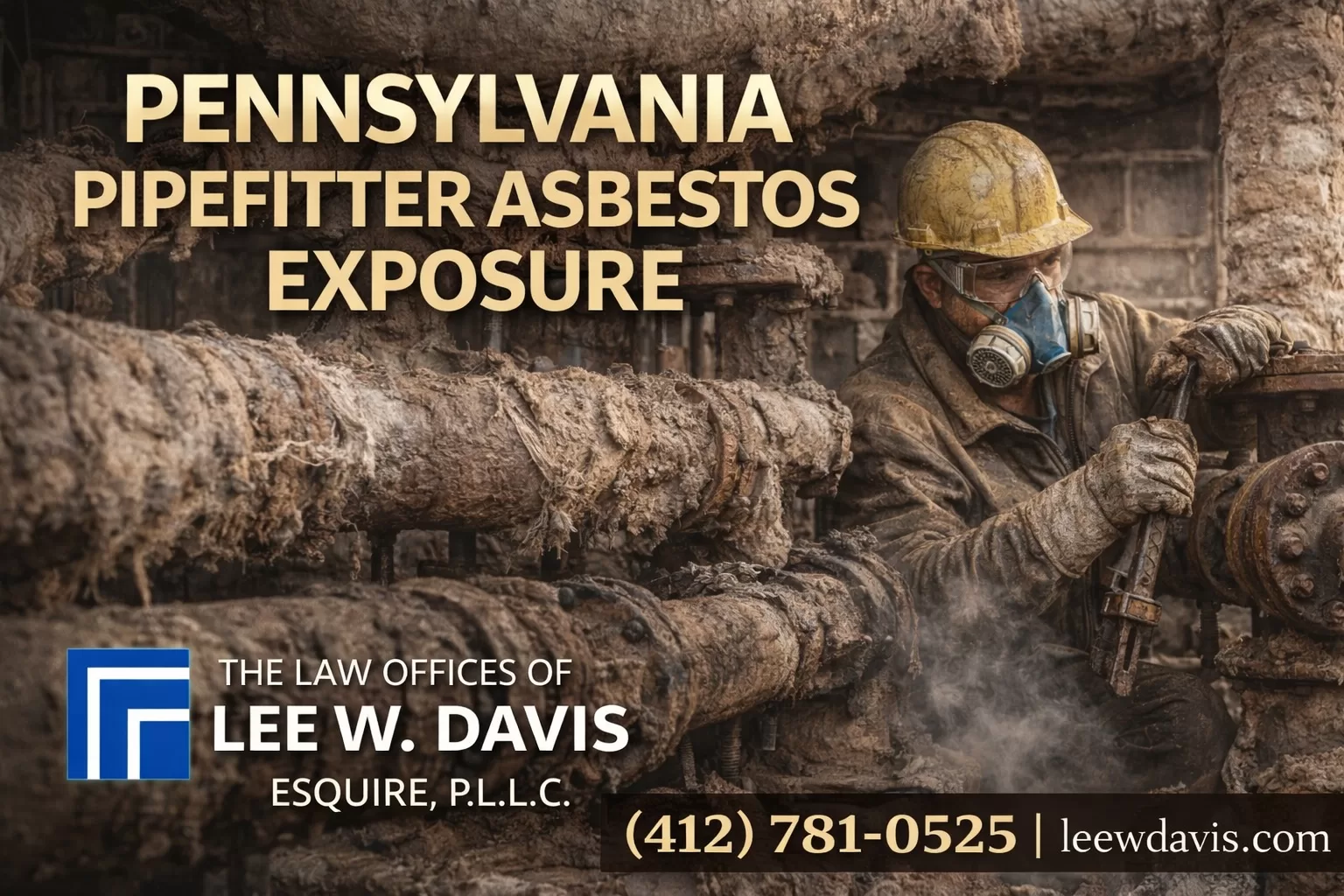
If you worked as a pipefitter in Pennsylvania and you’ve been diagnosed with mesothelioma or lung cancer, Pennsylvania pipefitter asbestos exposure is one of the most consistently well-documented occupational exposure histories in asbestos litigation. Pipefitters throughout Pennsylvania’s steel mills, power generating stations, chemical plants, refineries, shipyards, and manufacturing facilities worked in direct and sustained contact with the asbestos-containing insulation, gaskets, and valve packing that lined the steam and process piping systems throughout every industrial facility in the state — from Philadelphia and the Delaware Valley through the anthracite and bituminous coal regions, the Susquehanna Valley industrial corridor, and the massive western Pennsylvania steel and manufacturing complex.
Mesothelioma/Asbestos Legal Help – WV, MI & PA
Speak directly with attorney Lee W. Davis. No call centers. Free, confidential review.
Why Pennsylvania Pipefitters Face Among the Strongest Asbestos Claim Profiles
Pipefitters occupy a uniquely consistent position in the asbestos exposure hierarchy at industrial facilities throughout Pennsylvania. Where other trades encountered asbestos in specific areas or during specific tasks, pipefitters followed the pipe systems — which meant they followed the asbestos throughout every industrial facility they worked in.
Industrial piping systems run everywhere. Steam lines for process heat and utility services run from boiler rooms into every production department, every mechanical room, and every building in a major Pennsylvania industrial facility. Process piping for chemical manufacturing, refining, and industrial production connects every piece of process equipment throughout the plant. A Pennsylvania pipefitter maintaining those systems worked throughout the entire facility — and throughout the asbestos-containing insulation that covered virtually every pipe, valve, and fitting in every high-temperature application throughout every facility in the state.
The specific tasks that created the most significant pipefitter asbestos exposure were the core tasks of the trade — removing old pipe insulation to access pipe beneath it, replacing asbestos-containing gaskets at flanged connections on steam and process lines, changing out valve packing in the valves distributed throughout industrial piping systems, and refitting new insulation after completing mechanical work. Each of those tasks disturbed asbestos-containing materials directly, and pipefitters performed all of them repeatedly throughout careers spanning decades at Pennsylvania industrial facilities.
Pennsylvania’s Industrial Geography and the Pipefitter Asbestos Legacy
Pennsylvania’s full industrial geography created pipefitter asbestos exposure from one end of the state to the other:
Western PA steel and industrial corridor — The Mon Valley, Ohio River, and Allegheny Valley industrial operations that defined western Pennsylvania employed pipefitters throughout asbestos-saturated steam and process piping systems at every major facility. The Homestead Works, Clairton Coke Works, Allegheny Ludlum Brackenridge, Cheswick Power Station, Tarentum PPG Chemical Plant, Sharon Steel, and Armco Steel Butler Works represent the western PA pipefitter exposure environment across steel, coke, chemical, and power generation sectors.
Bethlehem Steel and the Lehigh Valley — Bethlehem Steel’s massive Bethlehem, PA operations were among the largest integrated steel facilities in the country, with steam and process piping systems throughout the facility requiring the heavy asbestos insulation that characterized industrial steel production. Pipefitters maintaining those systems at Bethlehem worked plant-wide throughout environments saturated with asbestos-containing pipe insulation, gaskets, and valve packing.
Philadelphia and Delaware Valley industrial corridor — Philadelphia’s industrial history includes refining, chemical manufacturing, shipbuilding, and heavy manufacturing along the Delaware River. Philadelphia refineries — with their extensive process piping systems carrying petroleum products at high temperatures and pressures — employed pipefitters in environments where asbestos-containing insulation, gaskets, and packing were present throughout every unit of the refinery. Delaware Valley shipyards employed pipefitters in the confined spaces of ship hulls — working in engine rooms and mechanical compartments where asbestos-insulated pipe systems ran throughout and where ventilation was minimal.
Pennsylvania power generating stations statewide — Power generating stations throughout Pennsylvania employed pipefitters on the turbine steam systems, boiler piping, feedwater and condensate systems, and the full range of high-pressure steam infrastructure throughout each generating station. The Pennsylvania power plant asbestos resource covers the full statewide power plant pipefitter exposure profile.
Anthracite coal region industrial facilities — The anthracite coal region of northeastern Pennsylvania operated coal preparation plants, breakers, and supporting industrial facilities with steam and utility systems requiring asbestos-containing insulation. Pipefitters maintaining those systems throughout the anthracite region accumulated exposure from the coal industry’s mechanical infrastructure across careers in the region.
Bituminous coal and coke operations — Western and southwestern Pennsylvania’s bituminous coal and coke operations employed pipefitters on the utility steam systems, by-products recovery piping, and chemical processing systems associated with coal preparation and coke production throughout the state’s coal counties.
Chemical plants and refineries statewide — Pennsylvania’s chemical manufacturing and refining sector — from the Delaware Valley through the industrial facilities distributed across central and western PA — employed pipefitters on the process piping systems that defined chemical plant and refinery operations. Chemical plant process piping carries high-temperature, high-pressure fluids requiring the most demanding thermal insulation standards, and the asbestos-containing insulation used on those systems created significant pipefitter exposure throughout the pre-1980 chemical manufacturing era.
The Specific Tasks That Created Pennsylvania Pipefitter Asbestos Exposure
Pipe insulation removal — Accessing pipe for repair or replacement required removing the insulation surrounding it. Old pipe insulation — particularly materials installed before the late 1970s in Pennsylvania industrial facilities — contained asbestos in high concentrations. Cutting, pulling, and stripping that insulation released fibers directly into the breathing zone of the pipefitter doing the work. This was the single most fiber-intensive task in the pipefitter trade.
Gasket removal and replacement — Flanged connections throughout Pennsylvania industrial piping systems — on steam lines, process piping, chemical transport systems, and utility systems throughout every facility in the state — used asbestos-containing gaskets to seal against heat and pressure. Removing old gaskets — scraping them from flange faces after years of heat cycling — released asbestos fibers in concentrated form. This task was performed thousands of times over the course of a Pennsylvania pipefitter’s career.
Valve packing replacement — Steam and process valves throughout Pennsylvania industrial facilities used asbestos-containing packing material to prevent leakage around valve stems. Replacing that packing was routine maintenance work performed on a regular schedule throughout every industrial facility in the state.
Work in confined mechanical spaces — Much of the pipefitting work in Pennsylvania industrial facilities occurred in pipe chases, mechanical rooms, utility corridors, and ship compartments where asbestos dust had no outlet. The concentration of fibers in those environments during active maintenance work was significantly higher than in open plant areas — a particular concern at Delaware Valley shipyards where confined space pipe work defined the bulk of the trade.
Pennsylvania United Association Records and Multi-Facility Career Documentation
Pennsylvania pipefitters were typically members of the United Association of Plumbers and Pipefitters and dispatched to industrial job sites through their local union hall. UA dispatch records, dues payment histories, benefit statements, and pension records establish which facilities a pipefitter was dispatched to and during what periods — documenting the multi-facility career history that characterizes most Pennsylvania pipefitter asbestos claims.
If you were a union pipefitter in Pennsylvania, your UA local records are among the most important documentation available for your asbestos claim. An experienced asbestos attorney can help you locate and preserve those records at the earliest possible stage.
Regional Pennsylvania Pipefitter Resources
Our practice has developed regional and county-specific pipefitter asbestos resources throughout Pennsylvania:
- Allegheny Valley pipefitters — Brackenridge, Tarentum, and Cheswick power station corridor
- Weirton Steel pipefitters — WV Ohio River corridor
- Westmoreland County pipefitters — Greensburg, Latrobe, Jeannette corridor
- Beaver County pipefitters — Beaver Falls, Aliquippa, Monaca corridor
- Washington County pipefitters — Washington Steel and county industrial facilities
What Evidence Supports a Pennsylvania Pipefitter Asbestos Claim
- Diagnosis records confirming mesothelioma or lung cancer
- Work history at Pennsylvania industrial facilities — job titles, years worked, specific piping systems and tasks performed, facilities and counties where you worked
- Memory of the specific pipe systems, valves, and equipment you worked on throughout Pennsylvania facilities
- Names of coworkers, foremen, or supervisors from your time at specific Pennsylvania facilities
- United Association union records from your Pennsylvania local — referral logs, dues records, benefit statements
- Social Security earnings records confirming employers and time periods
For a broader overview of how Pennsylvania mesothelioma claims work see our Pennsylvania resource. For workers with lung cancer diagnoses see Pittsburgh asbestos lung cancer. For the Pennsylvania asbestos lawyer overview see our dedicated guide. You can search the full list of asbestos job sites in Pennsylvania to review all documented Pennsylvania exposure sites.
Knowledge of Pennsylvania Pipefitter Asbestos Cases Since 1989
I first began researching Pennsylvania asbestos cases in 1989 as a paralegal, working on asbestos mass trials across Pennsylvania and West Virginia. I returned to Pittsburgh after supervising 3,200 Saginaw Foundry Asbestos Cases in 1999 to handle mesothelioma and lung cancer cases individually across Pennsylvania, West Virginia, and Michigan, applying decades of product identification work — tracking the specific pipe insulation manufacturers, gasket suppliers, and valve packing companies whose materials were used at Pennsylvania industrial facilities across the state — directly to every case evaluation.
When you call, you speak directly with me. No call centers. No case managers.
If you or a family member worked as a pipefitter in Pennsylvania and has been diagnosed with mesothelioma or lung cancer, time matters. Pennsylvania’s statute of limitations runs from the date of diagnosis, not from the date of your exposure decades ago.
Call (412) 781-0525 or start your confidential case review online now.
Check If Your Family Was Exposed
Get your free guide instantly + a confidential case review.
🔒 100% Confidential. No obligations.
Frequently Asked Questions
Q: I worked as a pipefitter at Pennsylvania industrial facilities across multiple counties and multiple sectors — steel mills, power plants, and chemical plants — over my career. Does that multi-facility, multi-sector history help my mesothelioma claim?
A: Yes significantly. A pipefitter career spanning multiple Pennsylvania facility types and counties accumulates asbestos exposure from distinct piping systems and distinct sets of asbestos-containing product manufacturers at each location. Each facility and each product line encountered there represents a separate thread in your exposure narrative and potentially a separate defendant in your claim. Multi-facility pipefitter careers throughout Pennsylvania typically produce the strongest claim profiles because the total exposure is greatest and the number of potentially responsible product defendants is largest.
Q: I worked as a pipefitter at a Philadelphia area refinery for many years and have been diagnosed with mesothelioma. Does that support a claim?
A: Yes, potentially. Philadelphia area refinery pipefitters worked throughout process piping systems carrying petroleum products at high temperatures and pressures — conditions requiring the most demanding thermal insulation standards and the asbestos-containing gaskets and valve packing that characterized refinery piping throughout the pre-1980 period. A pipefitter career maintaining those systems at a Pennsylvania refinery represents a significant and well-documented asbestos exposure history that has supported successful mesothelioma claims.
Q: How long do I have to file a mesothelioma claim in Pennsylvania connected to pipefitter work across the state?
A: Pennsylvania’s statute of limitations runs from the date of diagnosis, not the date of your exposure. Wrongful death claims carry different and sometimes shorter deadlines running from the date of death. Do not assume it is too late — call as soon as a diagnosis is confirmed so we can evaluate your full Pennsylvania pipefitter career history and identify all responsible parties.
Mesothelioma/Asbestos Legal Help – WV, MI & PA
Speak directly with attorney Lee W. Davis. No call centers. Free, confidential review.