
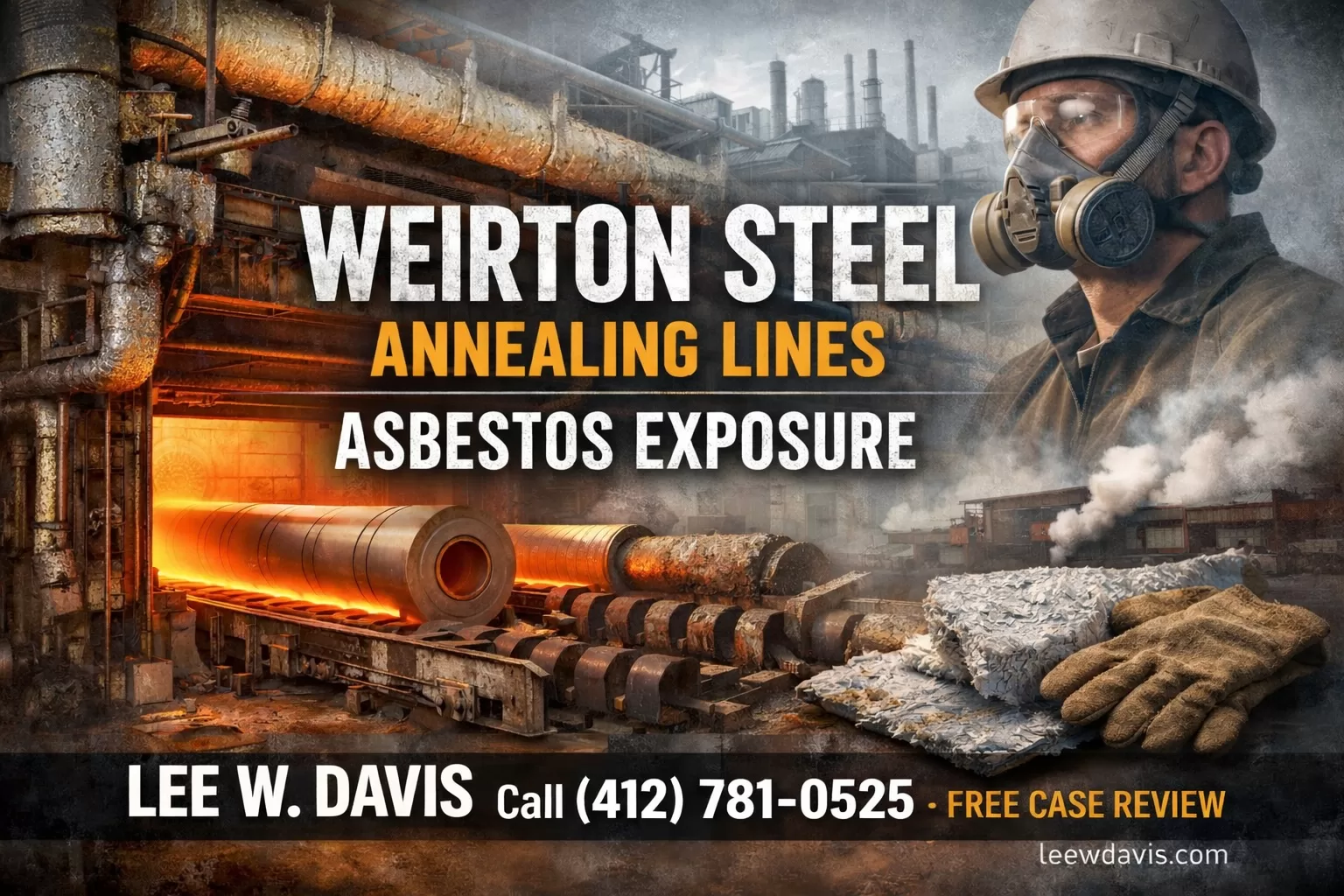
If you worked the Weirton Steel annealing lines and you’ve been diagnosed with mesothelioma, the heat-intensive nature of that operation matters directly to your asbestos exposure claim. Annealing was one of the most thermally demanding processes in the finishing side of the plant and high heat meant heavy insulation, which meant asbestos.
Mesothelioma/Asbestos Legal Help – WV, MI & PA
Speak directly with attorney Lee W. Davis. No call centers. Free, confidential review.
Why Annealing Lines Created Serious Asbestos Exposure
Annealing is a heat treatment process that softens steel strip after rolling by raising it to high temperatures and allowing it to cool in a controlled way. At Weirton Steel, the annealing furnaces ran continuously and at sustained extreme temperatures. That operating environment required substantial thermal insulation on the furnaces themselves, on the surrounding piping and mechanical systems, and on the equipment used to move steel through the process.
Read More about Weirton Steel Mesothelioma Lawsuits
That insulation historically contained asbestos. It was present on the furnace shells, on the steam and process lines feeding the furnaces, and on the mechanical components throughout the annealing department. During routine maintenance and especially during outage and repair work when insulation was removed, cut, or replaced asbestos fibers became airborne in the work area.
The annealing lines also used refractory materials in the furnace construction and repair that, like the open hearth and blast furnace, included asbestos-containing blocks, boards, cements, and ramming materials near the shell. Workers involved in furnace maintenance and repair on the annealing lines faced exposure profiles similar in some respects to those on the steelmaking side of the plant.
Read about West Virginia Mesothelioma Lawyer
Trades Most Commonly Involved in Annealing Line Asbestos Claims
Workers across multiple trades encountered asbestos-containing materials on the Weirton Steel annealing lines:
- Pipefitters and steamfitters on furnace feed and process lines
- Millwrights maintaining mechanical systems and furnace equipment
- Electricians working around furnace controls and high-heat systems
- Boilermakers on furnace maintenance and repair
- Laborers on teardown, cleanup, and outage crews
- Outside contractors brought in for furnace rebuilds and retrofits
Bystander exposure was significant. Workers did not need to handle insulation or refractory materials directly to breathe the fibers released when those materials were disturbed during maintenance and repair work nearby.
What Evidence Supports an Annealing Line Asbestos Claim
You do not need complete records or perfect memory to begin evaluating your claim. The evidence that matters most includes:
- Diagnosis records — pathology reports, imaging, treatment summaries
- Work history at Weirton Steel — department, job title, years worked, specific tasks
- Memory of the furnaces, equipment, and systems you worked on or around
- Names of coworkers, supervisors, or contractors you remember from the annealing department
- Union records, benefit statements, or Social Security earnings records confirming your employment
If you can describe what you worked on and where in the annealing department you worked, that is often enough to begin identifying responsible parties and building the exposure narrative.
Deep Knowledge of Weirton Steel Asbestos Cases
I first began researching Weirton Steel asbestos cases in 1989, working on the original asbestos mass trials in West Virginia. I have been licensed to practice law since 1996 and have handled mesothelioma cases across Pennsylvania, West Virginia, and Michigan ever since. That depth of knowledge about the plant, its departments, its contractors, and the product defendants involved in these claims is something I bring directly to every case evaluation.
When you call, you speak directly with me. No call centers. No case managers.
If you or a family member worked the Weirton Steel annealing lines and has been diagnosed with mesothelioma, time matters. West Virginia’s statute of limitations runs from the date of diagnosis, not from the date of your exposure decades ago.
Call (412) 781-0525 or start your confidential case review online now.
Check If Your Family Was Exposed
Get your free guide instantly + a confidential case review.
🔒 100% Confidential. No obligations.
Frequently Asked Questions
Q: I worked the annealing lines at Weirton Steel but never touched insulation directly. Can I still have an asbestos exposure claim?
A: Yes. Direct contact with insulation is not required for a viable mesothelioma claim. Asbestos fibers become airborne when insulation is cut, removed, or disturbed — and anyone working in that environment breathes the same air. Bystander exposure on the annealing lines was common and has supported numerous successful claims.
Q: The annealing furnaces I worked on were rebuilt and re-insulated several times during my career. Does that affect my claim?
A: It can actually strengthen it. Each rebuild and re-insulation event was a separate asbestos exposure event. Multiple exposures over the course of a career at the annealing lines can support a more substantial exposure narrative and may involve multiple product defendants whose materials were used at different points in time.
Q: How long do I have to file a mesothelioma claim in West Virginia after a diagnosis connected to Weirton Steel annealing line work?
A: West Virginia’s statute of limitations runs from the date of diagnosis, not from the date of your exposure. Wrongful death claims carry different and sometimes shorter deadlines. Records disappear and witnesses become harder to locate over time — call as soon as a diagnosis is confirmed.
Mesothelioma/Asbestos Legal Help – WV, MI & PA
Speak directly with attorney Lee W. Davis. No call centers. Free, confidential review.