
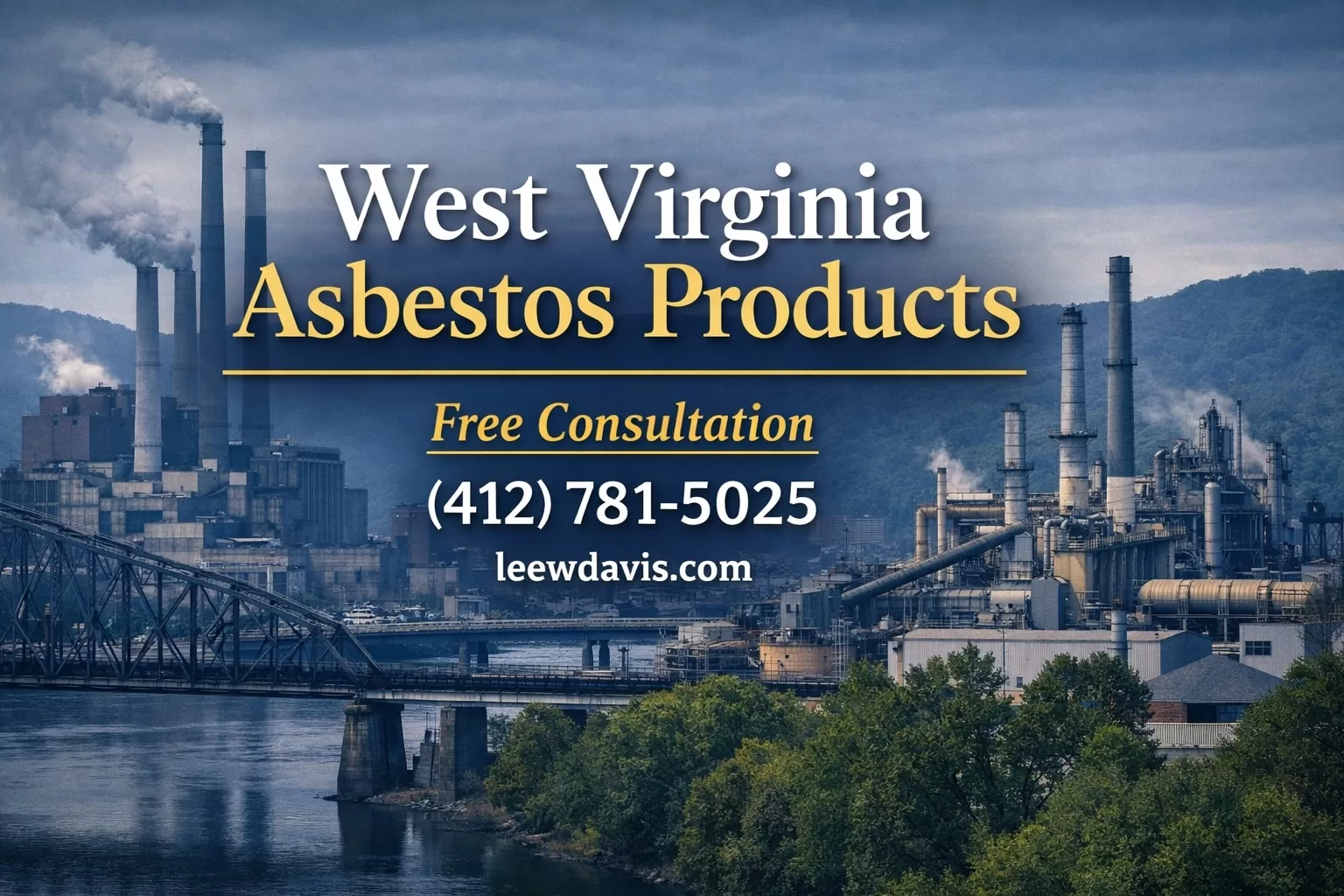
West Virginia Asbestos Products are still one of the most overlooked parts of proving an asbestos case. Many people remember the jobsite or the trade, but not the brand name on a box from 30 years ago. That’s normal. In most cases, you can still build a strong exposure story by identifying the type of product, where it was used, and who handled it.
Asbestos wasn’t just “in the air.” It was built into industrial materials because it resisted heat and corrosion. That means exposure often happened during routine maintenance—cutting, grinding, replacing, scraping, wire-brushing, or blowing out old dust.
Mesothelioma/Asbestos Legal Help – WV, MI & PA
Speak directly with attorney Lee W. Davis. No call centers. Free, confidential review.
What counts as an asbestos “product”?
A product can be almost anything used in industrial settings that contained asbestos fibers. The legal question is usually: what was it, where was it used, and how did the work release fibers?
Even if you can’t remember a brand name, you can often identify:
- Product category (insulation, gasket, refractory, cement, brake, etc.)
- Application (boilers, pipe systems, turbines, pumps, ovens, furnaces, electrical equipment)
- Task that disturbed it (removal, cutting, sanding, mixing, cleanup)
- Time period (decades matter because product formulas changed)
Common West Virginia asbestos product categories
Thermal insulation
Industrial insulation is one of the most common sources of exposure. It was used to wrap hot systems and conserve energy, especially in power generation and heavy industry.
Typical locations:
- Pipe runs, valves, elbows, flanges
- Boilers and boiler rooms
- Turbines and steam lines
Gaskets and packing
Gaskets and packing were used to seal systems and prevent leaks. They were often replaced during routine maintenance, and removal could create dust—especially when old material was scraped off.
Common applications:
- Pumps, compressors, and motors
- Valves and flanged piping
- Steam and chemical systems
Refractory materials
Refractory products were built to withstand extreme heat—lining furnaces, kilns, ovens, and high-temperature industrial units. Installation and tear-out are high-dust activities.
Common applications:
- Steel and metal facilities
- Chemical processing units
- Foundries and maintenance outages
Asbestos cement and construction materials
Asbestos cement products were used because they were durable and fire resistant. Cutting, drilling, and demolition work could release fibers.
Often found in:
- Cement pipe, panels, and boards
- Building and industrial structures
- Mechanical rooms and older renovations
Electrical and heat-resistant components
Some older electrical equipment and heat shields contained asbestos components—especially where heat, arc, or fire resistance mattered.
Examples:
- Heat shields and insulating boards
- Equipment panels in older industrial settings
- Some high-heat protective barriers
Vehicle and equipment friction materials
Brakes and clutches historically contained asbestos. Exposure often occurred when grinding, blowing out dust, sanding, or replacing components.
Common scenarios:
- Fleet maintenance
- Heavy equipment shops
- Industrial vehicle service
Where these products were commonly encountered in West Virginia
West Virginia work environments frequently associated with asbestos product use include:
- Power generation and boiler work
- Chemical facilities and maintenance shutdowns
- Steel and metal operations
- Industrial maintenance departments
- Pipefitting, millwright, and mechanical repair work
- Construction and demolition on older industrial sites
It is also common for exposure to occur during outages, turnarounds, or shutdowns, when large numbers of trades are brought in and old materials are disturbed at once.
How to prove exposure when you don’t remember brand names
Most people don’t remember the label—especially if they were focused on getting a job done. Proof often comes from combining:
- Your work history (jobs, years, duties, locations)
- Coworker testimony (who used what, where, and when)
- Industrial records (maintenance logs, parts lists, purchasing records when available)
- Product identification patterns (what was commonly used in that kind of system and era)
- Medical records linking disease to asbestos exposure
A strong case does not require perfection. It requires a credible, consistent exposure narrative supported by records and testimony.
Talk to a West Virginia mesothelioma lawyer
If you believe West Virginia Asbestos Products exposed you to asbestos and you’ve been diagnosed with mesothelioma, lung cancer, or another asbestos-related disease, you may have legal options. The key is acting promptly and preserving your work and medical history before records disappear.
For help evaluating your exposure and next steps, call (412) 781-0525 or visit leewdavis.com.
Check If Your Family Was Exposed
Get your free guide instantly + a confidential case review.
🔒 100% Confidential. No obligations.
Read More:
- For a deeper look at where exposures commonly occurred, see my West Virginia asbestos job sites page, which organizes major industries and work environments across the state.
- If you’ve already been diagnosed and want to understand the legal process and timelines, my West Virginia mesothelioma lawyer page explains how asbestos claims are built and pursued.
- When families are involved after a loss, my mesothelioma wrongful death page explains what surviving relatives can recover and how those claims differ.
FAQs
What are the most common West Virginia asbestos products?
The most common categories include thermal insulation, gaskets and packing, refractory materials, asbestos cement products, heat-resistant boards, and some older friction materials like brakes and clutches.
Do I need the brand name of the asbestos product to file a claim?
Not always. Many cases can be built through product category identification, work history, coworker testimony, and records that show what was typically used in that type of facility and time period.
Where were asbestos products most often used in West Virginia?
They were frequently used in power generation, chemical operations, steel and metal facilities, industrial maintenance work, and older construction or demolition involving mechanical rooms and high-heat systems.
Mesothelioma/Asbestos Legal Help – WV, MI & PA
Speak directly with attorney Lee W. Davis. No call centers. Free, confidential review.