
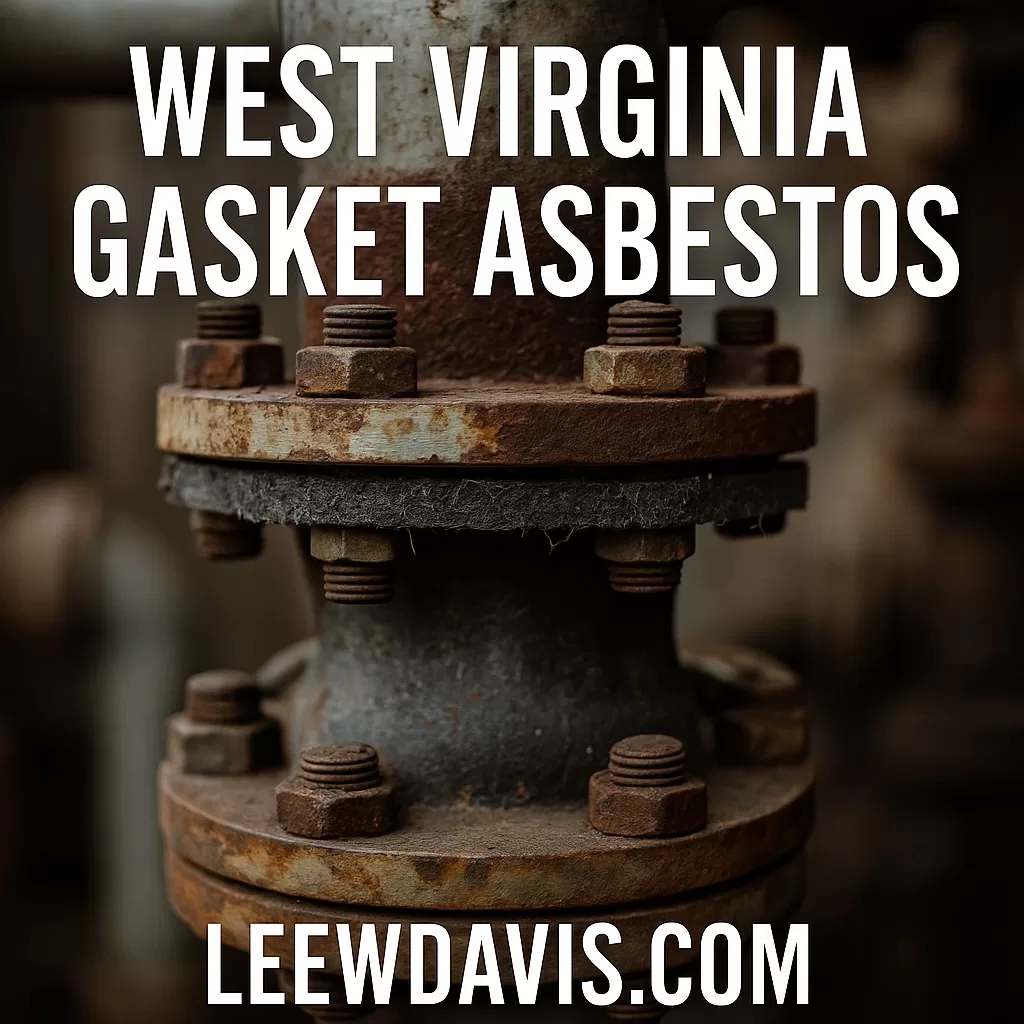
West Virginia Gasket Asbestos exposure was widespread across chemical plants, powerhouses, refineries, steel mills, and manufacturing sites throughout the state. Gaskets were installed anywhere two metal surfaces were bolted together—pumps, valves, flanges, tanks, pipe lines, boilers, reactors, steam lines, and chemical process equipment. Because these systems operated under extreme heat and pressure, asbestos was the preferred gasket material for decades.
Workers who removed, replaced, or scraped gaskets regularly released asbestos dust into the air. Many were never warned about the risks, even though asbestos-containing gaskets were among the most common exposure sources in West Virginia industry.
Why Gaskets Contained Asbestos
Asbestos was used in gaskets because it:
- Withstood thermal stress
- Sealed high-pressure systems
- Resisted acids, solvents, and chemicals
- Maintained stability in steam and heat cycles
Common asbestos gasket types included:
- Spiral-wound metal gaskets
- Sheet gaskets
- Rope and braided gaskets
- Die-cut flange gaskets
- High-temperature boiler gaskets
- Pump and valve gaskets
Whenever these gaskets were scraped, chiseled, wire-brushed, or removed, workers inhaled asbestos fibers released into the air.
Where Gasket Asbestos Exposure Occurred in West Virginia
Thousands of asbestos-containing gaskets were used across major industrial sites, including:
- Chemical plants in Belle, Institute, Nitro, and South Charleston
- Power stations along the Kanawha and Ohio River corridors
- Steel fabrication and manufacturing facilities
- Oil and gas processing terminals and compressor stations
- Pulp and paper plants
- Tank farms and pipeline hubs
Shutdowns and outages often involved mass gasket removal, creating extremely high exposure levels.
👉 Search Asbestos Job Sites in West Virginia
Workers Most at Risk
West Virginia Gasket Asbestos exposure affected a broad range of trades:
- Pipefitters
- Millwrights
- Mechanics
- Boilermakers
- Chemical operators
- Powerhouse crews
- Welders and fabricators
- Laborers assisting with teardown work
Even workers not directly removing gaskets were exposed through airborne dust during nearby maintenance.
Take-Home Asbestos Exposure
Gasket removal and scraping produced dust that settled on:
- Clothing and coveralls
- Lunchrooms and lockers
- Tools and toolbags
- Car interiors and truck seats
- Boots, gloves, and safety gear
Family members exposed to take-home asbestos may later develop mesothelioma or lung cancer.
Diseases Linked to Gasket Asbestos
Exposure from gasket work has been associated with:
These diseases often develop decades after exposure.
Legal Options for Workers and Families
Compensation may be available through:
- Asbestos trust funds
- Lawsuits against gasket manufacturers
- Wrongful death claims
- Evidence packages built on jobsite histories
- Witness statements and plant maintenance records
You may still qualify even if the plant closed decades ago.
Free Consultation
If you or a loved one developed mesothelioma or lung cancer after West Virginia Gasket Asbestos exposure, help is available.
Call 412-781-0525 for a free consultation.
No fee unless compensation is recovered.
Comments are closed.