
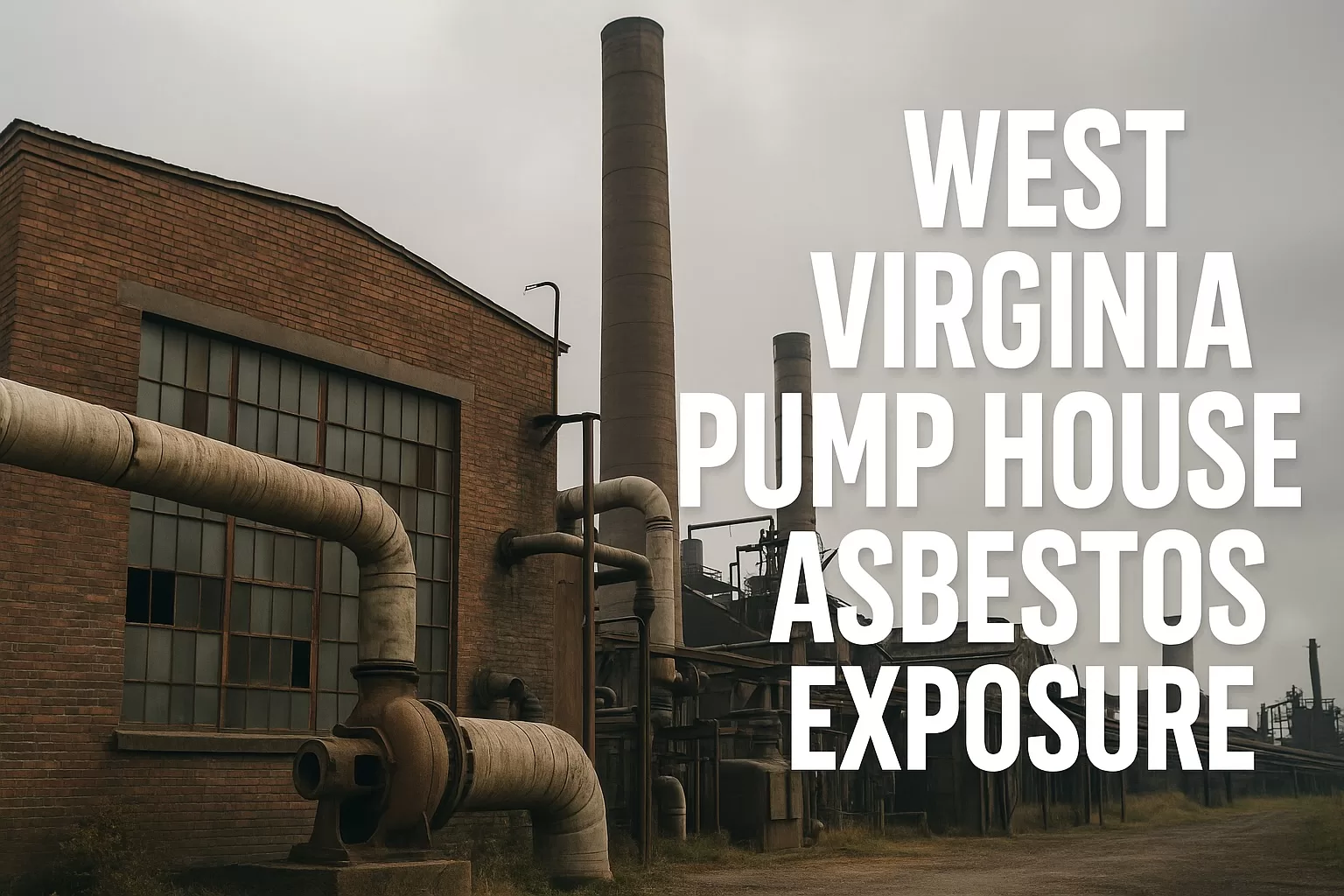
Workers across West Virginia faced significant asbestos risks in industrial facilities, utility stations, and power operations. One of the most overlooked sources of exposure was the West Virginia Pump House, a common structure found at coal plants, chemical facilities, steel mills, and municipal water systems. Because pump houses relied on high-heat equipment, steam lines, and insulated machinery, asbestos was routinely used—and workers often handled it daily without knowing the danger.
Mesothelioma/Asbestos Legal Help – WV, MI & PA
Speak directly with attorney Lee W. Davis. No call centers. Free, confidential review.
How Asbestos Exposure Occurred in a West Virginia Pump House
Pump houses in West Virginia often contained:
- Steam pumps and compressors
- High-temperature valves and packing
- Boilers and pressure lines
- Electrical systems and turbine connections
- Pipe insulation, gaskets, and pump housing wraps
The insulation materials used in these areas frequently contained chrysotile and amosite asbestos. Maintenance workers—such as pump operators, pipefitters, millwrights, laborers, machinists, and utility crews—were exposed whenever equipment was repaired, stripped, or replaced. Disturbing old insulation released dangerous fibers into the air.
Because asbestos-related diseases take decades to develop, many workers are only now discovering illnesses tied to exposures that occurred as far back as the 1960s, 70s, and 80s.
Health Risks from Pump House Asbestos Exposure
Exposure at a West Virginia Pump House can cause:
- Mesothelioma
- Asbestos lung cancer
Even low-dose exposure can later result in cancer. Many workers also experienced secondary exposure in other buildings on the grounds or from fibers carried home on clothing.
Who Is Eligible to File an Asbestos Claim?
You may be eligible for compensation if you:
- Worked in or around a pump house at a WV industrial site
- Performed maintenance or repair on pumps, valves, boilers, or piping
- Worked at a utility, chemical plant, steel facility, or power station
- Developed mesothelioma, lung cancer, or another asbestos-related illness
- Are a surviving family member of a worker who passed away
Compensation may include trust fund claims, lawsuits against manufacturers, or settlements based on work history.
How an Attorney Can Help
As an attorney who has handled thousands of asbestos cases across West Virginia, I help workers identify which companies supplied asbestos products to their jobsite, determine eligibility for trust fund claims, and move cases quickly from intake to filing.
Evidence from pump houses is still strong:
- Maintenance patterns
- Product identification
- Historical employer records
- Co-worker testimony
Even if the jobsite no longer exists, a legal claim is still possible.
Get Help Today
If you or a loved one worked in a pump house and later developed an asbestos disease, you may qualify for significant compensation.
📞 Call (412) 781-0525
Check If Your Family Was Exposed
Get your free guide instantly + a confidential case review.
🔒 100% Confidential. No obligations.
Free West Virginia asbestos case review.
FAQs — West Virginia Pump House Asbestos Exposure
1. How were workers exposed to asbestos in a West Virginia pump house?
Workers were exposed when repairing or maintaining pumps, valves, boilers, and piping that were insulated with asbestos materials. Disturbing old insulation released microscopic fibers into the air, which were inhaled during routine work. Many pump houses also had aging equipment where asbestos dust accumulated over decades.
2. Which industries in West Virginia used pump houses with asbestos-containing materials?
Pump houses were present at coal-fired power stations, chemical plants, steel mills, water treatment facilities, natural gas operations, and manufacturing plants. Any site requiring steam, high-pressure water movement, or mechanical pumping typically used asbestos products to control heat and prevent corrosion.
3. Can pump house workers still file an asbestos compensation claim today?
Yes. Even if the pump house was demolished or the employer no longer exists, workers can pursue compensation through asbestos trust funds, product identification evidence, and manufacturer liability. West Virginia law allows claims based on historical jobsite exposure going back decades.
4. What illnesses are linked to pump house asbestos exposure?
Common illnesses include mesothelioma, asbestos lung cancer, pleural disease, and asbestosis. Because these diseases have long latency periods—often 20 to 50 years—many workers are only now experiencing symptoms.
5. What information does an attorney need to evaluate my pump house claim?
An attorney typically needs your work history, dates of employment, specific duties, co-worker names, and any knowledge of equipment used in the pump house. Most asbestos cases rely on established jobsite records, so a lack of personal documentation is not a barrier to filing.
6. Were maintenance and utility workers at higher risk?
Yes. Pipefitters, pump operators, machinists, electricians, laborers, and maintenance crews faced the highest exposure because they handled insulation, removed gaskets, repaired pumps, or worked near boilers and steam lines where asbestos was present.
Mesothelioma/Asbestos Legal Help – WV, MI & PA
Speak directly with attorney Lee W. Davis. No call centers. Free, confidential review.