
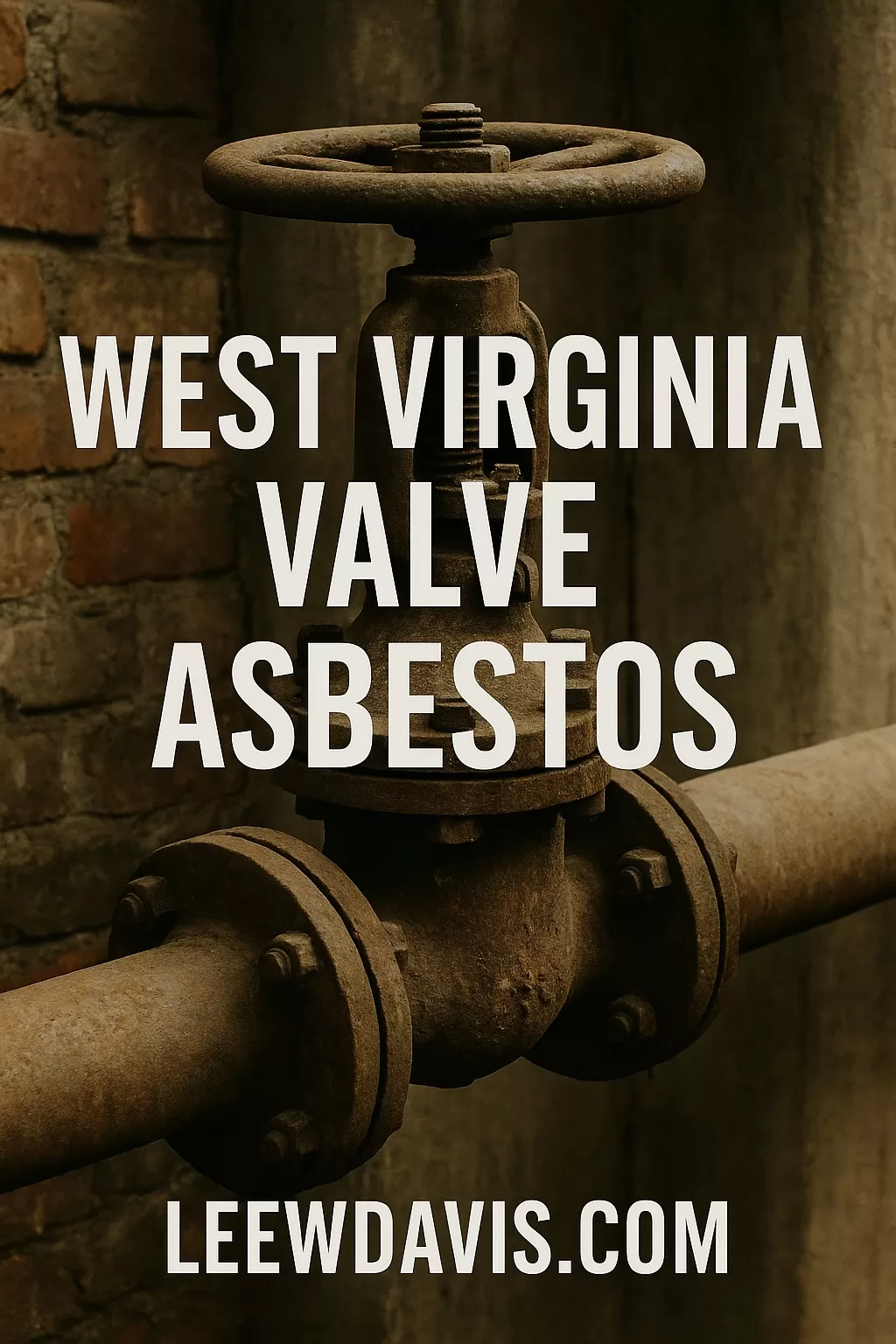
West Virginia Valve Asbestos exposure affected workers across chemical plants, power stations, refineries, steel mills, and manufacturing facilities throughout the state. Valves were essential components in controlling steam, chemicals, hot liquids, gases, and high-pressure systems, and nearly all valves contained asbestos materials for decades. Workers who installed, removed, repaired, or even worked near valves often inhaled asbestos fibers without ever being warned of the hazards.
Valves were connected to insulated piping systems, pumps, tanks, boilers, and reactors. Each connection point required sealing materials that could withstand extreme heat and pressure. Asbestos was the dominant choice, meaning thousands of West Virginia workers encountered asbestos dust as part of their everyday job duties.
Why Valves Contained Asbestos
Industrial valves used asbestos for several reasons:
- Asbestos packing around valve stems
- Asbestos gaskets at valve flanges
- Insulation surrounding valves and manifolds
- Heat-resistant wrapping on valve housings
- Asbestos paper, cloth, and board used during repairs
When workers removed old packing, scraped flange gaskets, or opened valves connected to deteriorating insulation, asbestos fibers were released into the air.
Industries in West Virginia Where Valve Exposure Occurred
Valve systems were everywhere in West Virginia industry, including:
- Chemical plants in Belle, Institute, Nitro, South Charleston
- Powerhouses across the Kanawha River Valley and northern WV
- Steel manufacturing and fabrication facilities
- Pipeline terminals and tank farms
- Pulp and paper processing
- Natural gas compression stations
- Refineries and heavy manufacturing sites in the Ohio Valley
Shutdowns and maintenance outages created particularly dangerous conditions when entire valve systems were opened or replaced.
Workers Most Exposed
West Virginia Valve Asbestos exposure impacted many trades, especially:
- Pipefitters
- Millwrights
- Maintenance mechanics
- Chemical operators
- Powerhouse workers
- Welders and boilermakers
- Insulators
- Laborers assisting with valve replacements
Even workers who never personally handled valves could inhale asbestos dust released during nearby teardown or repair work.
Take-Home Asbestos Exposure
Many workers carried asbestos fibers home unknowingly. Valve repairs commonly released dust that clung to:
- Work uniforms
- Laundry stored in lockers
- Gloves and boots
- Tool bags and equipment
- Car interiors used for commuting
Family members exposed to take-home asbestos may also develop mesothelioma or lung cancer years later.
Diseases Linked to Valve Asbestos Exposure
Workers exposed through valve maintenance and insulation removal may develop:
Both illnesses can appear decades after exposure, even when the worker spent only part of their career in valve-heavy areas.
Legal Options for West Virginia Workers and Families
Even if job sites have closed or been demolished, compensation is still available through:
- Asbestos trust funds
- Lawsuits against manufacturers of asbestos-containing valve components
- Claims for deceased workers
- Wrongful death actions
- Occupational exposure evidence packages
You may still qualify even without detailed employment records—testimony, jobsite histories, and product identification often fill the gaps.
Free Consultation for West Virginia Valve Asbestos Cases
If you or a loved one suffered mesothelioma or lung cancer after West Virginia Valve Asbestos exposure, legal help is available.
Call 412-781-0525 for a free consultation.
No fee unless compensation is recovered.
Check If Your Family Was Exposed
Get your free guide instantly + a confidential case review.
🔒 100% Confidential. No obligations.
FAQs – West Virginia Valve Asbestos
1. What is West Virginia Valve Asbestos exposure?
West Virginia Valve Asbestos exposure refers to workers inhaling asbestos fibers released from valve gaskets, packing, insulation, and flange materials used throughout industrial facilities across the state.
2. Why did valves contain asbestos?
Asbestos was used because it withstood heat, pressure, and chemical corrosion. Valve packing, flange gaskets, stem seals, and insulation all contained asbestos, especially in chemical plants, refineries, and powerhouses.
3. Which workers faced the highest valve asbestos exposure?
Pipefitters, millwrights, mechanics, welders, powerhouse workers, chemical operators, and laborers were routinely exposed while removing insulation, scraping gaskets, replacing packing, or repairing valve housings.
4. What diseases are linked to valve asbestos exposure?
Valve work has been associated with mesothelioma and lung cancer, even when exposure occurred decades earlier.
5. Can family members exposed through take-home asbestos file claims?
Yes. Workers often brought asbestos dust home on clothing, gloves, boots, and tool bags after valve repairs. Family members exposed this way may qualify for compensation.
6. Do I still have a case if the plant shut down years ago?
Yes. Claims generally target manufacturers of asbestos-containing valve components, not the facility itself. Closure or demolition does not prevent recovery.
7. How is exposure proven in valve asbestos cases?
Evidence can include jobsite histories, product identification records, coworker statements, maintenance logs, plant manuals, and known asbestos use in valves and connected systems.
Mesothelioma/Asbestos Legal Help – WV, MI & PA
Speak directly with attorney Lee W. Davis. No call centers. Free, confidential review.
Comments are closed.