
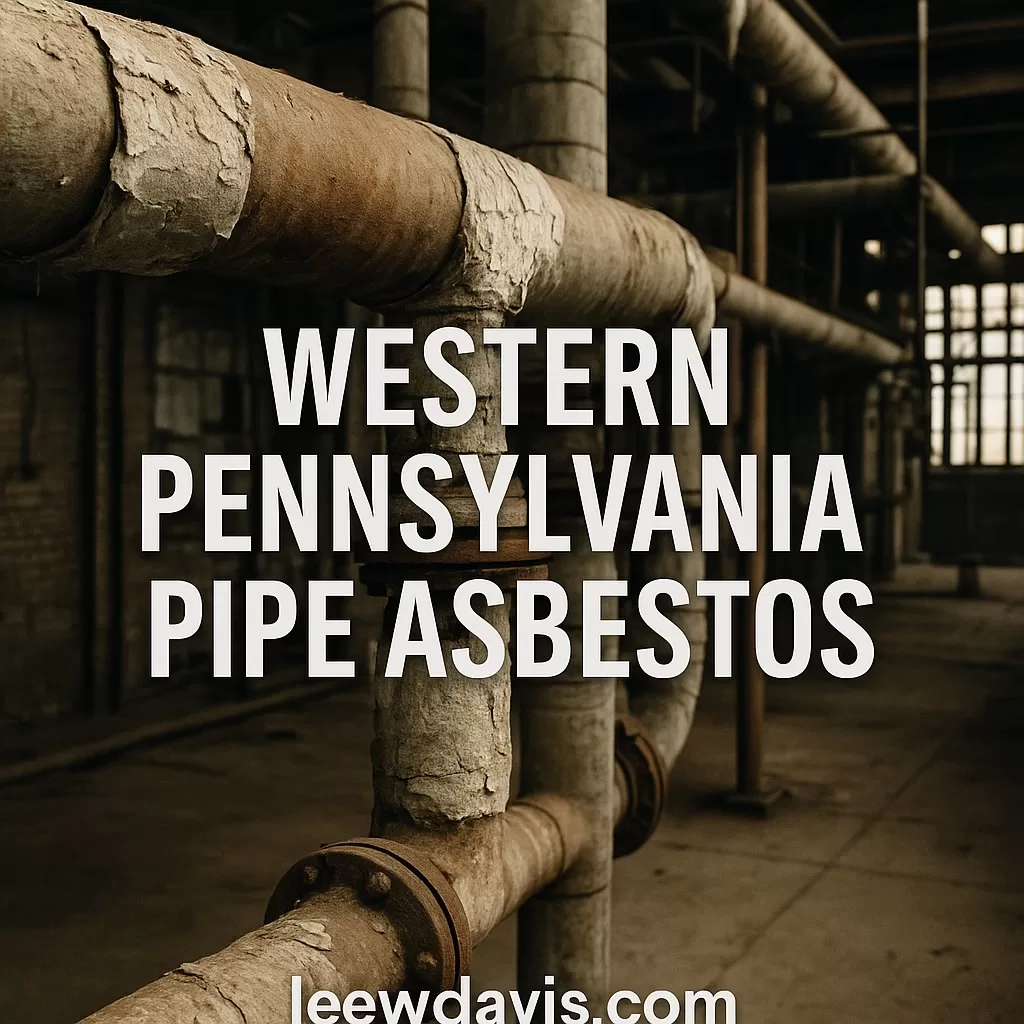
For decades, industrial workers across steel mills, refineries, power plants, and chemical facilities were exposed to Western Pennsylvania pipe asbestos without warnings or protection. Asbestos was heavily used in pipe insulation, pipe covering, joints, elbows, valves, and flange connections because it resisted heat, pressure, and corrosion. Those same properties made it deadly.
Today, many former workers—and even their family members—are being diagnosed with mesothelioma and lung cancer tied directly to asbestos exposure from industrial piping systems used throughout Western Pennsylvania.
Mesothelioma/Asbestos Legal Help – WV, MI & PA
Speak directly with attorney Lee W. Davis. No call centers. Free, confidential review.
How Pipe Asbestos Exposure Occurred
From the early 1900s through the late 1970s, asbestos was considered a standard industrial material. Pipe systems routinely contained asbestos in:
- Thermal pipe insulation
- Cement pipe covering
- Gaskets and flange materials
- Rope and packing used at joints
- Protective blankets around hot piping
Exposure occurred when workers cut, removed, repaired, or disturbed these materials. Aging pipe insulation became brittle over time, releasing asbestos fibers into the air—especially during maintenance shutdowns and repairs.
Facilities most associated with pipe asbestos exposure include:
- Steel mills (Edgar Thomson, Clairton, Irvin, Aliquippa)
- Coke works and blast furnace operations
- Power plants along the Ohio and Monongahela Rivers
- Refineries and chemical plants in Beaver and Washington Counties
- Heavy manufacturing facilities throughout Western Pennsylvania
👉 Search Asbestos Job Sites in Pennsylvania
Workers at Highest Risk
Pipe asbestos exposure affected a wide range of trades, including:
- Pipefitters
- Boilermakers
- Millwrights
- Maintenance mechanics
- Stationary engineers
- Insulators
- Laborers working near active pipe systems
Many workers were exposed daily over years or decades, often in confined pipe tunnels, basements, or mechanical rooms with poor ventilation.
Take-Home Asbestos Exposure in Pennsylvania
Pipe asbestos did not stay at the worksite. Workers often brought asbestos fibers home on:
- Clothing
- Jackets and gloves
- Tool bags
- Boots
- Vehicles
Family members were exposed while shaking out dusty clothes or doing laundry. Pennsylvania law recognizes take-home asbestos exposure, and spouses or children who later developed mesothelioma may have valid claims.
Why Claims Are Still Being Filed Today
Mesothelioma and asbestos-related lung cancer can take 30 to 60 years to develop. Even though many Western Pennsylvania plants closed decades ago, liability still exists because claims are typically filed against manufacturers of asbestos pipe products, not former employers.
Many responsible companies entered bankruptcy and established asbestos trust funds that continue paying claims today.
Legal Help for Western Pennsylvania Pipe Asbestos Exposure
If you or a loved one worked around industrial piping in Western Pennsylvania and were later diagnosed with mesothelioma or asbestos lung cancer, compensation may be available.
Claims often proceed without a trial and without suing a former employer.
Call 412-781-0525 for a free consultation.
Check If Your Family Was Exposed
Get your free guide instantly + a confidential case review.
🔒 100% Confidential. No obligations.
No upfront fees. Confidential review. Decades of asbestos litigation experience.
FAQs – Western Pennsylvania Pipe Asbestos
1. How were workers exposed to asbestos from pipes in Western Pennsylvania?
Asbestos was widely used in pipe insulation, cement covering, gaskets, and packing. Cutting, repairing, or removing these materials released fibers into the air, especially during maintenance and shutdowns.
2. Which jobs faced the highest pipe asbestos exposure?
Pipefitters, boilermakers, millwrights, maintenance mechanics, stationary engineers, and laborers working near active pipe systems faced the greatest risk.
3. Can family members be affected by pipe asbestos exposure?
Yes. Workers often carried asbestos dust home on clothing and tools. Pennsylvania recognizes take-home asbestos exposure, and family members who later developed mesothelioma may have valid claims.
4. Are claims still valid if the plant closed decades ago?
Yes. Most cases are filed against manufacturers of asbestos pipe products, not employers. Many responsible companies created asbestos trust funds that still pay claims today.
5. How long after exposure do asbestos diseases appear?
Mesothelioma and asbestos-related lung cancer often appear 30 to 60 years after exposure, which is why claims continue long after asbestos use ended.
6. Do I need proof of the exact asbestos product I worked with?
Not always. Work history, jobsite records, and industry evidence are often enough to establish exposure.