
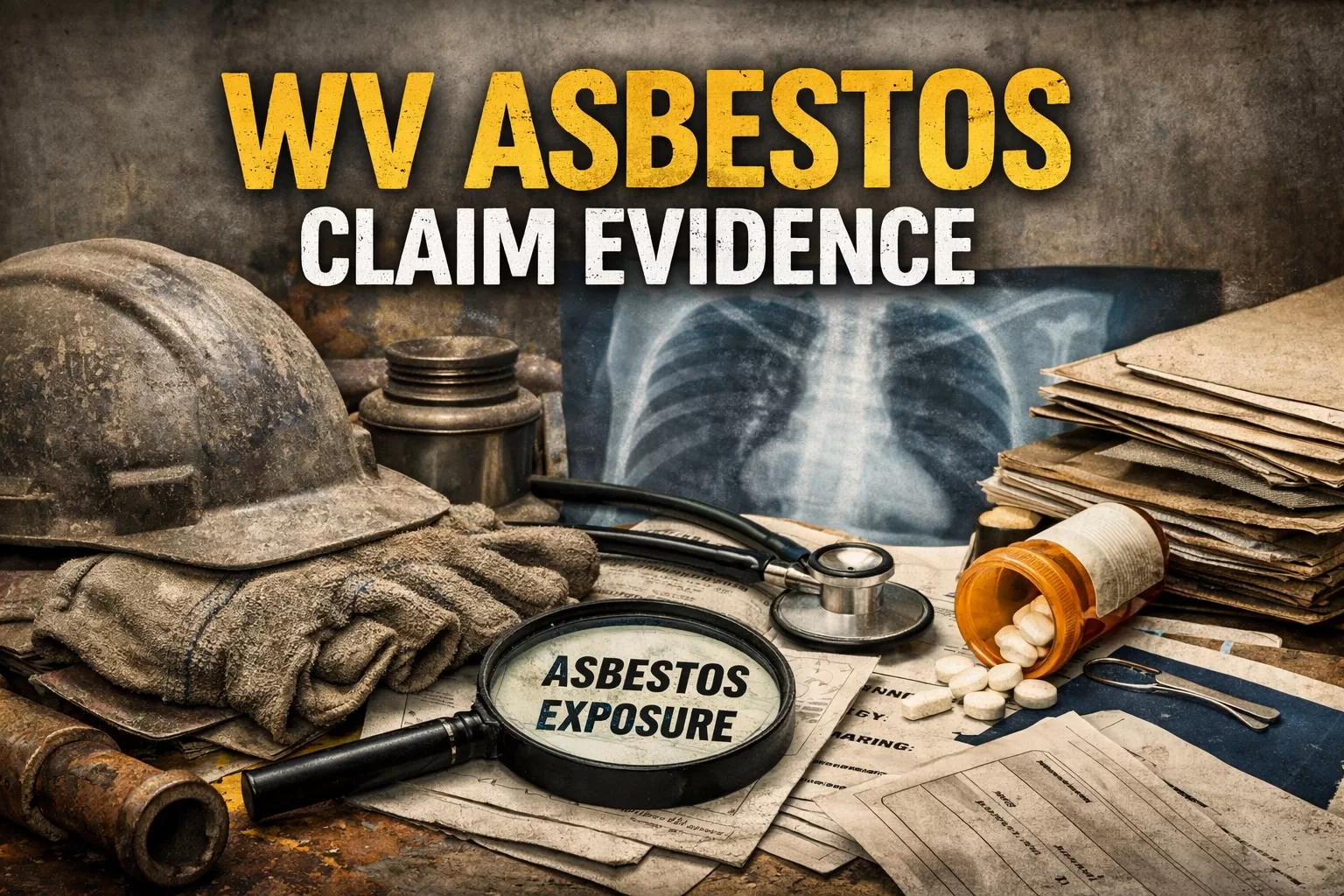
If you’re pursuing a claim after an asbestos disease diagnosis, WV Asbestos Claim Evidence matters more than almost anything else. Claims rise and fall on whether the proof is organized, consistent, and tied to specific job sites, products, and time periods—especially when exposure happened decades ago.
The good news: most strong claims are built from practical evidence you can gather and preserve now, even if your former employer is gone or records are incomplete.
Mesothelioma/Asbestos Legal Help – WV, MI & PA
Speak directly with attorney Lee W. Davis. No call centers. Free, confidential review.
Start with the “core three” categories of proof
1) Work history and jobsite details
The most important evidence is a clean work history that answers: where, when, and what you did.
Helpful items include:
- A timeline of employers, job titles, and dates (even approximate)
- Job sites in West Virginia (plants, mills, power stations, chemical facilities, schools, shipyards)
- Trades and tasks (pipefitting, insulation work, boilermaking, maintenance, tear-outs, gasket work)
- Names of supervisors, foremen, or coworkers who remember the work
If you can write a solid timeline from memory, that’s often the foundation that allows everything else to snap into place.
👉 Search Asbestos Job Sites in West Virginia
2) Medical evidence (diagnosis + causation support)
A claim needs proof of the disease and treatment course. Key items include:
- Pathology reports and diagnostic imaging reports
- Oncology/pulmonology records
- Treatment summaries (chemo, surgery, radiation)
- Disability notes and prognosis details, when relevant
For wrongful death cases, you also want:
- Death certificate and cause-of-death information
- Hospital records near the end of life
3) Product and exposure evidence
This is where claims get won—linking the work to asbestos-containing materials and the circumstances of exposure.
Evidence can include:
- Brand names remembered (insulation, refractory, gaskets, packing, cement, brake materials, etc.)
- Maintenance logs, purchase orders, or old invoices (when available)
- Photos from job sites, toolboxes, or old work areas
- Safety manuals, training documents, or jobsite hazard policies
Even if you don’t have “perfect” product ID, you can often build it through coworkers, jobsite patterns, and standard materials used at that facility.
The “supporting” evidence that strengthens credibility fast
- Coworker statements (who saw the dust, the tear-outs, the materials used)
- Union records (locals, dispatch records, benefit records)
- Social Security earnings history (helps confirm where you worked and when)
- Personnel files (job titles, departments, transfer history)
- Old resumes, calendars, notebooks, pay stubs, W-2s
- Family testimony (especially for illness progression and damages, and for wrongful-death claims)
Avoid these common evidence mistakes
- Waiting too long to write down names, job sites, and dates
- Relying on a single document when the case needs a full story
- Mixing up facilities or time periods (easy to do after 30–40 years)
- Not preserving medical records early (providers purge or archive)
- Assuming the other side will “find it”—they won’t
What to do today: a simple evidence checklist
- Write a one-page timeline: employers, job sites, dates, tasks
- List 5–10 coworkers or supervisors (names + any contact info)
- Gather medical records: diagnosis + pathology + treatment summary
- Pull SSA earnings history (or at least identify employers accurately)
- Collect any photos, union cards, old pay stubs, and job documents
Talk to a lawyer before you “organize away” something important
Evidence strategy is not just collecting paper—it’s deciding what matters, what must be proven, and how to present it consistently. If you’re in West Virginia and dealing with mesothelioma or another asbestos disease, getting the evidence plan right early can protect the value of your claim.
If you want help building your evidence package, contact the Law Offices of Lee W. Davis, Esquire, P.L.L.C. We can review your work history, identify missing proof, and map the fastest route to a credible claim.
Free Case Review: Get Your Evidence Organized Now
If you have questions about WV Asbestos Claim Evidence—or you’re not sure what records you need to prove exposure—let’s get it mapped out quickly and correctly.
Call the Law Offices of Lee W. Davis, Esquire, P.L.L.C. at (412) 781-0525 for a confidential case review.
You’ll speak directly with an attorney about your work history, job sites, medical diagnosis, and the fastest way to preserve the proof that matters.
FAQs
What is the most important WV Asbestos Claim Evidence?
Usually, it’s a clear work history tied to specific job sites and tasks—supported by medical proof of diagnosis and records that connect the work to asbestos-containing materials.
What if my employer is gone and I have no records?
Claims can still be proven through coworker statements, union history, Social Security earnings records, and jobsite patterns showing common asbestos materials used at the time.
Do I need the exact product brand name to file a claim?
Not always. Exact brand ID helps, but many cases are built through jobsite evidence, trade practices, witness testimony, and records showing typical asbestos materials used in that location and era.
- West Virginia claims hub: https://leewdavis.com/west-virginia-asbestos-claims/
- WV lawsuits page: https://leewdavis.com/asbestos-lawsuits-west-virginia/
- Wrongful death hub: https://leewdavis.com/mesothelioma-wrongful-death-claim/
Mesothelioma/Asbestos Legal Help – WV, MI & PA
Speak directly with attorney Lee W. Davis. No call centers. Free, confidential review.