
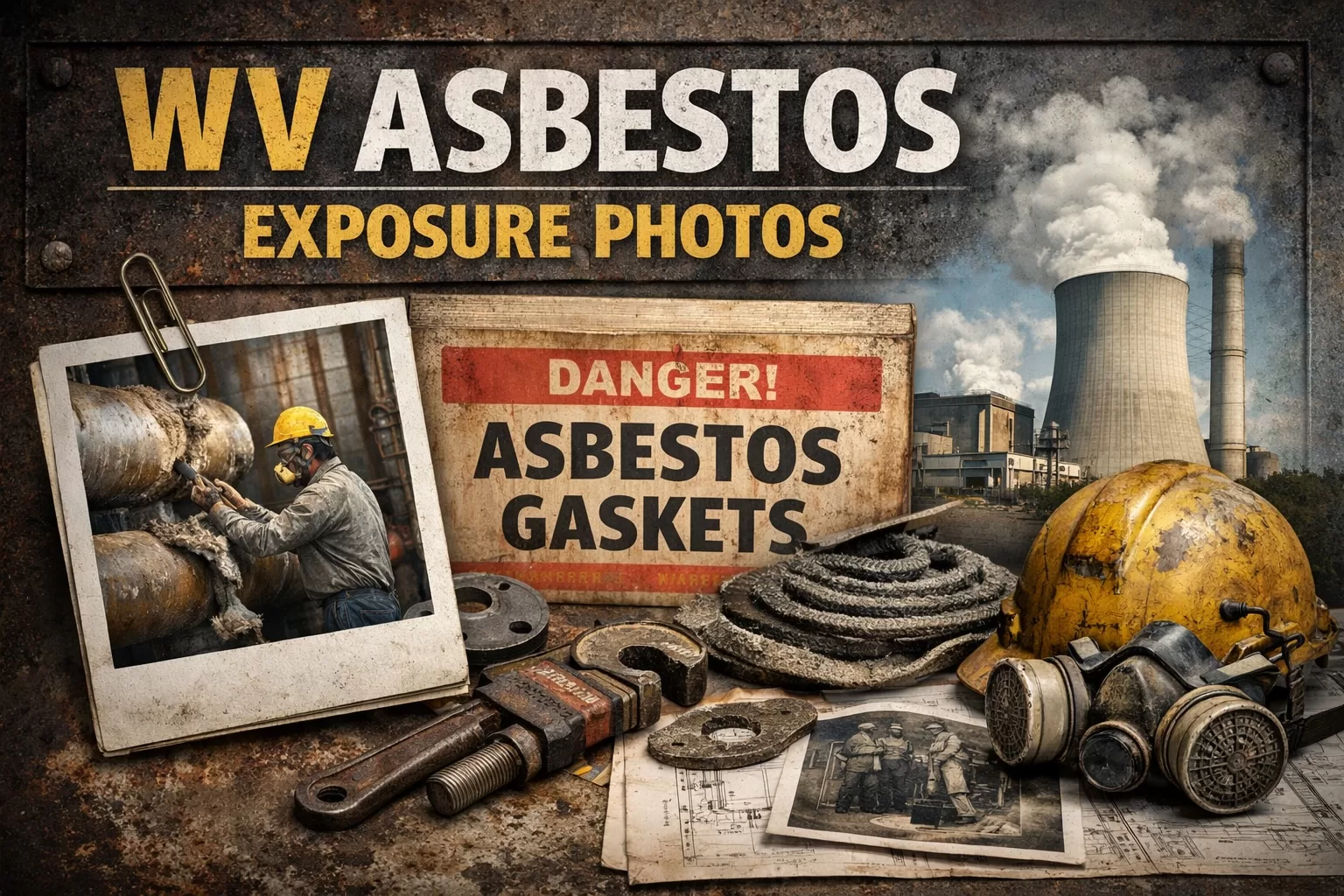
If you’re building an asbestos claim, WV asbestos exposure photos can matter—sometimes more than people realize. Photos don’t “prove” everything by themselves, but they can lock in the reality of where you worked, what you handled, and what products were present when the exposure happened. In West Virginia cases, that can mean the difference between a vague story and credible proof.
Mesothelioma/Asbestos Legal Help – WV, MI & PA
Speak directly with attorney Lee W. Davis. No call centers. Free, confidential review.
I’ve been doing product identification and exposure proof work since 1988—back when everything was paper, and “proof” meant hunting down what nobody bothered to save. The same principle still applies today: photos help corroborate your work history and the asbestos products you were around.
For case help statewide, start here: West Virginia mesothelioma lawyer
1) What kinds of photos actually help an asbestos claim?
The most useful photos are the ones that show tasks, materials, and context—not just a selfie at work.
Best categories:
- Jobsite photos showing the facility, unit, boiler room, powerhouse, mill area, or maintenance shop
- Equipment photos (boilers, turbines, pumps, valves, compressors, furnaces, ovens, heaters, ductwork)
- Insulation photos (blanket insulation, pipe wrap, block insulation, lagging, mudded joints)
- Gaskets/packing photos (flange work, valve packing, pump packing, gasket sheets, cut gaskets)
- Refractory photos (brick, castable, cement, kiln/furnace lining, refractory mix bags)
- Product packaging or labels (boxes, bags, cartons, stencil markings, part numbers)
- Work-in-progress photos (tear-out, scraping, wire brushing, grinding, cutting, mixing)
- Tool photos that show the type of work (gasket scrapers, wire wheels, grinders, saws)
- Crew photos where the background shows the work area or equipment being serviced
Photos that usually do less:
- Generic exterior shots with no context
- “Group photo at the gate” with no equipment or work area visible
- Photos that can’t be tied to a jobsite, timeframe, or task
2) What a photo needs to be “usable”
A usable photo typically needs at least one anchor:
- Where (which plant, shop, school, power station, mine, mill)
- When (approximate year range is often enough)
- What (the equipment/material/product or task being performed)
- Who (you, a coworker, your crew, or a supervisor who can confirm the scene)
You’re not trying to write a novel. You’re trying to make the photo testimony-ready.
If you’re trying to confirm where exposure happened, see West Virginia asbestos job sites for plants, mills, power stations, and other worksites
3) Add a simple caption file now (do this before you forget)
Create a basic notes file (or email it to yourself) titled:
“WV Asbestos Exposure Photos – Notes”
For each photo, add:
- Photo number / filename
- Location (jobsite + city)
- Approximate date/year
- What it shows (equipment + task)
- Any product names seen (even partial markings)
- Names of anyone pictured (or who took it)
This is how photos stop being “old pictures” and become evidence.
4) Where to find old jobsite photos
People assume they have none. Usually they do—just not where they’re looking.
Common sources:
- Your phone’s cloud backups (Google Photos / iCloud)
- Old Facebook albums (yours, spouse, coworkers, retired crew pages)
- Text message threads with coworkers
- Company newsletters, retirement books, union newsletters
- Local papers / jobsite dedication photos / plant historical pages
- Family photos where the jobsite is in the background (hardhat, shutdown work, gear)
- Estate boxes: envelopes of prints, old disposable-camera photos
If a coworker has the photos, that still helps—because they can authenticate what the picture is and when it was taken.
5) Don’t “edit” the originals
If you have originals, preserve them:
- Don’t crop originals
- Don’t overwrite the original file
- Don’t run filters or “enhance” the original
- Save a copy if you want to zoom or highlight
If you screenshot an old photo to zoom in on a label, keep both:
- Original
- Screenshot/zoom copy
6) What if the photo shows something that looks harmless?
That’s fine. Remember: asbestos cases often turn on routine maintenance work, not dramatic disasters. A photo of:
- A pump being rebuilt
- A valve being repacked
- A flange being opened
- Insulation being cut back …can be extremely persuasive when paired with a short explanation of what was used and how dust was created.
7) Photos and “product identification”
You’re trying to identify:
- The type of product (insulation, gasket, packing, refractory, cement board)
- The brand (if visible)
- The setting where those products were used (boiler rooms, powerhouses, mills, maintenance shops)
A single clear photo of a box/bag/label can matter. But even without labels, photos can show the materials and work practices that fit known asbestos-containing products.
For families pursuing a loss-based case, read mesothelioma wrongful death claim
8) you have photos, bring them now—don’t wait
If you have even a handful of old jobsite photos, I want to see them early. In asbestos litigation, evidence doesn’t get better with time—it disappears. I’ve focused on product identification and exposure proof since I started as a paralegal in 1988, through the Saginaw foundry cases, and then West Virginia asbestos cases where the difference between “maybe” and “credible” is proof you can defend.
Call (412) 781-0525 or reach me through leewdavis.com for a confidential asbestos case review.
Check If Your Family Was Exposed
Get your free guide instantly + a confidential case review.
🔒 100% Confidential. No obligations.