
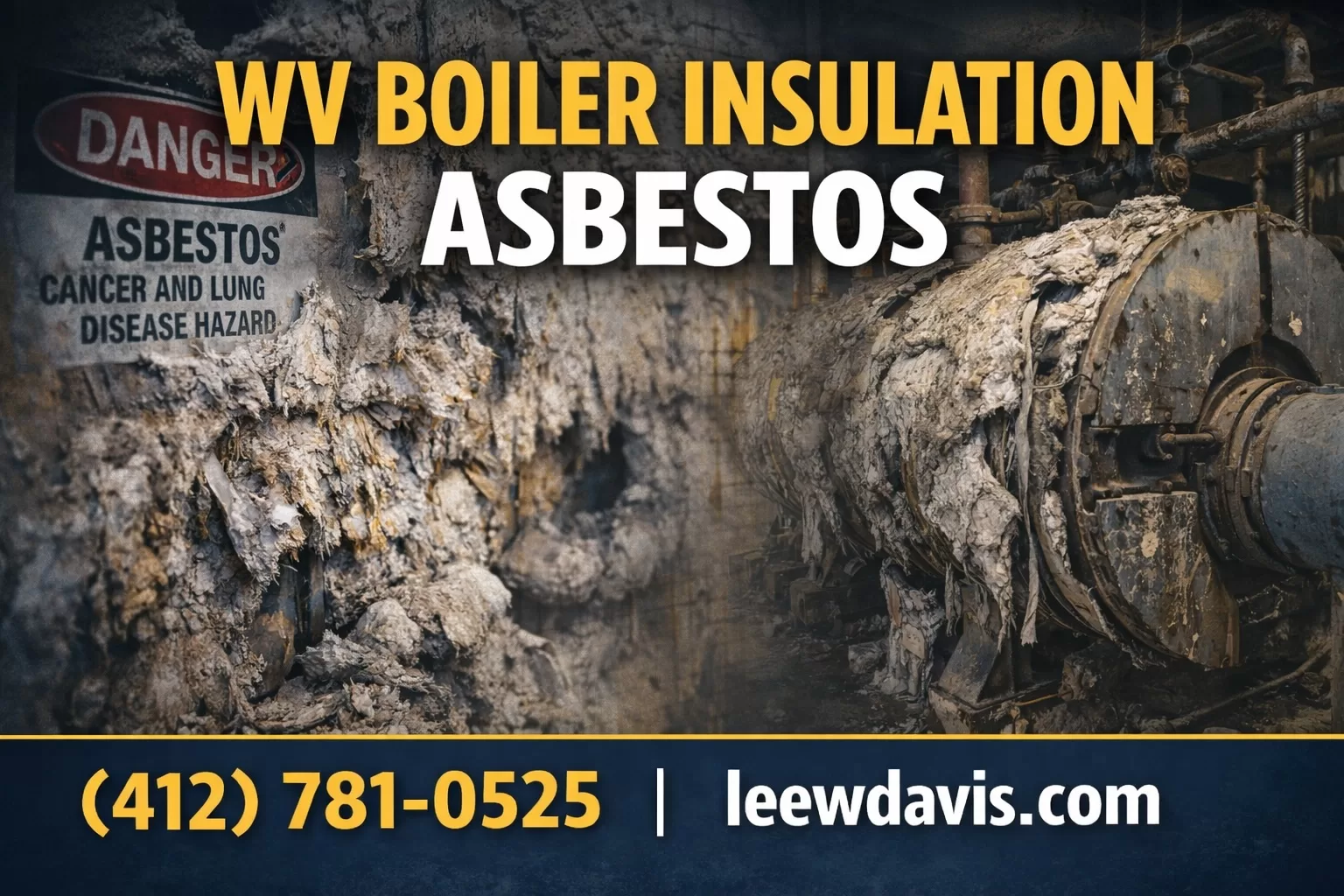
If you worked around WV Boiler Insulation Asbestos, you may have been exposed to dangerous fibers without realizing it. Boilers were commonly wrapped, packed, and repaired using insulation products that could shed dust during installation, maintenance, and tear-out. In West Virginia, that kind of day-to-day work exposure is one of the most common pathways to mesothelioma and other asbestos diseases.
Mesothelioma/Asbestos Legal Help – WV, MI & PA
Speak directly with attorney Lee W. Davis. No call centers. Free, confidential review.
Boiler insulation exposure often happened in power plants, chemical facilities, steel operations, refineries, hospitals, schools, and older commercial buildings—anywhere a boiler system had to be kept hot and efficient. The risk rises during shutdowns and major repairs, when insulation is cut, removed, scraped, or replaced.
Why boiler insulation was a major asbestos source
Boilers ran hot, and older insulation materials were built to resist heat. That’s exactly why asbestos was used. The dust risk is typically highest during:
- Insulation removal or replacement (“tear-out”)
- Repacking valves, flanges, and connections
- Cutting or trimming insulation block/blanket wrap
- Sweeping, vacuuming, or cleaning after maintenance
- Outage work where multiple trades disturb old materials
Pipefitters, boilermakers, maintenance mechanics, insulators, millwrights, electricians, and laborers were often in the same work area—meaning exposure wasn’t limited to the person doing the removal. It could be in the air, on clothing, and on tools.
What makes these cases winnable
Most successful claims are built like this:
- Work history (where you worked, what you did, when you did it)
- Site and equipment context (boiler rooms, outages, insulation work, repairs)
- Medical proof (diagnosis records, pathology if available)
- Product/company identification (what insulation or components were used, who supplied them)
- Witness support (co-worker statements when needed)
You do not need to remember every product name from 30–40 years ago to have a viable case. The evidence often comes from jobsite pattern proof, co-worker corroboration, historic purchasing, and trade usage.
Symptoms and timing
Asbestos diseases frequently have a long latency period—often decades between exposure and diagnosis. People usually start looking for answers only after a serious diagnosis, such as mesothelioma, lung cancer tied to asbestos exposure, or severe asbestosis. If you or a family member has been diagnosed, the most important step is preserving records and documenting your work history while details are still accessible.
West Virginia jobsite proof matters
In West Virginia, jobsite-driven evidence is often the difference between a weak claim and a strong one. If you’re trying to connect your exposure to a specific facility or region, start here:
- West Virginia mesothelioma lawyer page: I help WV workers and families build asbestos claims based on real jobsite history and medical proof.
- West Virginia asbestos job sites page: A starting point for identifying common WV facilities where asbestos insulation exposure occurred.
- Mesothelioma wrongful death page: If you’re pursuing a claim after a loss, there are specific steps for family claims and estate recovery.
What to do now
If you suspect WV Boiler Insulation Asbestos exposure:
- Write down the sites, years, and trades involved (even rough estimates help)
- Gather diagnosis records and any pathology reports
- List co-workers who remember outages, boiler rebuilds, or insulation tear-outs
- Don’t wait—deadlines can run quickly once a diagnosis occurs
Free Consultation
If you or a loved one has a mesothelioma or asbestos-related diagnosis and believe the exposure involved WV Boiler Insulation Asbestos, call (412) 781-0525 to discuss next steps. Time matters, and the right documentation early can significantly strengthen the claim.
Check If Your Family Was Exposed
Get your free guide instantly + a confidential case review.
🔒 100% Confidential. No obligations.
FAQs
What jobs are most associated with boiler insulation asbestos exposure?
Pipefitters, boilermakers, insulators, millwrights, maintenance mechanics, electricians, and laborers are frequently exposed—especially during outages and repair work.
I worked near the boiler room but didn’t remove insulation. Do I still have a claim?
Yes. Secondary exposure inside the work area is common when insulation is cut, disturbed, or removed, and dust spreads to nearby trades.
What records should I gather first?
Start with diagnosis records, imaging summaries, pathology reports (if available), and a basic work history list of sites and years.
Mesothelioma/Asbestos Legal Help – WV, MI & PA
Speak directly with attorney Lee W. Davis. No call centers. Free, confidential review.