
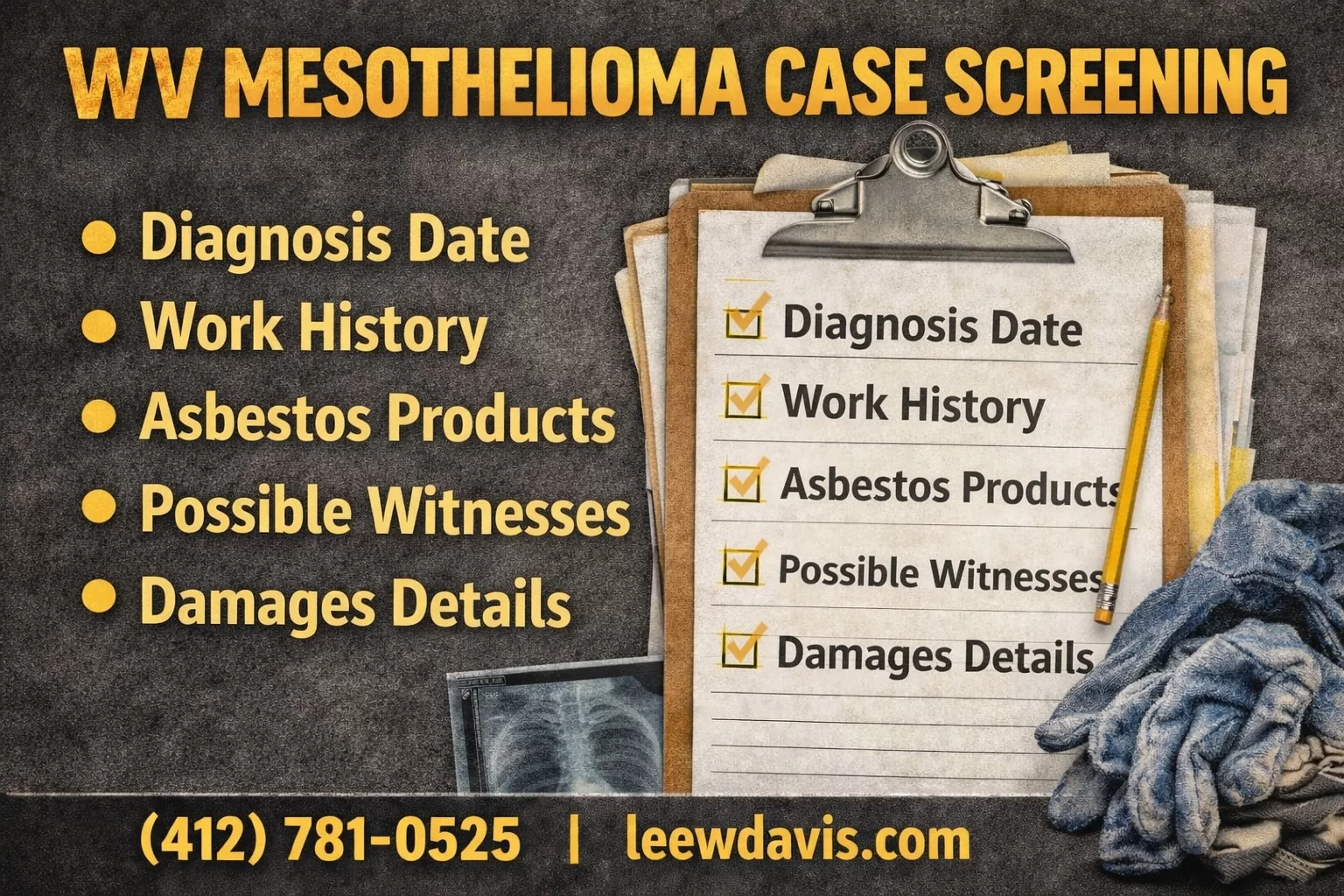
WV Mesothelioma Case Screening should start the same way every time: lock down the diagnosis, then build a clean exposure map that matches real worksites, real products, and real witnesses. When families come in late or with missing records defense counsel doesn’t “investigate.” They exploit gaps.
Below is the quick intake checklist I use to screen a West Virginia mesothelioma claim fast, identify what matters, and preserve the evidence before it disappears.
Mesothelioma/Asbestos Legal Help – WV, MI & PA
Speak directly with attorney Lee W. Davis. No call centers. Free, confidential review.
1) Confirm the diagnosis and the date it was made
For screening, you need more than “mesothelioma” as a general label. Gather:
- Pathology report (biopsy/cytology) and diagnosing physician
- Imaging: CT/PET reports and key dates
- Treatment records and where care is being provided
- If the patient has passed: death certificate + cause-of-death language
Diagnosis timing often drives strategy, urgency, and deadlines.
2) Build the work history timeline (even if it’s rough at first)
Start with a simple timeline: year → employer → job title/trade → location.
Then add details as you go:
- Union membership (local, hall, approximate years)
- Military service dates and duty stations (if applicable)
- Shutdowns, turnarounds, outages, and temporary assignments
A messy timeline can be cleaned. A missing timeline is a problem.
3) Identify worksites, not just employers
WV exposure cases often turn on where the work occurred:
- Plants, mills, power stations, chemical facilities
- Paper mills, foundries, refineries, rail yards
- Schools, hospitals, commercial boiler rooms
Worksite names matter because they connect your case to known asbestos-containing materials and contractors.
👉 Search Asbestos Job Sites in West Virginia
4) List products and tasks that create exposure
This is where screening becomes a case. Ask:
- What tasks did you perform? (cutting pipe, mixing cement, packing valves, removing insulation)
- What materials were present? (insulation, gaskets, packing, refractory, cement, boilers, turbines)
- Were there brand/product names the worker remembers?
- Were there dusty conditions, confined areas, or repeated maintenance?
Tasks + products + timeline = exposure story that can be proved.
5) Find witnesses and corroboration
A strong screening file includes at least one of the following:
- Coworkers who can confirm products/tasks
- Family who can confirm work clothes, dust, symptoms, timeline
- Union records, job tickets, or old pay stubs
- Photos, work badges, training cards, or plant access cards
Even one credible corroboration point can stabilize the entire case.
6) Document damages and the practical realities
During screening, capture:
- Current condition and treatment plan
- Out-of-pocket costs and travel
- Lost wages/retirement disruption
- Caregiver burden and family impact
This isn’t “fluff.” It’s part of the real case value.
7) Preserve evidence immediately
If you have a likely case, don’t wait:
- Request medical records and pathology slides (where appropriate)
- Preserve employment/union documentation
- Start a written exposure timeline while memory is fresh
- Save any product photos, old tool bags, work gear, or jobsite paperwork
Delay is the defense’s best friend.
Ready to screen your case?
If you have a diagnosis and a West Virginia work history—even if you’re unsure about the exact product names—WV Mesothelioma Case Screening can often be done quickly with the right checklist and the right documents.
Call (412) 781-0525 to discuss what you have, what you’re missing, and what to request next.
Check If Your Family Was Exposed
Get your free guide instantly + a confidential case review.
🔒 100% Confidential. No obligations.
FAQs – WV Mesothelioma Case Screening
What is WV Mesothelioma Case Screening?
It’s an intake process to confirm diagnosis, map exposure history, identify likely asbestos products/jobsites, and determine what evidence is needed to file a strong claim.
What if I don’t remember the exact asbestos product brand?
That’s common. Screening focuses on job tasks, locations, time periods, and trades you worked around—often enough to identify product families and responsible parties.
What records matter most at the start?
The pathology report/diagnosis proof and a work/exposure timeline. Those two pieces drive nearly everything that follows.