Michigan Asbestos Settlements Guide

Michigan Asbestos Settlements Guide


If youโ€™re searching for a Michigan Asbestos Settlements Guide, youโ€™re probably trying to answer two questions fast: what is my case worth and what actually moves the claim forward. In Michigan, settlement value usually turns on the same core proofโ€”diagnosis, exposure history, and product or jobsite evidenceโ€”but the timeline and leverage come from how cleanly you can document where the exposure happened and which companies are responsible. This guide explains the practical steps that increase settlement pressure and reduce delays, without wasting time on generic asbestos talk.

Read More: Michigan Mesothelioma Lawyer

This Michigan Asbestos Settlements Guide explains what settlement momentum actually looks like, what moves a case toward resolution, and what usually slows it down.

Mesothelioma/Asbestos Legal Help – WV, MI & PA

Speak directly with attorney Lee W. Davis. No call centers. Free, confidential review.
What counts as a โ€œsettlementโ€ in a Michigan asbestos case

Most Michigan asbestos resolutions fall into one of these paths:

  • Pre-suit resolution (rare, but possible when liability is obvious and records are clean)
  • Early litigation settlement (after defendants evaluate exposure and medical proof)
  • Case-management settlement (after depositions, work history gets locked in, experts line up)
  • Pre-trial settlement (when the trial date makes delay expensive)

The point: โ€œsettlementโ€ is usually the result of risk becoming unavoidable, not a polite negotiation.

The settlement timeline people donโ€™t expect

In real life, you often see this pattern:

  1. Diagnosis and medical documentation gets finalized
  2. Work history gets reduced to a clean narrative (jobsites, time periods, tasks)
  3. Defendants identify their exposure defenses (and you cut them off)
  4. Depositions lock in the testimony (plaintiff + coworker/family as needed)
  5. Experts get disclosed (medical causation + industrial hygiene as appropriate)
  6. Trial posture changes (the defense stops โ€œtestingโ€ and starts pricing risk)

If you want speed, you donโ€™t โ€œaskโ€ for itโ€”you build a file that canโ€™t be ignored.

What drives Michigan asbestos settlement value

Here are the variables that consistently move value:

1) Strength of medical proof

  • Clear diagnosis, pathology, imaging, and treatment history
  • A clean causation narrative that matches the exposure history

2) Exposure clarity

  • Not โ€œI worked around dust.โ€
  • Specific tasks: insulation disturbance, gasket scraping, valve packing, boiler/pipe work, refractory tear-out, shutdown/outage work, etc.

๐Ÿ‘‰ Search Asbestos Job Sites in Michigan

3) Defendant linkage

  • Premises liability (where you worked) and/or product identification (what you handled)
  • The more credible the linkage, the faster the defense has to price the case

4) Damages and human impact

  • Medical costs and loss history matter.
  • But so does the day-to-day reality: breathing limits, fatigue, missed work, family burden, and loss of normal life.

5) Litigation posture

  • Cases settle when discovery and depositions make denial expensive.
  • Delay usually benefits defendantsโ€”unless you control the pace.

The defenses youโ€™ll hear in Michiganโ€”and how good cases answer them

Defendants commonly try:

  • โ€œNo product ID.โ€ Strong cases donโ€™t depend on one perfect label. They use exposure detail, jobsite proof, and credible witness structure.
  • โ€œHe smoked.โ€ Smoking is not a permission slip for asbestos exposure. A well-built file keeps causation focused on medical proof and exposure mechanics.
  • โ€œIt was minimal.โ€ Specific repetitive tasks and duration beat vague โ€œminimal exposureโ€ arguments.
  • โ€œToo old / too late.โ€ Good files track the diagnosis timeline and when the claim accrued, then document it cleanly.

What a โ€œready-to-settleโ€ Michigan asbestos file looks like

A file that generates settlements typically has:

  • A tight medical packet (diagnosis + treatment timeline)
  • A one-page work history summary that is consistent everywhere
  • Clean exposure descriptions tied to sites and time periods
  • Witness plan (who can confirm what, and why theyโ€™re credible)
  • A clear litigation plan (depositions, discovery targets, and deadlines)

When those pieces are in place, negotiations stop being theoretical.

What you should do if youโ€™re considering a Michigan asbestos claim

If youโ€™re dealing with mesothelioma or another asbestos-related disease, the most important move is to lock down evidence earlyโ€”medical records, work history, and witnessesโ€”before memories fade and documents disappear.

If you want to talk through whether your history supports a Michigan claim, call (412) 781-0525. Youโ€™ll speak directly with attorney Lee W. Davis and get a clear plan for next steps.

Check If Your Family Was Exposed

Get your free guide instantly + a confidential case review.

๐Ÿ”’ 100% Confidential. No obligations.


FAQs

How long do Michigan asbestos cases take to settle?

It depends on medical status, exposure clarity, and how quickly testimony and discovery lock the facts in place. Strong cases move faster once risk becomes clear.

Do I need perfect product identification to settle?

Not always. Many cases are built on credible exposure history and jobsite linkage, supported by consistent testimony and corroborating records.

Does smoking prevent a Michigan asbestos settlement?

No. Smoking can be raised as an argument, but it does not erase asbestos exposure. Strong medical and exposure proof keeps the case grounded in causation.

Mesothelioma/Asbestos Legal Help – WV, MI & PA

Speak directly with attorney Lee W. Davis. No call centers. Free, confidential review.
Michigan Asbestos Air Monitoring

Michigan Asbestos Air Monitoring Guide

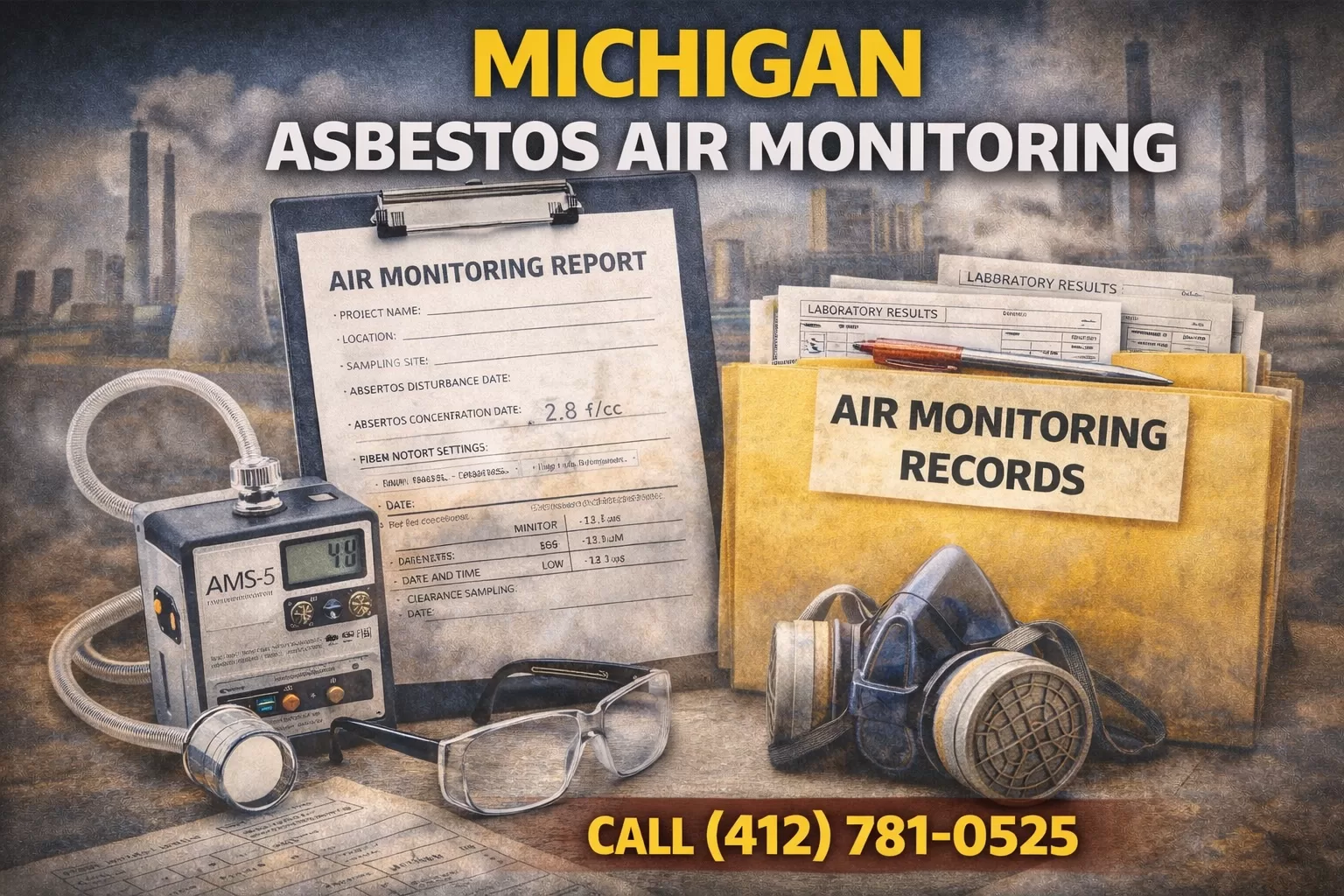
If youโ€™re trying to prove asbestos exposure in Michigan, Michigan Asbestos Air Monitoring can be the missing link between โ€œthere was asbestos on siteโ€ and โ€œit was disturbed while I worked there.โ€ Air monitoring is what gets done during abatement, demolition, shutdowns, and maintenance projectsโ€”especially when pipe insulation, boiler insulation, refractory, gaskets, or flooring are being removed or disturbed.

๐Ÿ‘‰ Search Asbestos Job Sites in Michigan

A lot of people assume their case lives or dies on a product name. In reality, many strong cases are built on records that show the conditions on the job: what was removed, what was in the air, and what the contractor was required to document. If you worked around industrial maintenance, construction, mechanical work, or large facility projects, air monitoring can help establish exposure even when no one remembers the brand from decades ago.

Mesothelioma/Asbestos Legal Help – WV, MI & PA

Speak directly with attorney Lee W. Davis. No call centers. Free, confidential review.
What Michigan asbestos air monitoring actually measures

Air monitoring typically means sampling airborne fibers during or after work that could release asbestos. Depending on the project, sampling can include:

  • Background (pre-work) sampling
  • Work area sampling during removal or disturbance
  • Clearance sampling after abatement
  • Personal sampling (worker-borne exposure monitoring), sometimes used on larger projects

The key point: these reports often show whether fiber counts spiked during the work, whether containment was effective, and whether the job was treated as an asbestos hazard or just handled casually.

Where air monitoring shows up in real Michigan job settings

Michigan Asbestos Air Monitoring is common in situations like:

  • Plant shutdowns and rebuilds
  • Boiler room and mechanical-room tear-outs
  • Pipe insulation removal and replacement
  • Demolition and renovation work in older buildings
  • School, hospital, and municipal projects
  • Industrial abatement projects involving insulation, floor tile, cement products, and equipment

If you were an industrial worker, electrician, pipefitter, laborer, millwright, mechanic, maintenance tech, or contractor, these documents can help tie you to a location and time period where airborne fibers were tested and recorded.

Learn More: Michigan Mesothelioma Lawyer

Who usually has the records

Air monitoring reports donโ€™t always sit with the facility forever. Theyโ€™re often held by:

  • Abatement contractors
  • Environmental consultants / industrial hygiene firms
  • Project managers or construction managers
  • Facilities departments (sometimes archived)
  • General contractors (especially on large projects)

If youโ€™re investigating an exposure history, you want to identify the contractor and consultant names because they frequently lead to the paper trail.

What to look for in the reports

Not all reports carry the same weight. Useful details include:

  • Project location and dates
  • Scope of work (what material was disturbed/removed)
  • Sampling method and results (including clearance results)
  • Containment methods and failure notes (if any)
  • Names of contractors and consultants involved

Even if a report โ€œpassesโ€ clearance, it can still confirm that asbestos work occurred, that insulation or materials were removed, and that the project treated the area as a fiber-risk environment.

What this can do for your Michigan claim

Michigan Asbestos Air Monitoring can help support:

  • Proof the site had asbestos work during your time there
  • Corroboration for exposure conditions (disturbance, tear-out, rebuilds)
  • Identification of contractors and product categories
  • A timeline that matches your work history to known asbestos projects

In many cases, itโ€™s the difference between a vague work story and a documented exposure environment.


FAQs

1) What if I donโ€™t know whether air monitoring was done?

Many workers donโ€™t. Monitoring is typically done by consultants and recorded in project files. The jobsite, year range, and type of work often helps narrow where records exist.

2) Does โ€œpassingโ€ clearance mean there was no exposure?

No. Clearance focuses on post-work conditions. The record can still confirm asbestos disturbance occurred and can identify the work scope and contractors.

3) Is air monitoring only done for big abatement projects?

No. It can appear in renovations, shutdown work, mechanical-room projects, and partial removalsโ€”especially where compliance required documentation.


If you have a Michigan work history and want to build a documented exposure timeline, call (412) 781-0525 or visit leewdavis.com.

Check If Your Family Was Exposed

Get your free guide instantly + a confidential case review.

๐Ÿ”’ 100% Confidential. No obligations.

Michigan Asbestos Jobsite Blueprints

Michigan Asbestos Jobsite Blueprints Guide

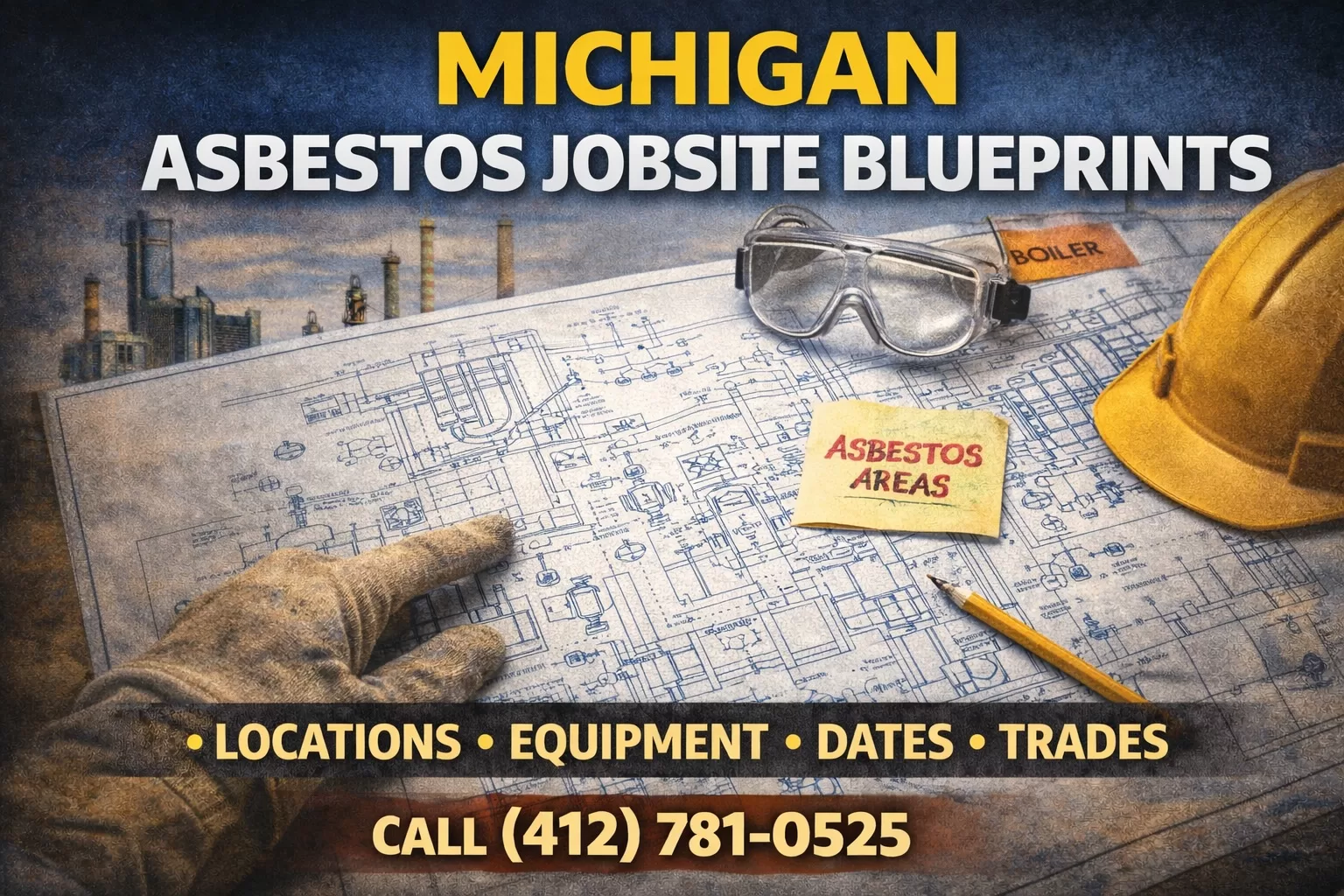
If youโ€™re building a Michigan asbestos case and the company โ€œcanโ€™t findโ€ safety files or product records, Michigan Asbestos Jobsite Blueprints can still prove exposure. Blueprints donโ€™t name brands. They do something better: they map the systemโ€”where insulation, steam lines, boilers, turbines, tanks, and high-heat equipment lived, and where trades actually worked during installs, outages, tear-outs, and maintenance.

Mesothelioma/Asbestos Legal Help – WV, MI & PA

Speak directly with attorney Lee W. Davis. No call centers. Free, confidential review.
Blueprints also solve the most common defense move: โ€œHe canโ€™t identify the product.โ€ In the real world, workers remember locations and tasks, not the manufacturer printed on a box from 1976. A blueprint-backed timeline helps connect your work history to the exact asbestos-prone systems in the plant.

What blueprints can establish in an asbestos case

Blueprints can help show:

  • System location: steam runs, pipe chases, boiler rooms, turbine decks, mechanical rooms
  • Equipment IDs: boilers, pumps, compressors, heat exchangers, tanks, valves
  • Access areas: catwalks, crawlspaces, duct runs, ceiling chases, maintenance corridors
  • Trade overlap: where pipefitters, insulators, millwrights, electricians, and laborers worked side-by-side
  • Outage and rebuild zones: areas where insulation was disturbed repeatedly

This matters because asbestos exposure is often cumulativeโ€”small disturbances, repeated over years, inside the same systems.

Learn More: Michigan Mesothelioma Lawyer

Where to find Michigan Asbestos Jobsite Blueprints

Depending on the jobsite and the era, blueprints may exist in multiple places:

  • Owner/plant engineering department (as-builts, revisions, system drawings)
  • Third-party engineering firms that designed additions or retrofits
  • Maintenance contractors who kept drawing sets for outages
  • Municipal building departments (permits and plan sets for certain projects)
  • Union halls / retiree collections (yesโ€”this happens more than people think)

Often you donโ€™t need โ€œthe entire plant.โ€ You need the unit, system, or area tied to the work you actually did.

๐Ÿ‘‰ Search Asbestos Job Sites in Michigan

What to request (so you donโ€™t get stonewalled)

When requesting blueprints, be specific. The cleanest request is:

  • Jobsite name + address (or unit name)
  • Years worked (range is fine)
  • Trade and typical work areas
  • System type (steam, boiler, turbine, process piping, mechanical room, etc.)
  • โ€œAs-built drawingsโ€ + โ€œrevisionsโ€ + โ€œequipment schedulesโ€

If you ask for โ€œanything about asbestos,โ€ youโ€™ll get nothing. If you ask for drawing sets tied to a unit and timeframe, youโ€™re more likely to get a real production.

How blueprints work with the rest of your proof

Blueprints are strongest when you combine them with:

  • work orders / outage schedules
  • material lists (where available)
  • union records or job dispatch sheets
  • coworker statements about insulation disturbance
  • photos of equipment or areas (even modern photos help match locations)

It becomes a simple story: you worked in these mapped systems, during these tasks, in these years.

The mistake people make

People chase brand names first. In many Michigan sites, those records are goneโ€”or never existed in a way a worker could access. Blueprints are often the fastest way to lock down place + system + task, which is what drives liability and causation.

If you have questions about which records to request for your specific Michigan jobsite, call (412) 781-0525 or visit leewdavis.com.

Check If Your Family Was Exposed

Get your free guide instantly + a confidential case review.

๐Ÿ”’ 100% Confidential. No obligations.

FAQs

Can blueprints prove asbestos exposure by themselves?

Blueprints usually donโ€™t name asbestos products, but they can prove the systems and areas where asbestos insulation, gaskets, and refractory were commonly used.

What if the jobsite says the drawings were destroyed?

Thatโ€™s common. The next step is locating third-party engineering firms, contractors, or permit plan sets that often kept copies or revisions.

Do I need blueprints if I already have work history records?

Work history shows you were employed. Blueprints help show where you worked inside the facility and what systems you likely worked around.

Mesothelioma/Asbestos Legal Help – WV, MI & PA

Speak directly with attorney Lee W. Davis. No call centers. Free, confidential review.
Michigan Asbestos Material Lists: What They Can Prove

Michigan Asbestos Material Lists | Claim Proof

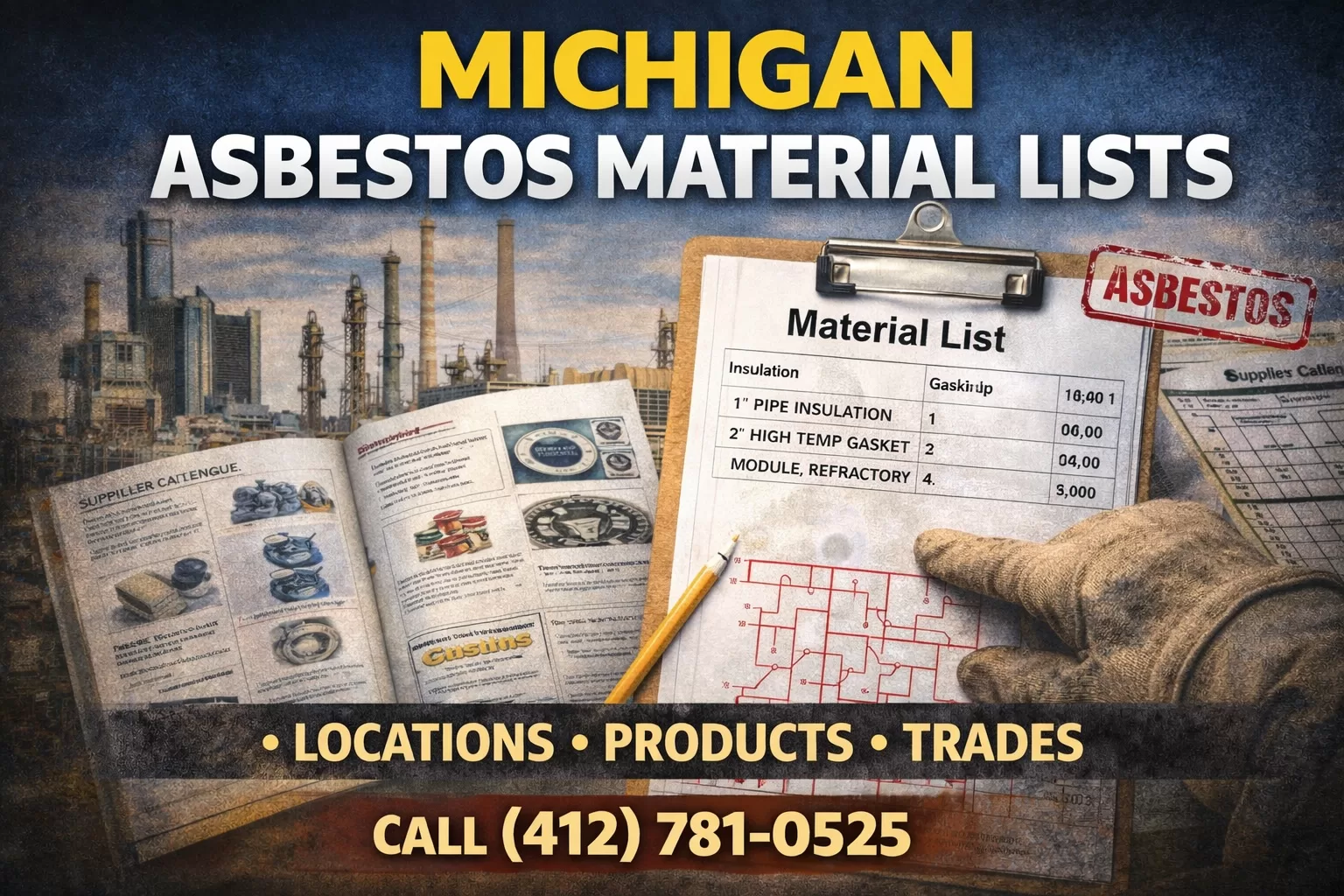
If youโ€™re building a Michigan asbestos case, one of the fastest ways to cut through โ€œno proofโ€ arguments is the paper trail that facilities used to keep operations running. Michigan asbestos material listsโ€”sometimes called material takeoffs, bill of materials (BOM), insulation schedules, equipment specs, or maintenance materials listsโ€”can show exactly what was installed, where it was installed, and what trades typically handled it.

Mesothelioma/Asbestos Legal Help – WV, MI & PA

Speak directly with attorney Lee W. Davis. No call centers. Free, confidential review.
These lists matter because exposure is often repetitive and routine. Itโ€™s not one dramatic moment. Itโ€™s the same gaskets, packing, insulation, refractory, and lagging getting disturbed during outages, rebuilds, and daily maintenance.

What โ€œmaterial listsโ€ usually include

Depending on the jobsite and era, lists can contain:

  • Insulation type and thickness (pipe, boiler, turbine, duct)
  • Gasket and packing specifications by equipment ID
  • Refractory products for furnaces, kilns, boilers, and vessels
  • Part numbers tied to vendors or manufacturer spec sheets
  • Locations: unit numbers, lines, elevations, rooms, or areas
  • Work packages tied to shutdown/outage planning

When a defense claims โ€œyou canโ€™t name the product,โ€ a material list can do that for youโ€”without relying on memory from 30โ€“50 years ago.

Where Michigan asbestos material lists are commonly found

Youโ€™ll often see these records connected to:

  • Auto and heavy manufacturing facilities
  • Power generation and utility plants
  • Chemical processing and refineries
  • Steel, foundry, and fabrication operations
  • Universities, hospitals, and large campuses with central plants
  • Commercial boiler rooms and industrial HVAC systems

Material lists are especially valuable in older Michigan industrial settings where โ€œstandard materialsโ€ were purchased and used for years.

How these records strengthen your exposure proof

Material lists help in three ways:

  1. They identify products (or at least product categories) tied to known asbestos uses.
  2. They connect products to locationsโ€”so your work history isnโ€™t generic.
  3. They corroborate trades and tasks (pipe work, valve rebuilds, outage work, insulation disturbance).

Thatโ€™s the core of causation proof: product + place + work activity + time period.

Read more about Michigan exposure records

How to find them

Depending on the facility, you may locate material lists through:

  • Maintenance departments and archived engineering files
  • Plant engineering drawings/spec packages
  • Contractors and mechanical firms that bid the work
  • Union records, job logs, and โ€œas-builtโ€ binders
  • Prior abatement, renovation, or demolition files
  • Environmental/industrial hygiene consultants

If you donโ€™t have them, that doesnโ€™t end the case. It just means the search becomes part of the strategy.

What to do next

If you worked industrial jobs in Michigan and later developed mesothelioma or another asbestos-related disease, the smartest move is to preserve your work history and start identifying records that can lock in exposure proof early.

Call (412) 781-0525 to talk through where you worked, what you did, and what records are most likely to exist for that site.

Check If Your Family Was Exposed

Get your free guide instantly + a confidential case review.

๐Ÿ”’ 100% Confidential. No obligations.


FAQs

What is an asbestos material list?

Itโ€™s a list or schedule showing what materials were installed or specified at a facilityโ€”often including insulation, gaskets, packing, and refractory products historically associated with asbestos.

What if I canโ€™t name a brand?

Thatโ€™s common. Material lists, specs, and work packages can identify products and locations even when a worker canโ€™t recall a brand decades later.

Are material lists useful if my work was โ€œmaintenanceโ€ not construction?

Yes. Maintenance tasks often create the most consistent exposure, and material lists can show what components were routinely handled.

Do I need records to have a case?

Not always, but records can significantly strengthen the case and speed up the proof processโ€”especially when companies deny product identification.

Learn More: Michigan Mesothelioma Lawyer

Mesothelioma/Asbestos Legal Help – WV, MI & PA

Speak directly with attorney Lee W. Davis. No call centers. Free, confidential review.
Michigan Asbestos Abatement Records: Proof That Asbestos Was There

Michigan Asbestos Abatement Records Proof

If youโ€™re trying to prove a Michigan asbestos case, the most frustrating fight is often the same one: everyone agrees the building was old, but nobody wants to admit what was in it. Thatโ€™s why Michigan Asbestos Abatement Records matter. Theyโ€™re not memories. Theyโ€™re paperworkโ€”permits, scopes, invoices, lab reports, and clearance documentationโ€”created because asbestos was identified, handled, and removed.

And when abatement happened in a mechanical room, tunnel, powerhouse, school, hospital, refinery, foundry, or industrial plant, those records can do something witness recollection canโ€™t: pin down asbestos presence, location, and timeframes.

What counts as โ€œabatement recordsโ€

Michigan Asbestos Abatement Records may include:

  • Abatement permits/notifications (often tied to a specific address and work area)
  • Scope of work documents describing what materials were removed
  • Air monitoring and clearance results
  • Lab testing (PLM/TEM results) identifying asbestos-containing material
  • Contractor invoices and daily logs
  • Project files showing work zones, containment, and equipment used
  • Building/plant maintenance files referencing abatement before renovation

Even if the records donโ€™t name the exact manufacturer, they often identify the material type (pipe insulation, block, transite, floor tile/mastic, boiler insulation, refractory, gaskets, etc.) and the exact rooms or units involved.

๐Ÿ‘‰ Learn More about Michigan Mesothelioma Lawyer

Why abatement records are so powerful in claims

These records help prove what defendants routinely try to blur:

  • Asbestos was present (not a guessโ€”documented testing or regulated removal)
  • Where it was located (mechanical rooms, units, tunnels, lines, equipment areas)
  • When it was disturbed/removed (supports exposure windows and renovation/outage periods)
  • Who was responsible (owners, contractors, subs, consultants)
  • Why workers were exposed (repair, demo, renovation, outage, emergency work)

In industrial settings, abatement also tends to line up with the highest exposure tasks: outages, tie-ins, tear-outs, rebuilds, and demolitionโ€”exactly when dust is created.

Where you can find Michigan abatement records

Depending on the jobsite, these documents may exist with:

  • The facility owner (EHS, engineering, maintenance, or legal)
  • The abatement contractor (project binders, daily logs, invoices)
  • The environmental consultant (sampling and clearance files)
  • The general contractor (project specs and compliance documentation)
  • The public entity (school districts, municipalities, universities, hospitals)

Even when ownership changes, abatement files often survive because theyโ€™re compliance-related and tied to renovation projects.

How to use abatement records to build a stronger case

If you have your work history (employer, job classification, dates, site), abatement records can provide the missing โ€œasbestos existed hereโ€ proof by matching:

  • Your timeframe to documented abatement periods
  • Your work areas to containment zones/material locations
  • Your job tasks to materials that were disturbed or handled

It also helps explain why someone can be exposed without โ€œworking asbestosโ€ full-time: electricians, millwrights, pipefitters, mechanics, and maintenance crews were often in the same spaces during abatement or pre-abatement disturbance.

Practical checklist: what to request

Ask for:

  • Abatement notifications/permits tied to the jobsite
  • Sampling reports (PLM/TEM) and material inventories
  • Scope-of-work documents listing locations/materials removed
  • Air monitoring and clearance documentation
  • Contractor invoices/daily logs with dates and work areas
  • Renovation/outage project binders referencing abatement

If you were exposed in Michigan and youโ€™re trying to turn โ€œI worked thereโ€ into a provable claim, Michigan Asbestos Abatement Records can supply the concrete proof that moves a case forward.

Call (412) 781-0525 to discuss your work history directly with Lee Davis and what records are most likely to exist for your jobsites.

Check If Your Family Was Exposed

Get your free guide instantly + a confidential case review.

๐Ÿ”’ 100% Confidential. No obligations.

๐Ÿ‘‰ Search Asbestos Job Sites in Michigan

Mesothelioma/Asbestos Legal Help – WV, MI & PA

Speak directly with attorney Lee W. Davis. No call centers. Free, confidential review.
Michigan Pipe Insulation Asbestos

Michigan Pipe Insulation Asbestos | Claim Help

Michigan Pipe Insulation Asbestos exposure is one of the most commonโ€”and most underestimatedโ€”sources of asbestos disease in industrial work. For decades, insulation on hot piping was designed to handle extreme heat. The problem is that many of those insulation products contained asbestos, and when they were cut, removed, repaired, or disturbed, asbestos fibers could be released into the air.

Mesothelioma/Asbestos Legal Help – WV, MI & PA

Speak directly with attorney Lee W. Davis. No call centers. Free, confidential review.
This isnโ€™t a โ€œrareโ€ scenario. It happened during ordinary work: shutting down lines, repairing leaks, replacing valves, rebuilding pumps, tearing out old wrap, or working around old, brittle insulation that crumbled when touched.

Why pipe insulation created dangerous exposure

Pipe insulation becomes a high-risk source of asbestos when it is:

  • Aged and brittle from years of heat cycles
  • Cut, torn, or removed during maintenance or renovations
  • Disturbed during outages when crews move fast to restore operations
  • Swept or brushed after tear-out, sending dust airborne again

Even if you werenโ€™t the person โ€œinstalling insulation,โ€ you could still inhale dust if you worked nearby while insulation was being removed or repaired.

Where Michigan pipe insulation exposure commonly occurred

Pipe insulation was everywhere hot systems existed, including:

  • Power plants and boiler rooms
  • Automotive plants and heavy manufacturing
  • Foundries and steel-related operations
  • Chemical and refinery-type process facilities
  • Paper mills and industrial processing plants
  • Large institutional buildings with steam systems (schools, hospitals, government facilities)

If a facility had steam lines, hot water runs, or high-temperature process piping, insulation was likely part of the system.

๐Ÿ‘‰ Search Asbestos job sites in Michigan

Trades most often affected

Michigan Pipe Insulation Asbestos exposure frequently shows up in the work histories of:

  • Pipefitters and steamfitters
  • Industrial maintenance mechanics
  • Millwrights
  • Boilermakers
  • Electricians working around insulated runs
  • Operating engineers and plant utility crews
  • Contractors who handled shutdown and outage work

Many exposures were โ€œincidentalโ€ but repeatedโ€”walking through the same areas, year after year, while insulation was patched, replaced, or torn out.

How exposure happens in real life

The highest-risk tasks tend to include:

  • Tear-out of old pipe wrap during system repair
  • Removing insulation to reach a valve, flange, or pump
  • Scraping and cleanup after insulation disturbance
  • Working in cramped mechanical spaces where dust concentrates (tunnels, chases, boiler rooms)

People remember the conditions: heat, tight space, urgency, dust on clothes and tools, and jobs where visibility changed when debris got kicked up.

What matters for a claim

A strong Michigan Pipe Insulation Asbestos case often centers on:

  • The type of facility (plant, foundry, mill, process site, institutional steam system)
  • Your job role and routine tasks (maintenance, repair, outage work, mechanical access)
  • Time period (older insulation and lagging were commonly asbestos-containing)
  • Repeated work near hot piping systems

You do not need perfect memory of product names. What matters is whether your work history realistically placed you around asbestos-containing insulation and repeated disturbance events.

Talk to a lawyer about Michigan industrial insulation exposure

If you or a family member has mesothelioma or another asbestos disease and your work history involved hot piping systems, maintenance work, or industrial repairs, you may have a viable claim.

Call (412) 781-0525 or visit leewdavis.com to discuss your Michigan work history.

Check If Your Family Was Exposed

Get your free guide instantly + a confidential case review.

๐Ÿ”’ 100% Confidential. No obligations.


FAQs

What is Michigan Pipe Insulation Asbestos exposure?

Itโ€™s asbestos exposure from insulation on hot piping systemsโ€”especially when old insulation is cut, removed, repaired, or disturbed during maintenance.

Do I need to remember the insulation brand?

No. Many cases are supported by your job duties, facility type, and timeframeโ€”especially if you worked around steam lines and insulation tear-outs.

I wasnโ€™t an insulator. Can I still have exposure?

Yes. Pipefitters, electricians, mechanics, and other trades often worked near insulation disturbance and inhaled dust without being the installer.

What types of workplaces in Michigan had asbestos pipe insulation?

Any facility with steam or hot process pipingโ€”plants, foundries, mills, chemical/process sites, and older institutional buildings with boiler rooms and steam runs.

Mesothelioma/Asbestos Legal Help – WV, MI & PA

Speak directly with attorney Lee W. Davis. No call centers. Free, confidential review.

Michigan Asbestos Exposure Records

Michigan Asbestos Exposure Records Guide

If youโ€™re building an asbestos-related claim in Michigan, the hardest part is often not the diagnosisโ€”itโ€™s proving where the exposure happened and what work you did. Michigan Asbestos Exposure Records are the paper trail that can turn a โ€œmaybeโ€ case into a documented case.

People think proof means a product box or a brand name from 1976. In real life, many strong cases are built from records that show your work location, tasks, equipment, and time period, even when no one remembers the manufacturer.

Mesothelioma/Asbestos Legal Help – WV, MI & PA

Speak directly with attorney Lee W. Davis. No call centers. Free, confidential review.

This guide explains what Michigan records to look for, where to request them, and how they help prove exposure.

What counts as Michigan Asbestos Exposure Records

The best records are the ones that show work + place + task + timeframe. Useful examples include:

  • Union dispatch slips, referral records, and jobsite assignments
  • Social Security โ€œEarnings Recordโ€ and employer history
  • Personnel files (job titles, departments, transfer history)
  • Maintenance work orders and job tickets (especially in industrial settings)
  • Shutdown/outage documentation (power plants, foundries, refineries, mills)
  • Piping lists, equipment IDs, and asset logs
  • Purchase orders and invoice records (materials used on site)
  • Safety meeting logs and industrial hygiene records
  • Blueprints, drawings, and equipment manuals
  • Contractor logs and subcontractor scopes of work

Even if a record doesnโ€™t say โ€œasbestos,โ€ it can still be powerful if it places you in work that commonly disturbed asbestosโ€”gasket changes, valve packing, boiler work, refractory tear-out, insulation disturbance, pump rebuilds, or demolition/renovation.

๐Ÿ‘‰ Search Asbestos Job Sites in Michigan

Why records matter more than memory

Time erases details. Companies change names. Plants close. Supervisors retire. Thatโ€™s why documented records beat recollections.

Michigan Asbestos Exposure Records help establish:

  • Worksite identification (exact facility, department, and time period)
  • Job duties (what you physically did)
  • Frequency and duration (repeat work = stronger exposure story)
  • Corroboration (multiple sources pointing to the same work history)

In many cases, the winning proof is a stack of ordinary documents that all say the same thing: you were there, doing that work, during those years.

Where to request key records in Michigan

Here are common starting points:

1) Social Security work history

Your earnings history helps confirm employer names and timeframes. Itโ€™s often the backbone for reconstructing a work timeline.

2) Unions and benefit funds

If you were in a trade, union records may show dispatches, jobsite placements, locals, contractors, and dates. Pension/benefit funds often keep long-running employment verification documentation.

3) Employers and successors

Even if the original company is gone, a successor, purchaser, or records custodian may exist. HR records, safety records, and maintenance archives sometimes survive long after shutdown.

4) Public entities and archives

If the site was tied to a municipality, state project, or public contract, records can exist in public repositoriesโ€”especially for major facility work, rebuilds, or demolition.

5) Coworkers and trade documentation

Old pay stubs, W-2s, apprenticeship paperwork, tool receipts, and job notebooks can fill gaps where institutional records are missing.

Read More: Michigan Mesothelioma Lawyer

The exposure โ€œrecord stackโ€ that wins cases

A strong file usually looks like this:

  1. Timeline proof (earnings record + job history)
  2. Site proof (dispatch slips / badges / HR / payroll)
  3. Task proof (maintenance tickets / outage sheets / job logs)
  4. Material inference (site era + equipment type + documented industrial use)
  5. Medical proof (diagnosis and causation support)

That combination is what turns โ€œI worked around itโ€ into a documented exposure history that can actually be pursued.

Read about Saginaw MI Foundry Asbestos Exposure

Common mistakes that weaken proof

  • Waiting too long to request records (some custodians purge)
  • Asking for the wrong department (HR vs. safety vs. maintenance)
  • Not capturing all names of the company (mergers, subsidiaries, DBAs)
  • Focusing only on brands instead of tasks and locations
  • Not building a timeline first (dates matter)

What to do if the company is closed or records are โ€œgoneโ€

โ€œRecords donโ€™t existโ€ often means โ€œwe donโ€™t want to lookโ€ or โ€œwe donโ€™t keep them here.โ€

There are still options:

  • Identify successor entities and custodians
  • Use union/pension records to confirm placement
  • Use project records, contractor logs, and public archives
  • Reconstruct the exposure story using multiple corroborating sources

The key is building the story from independent records that converge on the same worksite and work duties.

Talk to a Michigan asbestos lawyer about proving exposure

If youโ€™re trying to build a case, donโ€™t guess. The right recordsโ€”requested the right wayโ€”can decide whether a claim stalls or moves.

For help identifying which Michigan Asbestos Exposure Records matter for your work history and what to request first, contact Law Offices of Lee W. Davis, Esquire, P.L.L.C. at (412) 781-0525. Establish credible exposure to asbestos, that’s what we do.


FAQs

What if I donโ€™t remember the brand of asbestos product?

You usually donโ€™t need a brand name to start. Records showing the facility, your job duties, and the timeframe can establish exposure even without product packaging.

Are union records enough to prove exposure?

They can be a strong foundation because they show jobsite placement and dates, but pairing them with task records (work orders, outage logs, maintenance tickets) makes the proof much stronger.

What if the employer says records were destroyed?

Thatโ€™s common. Other sourcesโ€”Social Security history, pension/benefit funds, public project records, contractor records, and coworker documentationโ€”can still rebuild the timeline and support exposure proof.

How far back do asbestos exposure records go?

It depends on the custodian. Some archives go back decades, especially unions and benefit funds. Company record retention varies widely, which is why early requests matter.

Do I need medical records before collecting exposure records?

You can start building the work history anytime. In many situations, creating the timeline early helps you gather the right medical proof later and avoids losing key employment documentation.

Michigan Autoworker Asbestos Exposure Guide

Michigan Autoworker Asbestos Exposure Guide

Michigan Autoworker Asbestos Exposure is rarely about one dramatic moment. Itโ€™s usually about years of ordinary work that involved dust-producing tasksโ€”maintenance, repairs, tear-outs, and cleanupโ€”often in older mechanical and utility areas that supported production. If youโ€™re dealing with mesothelioma or another asbestos disease, the strongest cases are the ones that can clearly answer three questions: where you worked, what you did, and how we prove it.

Auto plants were complex industrial environments. Even if you were โ€œon the line,โ€ you still worked around (or inside) systems that required gaskets, packing, insulation, and high-heat equipment support. And for skilled trades and maintenance crews, asbestos exposure risk was often higher because the work disturbed materials during repairs and shutdowns.

Where Michigan autoworkers were commonly exposed

While every facility and era is different, Michigan autoworker exposure histories often include one or more of these areas:

  • Maintenance and repair bays (equipment work, rebuilds, cleanup)
  • Mechanical rooms and utility spaces (steam lines, boilers, insulation, pipe systems)
  • Older production support areas where insulation and heat control materials were used
  • Shutdown/outage projects involving tear-outs and rebuilds under time pressure
  • Parts and equipment areas where dusty materials were handled or cleaned

You donโ€™t need the โ€œperfect plant mapโ€ to begin. You need a defensible description of your work areas and job duties.

Job duties that tend to matter most

Most autoworker asbestos cases are built around work that created dust:

  • Scraping and replacing gaskets on flanges, pumps, valves, and equipment
  • Removing or disturbing insulation during access, repair, or replacement
  • Replacing valve packing and cleaning out old materials
  • Grinding, sanding, wire-brushing, or cutting during repairs
  • Cleaning debris after tear-outs, retrofits, or equipment changes
  • Supporting trades during shutdown work (moving materials, sweeping, cleanup)

If your work history included these kinds of tasksโ€”even as โ€œhelpingโ€ or โ€œsupport laborโ€โ€”write them down now.

Proof: the โ€œanchorsโ€ that prevent delays

The fastest way to move a claim forward is to build an anchor timeline that you can support with records. Start with:

  1. Employer names and approximate year ranges
  2. Your role (production, skilled trades, maintenance, contractor)
  3. Work areas (maintenance bay, utilities, mechanical rooms, production support)
  4. Dust-producing tasks (gaskets, packing, insulation disturbance, cleanup)
  5. Coworker names who can confirm the work

Then confirm it with:

  • Social Security earnings history
  • W-2s, pay stubs, tax records
  • Union/apprenticeship records
  • Badge logs, dispatch tickets, training cards (if available)
  • Old resumes, job bids, or work orders

Your case becomes stronger when the timeline is clean and consistentโ€”especially when multiple facilities or contractors are involved.

Michigan case value: the cap issue changes how you document damages

Michigan personal injury cases commonly involve a cap on non-economic damages in many contexts, and that reality affects how you present your case. When non-economic damages are limited, the economic record becomes even more important:

  • Medical costs and treatment timeline
  • Out-of-pocket expenses
  • Wage loss / work limitations
  • Travel costs for specialty care
  • Caregiving costs and household impact documentation

In other words: donโ€™t wait until โ€œlaterโ€ to document damages. Start early and keep it organized.

A practical next step you can do today

If you want a simple starting point, create a one-page list:

  • Facility / employer
  • Years (even rough ranges)
  • Work area
  • Dust-producing tasks
  • Names of coworkers or supervisors

That page becomes the backbone of your exposure proofโ€”especially for autoworkers whose histories are spread across multiple shops, lines, and maintenance periods.

If youโ€™re building a facility list and want a structured checklist, use Asbestos Job Sites in Michigan to organize your employers, cities, and year ranges.

For a clean method to document job tasks and evidence, see MI Asbestos Job Duties Proof and write down the dusty duties that matter most.

For valuation factors and damages documentation in Michigan cases, read Michigan Mesothelioma Case Value before you assume the case value โ€œspeaks for itself.โ€

If you need a broader timing overview, start with Michigan Asbestos Lawsuit Timeline to understand the usual steps and where cases slow down.

If you want help evaluating a Michigan autoworker exposure claim and organizing the work history proof, call (412) 781-0525 or contact us here: https://leewdavis.com/contact/

Check If Your Family Was Exposed

Get your free guide instantly + a confidential case review.

๐Ÿ”’ 100% Confidential. No obligations.

FAQs

I was โ€œjust an autoworker,โ€ not a tradespersonโ€”can I still have a claim?

Yes. Many production roles still involved working near disturbed materials, equipment repairs, or older utility spaces. The question is what duties and locations apply to your work history.

Do I need to remember the brand names of asbestos products?

No. Start with job duties, locations, and years. Product identification often comes later through investigation and facility patterns.

What if my exposure was during shutdowns or maintenance periods?

Shutdowns can be high-risk because equipment is opened, insulation is disturbed, and cleanup happens quickly with multiple crews in the same spaces.

What records help the most at the start?

Social Security earnings history, W-2s/tax records, union/apprenticeship records, and any job documents that confirm where and when you worked.

Lansing Autoworker Asbestos Exposure Claims

Lansing Autoworker Asbestos Exposure Claims

Lansing Autoworker Asbestos Exposure cases usually come down to one thing: what you actually did, where you did it, and how clearly the work history can be proven. Auto work wasnโ€™t one single taskโ€”Michigan autoworkers moved through maintenance bays, parts rooms, paint areas, stamping, powertrain-related areas, boiler and mechanical spaces, and shutdown projects where dust-producing work was common.

If youโ€™re facing mesothelioma or another asbestos disease, your case doesnโ€™t require perfect memory of a brand name from decades ago. It requires a clear timeline and job-duty proof that connects your work to asbestos-containing materials used around hot systems, friction components, and industrial equipment.

Where asbestos exposure often happened for Lansing autoworkers

Many Lansing autoworker exposure histories include one or more of these scenarios:

  • Gaskets and packing work on pumps, valves, compressors, and utility systems
  • Insulation disturbance around steam lines, boilers, heaters, and older mechanical rooms
  • Brake and clutch work (especially older friction materials)
  • Grinding, scraping, wire-brushing, and cleanup during maintenance and repair
  • Shutdown/outage projects where multiple trades tear out and rebuild equipment under time pressure
  • Contractor crossover (millwright, electrician, pipefitter, mechanic, labor) inside auto plants

The โ€œwhereโ€ matters, but the job duty matters more. Two workers can have the same employer and very different exposure profiles based on what they touched.

What proof matters most

To build a strong Lansing case, start with โ€œanchorsโ€ you can write down today:

  1. Employer names and approximate year ranges
  2. Your role (autoworker, skilled trades, maintenance, contractor)
  3. Work areas (maintenance bay, mechanical rooms, utilities, production areas)
  4. Dust-producing tasks (scraping gaskets, packing changes, insulation disturbance, cleanup)
  5. Coworker names who saw the same work

For a job-duty evidence format that prevents delays, see MI Asbestos Job Duties Proof and document tasks like gasket scraping, packing changes, and insulation disturbance.

Then confirm the timeline with records:

  • Social Security earnings history
  • W-2s / pay stubs / tax returns
  • Union or apprenticeship records
  • Old resumes, training cards, badge logs, or dispatch/job tickets

If youโ€™re listing Lansing-area facilities and other Michigan locations, use Asbestos Job Sites in Michigan as a checklist while you build your work timeline.

Michigan case value: donโ€™t ignore the cap issue

Michigan cases can involve a cap on non-economic damages in many personal injury actions, and that reality affects how lawyers document and present damages. Even when non-economic damages are limited, the economic damages record (medical bills, out-of-pocket costs, wage loss, and related documentation) becomes even more important to build cleanly and early. The best time to protect value is at the startโ€”when work history proof and damages documentation are being assembled.

For Michigan valuation factors and damages documentation, read Michigan Mesothelioma Case Value before you assume the case โ€œspeaks for itself.โ€

If you want help organizing a Lansing autoworker exposure timeline and evaluating your options, call (412) 781-0525 or contact us here: https://leewdavis.com/contact/

Check If Your Family Was Exposed

Get your free guide instantly + a confidential case review.

๐Ÿ”’ 100% Confidential. No obligations.

FAQs

What if I donโ€™t remember asbestos product names?

Thatโ€™s normal. Most cases start with job duties, locations, and years. Product identification often comes later through investigation and records.

I worked shutdowns or maintenance projectsโ€”does that matter?

Yes. Shutdown work can create concentrated dust exposures because equipment is opened, materials are disturbed, and cleanup happens fast.

What should I write down first?

Employer names, year ranges, your work areas, and the dusty tasks you performed (gaskets, packing, insulation disturbance, grinding/scraping, cleanup).

Can contractors or skilled trades working inside auto plants have claims?

Yes. Cross-trade exposure in mechanical and utility spaces is common, especially during repairs, retrofits, and shutdown work.

Michigan Asbestos Lawsuit Timeline Explained

Michigan Asbestos Lawsuit Timeline Explained

A Michigan Asbestos Lawsuit Timeline is rarely โ€œone size fits all,โ€ but the steps are predictable once you know what matters. Most delays donโ€™t come from the medical proof. They come from the work historyโ€”where the exposure happened, what job duties created asbestos dust, and how quickly those facts can be organized into a claim-ready timeline.

To identify likely exposure locations quickly, start with Asbestos Job Sites in Michigan and match your work history to documented sites.

If youโ€™re reading this after a mesothelioma diagnosis, youโ€™re probably not looking for theory. You want to know what happens next, what you need to gather, and how to avoid wasting months.

Step 1: The first 7โ€“14 days (start with anchors, not perfection)

You do not need every record to begin. The strongest early start is simple:

  • Treating facility + diagnosis basics (where the records can be requested)
  • Employer names and approximate year ranges
  • Your trade/job role (pipefitter, electrician, millwright, mechanic, maintenance, labor)
  • The work areas you remember (boiler rooms, mechanical rooms, pipe racks, equipment bays)
  • High-dust tasks (insulation disturbance, gasket scraping, valve packing, shutdown tear-outs)

That โ€œanchor listโ€ is the fastest way to begin a serious review. If youโ€™re not sure what details to write down first, this MI Asbestos Job Duties Proof guide explains the job tasks that most often support exposure evidence.

Step 2: Work history and exposure development (weeks 2โ€“6)

This is where most Michigan asbestos cases are built. The goal is to connect job duties + locations + timeframes to the kinds of asbestos-containing materials used around hot systems and industrial equipment.

Common exposure scenarios that matter:

  • Insulation tear-outs or disturbance around hot piping
  • Gasket scraping and packing replacement on pumps/valves
  • Boiler/equipment-room maintenance
  • Refractory tear-outs during rebuilds
  • Shutdown/outage work with heavy disturbance and cleanup dust

Even if you donโ€™t remember product names, job duties often lead the investigation to the right manufacturers and responsible parties.

Step 3: Records and witness โ€œhooksโ€ (weeks 4โ€“10)

The case moves faster when you can verify work history through:

  • Social Security earnings history
  • W-2s / pay stubs / tax returns
  • Union or apprenticeship records
  • Old resumes or job logs
  • Coworker names (people who saw the same dusty work)
  • Photos (even background signage can confirm location)

Families often help with this stage when a worker is too sick to chase records alone.

My office will gather all the records with your help.

Step 4: Case valuation and strategy (month 2 onward)

Once exposure and damages are documented, valuation becomes realistic. In Michigan, economic damages documentation (medical costs, lost income, out-of-pocket expenses) can be especially important to develop cleanly. A strong timeline plus strong documentation usually leads to better decision-making and fewer dead ends.

For a Michigan-specific valuation overview, see Michigan Mesothelioma Case Value and how damages documentation affects case decisions.

What you can do today to keep your Michigan case moving

If you only do three things today, do these:

  1. Write down employer names + year ranges
  2. List the dust-creating job duties you remember
  3. Save coworker/foreman names while you can still find them

Thatโ€™s enough to start.

Call (412) 781-0525 or contact us here: https://leewdavis.com/contact/

Check If Your Family Was Exposed

Get your free guide instantly + a confidential case review.

๐Ÿ”’ 100% Confidential. No obligations.

FAQs

How long does a Michigan asbestos lawsuit usually take?

It depends on exposure proof, records, and defendants. The timeline moves faster when work history anchors and job duties are organized early.

Do I need to remember asbestos product names?

No. Most cases start with job duties, locations, and timeframes. Product identification often comes later through investigation.

What if I worked at multiple sites across Michigan?

Thatโ€™s common. The key is building a clean timeline by site and year range so each exposure period is documented clearly.

Can family members start the process?

Yes. Families can begin with medical basics and known work history while records are requested and witnesses are located.

Mesothelioma/Asbestos Legal Help – WV, MI & PA

Speak directly with attorney Lee W. Davis. No call centers. Free, confidential review.