Mt Storm Pipefitter Asbestos

Mt Storm Pipefitter Asbestos Claims

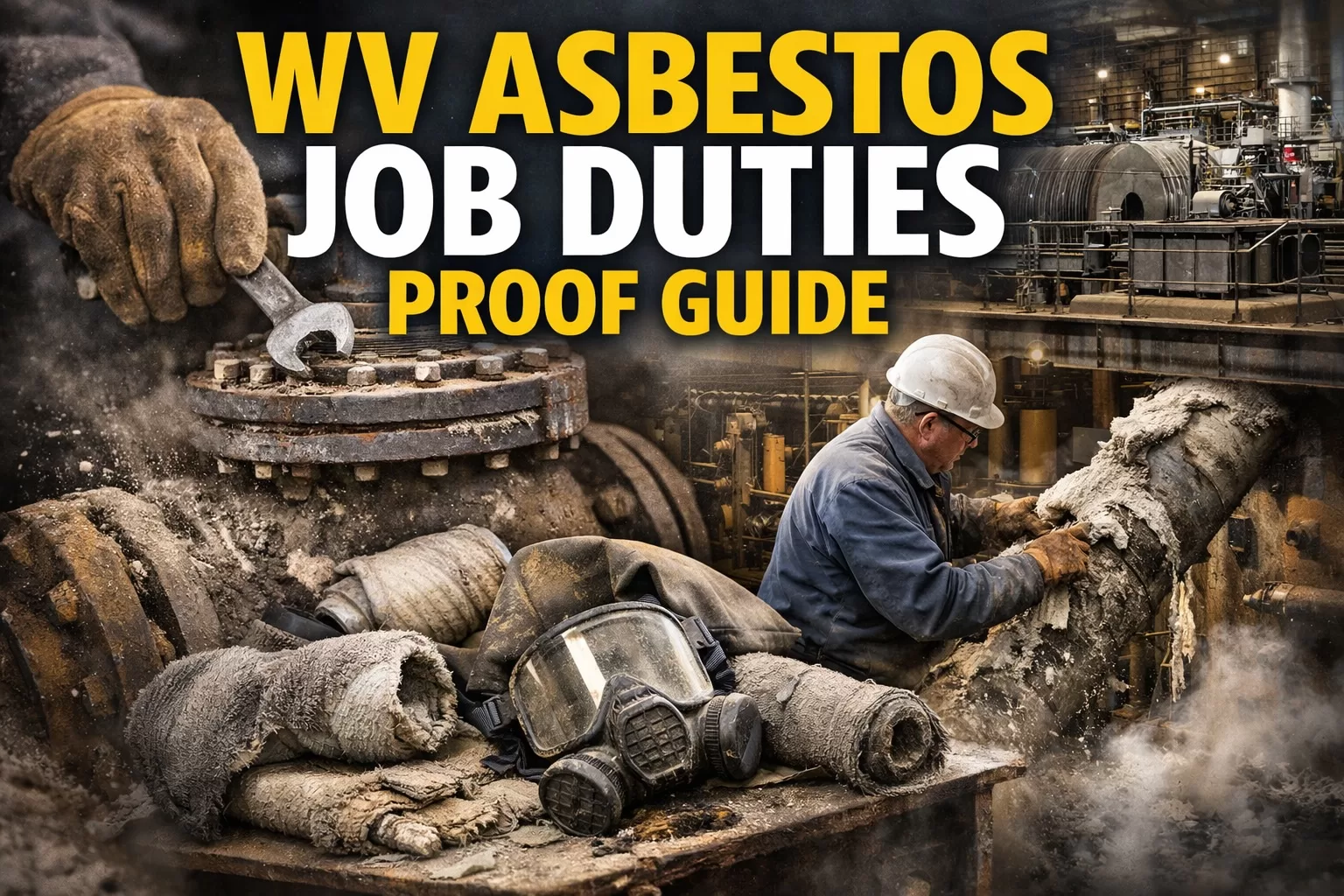
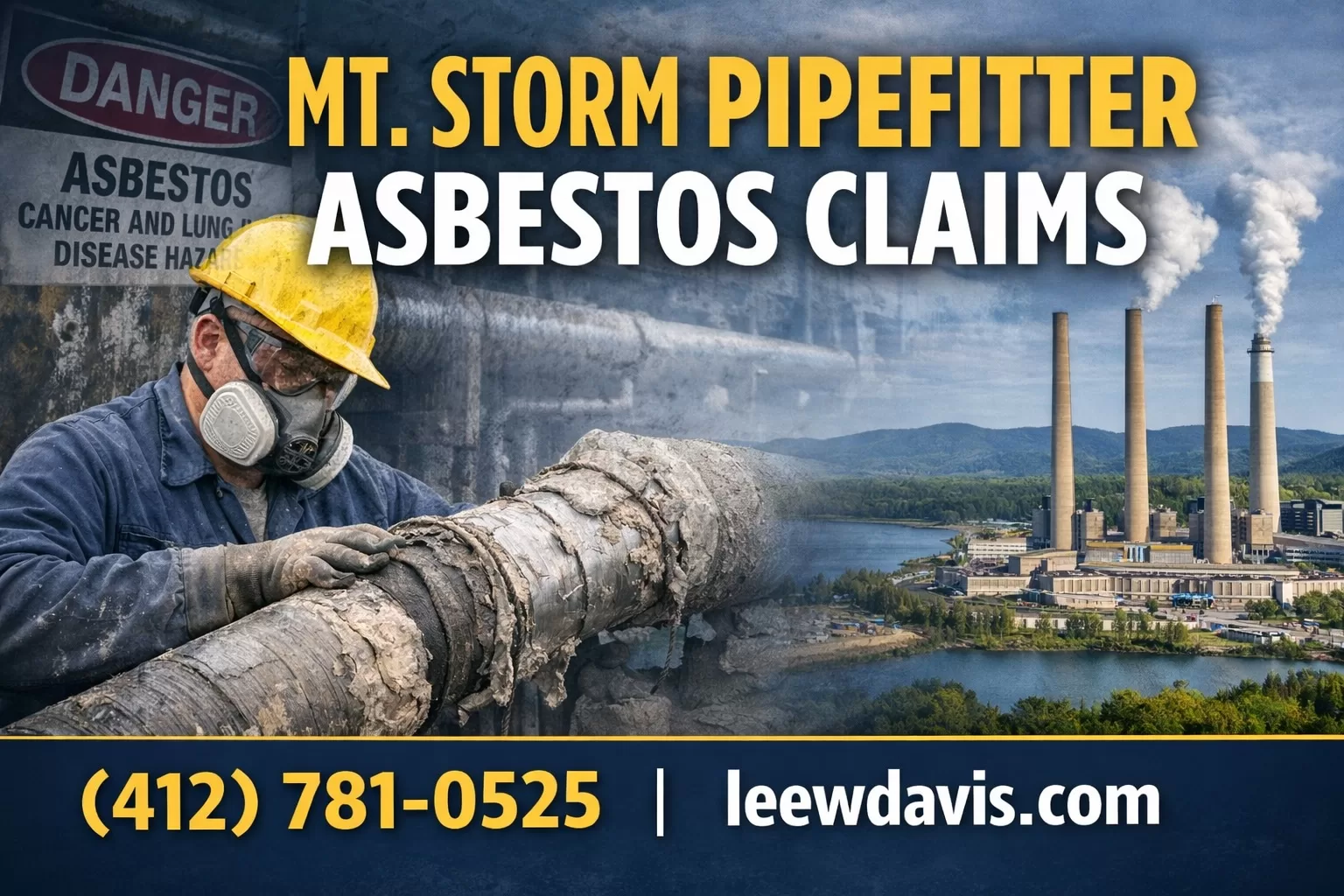
If you’re searching Mt Storm Pipefitter Asbestos, it usually means one thing: you or a family member worked around insulation, gaskets, cement, or high-heat equipment and now there’s a diagnosis—or a scare—you can’t ignore. Mt. Storm’s generating equipment, piping systems, and maintenance areas involved materials that historically were commonly asbestos-containing. Pipefitters were often directly in the zone when those materials were cut, removed, scraped, or replaced.

This page explains what matters most: how pipefitters were exposed, what proof wins these cases, and what to do next.

Mesothelioma/Asbestos Legal Help – WV, MI & PA

Speak directly with attorney Lee W. Davis. No call centers. Free, confidential review.

Where pipefitters encountered asbestos at Mt. Storm

Pipefitters weren’t exposed “in the abstract.” Exposure typically came from hands-on maintenance and shutdown work where asbestos materials were disturbed.

Common exposure points included:

  • Pipe insulation and block insulation on steam lines, condensate lines, and high-temperature runs
  • Valve and pump packing removed and replaced during routine maintenance
  • Flange gaskets (steam, water, chemical lines) scraped and wire-brushed off
  • Boiler/steam system areas where insulation and refractory materials were present
  • Turbine-adjacent piping and related mechanical rooms during outages
  • Cement, mud, and wraps used on pipes and fittings in older systems

The risk rises when material is disturbed and becomes dust—especially in enclosed mechanical spaces or during aggressive outage schedules.

Why pipefitters are a high-risk trade

Pipefitters are high-risk because the work combines:

  1. direct contact with insulation, gaskets, packing, and cement products, and
  2. frequent disturbance—cutting, grinding, scraping, pulling, replacing.

That is the exposure pattern juries and adjusters understand: repeated, hands-on, dusty work around heat systems, often over years.

Diagnoses commonly tied to asbestos exposure

The diagnosis changes what you can recover and how fast you should move.

Asbestos-related diseases include:

  • Mesothelioma (often the strongest cases)
  • Lung cancer (especially with significant occupational exposure)
  • Asbestosis and other serious asbestos-related pulmonary scarring

If you have a new diagnosis and any Mt. Storm work history, do not wait to “see how it goes.” The evidence side of these claims is time-sensitive.

Mesothelioma/Asbestos Legal Help – WV, MI & PA

Speak directly with attorney Lee W. Davis. No call centers. Free, confidential review.

What evidence makes an Mt. Storm pipefitter case strong

Most people think they need a perfect paper trail. You don’t. Strong cases are built from work history + product/trade exposure + medical proof.

Key evidence usually includes:

  • Work history: employer names, dates, job titles, crafts/trades, outage work
  • Site details: areas worked (mechanical rooms, pipe runs, turbine/boiler areas)
  • Co-worker proof: statements confirming the materials and tasks
  • Medical records: diagnosis, pathology (for mesothelioma), imaging, treatment
  • Exposure narrative: the “how” of dust generation—scraping, pulling insulation, grinding gaskets, etc.

If you can describe the work clearly, we can usually build the proof around it.

Can a family bring a claim?

Yes. When asbestos exposure results in death, surviving family members may have a claim depending on the circumstances and timing. If you want the family-claim path explained, start here: the mesothelioma wrongful death page on my site covers what families need to know and what records matter most.

Time matters: do not wait after diagnosis

These claims are not like a property dispute where documents sit in a file cabinet. Witnesses move, memories fade, employers disappear, and jobsite proof gets harder. The sooner we document the work history and medical timeline, the stronger the case usually becomes.

What compensation can include

Every case is different, but damages may include:

  • Medical expenses and future care
  • Lost income and loss of earning capacity
  • Pain and suffering
  • Family losses (in qualifying cases)

The goal is to build the case the right way—fast, credible, and supported—so the value reflects the harm.


FAQs

What does “Mt Storm Pipefitter Asbestos” mean for a claim?

It typically refers to pipefitter work around asbestos-containing insulation, gaskets, packing, or cement products at Mt. Storm where dust exposure occurred during maintenance or outages.

I worked outages—does that matter?

Yes. Outage work often involves intense removal and replacement tasks that disturb insulation and gaskets. Those are classic high-exposure conditions.

What if I don’t remember product names?

That’s normal. Most clients don’t. We build cases from trade tasks, areas worked, time periods, and corroboration—then match that to known product categories and proof sources.


Call Lee Now

If you have a diagnosis and Mt. Storm pipefitter work history, you should get a legal review now—before the evidence gets harder to capture.

Call (412) 781-0525 or visit leewdavis.com to request a consultation.


Helpful links

  • For broader statewide guidance, you can also read my West Virginia mesothelioma lawyer page, which explains how asbestos claims are evaluated across WV worksites.
  • If you want to see how Mt. Storm fits into the bigger map of exposure locations, my West Virginia asbestos job sites page lists facilities and the types of work historically tied to asbestos exposure.

Check If Your Family Was Exposed

Get your free guide instantly + a confidential case review.

🔒 100% Confidential. No obligations.

West Virginia Asbestos Products

West Virginia Asbestos Products | Claim Help

West Virginia Asbestos Products are still one of the most overlooked parts of proving an asbestos case. Many people remember the jobsite or the trade, but not the brand name on a box from 30 years ago. That’s normal. In most cases, you can still build a strong exposure story by identifying the type of product, where it was used, and who handled it.

Asbestos wasn’t just “in the air.” It was built into industrial materials because it resisted heat and corrosion. That means exposure often happened during routine maintenance—cutting, grinding, replacing, scraping, wire-brushing, or blowing out old dust.

Mesothelioma/Asbestos Legal Help – WV, MI & PA

Speak directly with attorney Lee W. Davis. No call centers. Free, confidential review.

What counts as an asbestos “product”?

A product can be almost anything used in industrial settings that contained asbestos fibers. The legal question is usually: what was it, where was it used, and how did the work release fibers?

Even if you can’t remember a brand name, you can often identify:

  • Product category (insulation, gasket, refractory, cement, brake, etc.)
  • Application (boilers, pipe systems, turbines, pumps, ovens, furnaces, electrical equipment)
  • Task that disturbed it (removal, cutting, sanding, mixing, cleanup)
  • Time period (decades matter because product formulas changed)

Common West Virginia asbestos product categories

Thermal insulation

Industrial insulation is one of the most common sources of exposure. It was used to wrap hot systems and conserve energy, especially in power generation and heavy industry.

Typical locations:

  • Pipe runs, valves, elbows, flanges
  • Boilers and boiler rooms
  • Turbines and steam lines

Gaskets and packing

Gaskets and packing were used to seal systems and prevent leaks. They were often replaced during routine maintenance, and removal could create dust—especially when old material was scraped off.

Common applications:

  • Pumps, compressors, and motors
  • Valves and flanged piping
  • Steam and chemical systems

Refractory materials

Refractory products were built to withstand extreme heat—lining furnaces, kilns, ovens, and high-temperature industrial units. Installation and tear-out are high-dust activities.

Common applications:

  • Steel and metal facilities
  • Chemical processing units
  • Foundries and maintenance outages

Asbestos cement and construction materials

Asbestos cement products were used because they were durable and fire resistant. Cutting, drilling, and demolition work could release fibers.

Often found in:

  • Cement pipe, panels, and boards
  • Building and industrial structures
  • Mechanical rooms and older renovations

Electrical and heat-resistant components

Some older electrical equipment and heat shields contained asbestos components—especially where heat, arc, or fire resistance mattered.

Examples:

  • Heat shields and insulating boards
  • Equipment panels in older industrial settings
  • Some high-heat protective barriers

Vehicle and equipment friction materials

Brakes and clutches historically contained asbestos. Exposure often occurred when grinding, blowing out dust, sanding, or replacing components.

Common scenarios:

  • Fleet maintenance
  • Heavy equipment shops
  • Industrial vehicle service

Where these products were commonly encountered in West Virginia

West Virginia work environments frequently associated with asbestos product use include:

  • Power generation and boiler work
  • Chemical facilities and maintenance shutdowns
  • Steel and metal operations
  • Industrial maintenance departments
  • Pipefitting, millwright, and mechanical repair work
  • Construction and demolition on older industrial sites


It is also common for exposure to occur during outages, turnarounds, or shutdowns, when large numbers of trades are brought in and old materials are disturbed at once.

How to prove exposure when you don’t remember brand names

Most people don’t remember the label—especially if they were focused on getting a job done. Proof often comes from combining:

  1. Your work history (jobs, years, duties, locations)
  2. Coworker testimony (who used what, where, and when)
  3. Industrial records (maintenance logs, parts lists, purchasing records when available)
  4. Product identification patterns (what was commonly used in that kind of system and era)
  5. Medical records linking disease to asbestos exposure

A strong case does not require perfection. It requires a credible, consistent exposure narrative supported by records and testimony.

Talk to a West Virginia mesothelioma lawyer

If you believe West Virginia Asbestos Products exposed you to asbestos and you’ve been diagnosed with mesothelioma, lung cancer, or another asbestos-related disease, you may have legal options. The key is acting promptly and preserving your work and medical history before records disappear.

For help evaluating your exposure and next steps, call (412) 781-0525 or visit leewdavis.com.

Check If Your Family Was Exposed

Get your free guide instantly + a confidential case review.

🔒 100% Confidential. No obligations.


Read More:


FAQs

What are the most common West Virginia asbestos products?

The most common categories include thermal insulation, gaskets and packing, refractory materials, asbestos cement products, heat-resistant boards, and some older friction materials like brakes and clutches.

Do I need the brand name of the asbestos product to file a claim?

Not always. Many cases can be built through product category identification, work history, coworker testimony, and records that show what was typically used in that type of facility and time period.

Where were asbestos products most often used in West Virginia?

They were frequently used in power generation, chemical operations, steel and metal facilities, industrial maintenance work, and older construction or demolition involving mechanical rooms and high-heat systems.

Mesothelioma/Asbestos Legal Help – WV, MI & PA

Speak directly with attorney Lee W. Davis. No call centers. Free, confidential review.

West Virginia Asbestos Diagnosis: What to Do Next

West Virginia Asbestos Diagnosis Help

A West Virginia Asbestos Diagnosis can feel overwhelming, especially when the next steps are unclear and time matters. The most important thing is to get organized early—medical records, work history, and exposure details—because those are the building blocks that determine whether a claim can be pursued and how strong it will be.

Mesothelioma/Asbestos Legal Help – WV, MI & PA

Speak directly with attorney Lee W. Davis. No call centers. Free, confidential review.

Start with the medical proof that actually matters

Your diagnosis is not just a label. In asbestos cases, the details in your records are everything. If you have them, gather:

  • Pathology reports (biopsy results)
  • Imaging reports (CT, PET, X-ray summaries)
  • Pulmonology/oncology notes
  • Treatment summaries and current care plan

If you don’t have all of these yet, that’s normal. A strong case can still be built, but we need the right records lined up and consistent.

For more information, visit my West Virginia mesothelioma lawyer page.

Build a clean work history while it’s still fresh

Once there’s a West Virginia Asbestos Diagnosis, the next question is usually: Where did the exposure happen? The work history does not need to be perfect on day one—but it needs to become specific.

Start a simple timeline:

  • Employers (including contractors and staffing companies)
  • Job sites (plants, mills, power stations, refineries, commercial builds)
  • Job titles and trades (pipefitter, electrician, boilermaker, millwright, insulator, mechanic)
  • Years worked and the kinds of tasks you performed

Even “I worked shutdowns at multiple sites” can be narrowed down quickly with the right follow-up questions.

You can also review common exposure locations on my West Virginia asbestos job sites page.

Exposure isn’t just “asbestos was present”—it’s what you handled

Many defendants fight cases by claiming the exposure story is too vague. The goal is to identify what you were around:

  • Insulation, block, cement, packing, gaskets
  • Pumps, valves, turbines, boilers, compressors
  • Pipe covering, mud, refractory materials
  • Dust during tear-outs, maintenance, and rebuilds

Your trade and the kind of work you did often points to the product categories that matter most.


Don’t wait to document witnesses and supporting proof

If co-workers, supervisors, or family members can confirm where you worked and what you did, list them now. Names and phone numbers are easy to lose over time. Also gather:

  • Union records (if applicable)
  • Social Security earnings statement
  • Old badges, job logs, pay stubs, W-2s
  • Any jobsite photos or project paperwork

Timing matters, but the right preparation matters more

People often ask how long they have after a West Virginia Asbestos Diagnosis to take action. The better question is: How fast can we build a proof-ready claim? The strongest cases move when the medical proof and exposure proof are assembled early and cleanly—before memories fade and records get harder to retrieve.

Talk to a lawyer who knows WV jobsite exposure

If you or a loved one has a West Virginia Asbestos Diagnosis, the goal is to identify exposure sources, preserve proof, and pursue every available avenue of recovery. A focused investigation—built around your actual work and medical records—can make the difference between a stalled case and a serious claim.

Free consultation available.

Call (412) 781-0525 to talk with Lee W. Davis about your West Virginia asbestos or mesothelioma claim. You can also reach us through the contact form—confidential, no-obligation consultation.

Check If Your Family Was Exposed

Get your free guide instantly + a confidential case review.

🔒 100% Confidential. No obligations.


FAQs

What should I do first after a West Virginia Asbestos Diagnosis?

Start by gathering core medical records (pathology/imaging/treatment notes) and writing a basic work-history timeline with employers, jobsites, and dates.

Can I file a claim if I don’t remember every product name?

Yes. Many people don’t. A case can often be built using jobsite history, trade tasks, co-worker testimony, and document retrieval to identify likely asbestos-containing products.

Does a West Virginia Asbestos Diagnosis always mean mesothelioma?

No. Asbestos exposure can be linked to mesothelioma, lung cancer, and other asbestos-related diseases. The specific diagnosis and medical proof determine the claim strategy.

Mesothelioma/Asbestos Legal Help – WV, MI & PA

Speak directly with attorney Lee W. Davis. No call centers. Free, confidential review.

Happy New Year from Lee W. Davis

Happy New Year Pittsburgh | Lee W. Davis

Happy New Year Pittsburgh from the Law Offices of Lee W. Davis, Esquire, PLLC.

To everyone in Western Pennsylvania, West Virginia, and Michigan—thank you for your trust and support this year. I hope 2026 brings you health, peace, and better days.

If you need help with an asbestos or mesothelioma case or you’re not sure where to start—call (412) 781-0525 or visit leewdavis.com for a confidential, no-pressure case review.

Wishing you and your family a safe, healthy New Year.

— Lee W. Davis

WV Asbestos Exposure Affidavit: What It Must Say

WV Asbestos Exposure Affidavit

A WV Asbestos Exposure Affidavit is one of the most misunderstood pieces of an asbestos case. People think it’s a “quick statement” that says, “I worked around asbestos.” That’s not enough — and it’s exactly how weak proof gets attacked.

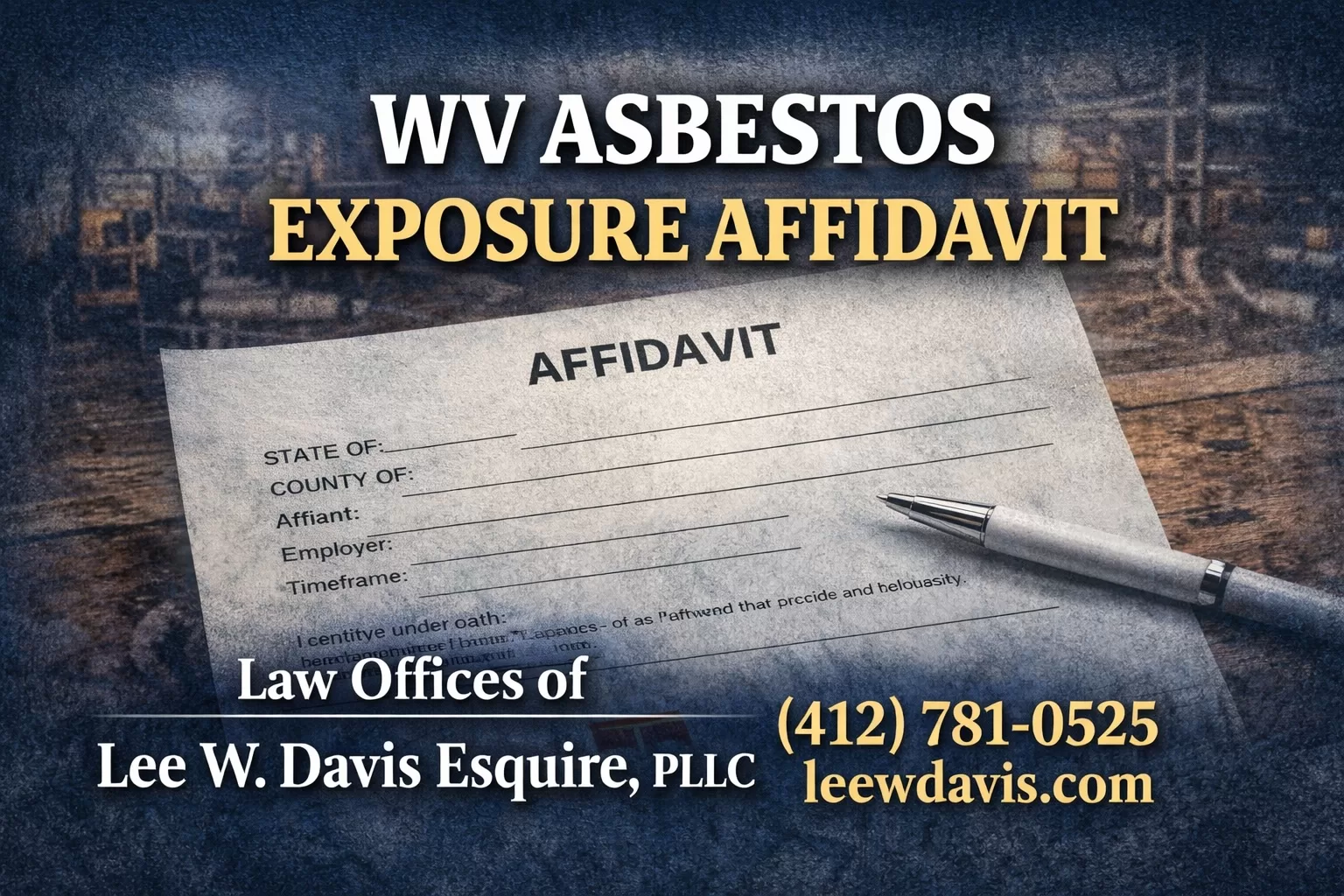
An affidavit is supposed to read like a true, specific account from someone with firsthand knowledge: what the job was, what the materials were, what the work conditions were, and why that person is in a position to know.

Here’s the standard I use: if the affidavit doesn’t answer the obvious follow-up questions, it’s not done.

What a usable affidavit includes

A strong affidavit should cover:

  • Who: full name, job title(s), employer(s), and how the witness knows the injured worker
  • Where: the actual facility/jobsite (not just “a mill” or “a plant”)
  • When: timeframe (even approximate) and whether it was continuous, seasonal, shutdown work, etc.
  • What work: tasks performed (insulation removal, pipe work, gasket scraping, refractory work, boiler maintenance, turbine work, etc.)
  • What products/materials: insulation type, gaskets, cement, packing, refractory, block/blanket, mud, hot-tops, brand names if known
  • How exposure happened: visible dust, cutting/sanding, mixing, sweeping, blowdown, compressed air, dry removal
  • Why the witness knows: “I worked beside him,” “I performed the same tasks,” “I handled the material,” “I supervised the shutdown crew,” etc.

A good affidavit doesn’t try to be dramatic. It’s calm, detailed, and believable — because credibility wins.

Who can sign an affidavit

The best affidavits come from:

  • coworkers who worked the same job or shutdowns
  • supervisors/foremen
  • maintenance partners, insulators, pipefitters, millwrights, electricians who were present
  • in some cases, family members (useful for what they observed at home, not for technical product ID)

Common affidavit mistakes that hurt cases

  • vague dates (“years ago”) with no timeframe at all
  • generic language that reads like a form
  • claiming brand names that the witness can’t actually support
  • skipping the how (how dust was generated, how often, how close)

I’ve been building legitimate exposure proof since 1988 — long before anyone was doing “content” about asbestos. I learned product and jobsite identification the hard way: thousands of industrial cases, including foundry work in Michigan, and then real West Virginia mesothelioma and lung cancer case development where the proof has to hold up when the defense starts pushing.

If your case needs a WV Asbestos Exposure Affidavit, I’ll tell you what belongs in it, who the best witnesses are, and how to get statements that actually help the case.

Call (412) 781-0525 or start at leewdavis.com

Check If Your Family Was Exposed

Get your free guide instantly + a confidential case review.

🔒 100% Confidential. No obligations.

FAQs

1) Does a WV Asbestos Exposure Affidavit have to name the exact product brand?

No. Brand names help when they’re real and supportable. Task-based exposure plus material description can still be strong when it’s detailed and credible.

2) Can a family member sign an affidavit?

Yes, but it’s usually limited to what they personally observed (dusty clothes, symptoms, diagnosis timeline). Product and task details are usually strongest from coworkers or jobsite witnesses.

3) Is a notarized affidavit required?

In many settings, notarization matters. Even when not strictly required, a properly executed sworn statement is harder to dismiss and tends to carry more weight.

Mesothelioma/Asbestos Legal Help – WV, MI & PA

Speak directly with attorney Lee W. Davis. No call centers. Free, confidential review.

Read More about:

WV Asbestos Employment Records

wv asbestos employment records

If you’ve been diagnosed with mesothelioma, lung cancer, or another asbestos disease, the paperwork that proves where you worked and when can matter just as much as the medical diagnosis. WV asbestos employment records are often the backbone of a real claim—because defendants and insurers attack the same thing every time: “Prove you were there.”

👉 Read How Important Your Work History is to Your Case

I don’t guess on work history. I’ve been building credible exposure proof since I started as a paralegal in 1988, through the Saginaw foundry casework, and then into West Virginia cases where the difference between a strong case and a stalled case was often one thing: solid employment documentation that locks down the jobsite, the time period, and the trade.

Mesothelioma/Asbestos Legal Help – WV, MI & PA

Speak directly with attorney Lee W. Davis. No call centers. Free, confidential review.

What counts as WV asbestos employment records?

Employment proof comes in layers. Some records show you were employed. Others prove where you were physically assigned and what you likely handled.

High-value records include:

  • Social Security Earnings (SSA) history (confirms employers and time frames)
  • W-2s / pay stubs / tax records (confirms employer identity and dates)
  • Union records (membership cards, referral slips, dispatch logs, work orders, job assignments)
  • Pension and benefit files (often list employers, job codes, and service credits)
  • HR and personnel files (job titles, departments, locations, training, discipline, transfers)
  • Job bids / project assignments / foreman logs (great for pinning down specific jobsites)
  • Contractor records (subcontract agreements, site access badges, safety orientation records)
  • Work permits, security badges, or plant access logs (rare—but gold when they exist)

You don’t need all of this. But the more you can gather, the harder it is for anyone to pretend your exposure “can’t be proven.”


Why defendants fight employment proof

Defendants rarely argue your diagnosis head-on. They attack your exposure pathway by claiming:

  • you never worked at that facility,
  • you worked there “too briefly,”
  • you worked there “too early/late,” or
  • the products you name “weren’t there when you were.”

Employment records shut those defenses down. They also help identify the right defendants—because jobsite and time period drive which products, trades, and contractors were present.

👉 Read About Asbestos Exposure Timelines

The fastest way to strengthen your case

Start with what locks in dates and employer identity, then build outward.

Step 1: Confirm the timeline

  • SSA earnings record
  • W-2s or tax returns
  • pay stubs or direct deposit records

Step 2: Confirm the jobsite and assignment

  • union dispatch/referral
  • benefit fund statements
  • HR job assignment documents
  • badges / site access documents

Step 3: Confirm the trade and tasks

  • job title and department
  • training records
  • apprenticeship records
  • foreman/project logs if available

Even one or two strong documents can change a case. I’ve watched claims fall apart because the “employment story” was soft, and I’ve watched claims become undeniable because we pinned down the employment facts with records that do not lie.

👉Employment Proof helps with WV Asbestos Product Identification

Common problems—and what they usually mean

“Company closed years ago.”

That doesn’t end the hunt. Pension funds, unions, SSA, tax records, and successor entities often hold what the employer no longer has.

“I was a contractor, not a plant employee.”

That’s normal in WV exposure cases. Contractors often have better paper trails than people think—especially through union dispatch, safety orientations, and job-bid records.

“I can’t remember the exact dates.”

That’s why we pull records. Memory isn’t the standard. Proof is.

Call for a Free Case Review

If you’re trying to build a legitimate WV asbestos case, employment records are often the missing piece that turns “I think I worked there” into documented proof that a defendant can’t dodge.

This is the work I’ve done for decades—starting as a paralegal in 1988, through major industrial casework in Saginaw, and then into West Virginia mesothelioma and lung cancer claims where credibility matters and documentation wins.

Call (412) 781-0525 or visit leewdavis.com to start. If you have a diagnosis and a work history, I’ll tell you what records matter, what’s worth chasing, and what moves the needle.

Check If Your Family Was Exposed

Get your free guide instantly + a confidential case review.

🔒 100% Confidential. No obligations.

WV Asbestos Pathology Report

WV Asbestos Pathology Report Help

A WV Asbestos Pathology Report is one of the most important documents in an asbestos case because it is the closest thing to “proof on paper” of what the disease actually is. People often bring me CT scan notes, discharge summaries, or a single clinic printout and assume that’s enough. It isn’t.

In real-world litigation, the pathology is where diagnoses get confirmed, corrected, upgraded, or sometimes flat-out changed. If you’ve been told you have mesothelioma, asbestos-related lung cancer, or another asbestos disease, your pathology file is where the truth lives—often in more detail than you’ve ever been given.

What a pathology report is (and what it is not)

A pathology report is the written interpretation by the pathologist who reviewed tissue—biopsy samples, surgical specimens, pleural fluid, or lung tissue. It is not a CT report. It is not a “radiology impression.” It is not a doctor’s office note summarizing what they believe is going on.

A pathology report typically includes:

  • The specimen source (where the tissue came from)
  • The final diagnosis (what the tissue shows)
  • Microscopic findings
  • Sometimes an immunohistochemistry panel (IHC) with markers that confirm mesothelioma vs. carcinoma
  • Sometimes references to prior specimens or consults

If you have a WV asbestos claim, this report is often the anchor document that supports the disease element of the claim.

Why the pathology matters in asbestos cases

In asbestos litigation, defense lawyers (and claims administrators) don’t argue feelings. They argue records. And when the diagnosis is challenged, pathology is where those fights are won or lost.

Common examples I see:

  • A chart says “mesothelioma,” but the pathology says “poorly differentiated carcinoma.”
  • A doctor note says “asbestos-related lung cancer,” but the pathology doesn’t specify anything about asbestos (which is normal), and the work shifts to proving occupational exposure separately.
  • A hospital summary is vague, but the pathology has the exact cell type and site, which is critical for causation and damages.
  • There are multiple facilities involved, and the “final” report you were handed is not actually the final or complete set.

Bottom line: pathology isn’t a supporting document. It’s a core document.

What to look for in a WV Asbestos Pathology Report

If you have the report in front of you, these are the parts that usually matter most:

1) The “Final Diagnosis” section

This is where the official call is made. If it says malignant pleural mesothelioma (or peritoneal), that’s significant. If it says lung adenocarcinoma, that’s still potentially an asbestos case, but the focus shifts to exposure and causation.

2) The specimen source and site

“Pleura,” “lung,” “peritoneum,” “lymph node,” “pleural fluid,” etc. A site matters because it affects:

  • the medical story,
  • the damages story,
  • and sometimes the legal theory.

3) Immunohistochemistry (IHC) markers

Mesothelioma is often confirmed through patterns of staining. You don’t need to memorize markers, but you do need to know whether IHC was done and whether it supports the diagnosis.

4) Addenda and amended reports

This is where people get burned. A report can be “amended” days later after additional stains or outside review. If you only have the first version, you may be missing the most important page.

The problems I see constantly: missing slides, missing addenda, and “summary-only” records

If you’re dealing with a serious diagnosis, you want more than a one-page report. You want the full pathology packet.

Here are recurring problems:

  • The hospital portal only shows a summary, not the full pathology report with addenda.
  • Slides and blocks exist but were never requested (and sometimes get moved, archived, or lost in the shuffle).
  • The specimen was reviewed at Facility A, then sent to Facility B, and your file is split.
  • A consult pathologist issued a separate opinion and it’s not in your chart unless you ask.

If you’re trying to build a claim, “close enough” documentation is how cases get delayed, discounted, or denied.

How to request the right pathology documents

When you request records, don’t ask for “my pathology report” in casual terms and hope someone guesses correctly. Be specific.

Ask for:

  • The complete pathology report for all specimens related to the diagnosis
  • All addenda / amendments / supplemental reports
  • The operative pathology (if surgery was done)
  • The cytology report (if pleural fluid was tested)
  • Any outside consult reports (if slides were sent out)
  • The block and slide inventory information (what exists and where it is stored)

If you’re not sure what facility actually controls the pathology file, start with the facility that performed the biopsy or surgery, then follow the paper trail to any consult lab that re-read the slides.

For the broader records request process, see WV Asbestos Medical Records (because missing pages are a predictable problem, not a rare one).


What if the pathology report doesn’t say “asbestos”?

That’s normal.

Pathology generally identifies disease. It rarely says, “This was caused by asbestos.” That part is proven through occupational exposure evidence, work history, jobsite product identification, and credible witness proof.

If the diagnosis is sound, then your next step is proving exposure and defendants/products—not trying to force pathology to say something it usually will not say.

That’s where product work matters. If you haven’t already, review WV Asbestos Product Identification for the exposure proof side of the case.

Where CT scans fit (and where they don’t)

A CT scan can show pleural thickening, effusions, masses, or other findings that raise suspicion and guide the biopsy. It supports the medical timeline and progression, but it is not the same as tissue proof.

If you want the imaging angle in plain English, see WV Asbestos CT Scan—but understand this: pathology is what typically carries the weight when the stakes get real.

When a second pathology review makes sense

A second review can be appropriate when:

  • the diagnosis is ambiguous,
  • the report relies on limited tissue,
  • there were multiple competing impressions,
  • or the treating team’s clinical diagnosis doesn’t match the written pathology.

In asbestos cases, clarity matters. If the diagnosis is going to be challenged, you want to know that early—not after months of waiting and paperwork.

Mesothelioma/Asbestos Legal Help – WV, MI & PA

Speak directly with attorney Lee W. Davis. No call centers. Free, confidential review.

FAQs

What if my pathology report is missing pages or doesn’t look “final”?

That’s common. Ask for all addenda/amendments and confirm whether additional stains or outside consults were performed after the initial report.

Do I need the slides and tissue blocks?

Not always, but you want to know they exist and where they are. Slides/blocks matter if the diagnosis is disputed, if you need a second review, or if the available report is incomplete.

What if the hospital says the pathology is archived or they can’t find it?

It usually means the request wasn’t routed correctly or the file is split across facilities/labs. Be specific and persistent. Archiving is not the same as nonexistence.


The way I handle pathology in real asbestos cases

I’ve been doing product and exposure identification work since 1988, back when it was done with paper files, job logs, and hard conversations—not search engines and templates. I carried that approach through the Saginaw foundry cases, and then into West Virginia mesothelioma and lung cancer cases where credibility matters and shortcuts get exposed.

A pathology report is not “just another medical record.” It’s the document that can make a claim straightforward—or quietly sabotage it if it’s incomplete, vague, or inconsistent.

If you were diagnosed in West Virginia and you want a serious review of whether your WV Asbestos Pathology Report is complete and usable—and what to request next—start here:

Contact the Law Offices of Lee W. Davis, Esquire, PLLC for a free case review.

Call (412) 781-0525

Check If Your Family Was Exposed

Get your free guide instantly + a confidential case review.

🔒 100% Confidential. No obligations.

WV Asbestos CT Scan

WV Asbestos CT Scan | Proof of Disease

A WV Asbestos CT Scan can be one of the strongest pieces of objective proof in an asbestos case because it documents what is happening inside the chest—often before a person feels how serious it is. CT imaging is not “just medical records.” It’s visual evidence that can support a diagnosis, explain why symptoms progressed, and anchor your case timeline in a way that insurance companies and defendants can’t easily hand-wave away.

If you’ve been told your CT shows pleural changes, scarring, nodules, or “suspicious findings,” the next step is making sure those findings are properly documented and paired with a credible exposure history.


What a CT scan can prove in an asbestos claim

A CT scan is used to evaluate the lungs and pleura (the lining around the lungs). In asbestos litigation, it commonly supports proof of:

  • Pleural plaques (classic marker of asbestos exposure in many cases)
  • Pleural thickening (sometimes described as “diffuse pleural thickening”)
  • Pleural effusion (fluid buildup that can be associated with malignancy)
  • Interstitial fibrosis or scarring patterns
  • Pulmonary nodules or masses that require biopsy or follow-up imaging
  • Atelectasis (collapsed lung areas) that can appear alongside pleural disease

A CT alone may not “diagnose” mesothelioma, but it often provides the evidence trail that leads to biopsy, oncology referral, and the final diagnosis—while also documenting progression over time.


The CT language that matters (and what to ask for)

Radiology reports contain key phrases that can either help your case—or bury the lead. When reviewing a WV Asbestos CT Scan, you want to make sure the report clearly captures:

  • Where the findings are (right/left, upper/lower, pleural vs. lung parenchyma)
  • How extensive they are (diffuse vs. focal; thickness; size measurements)
  • Whether progression is noted compared to earlier imaging
  • Recommended next steps (PET scan, biopsy, thoracentesis, oncology consult)

Practical tip: If you have multiple CT scans over months or years, the comparison language (“increased,” “worsened,” “new”) can be crucial. That’s how imaging becomes a timeline—not just a single snapshot.


CT scans don’t replace exposure proof (they support it)

Even a strong CT scan needs to be paired with proof of where asbestos exposure happened. That usually means combining imaging with:


Common CT-related issues that can weaken a claim

A few problems show up again and again:

  • A report that’s too vague (“scarring” without detail, no measurements, no comparison)
  • Missing prior imaging (radiologist can’t compare, so progression isn’t documented)
  • Delays in follow-up (defendants later argue the condition is unrelated or uncertain)
  • The wrong label (treating pleural disease like generic “COPD changes” without deeper workup)

These are fixable in many cases—by gathering the full imaging history, pulling the actual images when needed, and aligning the medical narrative with the exposure narrative.


FAQs

Can a WV Asbestos CT Scan prove mesothelioma?

A CT scan can strongly support suspicion and document pleural disease, but mesothelioma is typically confirmed through pathology (biopsy). CT imaging often becomes the proof trail that leads to that diagnosis.

What if my CT says “pleural thickening” but no one mentioned asbestos?

That happens a lot. Pleural findings can be documented without the radiologist naming the cause. A proper legal/medical review connects the imaging findings to a credible asbestos exposure history.

Should I get copies of the actual CT images or just the report?

Start with the report, but the actual images can matter—especially when there’s a dispute about what the scan shows, progression, or the severity of pleural involvement.


Call Lee Directly – Not A Call Center

If you have a WV Asbestos CT Scan showing pleural plaques, thickening, nodules, or unexplained effusion, don’t let it sit in a chart as “just another test.” Imaging can become powerful evidence—but only if it’s tied to the right work history and product exposure proof.

I’ve focused on asbestos exposure proof and case-building for decades—starting as a paralegal in 1988, through major industrial exposure matters, and continuing with West Virginia mesothelioma and lung cancer cases where credible product identification and legitimate evidence make the difference.

Call Now: 412-781-0525

Or use this form:

Check If Your Family Was Exposed

Get your free guide instantly + a confidential case review.

🔒 100% Confidential. No obligations.

Defendants don’t “accept” asbestos exposure—they demand proof. A CT scan can document the disease process.

Start with a free West Virginia asbestos case review.

Mesothelioma/Asbestos Legal Help – WV, MI & PA

Speak directly with attorney Lee W. Davis. No call centers. Free, confidential review.

WV Asbestos Product Identification: How to Prove Exposure in West Virginia

WV Asbestos Product Identification

WV Asbestos Product Identification is often the difference between a case that moves and a case that stalls. In West Virginia, it’s not enough to know you worked “around asbestos.” You need a provable connection between your work history and specific asbestos-containing products—insulation, gaskets, packing, cement, refractory, pipe covering, valves, boilers, turbines, brake products, electrical components, and more.

This is where real cases are won: building a clean, document-backed story of what product, who supplied it, where it was used, and how you were exposed.

Mesothelioma/Asbestos Legal Help – WV, MI & PA

Speak directly with attorney Lee W. Davis. No call centers. Free, confidential review.

What “product identification” actually means

Product identification means establishing that you were exposed to asbestos from an identifiable product (or product line) at a particular worksite, during a particular time period, through a particular kind of work.

In practice, that proof usually comes from a combination of:

  • Work history and job duties (what you physically did)
  • The site and department (where you worked)
  • Timeframe (when you were there)
  • Product names and nicknames workers used on the job
  • Co-worker corroboration
  • Documents that show what was installed, repaired, or supplied

Where WV Asbestos Product Identification evidence usually comes from

You don’t need every category below—but the stronger the mix, the stronger the case.

1) Job records and work history documents

These are the “skeleton” of the case. They prove dates, employers, and job classification.

Common sources:

  • Social Security earnings history
  • Union records (membership, dispatch slips, job calls)
  • Personnel files (hire dates, departments)
  • Pay stubs, W-2s, pension records
  • Military DD-214 and service records (when applicable)

2) Product names, brand names, and jobsite “shorthand”

Workers rarely say “asbestos-containing thermal insulation.” They say what they actually handled:

  • “pipe covering,” “mud,” “block,” “lagging”
  • “packing,” “rope,” “sheet gasket”
  • refractory “brick,” “castable,” “blanket”
  • “boiler insulation,” “turbine wrap,” “millboard”

Brand names can matter, but so can the way crews referred to products. A good intake focuses on what the product looked like, how it was used, where it was stored, and who installed it.

3) Co-worker statements and trade witnesses

If you did not personally install a product, a co-worker often can confirm what was used in your area, on your shift, or by the contractor crew that did the install.

Strong co-worker proof usually includes:

  • Same department or same unit
  • Overlapping time period
  • Specific tasks (cutting, mixing, removing, sweeping, grinding)
  • Frequency and proximity

4) Site documents and historical evidence

These are the “receipt” records that show products were actually at the facility.

Examples:

  • Maintenance logs and work orders
  • Purchase orders and supply invoices
  • Equipment manuals and parts lists
  • Blueprints, specs, and bid packages
  • Shutdown/outage contractor records
  • Safety meeting minutes and industrial hygiene records

👉 Search Asbestos Job Sites in West Virginia

5) Medical documentation that connects exposure to disease

Your diagnosis, pathology, imaging, and treatment records are not just “damages”—they support causation and timeline.

Typical core records:

  • Pathology report(s)
  • Operative reports
  • Oncology and pulmonology notes
  • Radiology (CT, PET) reports
  • Death certificate (wrongful death cases)

Common “product ID” problems—and how they get solved

“I can’t remember the brand names.”

That’s normal. Many strong cases are built without brand recall by using:

  • jobsite records,
  • co-worker proof,
  • known product usage at the site during that time,
  • and work-practice descriptions (cutting/mixing/removal).

“The company is gone / records are missing.”

Old sites, bankrupt suppliers, and vanished contractors are routine in asbestos litigation. The solution is reconstructing the picture using alternative proof—union records, Social Security history, historical jobsite evidence, and trade witnesses.

“I only did maintenance / cleanup.”

Maintenance, repair, and cleanup work is often the highest-exposure work because it involves disturbing existing asbestos materials, especially during tear-outs, shutdowns, and emergency repairs.

Quick checklist for your intake interview

If you want to strengthen WV Asbestos Product Identification, gather:

  • Worksites (plant names, cities, departments/units)
  • Years at each site (approximate is okay)
  • Job title(s) and the work you actually performed
  • Trades you worked around (insulators, pipefitters, boilermakers, millwrights)
  • Products you handled (gaskets, packing, insulation, refractory, cement, etc.)
  • The dirtiest tasks (cutting, mixing, scraping, removing, grinding)
  • Names of co-workers who can confirm products/work practices
  • Any old photos, tool lists, manuals, or paperwork you still have

FAQs

How specific does WV Asbestos Product Identification need to be?

Specific enough to connect your exposure to identifiable products used at identifiable worksites during identifiable time periods. The proof can be built from multiple sources—records plus witness testimony is common.

What if I only know the jobsite, not the product?

That’s still a starting point. Many cases begin with a solid jobsite/work history and then add product proof through records, known product usage, and co-worker statements.

Does product identification matter for settlement value?

Yes. Strong product identification generally strengthens leverage because it clarifies liability and reduces the defense’s ability to claim “no proof of exposure.”


Free case review

If you or a family member has mesothelioma or another asbestos disease, a focused review can often identify product pathways quickly—especially when the work history is organized the right way. WV Asbestos Product Identification is a process, and the first step is building the timeline and exposure map while records still exist.

If you’re serious about bringing a West Virginia asbestos case, product identification is the make-or-break issue—and it’s been the center of my work for decades.

I started doing asbestos product identification work in 1988 as a paralegal—back when proving exposure meant digging through job histories, work orders, union records, and co-worker proof without today’s digital shortcuts. I carried that same approach through the Saginaw foundry cases, and then into the West Virginia mesothelioma and lung cancer cases, where I worked directly with clients to build credible, legitimate, evidence-based exposure stories that stand up under scrutiny.

If you don’t know the product names, don’t guess. If the company is gone, don’t assume it can’t be proven. This is exactly what I do: reconstructing the exposure map—jobsite by jobsite, product by product—until the case is supported by real evidence.

Call (412) 781-0525 or use the contact form on this page to request a confidential review. If there’s a provable asbestos exposure pathway in your work history, we’ll find it—and we’ll build it the right way.

Check If Your Family Was Exposed

Get your free guide instantly + a confidential case review.

🔒 100% Confidential. No obligations.

WV Expansion Joint Asbestos

WV Expansion Joint Asbestos Claims

If you worked around WV Expansion Joint Asbestos materials in power plants, refineries, steel facilities, or large commercial mechanical rooms, you may have had repeated, high-dose exposure without realizing it. Expansion joints were installed to absorb vibration, movement, and temperature swing—exactly the conditions where older asbestos-containing components were commonly specified.

Mesothelioma/Asbestos Legal Help – WV, MI & PA

Speak directly with attorney Lee W. Davis. No call centers. Free, confidential review.

WV Expansion Joint Asbestos exposure sources

Expansion joints show up anywhere a system expands and contracts: ductwork, boilers, turbines, generators, large piping runs, and industrial ventilation. Decades ago, many expansion joints were built with (or wrapped in) asbestos-containing cloth, rope, tape, millboard, packing, or insulating layers because asbestos resisted heat and helped prevent failure.

Exposure risk often spikes during:

  • Cutting out or “demo” of old duct/piping sections
  • Unbolting flanges and disturbing joint material
  • Grinding, scraping, wire-brushing, or sanding old residue
  • Replacing adjacent insulation (which shakes loose dust near joints)
  • Shutdown/turnaround work where multiple trades are working the same area

Where WV Expansion Joint Asbestos was commonly encountered

In West Virginia, expansion joints were frequently encountered by workers in:

  • Power generation and boiler houses
  • Chemical and industrial processing facilities
  • Steel and metal-related industrial systems
  • Pulp/paper and large manufacturing plants
  • Commercial HVAC rooms in older hospitals, schools, and municipal buildings

Even if you didn’t install expansion joints, you could still be exposed if you worked nearby while someone else handled removal, maintenance, or repair.

👉 Search for Asbestos Job Sites in West Virginia

What evidence helps prove WV Expansion Joint Asbestos exposure

The strongest cases are built on proof—practical, jobsite-specific proof. Helpful evidence can include:

  • Work history: job titles, years, departments, and tasks (shutdowns/turnarounds matter)
  • Site identification: where you worked and what systems you serviced (duct lines, turbines, boilers, etc.)
  • Coworker testimony: who performed the work, what products/materials looked like, how dust traveled
  • Product and component clues: purchase orders, maintenance logs, photos, outage reports, old manuals
  • Medical records: diagnosis date, pathology reports, imaging, and treating physician notes

If the plant is closed or records are missing, don’t assume your claim is dead. Exposure cases are often proven through layered evidence: your work history, coworker statements, jobsite documentation, and medical proof.


Who may be responsible for WV Expansion Joint Asbestos harm

Liability is often broader than a single employer. Depending on the facts, responsible parties may include:

  • Manufacturers and suppliers of asbestos-containing expansion joint components or materials
  • Contractors responsible for installation, repair, or replacement work
  • Premises owners and operators (in some circumstances)
  • Successor entities (when brands changed hands)

Each case turns on where the exposure happened, what materials were used, and who supplied or controlled them.

What compensation can cover

A WV Expansion Joint Asbestos case may seek compensation for:

  • Medical bills and future treatment costs
  • Lost income and reduced earning capacity
  • Pain, suffering, and loss of life’s pleasures
  • Caregiver costs and household services
  • Wrongful death damages for surviving families (when applicable)

FAQs

What is an expansion joint, and why would it contain asbestos?

An expansion joint is a flexible connector that absorbs movement and heat expansion in ducts or piping. Older designs often used asbestos-containing layers because they were heat-resistant and durable.

I wasn’t an insulator—can I still have a WV Expansion Joint Asbestos case?

Yes. Pipefitters, millwrights, mechanics, boilermakers, HVAC workers, laborers, and maintenance staff often worked directly on systems that included asbestos-containing joints or were exposed while others disturbed them.

What if the jobsite is closed or the equipment is gone?

You can still bring a claim. Cases are frequently proven through work history, coworker testimony, historic jobsite documentation, and medical evidence—even when physical materials are no longer available.

Talk with a WV asbestos lawyer about next steps

If you suspect WV Expansion Joint Asbestos exposure played a role in mesothelioma, lung cancer, or another asbestos disease, the next step is getting your work history and medical proof organized quickly. A well-built case focuses on specific systems, tasks, and time periods—then identifies the responsible manufacturers and contractors.

Free, confidential consultation available. Call Lee directly (412) 781-0525

Check If Your Family Was Exposed

Get your free guide instantly + a confidential case review.

🔒 100% Confidential. No obligations.