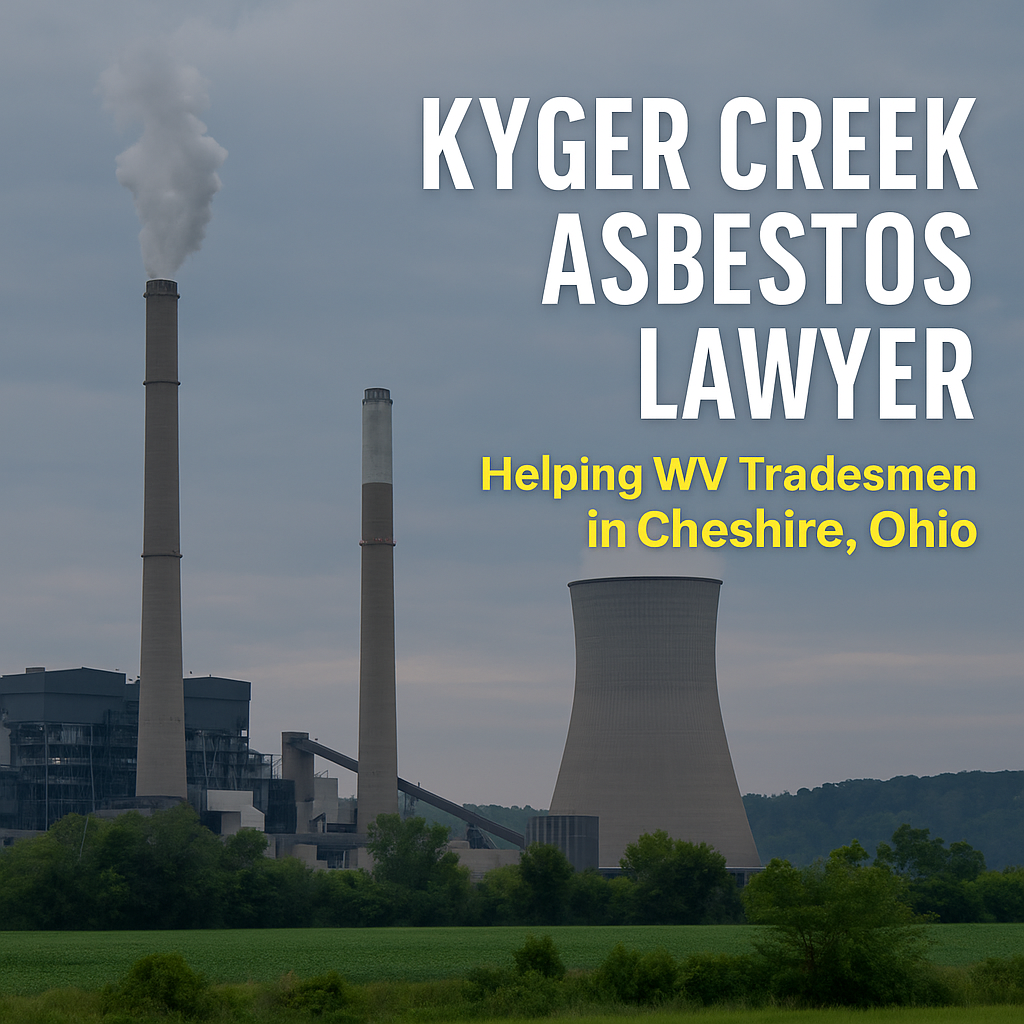
Many West Virginia tradesmen crossed the Ohio River to work at the Kyger Creek Power Station in Cheshire, Ohio—often unaware of the hidden dangers. A Kyger Creek asbestos lawyer can help if you or a loved one was exposed to asbestos while working there or through contaminated clothing brought home.
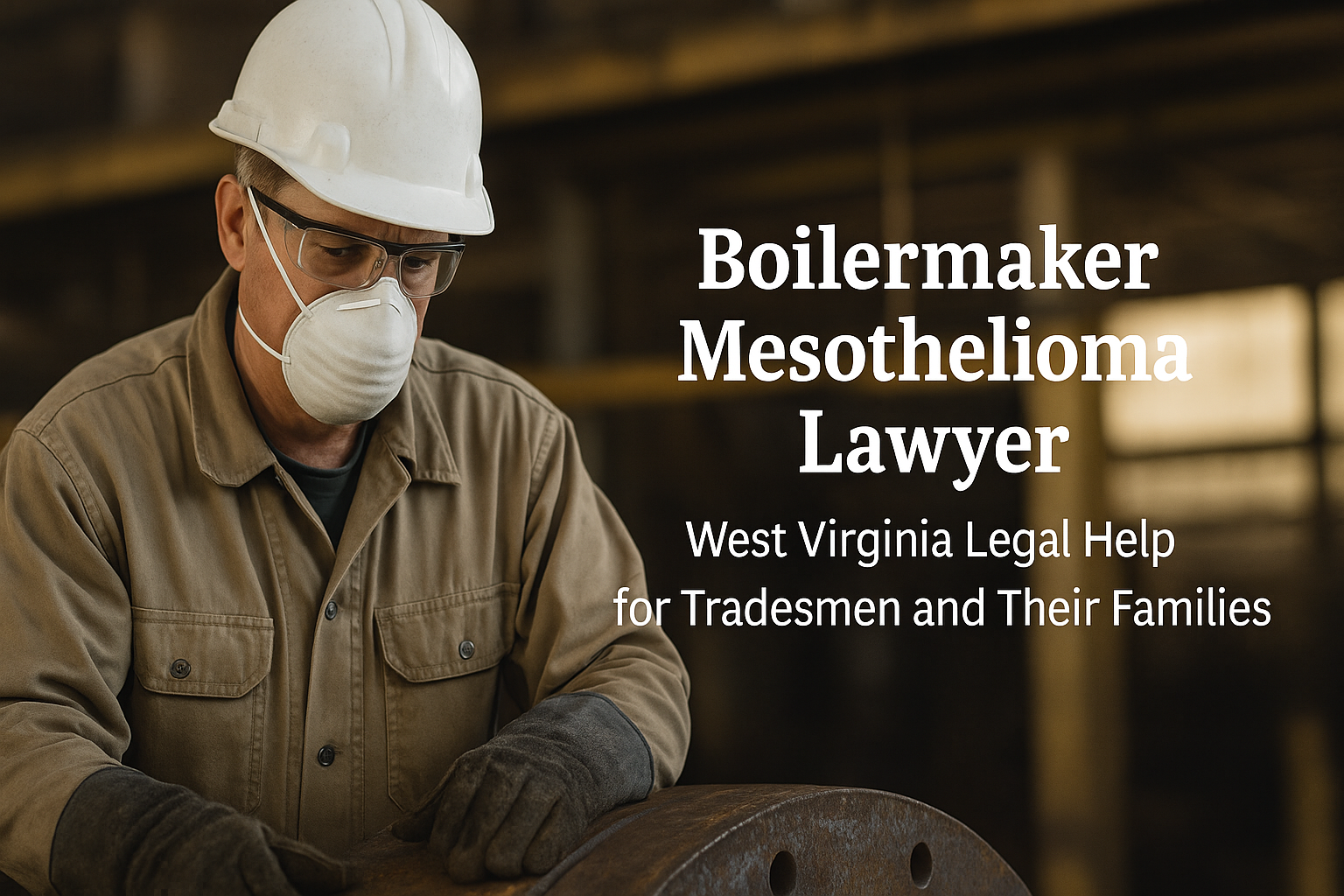
Pipefitters, boilermakers, millwrights, electricians, and insulators who worked at Kyger Creek in the 1960s, 70s, and 80s routinely handled or worked near asbestos-containing materials. Unfortunately, this has led to serious illnesses decades later, including mesothelioma, lung cancer, and asbestosis.
Asbestos Exposure at Kyger Creek Power Station
Kyger Creek Power Station used large amounts of asbestos insulation around:
- Boilers
- Turbines
- Pipes and pumps
- Electrical wiring and switchgear
These materials were routinely disturbed during maintenance, repairs, and retrofitting work — creating airborne asbestos dust that tradesmen breathed in without warning or protective equipment.
WV Tradesmen Who Worked at Kyger Creek
It wasn’t uncommon for West Virginia workers to drive across the river daily or take contractor assignments on extended jobs at Kyger. Workers from plants like Philip Sporn, Mountaineer, or Pleasants Power Station would take extra jobs or transfers to Kyger Creek — never knowing the long-term health risks.
Take-Home Asbestos Exposure Risks
Families of Kyger Creek workers also faced take-home asbestos exposure. If contaminated clothing was worn home, microscopic fibers could be released into family vehicles, laundry rooms, and homes — potentially harming spouses and children.
Learn more about take-home claims here.
Kyger Creek Asbestos Lawyer for WV Tradesmen and Their Families
If you or a loved one worked at Kyger Creek Power Station and have been diagnosed with an asbestos-related illness, you may be entitled to compensation — even if your exposure happened decades ago. You do not need to have worked directly for the utility or even lived in Ohio.
Lee W. Davis has represented tradesmen exposed across the Ohio River for over 35 years — from Fort Martin to DuPont Washington Works. Let us help your family next.
Check If Your Family Was Exposed
Get your free guide instantly + a confidential case review.
🔒 100% Confidential. No obligations.
📌 Related Job Sites
You may also want to read about asbestos exposure at:
- Philip Sporn Powerhouse – New Haven, WV
- Mountaineer Power Plant – New Haven, WV
- DuPont Washington Works – Washington, WV
Were you or a family member exposed to asbestos at Kyger Creek Power Station?
📞 Call 412-781-0525 now or use the form above for a free legal consultation.