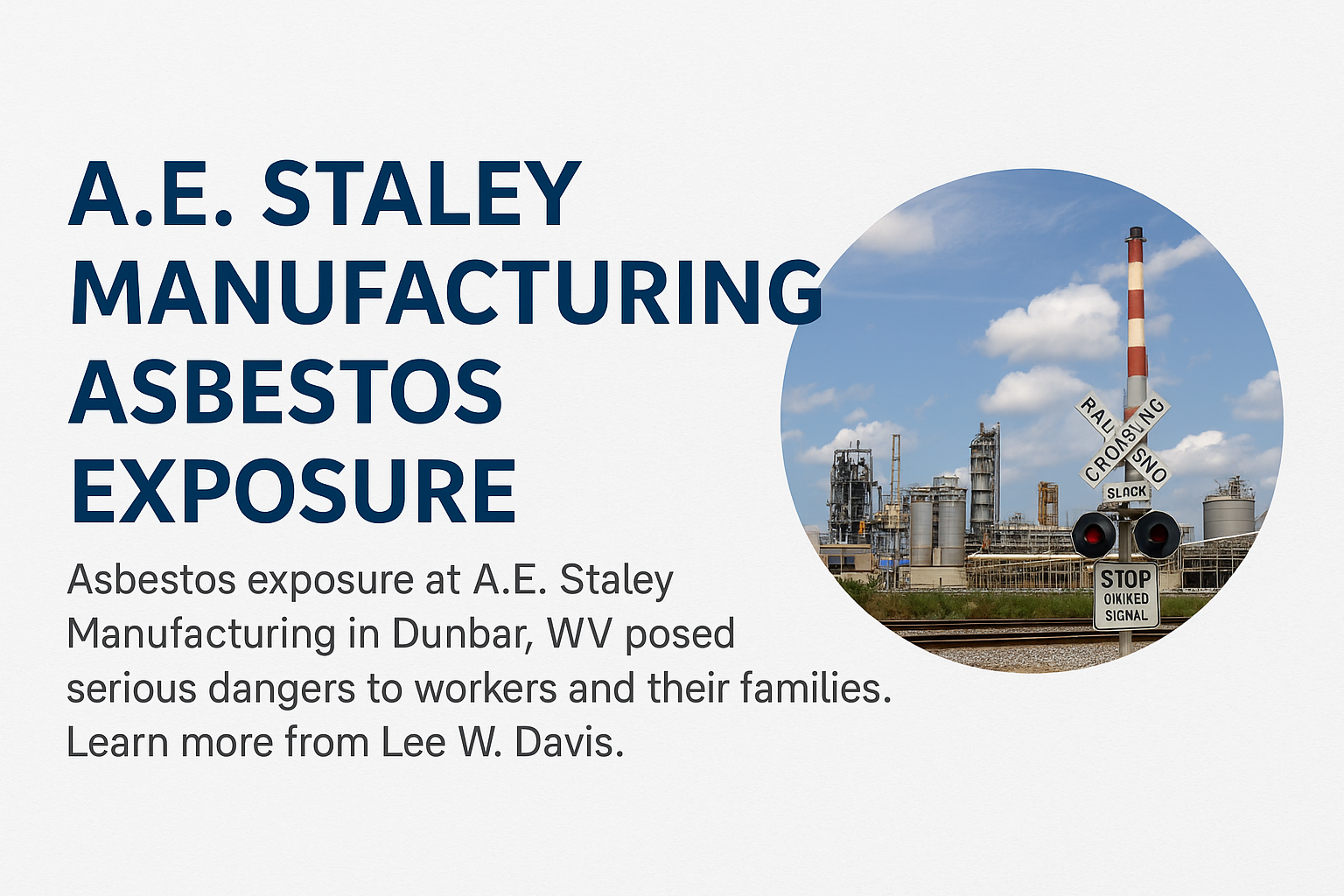
AE Staley asbestos exposure in Dunbar, West Virginia, endangered generations of plant workers and their families. For decades, employees at the Staley Manufacturing facility encountered asbestos while performing routine maintenance and production tasks. Many were unaware that this daily exposure to asbestos fibers could lead to serious illnesses such as mesothelioma, lung cancer, and asbestosis years later.
A Hidden Risk for Industrial Workers with AE Staley asbestos exposure
Asbestos was commonly used at facilities like AE Staley for its heat-resistant and insulating properties. It was often present in:
- Boilers and piping systems
- Turbines and pumps
- Roofing and flooring materials
- Insulating gaskets and valves
When these materials were installed, repaired, or removed, airborne asbestos fibers could be released—posing long-term health risks to anyone nearby.
Take-Home AE Staley asbestos exposure in Dunbar
Many families in Dunbar were also affected by take-home asbestos exposure. Workers would unknowingly carry fibers home on their clothes, shoes, or gear. As a result, spouses and children—often responsible for laundering contaminated workwear—faced secondhand exposure that could lead to the same devastating diseases.
Learn more about how this happens and how to pursue legal action:
👉 What Is Take-Home Asbestos Exposure?
Can You File a Claim?
If you or a loved one worked at the AE Staley plant in Dunbar and later developed mesothelioma or another asbestos illness, you may be entitled to compensation. Attorney Lee W. Davis has handled asbestos litigation across West Virginia and Pennsylvania since 1988, including thousands of cases just like yours.
Call for Legal Help
If asbestos exposure at A.E. Staley impacted your family, don’t wait. Call 412-781-0525 or visit the link below to schedule a free consultation. There are strict time limits on these claims, and early legal action is often the key to recovery.
Get Help Today
🔗 Take-Home Asbestos Exposure Information
🔗 Previous Post: Mountaineer Power Plant Asbestos
Check If Your Family Was Exposed
Get your free guide instantly + a confidential case review.
🔒 100% Confidential. No obligations.