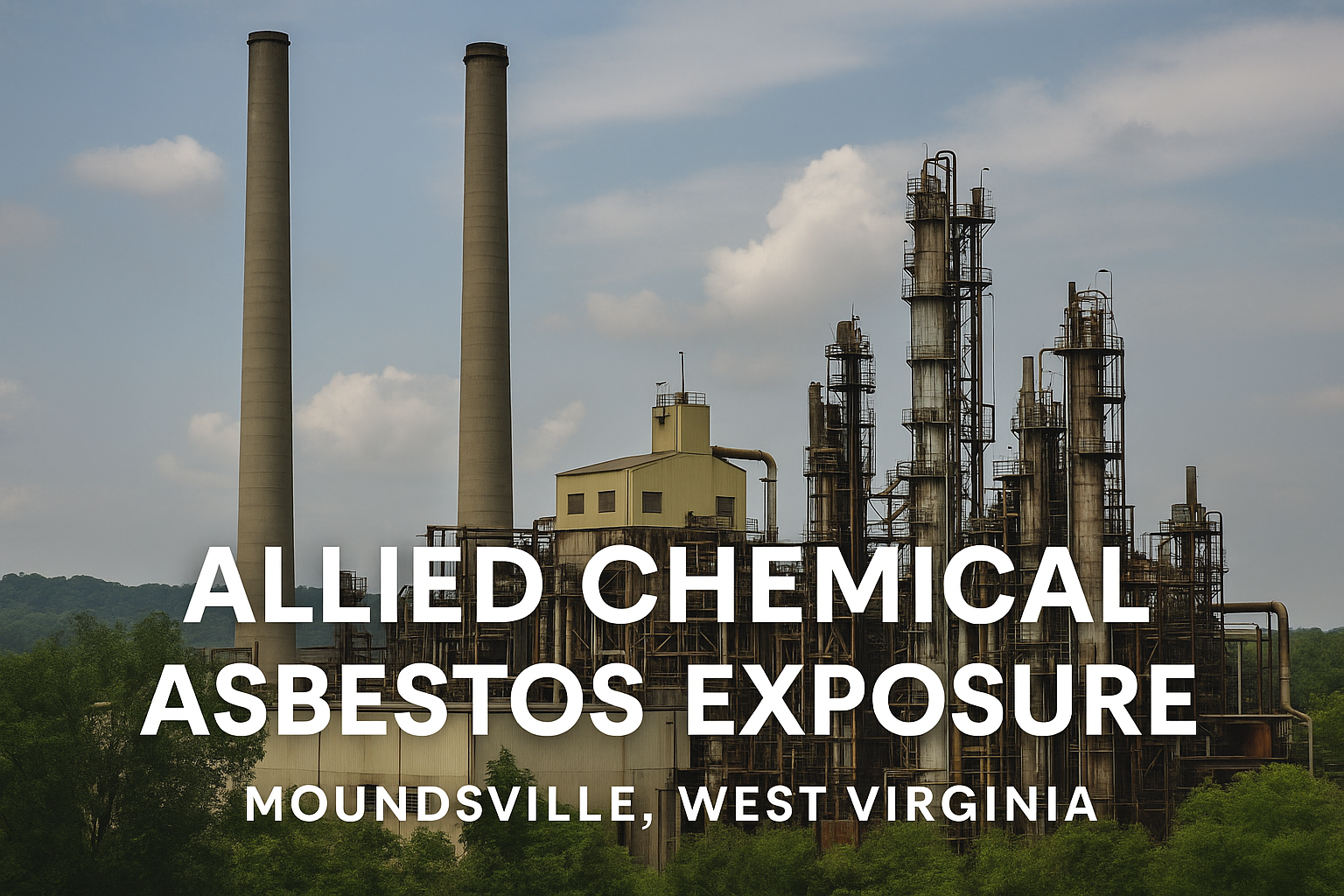
The Allied Chemical plant in Moundsville, West Virginia was once a major employer in Marshall County, but many former workers and their families are now facing serious health consequences due to asbestos exposure. Decades of chemical production, boiler operations, and pipe insulation maintenance exposed employees to asbestos dust on a near-daily basis. If you or someone you love developed mesothelioma, lung cancer, or asbestosis after working at or living with someone who worked at Allied, you may have a valid legal claim.
Allied Chemical asbestos exposure did not just affect workers—it also harmed spouses and children through secondhand or “take-home” exposure.
Chemical Plant Operations and Asbestos Use
At its peak, Allied Chemical used large-scale industrial equipment requiring heat protection, which meant asbestos was everywhere:
- Pipe insulation
- Boiler wrap
- Pump gaskets
- Protective clothing
- Fireproof wallboard
Over time, this asbestos broke down into airborne fibers that workers inhaled or carried home on their uniforms, boots, and skin.
Marshall County Workers at Risk
The Allied Chemical plant drew workers from across Moundsville, Glen Dale, McMechen, Benwood, and even Wheeling. Some worked directly in high-risk environments like:
- Chemical processing rooms
- Boiler maintenance zones
- Power units and valve control
- Tank and pipe inspections
These workers were often exposed without proper respiratory protection and received no warnings about asbestos health risks.
Take-Home Asbestos Exposure from Allied Chemical
One of the tragic aspects of Allied Chemical asbestos exposure is that it often affected family members who never set foot in the plant. Workers brought fibers home on their clothing, putting spouses and children at risk for:
- Mesothelioma
- Lung cancer
- Pleural plaques and fibrosis
If you’re dealing with a take-home exposure case, learn more about how these claims work here.
Legal Help for Allied Chemical Workers and Families
You may be entitled to compensation for:
- Medical expenses
- Pain and suffering
- Lost wages
- Wrongful death damages in fatal cases
Asbestos trust funds and legal claims are available—but time limits apply. Attorney Lee W. Davis has handled asbestos and mesothelioma cases in West Virginia since the late 1980s and can help you navigate your options.
📞
Speak With an Asbestos Attorney Today
If you or a loved one were harmed by Allied Chemical asbestos exposure in Moundsville, don’t wait. Call (412) 781-0525 or click below for a confidential case review.
Check If Your Family Was Exposed
Get your free guide instantly + a confidential case review.
🔒 100% Confidential. No obligations.