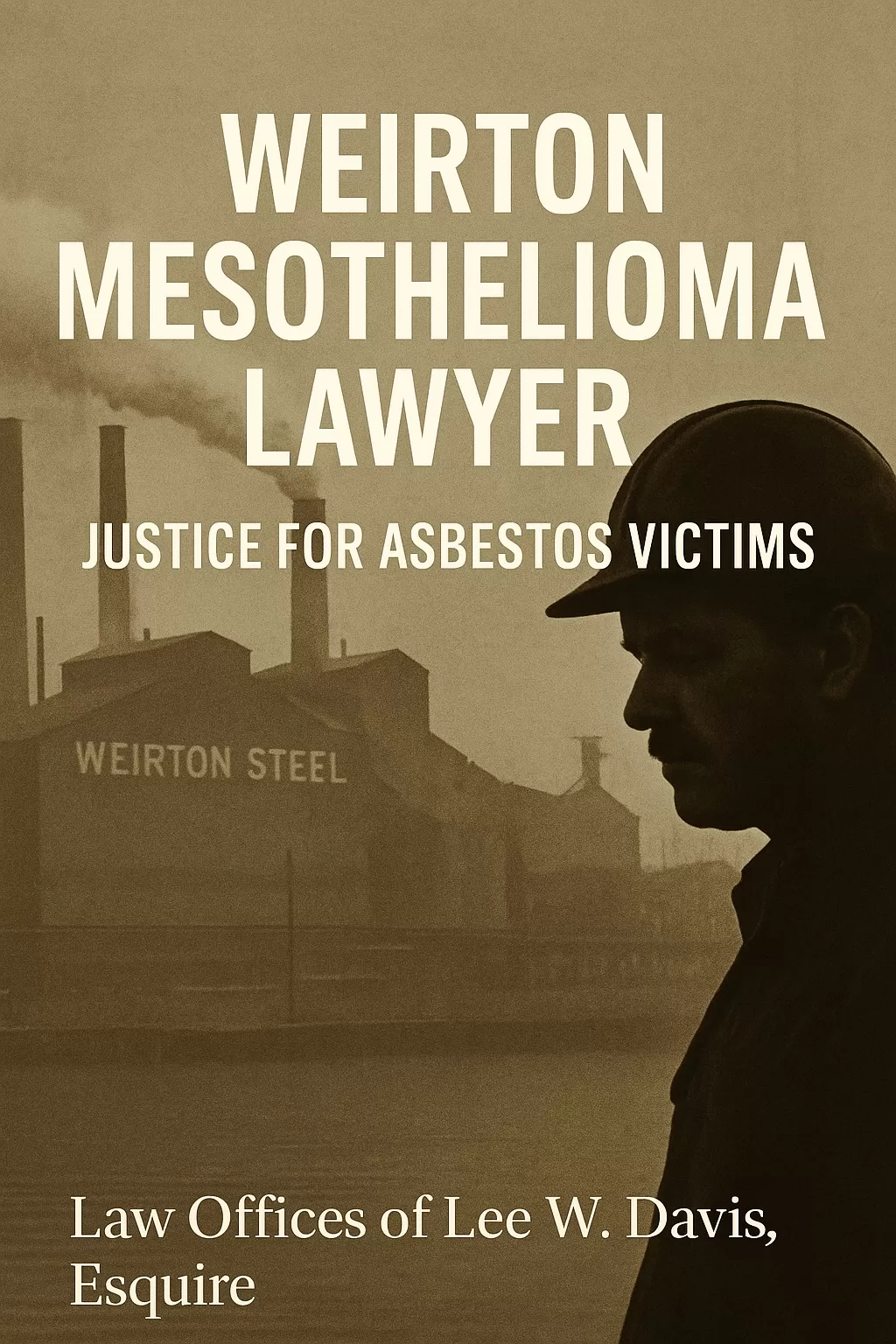
Weirton Steel Mesothelioma Lawyer – Legal Help for Steelworkers and Their Families

If you or a family member worked at Weirton Steel and has been diagnosed with mesothelioma, the exposure history at that specific plant — its departments, its contractors, its asbestos-containing materials — is the foundation of your claim. As a Weirton Steel mesothelioma lawyer with direct knowledge of this facility going back to 1989, I can evaluate your case with the specificity it requires.

Weirton Steel — One of West Virginia’s Most Significant Asbestos Exposure Sites

Weirton Steel operated continuously along the Ohio River in Hancock County for most of the twentieth century, employing generations of West Virginia workers across one of the most complex industrial facilities in the region. The plant produced steel through every phase of the process — from coke production on Browns Island through steelmaking, finishing, and shipping — and every phase of that process relied on asbestos-containing materials for insulation, refractory, and mechanical systems.

The plant’s ownership changed multiple times over its history — from Weirton Steel Corporation through National Steel, ISG, Mittal Steel, and ArcelorMittal — but the legacy of asbestos exposure it created for workers and their families remained constant across every ownership era. Workers who were exposed in the 1960s, 1970s, and 1980s are receiving mesothelioma diagnoses today, decades after their last day at the plant.

Asbestos Exposure Across Every Department at Weirton Steel

Weirton Steel was not a single exposure environment. The plant covered multiple square miles and employed workers across distinct departments, each with its own exposure profile and its own asbestos-containing materials. Understanding which department you worked in, what your specific tasks involved, and what materials surrounded you is the starting point for building a viable mesothelioma claim.

The departments where asbestos exposure was most significant at Weirton Steel include:

Browns Island Coke Batteries — The coke ovens on Browns Island converted coal into coke through sustained extreme heat. Asbestos appeared in the repair materials used on the oven shells, in the by-products recovery piping, and in the insulation throughout the battery complex. Coke battery workers, pipefitters, millwrights, and outside contractors doing rebuild work faced some of the heaviest exposure at the entire plant.

Blast Furnace — The blast furnace produced iron through a separate high-heat process with its own refractory and insulation requirements. The asbestos story at the blast furnace was in the repair and maintenance materials — blocks, boards, ramming materials, and cements used near the shell — not in the firebrick itself.

Open Hearth — The open hearth furnaces ran at extreme temperatures and required constant maintenance of the shell, the hot tops, and the surrounding mechanical systems. Asbestos-containing repair materials, insulation, and refractory products created significant exposure for maintenance crews and outside contractors doing outage work.

Strip Mill — The strip mill processed hot rolled steel through a series of high-heat passes requiring sustained insulation on the rolling equipment, piping, and mechanical systems throughout the department.

Rolling Mills — Rolling mill operations generated extreme heat and continuous mechanical wear, surrounding workers with insulated piping, equipment, and mechanical systems that required regular maintenance and frequent disturbance of asbestos-containing materials.

Tin Mill — The tin mill annealing furnaces and pickling lines carried insulation and gasket materials that historically contained asbestos. Pipefitters, millwrights, and electricians working the tin mill encountered these materials throughout their careers.

Annealing Lines — Annealing required sustained high heat in enclosed furnace environments, with asbestos-containing insulation on the furnaces, the surrounding piping, and the repair materials used during outage work.

Heavy Construction and Outside Contractors — Ironworkers, boilermakers, pipefitters, and laborers brought in for shutdowns and rebuilds often faced heavier exposure than direct employees because their work involved tearing out and replacing the asbestos-containing materials that had accumulated over decades of plant operation.

In-House Pipefitters — In-house pipefitters worked plant-wide across every department, maintaining the steam and process piping systems that ran through the entire facility. Their exposure was cumulative and plant-wide across every area where asbestos-insulated pipe systems required service.

In-House Millwrights — Millwrights maintained the industrial equipment throughout every production and mechanical area of the plant. Their work took them into every department and into direct contact with the insulation surrounding the equipment they serviced.

You Do Not Have to Have Been a Direct Weirton Steel Employee

Some of the strongest mesothelioma claims from Weirton Steel come from outside contractors and heavy construction workers who worked the plant during shutdowns and rebuilds. If your paycheck came from a contracting firm rather than Weirton Steel directly, your exposure history at the facility still supports a viable claim. The defendants in these cases are typically the manufacturers of the asbestos-containing products used at the plant — not necessarily Weirton Steel itself.

Take-home exposure cases are also well established. Family members who were exposed to asbestos dust brought home on a worker’s clothing, hair, or vehicle have pursued successful mesothelioma claims arising from that secondary exposure.

Knowledge of Weirton Steel Going Back to 1989

I first began researching Weirton Steel asbestos cases in 1989, working on the original asbestos mass trials in West Virginia. I have been licensed to practice law since 1996 and have handled mesothelioma cases across Pennsylvania, West Virginia, and Michigan ever since. That includes cases from workers in every department of the Weirton Steel complex — the coke batteries, the blast furnace, the open hearth, the strip mill, the rolling mills, the tin mill, the annealing lines, and the maintenance trades that worked throughout the plant.

Read More about Lee

When you call, you speak directly with me. No call centers. No case managers. No outsourcing.

West Virginia’s statute of limitations for mesothelioma runs from the date of diagnosis, not the date of exposure. Wrongful death claims carry different and sometimes shorter deadlines. Either way, delay works against you.

Call (412) 781-0525 or start your confidential case review online now.

Check If Your Family Was Exposed

Get your free guide instantly + a confidential case review.

🔒 100% Confidential. No obligations.


Frequently Asked Questions

Q: I worked at Weirton Steel in the 1970s and was just diagnosed with mesothelioma. Is it too late to file a claim?

A: No. West Virginia’s statute of limitations for mesothelioma runs from the date of diagnosis, not the date of your exposure at Weirton Steel decades ago. Workers exposed in the 1960s, 1970s, and 1980s are receiving diagnoses and filing viable claims today. Call as soon as a diagnosis is confirmed — the earlier we begin building the exposure history and identifying responsible parties, the stronger your claim will be.

Q: Weirton Steel has gone through multiple ownership changes. Who is liable for my asbestos exposure there?

A: The primary defendants in Weirton Steel mesothelioma cases are typically the manufacturers of the asbestos-containing products used at the facility — insulation manufacturers, refractory suppliers, gasket and packing manufacturers — rather than Weirton Steel or its successor owners directly. Many of those manufacturers have established asbestos bankruptcy trusts that continue to pay claims today. An experienced asbestos attorney can identify which defendants and trust funds apply to your specific work history and exposure timeline.

Q: My father worked Weirton Steel his entire career and died of mesothelioma last year. Can our family still file a claim?

A: A wrongful death claim may still be available to your family. West Virginia wrongful death deadlines for mesothelioma run from the date of death and are separate from the personal injury deadline. Those deadlines can move quickly. Call as soon as possible — the sooner we can evaluate the work history and exposure narrative, the better the chance of preserving a viable claim for your family.


Call Today for a Free Case Review

If you’re looking for a Weirton Steel Mesothelioma lawyer who knows the job site and understands your case, call Lee W. Davis today at (412) 781-0525 or contact us online.

Check If Your Family Was Exposed

Get your free guide instantly + a confidential case review.

🔒 100% Confidential. No obligations.

Related Post: Boilermaker Mesothelioma Lawyer – Learn Your Rights