Pittsburgh Asbestos Lung Cancer

Pittsburgh Asbestos Lung Cancer Lawyer

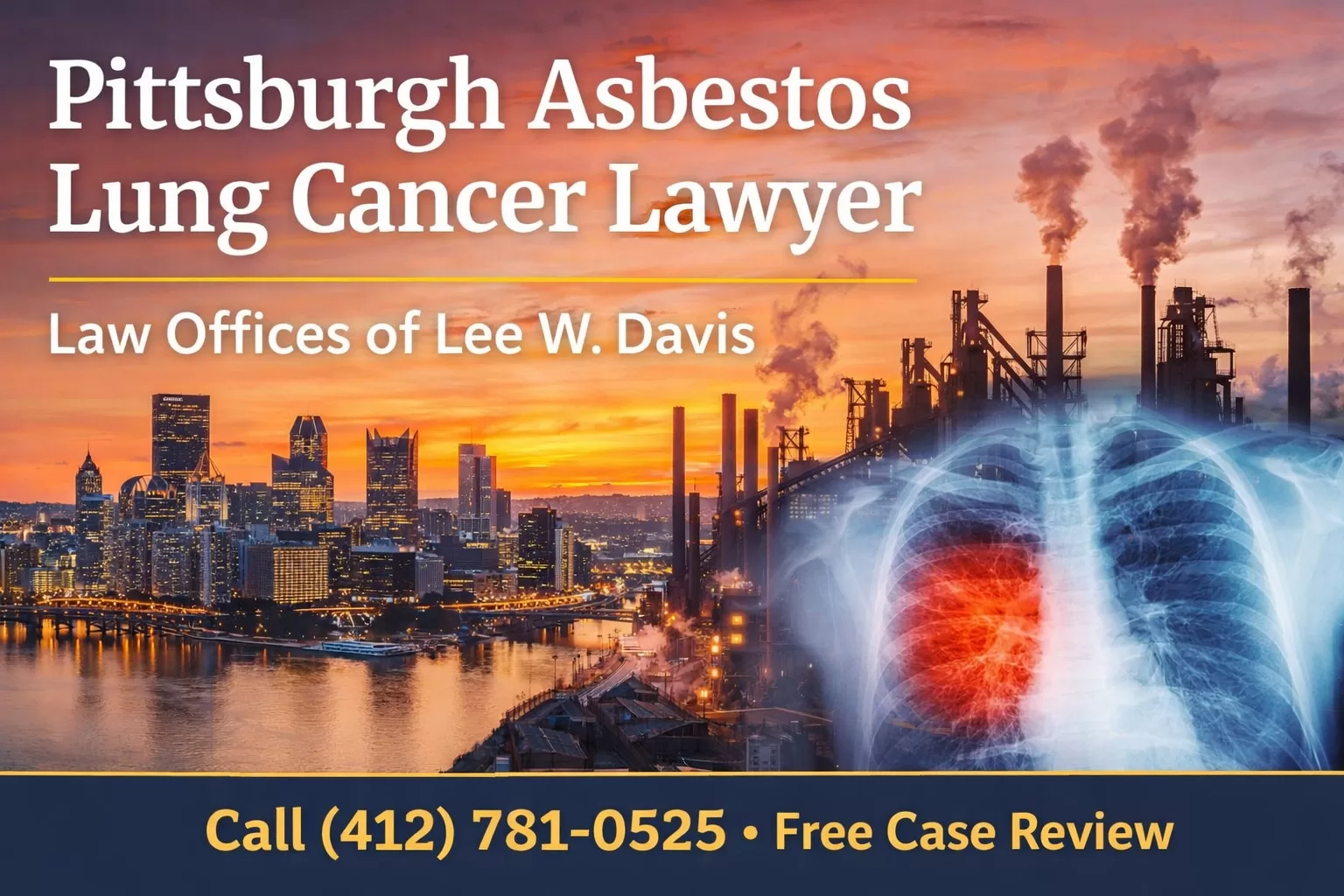
If you were diagnosed with Pittsburgh asbestos lung cancer after working in the region’s steel mills, coke plants, power plants, or industrial facilities along the Mon, Allegheny, or Ohio rivers, your work history may be the foundation of a viable legal claim. Asbestos-related lung cancer is the most common long-term consequence of industrial asbestos exposure in the Pittsburgh region — more common than mesothelioma — and it is fully compensable under Pennsylvania law.


Pittsburgh’s Industrial History and Asbestos Exposure

The Pittsburgh region was one of the most heavily industrialized areas in American history. The steel mills, coke plants, glass works, and heavy manufacturing facilities that lined the Mon Valley, the Allegheny Valley, and the Ohio River corridor employed generations of Allegheny County workers in environments saturated with asbestos-containing materials.

Asbestos appeared in virtually every industrial facility in the Pittsburgh region — in the insulation on steam and process piping, in the refractory materials used in furnaces and coke ovens, in the gaskets and packing used in mechanical systems, and in the protective and electrical materials used throughout plant operations. Workers in those facilities breathed asbestos fibers routinely over careers that spanned decades, and the lung cancer diagnoses that result are appearing today — thirty, forty, and fifty years after the exposure occurred.

The Smoking History Question — and Why It Does Not Bar Your Claim

This is the first question most Pittsburgh asbestos lung cancer claimants raise and the one most often handled poorly by lawyers without specific asbestos experience.

If you smoked and you worked around asbestos in Pittsburgh’s industrial facilities, you may have been told your smoking history disqualifies your claim. That is not accurate under Pennsylvania law or under the product liability standards that govern asbestos cases in Allegheny County and throughout western PA.

The legal question is not whether you smoked. The legal question is whether asbestos exposure was a contributing cause of your lung cancer. Pennsylvania’s contributing cause standard allows recovery where asbestos exposure contributed to the development of lung cancer — not as the only cause, not even as the primary cause, but as a real contributing factor that would not have been present without the asbestos exposure your work history involved.

The science supports this standard. Smoking and asbestos exposure do not simply add together in lung cancer risk — they multiply each other. A worker who both smoked and was exposed to asbestos faces lung cancer risk many times higher than a worker who only smoked. That multiplicative relationship is well established in the medical literature and is recognized throughout Pennsylvania asbestos litigation.

Do not assume your smoking history bars your claim. Discuss your full work history and medical record with an experienced asbestos attorney before drawing that conclusion.

Pittsburgh Area Industrial Sites With Significant Asbestos Exposure

The facilities most commonly associated with asbestos lung cancer claims in the Pittsburgh region include:

  • Clairton Coke Works — the largest coke plant in the western hemisphere at its peak, with asbestos exposure across the battery operations, by-products recovery, and mechanical systems throughout the facility
  • Neville Island Coke and Chemical — Ohio River coke and chemical facility within Allegheny County with documented asbestos exposure across battery operations, chemical processing, and maintenance trades
  • US Steel Homestead Works — one of the most historically significant steel facilities in western PA, with asbestos exposure across every production department along the Mon Valley
  • Crucible Steel Midland Works — specialty steel facility in Beaver County with documented asbestos use in refractory and insulation systems
  • Pittsburgh Plate Glass / PPG — chemical and glass manufacturing with asbestos exposure across plant operations including the Pittsburgh Corning connection
  • Cheswick Power Station — Springdale generating station with asbestos insulation throughout mechanical and steam systems
  • Keystone Power Station — Armstrong County generation facility with documented asbestos exposure
  • Mon Valley steel facilities — Duquesne, McKeesport, and the broader US Steel operations along the Mon River corridor

You can search the full list of asbestos job sites in Pennsylvania to check whether your former workplace appears in the documented exposure database. For a broader Pittsburgh-area exposure overview see Pittsburgh asbestos exposure claims.

Trades Most Commonly Involved in Pittsburgh Asbestos Lung Cancer Claims

The trades with the strongest asbestos lung cancer claim profiles in the Pittsburgh region include:

  • Pipefitters and steamfitters on process and utility systems
  • Millwrights maintaining industrial equipment throughout plant operations
  • Boilermakers on furnace and boiler maintenance and repair
  • Insulators — direct handlers of asbestos-containing insulation materials
  • Electricians working around asbestos-containing electrical components
  • Ironworkers and heavy construction trades on shutdown and rebuild work
  • Laborers on demolition, teardown, and outage crews
  • Outside contractors brought in for plant shutdowns and major repairs

What Evidence Supports a Pittsburgh Asbestos Lung Cancer Claim

The evidence that matters most in a Pittsburgh asbestos lung cancer claim includes:

  • Pathology and diagnosis records confirming lung cancer diagnosis and cell type
  • Detailed work history — facilities, departments, job titles, specific tasks, years worked
  • Exposure narrative — what you worked on, what materials surrounded you, how often insulation or refractory was disturbed in your work environment
  • Union records, Social Security earnings records, or employment documentation confirming work at specific Pittsburgh area facilities
  • Medical records documenting smoking history — relevant to the legal analysis and should be disclosed fully rather than avoided
  • Prior pulmonary testing showing asbestos-related changes such as pleural plaques or pleural thickening, which support the causal connection between asbestos exposure and lung cancer

For a broader overview of how Pennsylvania asbestos claims work see the Pennsylvania mesothelioma lawyer page and the Pennsylvania asbestos lawyer resource.

Knowledge of Pittsburgh Asbestos Cases Going Back to 1989

I first began researching Pittsburgh area asbestos cases in 1989, working on asbestos mass trials across Pennsylvania and West Virginia. I have been licensed to practice law since 1996 and have handled asbestos-related lung cancer and mesothelioma cases across Pennsylvania, West Virginia, and Michigan ever since. That includes cases from workers at the Mon Valley steel facilities, the Allegheny Valley coke and power plants, the Ohio River corridor industrial sites, and the chemical and manufacturing facilities throughout Allegheny County and surrounding counties.

When you call, you speak directly with me. No call centers. No case managers.

If you have been diagnosed with lung cancer and have a history of working around asbestos in Pittsburgh’s industrial facilities, your case deserves a careful evaluation regardless of your smoking history. Pennsylvania’s statute of limitations runs from the date of diagnosis.

Call (412) 781-0525 or start your confidential case review online now.


Frequently Asked Questions

Q: I worked at the Clairton Coke Works for twenty years and smoked. My pulmonologist says my lung cancer is smoking-related. Can I still pursue an asbestos claim?

A: Yes, potentially. A clinical attribution to smoking does not end the legal analysis. Pennsylvania’s contributing cause standard asks whether asbestos exposure contributed to your lung cancer — not whether it was the sole or primary cause. Coke plant workers at Clairton faced sustained and heavy asbestos exposure across the battery operations, the by-products recovery systems, and the mechanical maintenance work throughout the facility. That exposure history, combined with a lung cancer diagnosis, warrants a careful legal evaluation regardless of your smoking history or your doctor’s clinical attribution.

Q: What is the difference between filing a Pittsburgh asbestos lung cancer claim and a mesothelioma claim?

A: Both follow similar legal pathways — product liability claims against manufacturers of asbestos-containing materials and claims against asbestos bankruptcy trusts. The key distinction is evidentiary. Mesothelioma is almost exclusively caused by asbestos, making causation direct. Lung cancer requires additional evidence establishing asbestos as a contributing factor given the existence of other potential causes. Compensation amounts and case dynamics differ as well. An experienced Pittsburgh asbestos attorney handles both claim types and can evaluate the specific value and strategy for your lung cancer case based on your work history and diagnosis.

Q: How long do I have to file an asbestos lung cancer claim in Pennsylvania?

A: Pennsylvania’s statute of limitations for asbestos-related lung cancer runs from the date of diagnosis — not the date of your asbestos exposure decades earlier. Wrongful death claims carry different and sometimes shorter deadlines running from the date of death. Do not assume it is too late without speaking to an attorney — call as soon as a diagnosis is confirmed.
West Virginia Lung Cancer

West Virginia Lung Cancer from Asbestos

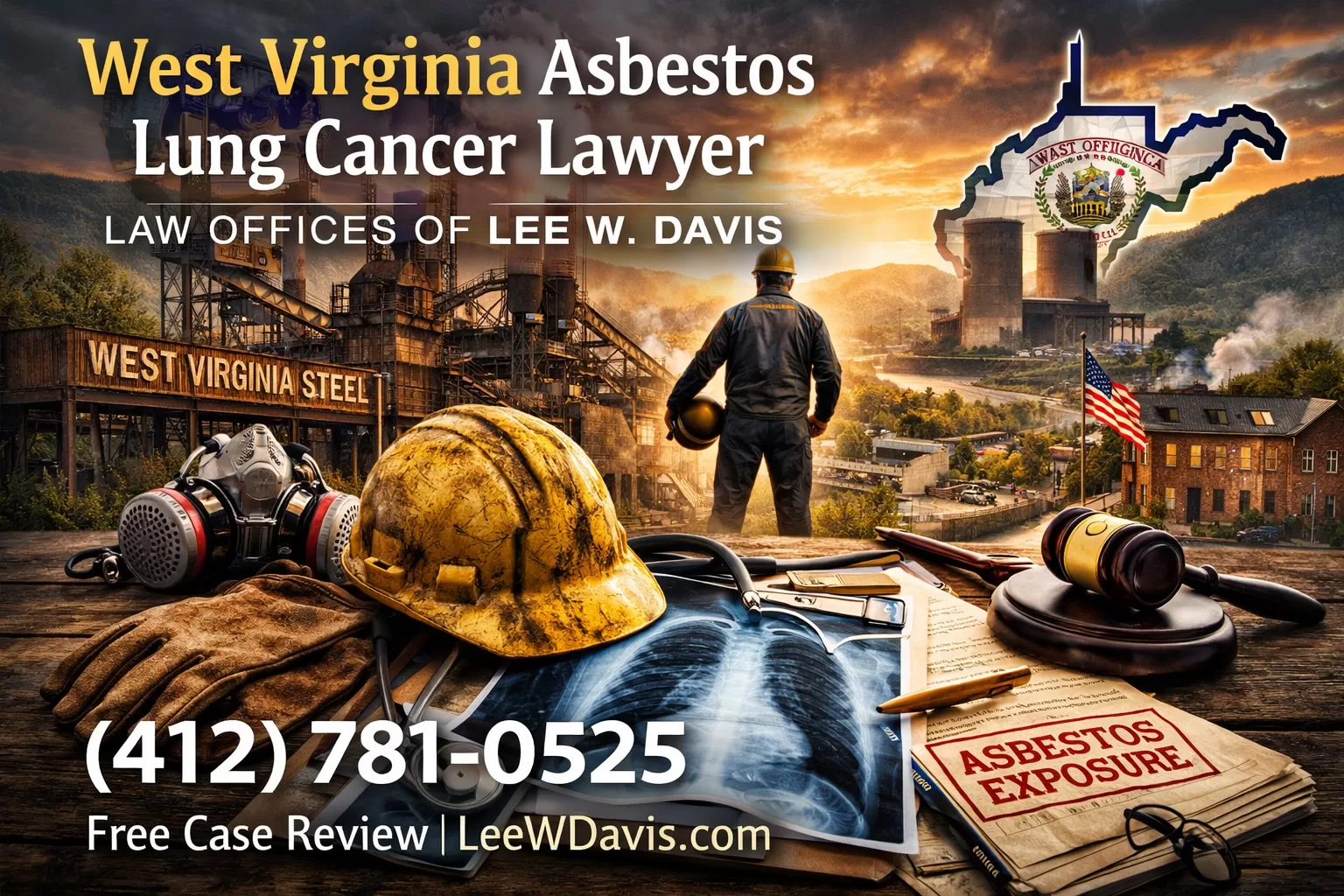
If you were diagnosed with West Virginia lung cancer after working in the state’s steel mills, chemical plants, power plants, or heavy industry, asbestos exposure from your work history may be a significant factor — and a viable legal claim. Asbestos-related lung cancer cases are less commonly discussed than mesothelioma but they are equally real, equally serious, and equally compensable under the law.

Asbestos Lung Cancer Is More Common Than Mesothelioma

Mesothelioma is the cancer most people associate with West Virginia asbestos exposure, but asbestos-related lung cancer is statistically far more prevalent. For every mesothelioma diagnosis, there are roughly four asbestos-related lung cancer diagnoses. West Virginia’s industrial history — its steel mills, chemical corridors, power plants, coke facilities, and construction sites — created the conditions for widespread asbestos exposure across generations of workers, and lung cancer is the most common long-term consequence of that exposure.

The reason asbestos lung cancer receives less attention is partly legal and partly medical. Lung cancer has multiple potential causes, and establishing asbestos as a significant contributing factor requires a careful analysis of work history, exposure duration, and medical evidence. That analysis is exactly what an experienced West Virginia mesothelioma lawyer does when evaluating a lung cancer claim.

The Smoking History Question — and Why It Does Not Disqualify Your Claim

This is the question most West Virginia lung cancer claimants ask first and most other lawyers handle poorly.

If you smoked and you worked around asbestos, you may have been told — by a doctor, an insurance adjuster, or another lawyer — that your smoking history disqualifies your asbestos lung cancer claim. That is not accurate under West Virginia asbestos laws or under the legal standards that govern asbestos product liability claims.

The relationship between smoking and asbestos exposure in lung cancer is not either/or. It is multiplicative. A worker who smoked and was exposed to asbestos does not have the same lung cancer risk as a worker who only smoked. The combination of tobacco smoke and asbestos fiber exposure multiplies lung cancer risk far beyond what either exposure alone produces. That multiplicative relationship is well established in the medical and scientific literature and is recognized in asbestos litigation throughout West Virginia.

What matters legally is whether asbestos exposure was a contributing cause of your lung cancer — not the only cause, not even the primary cause, but a contributing cause that would not have been present without the asbestos exposure your work history involved. West Virginia’s legal standards allow recovery where asbestos exposure contributed to the development of lung cancer even where other risk factors including smoking were also present.

If you worked in West Virginia’s industrial facilities and have a lung cancer diagnosis, your smoking history is a factor to discuss with an experienced asbestos attorney — not a reason to assume you have no claim.

West Virginia Industrial Sites With Significant Asbestos Exposure

West Virginia’s industrial history produced WV occupational asbestos exposure across a wide range of facilities and job types. The facilities most commonly associated with lung cancer claims in West Virginia include:

  • Weirton Steel — across every department from the coke batteries on Browns Island through the blast furnace, open hearth, strip mill, rolling mills, tin mill, and finishing operations
  • Wheeling-Pitt Steel — Steubenville, Mingo Junction, and Follansbee operations
  • Union Carbide South Charleston and Institute — chemical plant workers with sustained exposure to asbestos-insulated piping and mechanical systems
  • DuPont Natrium and Belle — chemical facility workers across the Kanawha Valley corridor
  • Mount Storm Power Station — power plant workers on insulation and mechanical systems
  • John Amos Power Plant — Putnam County power generation workers
  • Willow Island Power Station — Marshall County power plant workers
  • Koppers Company Follansbee — coke and chemical plant workers
  • Ormet Corporation — aluminum plant workers in Hannibal
  • Construction and heavy industrial trades throughout the Ohio Valley and Kanawha Valley corridors

You can search the full list of asbestos job sites in West Virginia to check whether your former workplace appears in the documented exposure database.

Trades Most Commonly Involved in West Virginia Asbestos Lung Cancer Claims

Asbestos lung cancer claims arise most frequently from workers in trades that involved regular contact with asbestos-containing insulation, refractory, gaskets, and packing materials. The trades most commonly represented in West Virginia claims include:

  • Pipefitters and steamfitters
  • Millwrights and maintenance mechanics
  • Boilermakers
  • Insulators
  • Electricians
  • Iron workers and heavy construction trades
  • Laborers on demolition, teardown, and outage crews
  • Outside contractors on industrial shutdowns and rebuilds

Mesothelioma/Asbestos Legal Help – WV, MI & PA

Speak directly with attorney Lee W. Davis. No call centers. Free, confidential review.

What Evidence Supports a West Virginia Asbestos Lung Cancer Claim

Lung cancer claims require the same foundational evidence as West Virginia mesothelioma lawsuits, with additional emphasis on establishing asbestos as a contributing cause given the existence of other potential risk factors. Evidence that matters includes:

  • Pathology and diagnosis records confirming lung cancer diagnosis and cell type
  • Detailed work history — facilities, departments, job titles, specific tasks, years worked
  • Exposure narrative — what you worked on, what materials surrounded you, how often insulation or refractory was disturbed in your work area
  • Union records, Social Security earnings records, or employment documentation confirming work at specific facilities
  • Medical records documenting smoking history — this is relevant to the legal analysis and should be disclosed fully rather than avoided
  • Any prior pulmonary testing showing asbestos-related changes such as pleural plaques or pleural thickening, which can support the causal connection between asbestos exposure and lung cancer

Your Legal Options in West Virginia

West Virginia asbestos lawsuits for lung cancer follow the same general pathways as mesothelioma claims. The primary defendants are typically the manufacturers of the asbestos-containing products used at your workplace — not necessarily your employer directly. Many of those manufacturers have established asbestos bankruptcy trusts that continue to pay claims today. Depending on your work history and diagnosis, your claim may involve a personal injury lawsuit, trust fund filings, or both pursued in parallel.

For a full overview of how these claims work in West Virginia, see WV mesothelioma legal options.

Knowledge of West Virginia Asbestos Cases Going Back to 1989

I first began researching West Virginia asbestos cases in 1989, working on the original asbestos mass trials in the state. I have been licensed to practice law since 1996 and have handled asbestos-related lung cancer and mesothelioma cases across West Virginia, Pennsylvania, and Michigan ever since. That includes cases from workers at Weirton Steel, Wheeling-Pitt, Union Carbide, DuPont, and industrial facilities throughout the Ohio Valley and Kanawha Valley corridors.

When you call, you speak directly with me. No call centers. No case managers.

If you have been diagnosed with lung cancer and have a history of working around asbestos in West Virginia’s industrial facilities, your case deserves a careful evaluation regardless of your smoking history. West Virginia’s statute of limitations runs from the date of diagnosis.

Call (412) 781-0525 or start your confidential case review online now.


Frequently Asked Questions

Q: I smoked for 30 years and worked at Weirton Steel. My doctor says my lung cancer is from smoking. Do I have an asbestos claim?

A: Possibly yes. A lung cancer diagnosis attributed to smoking does not automatically eliminate an asbestos claim. The legal question is whether asbestos exposure from your work history was a contributing cause of your lung cancer — not whether it was the only cause. The combination of smoking and asbestos exposure multiplies lung cancer risk far beyond either factor alone, and West Virginia law allows recovery where asbestos was a contributing cause even where smoking was also present. An experienced asbestos attorney can evaluate your specific work history and medical records to determine whether a viable claim exists.

Q: What is the difference between an asbestos lung cancer claim and a mesothelioma claim?

A: Both arise from asbestos exposure and follow similar legal pathways — product liability claims against the manufacturers of asbestos-containing materials, and claims against asbestos bankruptcy trusts where applicable. The key differences are medical and evidentiary. Mesothelioma is almost exclusively caused by asbestos exposure, making causation straightforward. Lung cancer has multiple potential causes, requiring additional evidence establishing asbestos as a contributing factor. Compensation amounts and case timelines can also differ. An experienced asbestos attorney handles both claim types and can advise on the specific value and strategy for a lung cancer case based on your work history and medical records.

Q: How long do I have to file an asbestos lung cancer claim in West Virginia?

A: West Virginia’s statute of limitations for asbestos-related lung cancer runs from the date of diagnosis — not the date of your asbestos exposure, which may have occurred decades earlier. Wrongful death claims for a family member who died of asbestos lung cancer carry different and sometimes shorter deadlines running from the date of death. Do not assume it is too late without speaking to an attorney — call as soon as a diagnosis is confirmed.
Mesothelioma/Asbestos Legal Help – WV, MI & PA

Speak directly with attorney Lee W. Davis. No call centers. Free, confidential review.

Weirton Steel Mesothelioma Lawyer – Legal Help for Steelworkers and Their Families

Weirton Steel Mesothelioma Lawyer Help for Victims witha Lawyer with Experience

If you or a family member worked at Weirton Steel and has been diagnosed with mesothelioma, the exposure history at that specific plant — its departments, its contractors, its asbestos-containing materials — is the foundation of your claim. As a Weirton Steel mesothelioma lawyer with direct knowledge of this facility going back to 1989, I can evaluate your case with the specificity it requires.

Weirton Steel — One of West Virginia’s Most Significant Asbestos Exposure Sites

Weirton Steel operated continuously along the Ohio River in Hancock County for most of the twentieth century, employing generations of West Virginia workers across one of the most complex industrial facilities in the region. The plant produced steel through every phase of the process — from coke production on Browns Island through steelmaking, finishing, and shipping — and every phase of that process relied on asbestos-containing materials for insulation, refractory, and mechanical systems.

The plant’s ownership changed multiple times over its history — from Weirton Steel Corporation through National Steel, ISG, Mittal Steel, and ArcelorMittal — but the legacy of asbestos exposure it created for workers and their families remained constant across every ownership era. Workers who were exposed in the 1960s, 1970s, and 1980s are receiving mesothelioma diagnoses today, decades after their last day at the plant.

Asbestos Exposure Across Every Department at Weirton Steel

Weirton Steel was not a single exposure environment. The plant covered multiple square miles and employed workers across distinct departments, each with its own exposure profile and its own asbestos-containing materials. Understanding which department you worked in, what your specific tasks involved, and what materials surrounded you is the starting point for building a viable mesothelioma claim.

The departments where asbestos exposure was most significant at Weirton Steel include:

Browns Island Coke Batteries — The coke ovens on Browns Island converted coal into coke through sustained extreme heat. Asbestos appeared in the repair materials used on the oven shells, in the by-products recovery piping, and in the insulation throughout the battery complex. Coke battery workers, pipefitters, millwrights, and outside contractors doing rebuild work faced some of the heaviest exposure at the entire plant.

Blast Furnace — The blast furnace produced iron through a separate high-heat process with its own refractory and insulation requirements. The asbestos story at the blast furnace was in the repair and maintenance materials — blocks, boards, ramming materials, and cements used near the shell — not in the firebrick itself.

Open Hearth — The open hearth furnaces ran at extreme temperatures and required constant maintenance of the shell, the hot tops, and the surrounding mechanical systems. Asbestos-containing repair materials, insulation, and refractory products created significant exposure for maintenance crews and outside contractors doing outage work.

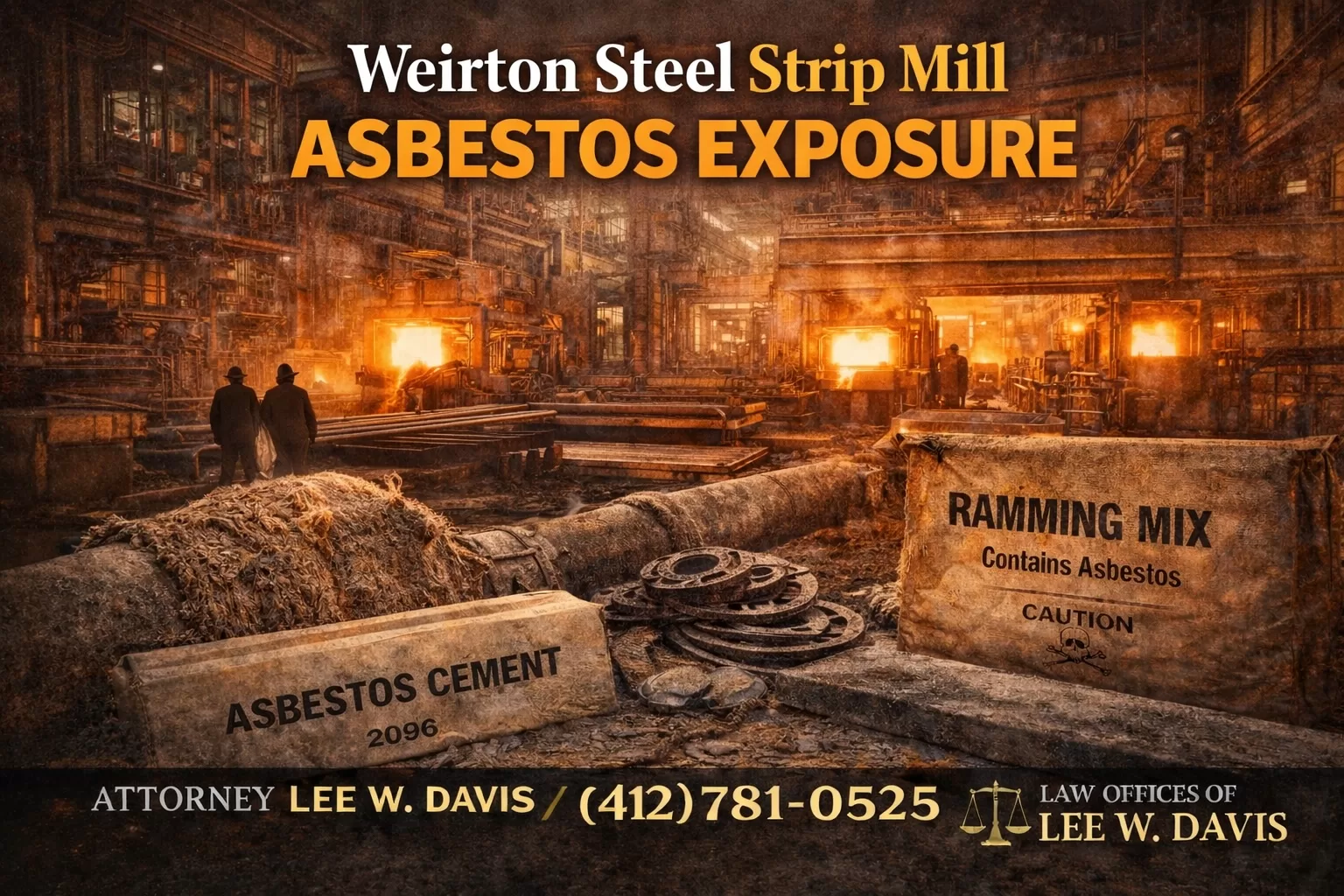
Strip Mill — The strip mill processed hot rolled steel through a series of high-heat passes requiring sustained insulation on the rolling equipment, piping, and mechanical systems throughout the department.

Rolling Mills — Rolling mill operations generated extreme heat and continuous mechanical wear, surrounding workers with insulated piping, equipment, and mechanical systems that required regular maintenance and frequent disturbance of asbestos-containing materials.

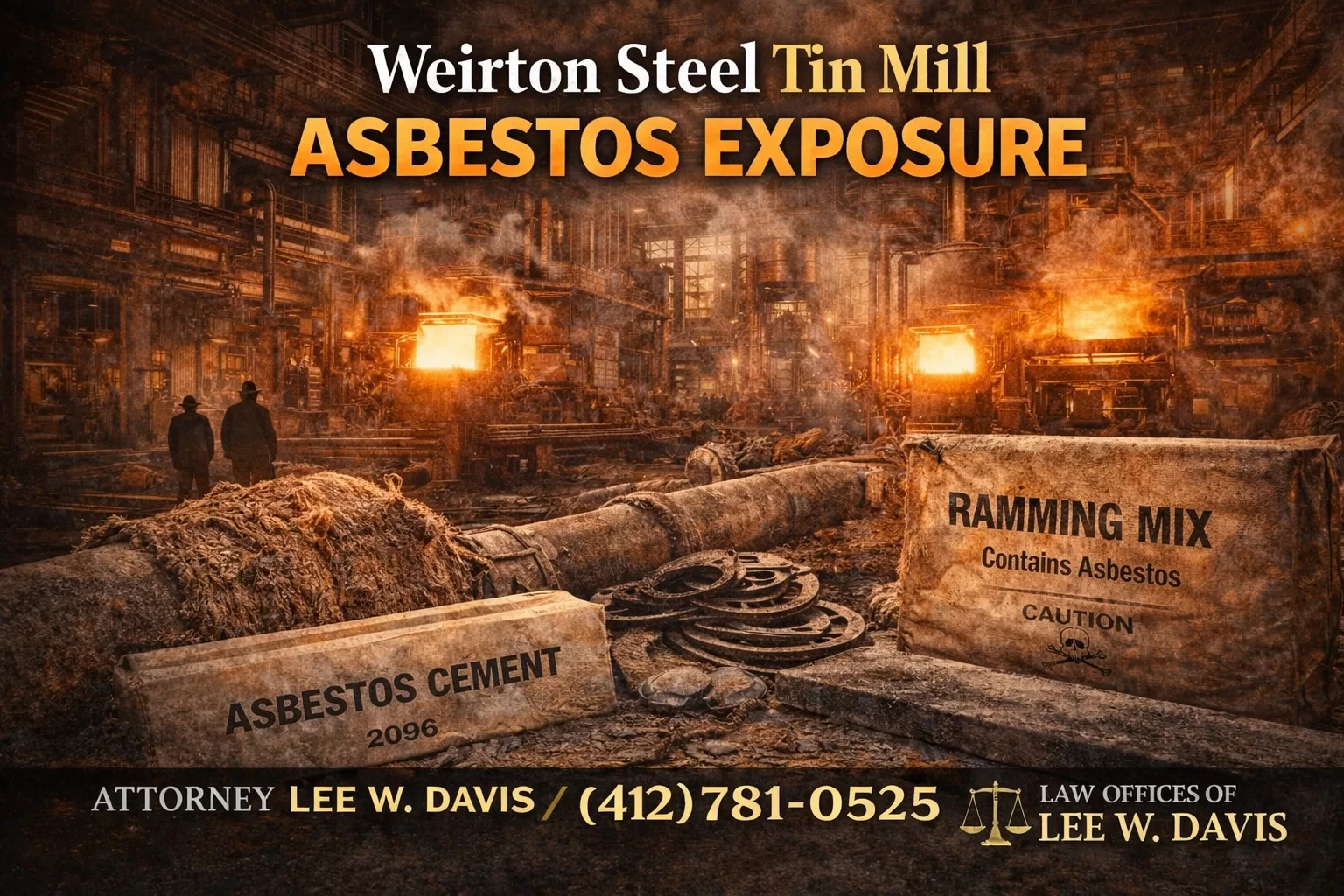
Tin Mill — The tin mill annealing furnaces and pickling lines carried insulation and gasket materials that historically contained asbestos. Pipefitters, millwrights, and electricians working the tin mill encountered these materials throughout their careers.

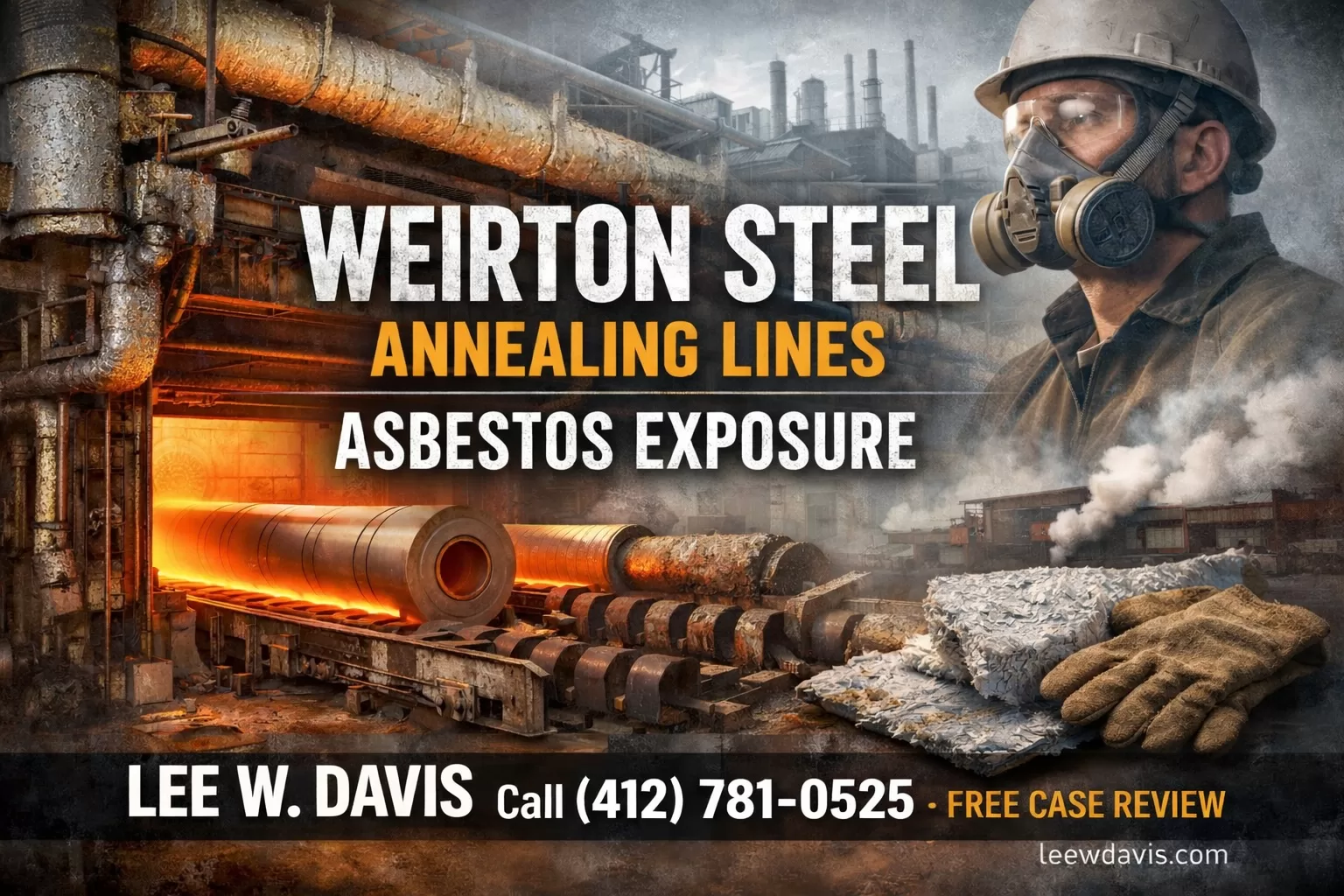
Annealing Lines — Annealing required sustained high heat in enclosed furnace environments, with asbestos-containing insulation on the furnaces, the surrounding piping, and the repair materials used during outage work.

Heavy Construction and Outside Contractors — Ironworkers, boilermakers, pipefitters, and laborers brought in for shutdowns and rebuilds often faced heavier exposure than direct employees because their work involved tearing out and replacing the asbestos-containing materials that had accumulated over decades of plant operation.

In-House Pipefitters — In-house pipefitters worked plant-wide across every department, maintaining the steam and process piping systems that ran through the entire facility. Their exposure was cumulative and plant-wide across every area where asbestos-insulated pipe systems required service.

In-House Millwrights — Millwrights maintained the industrial equipment throughout every production and mechanical area of the plant. Their work took them into every department and into direct contact with the insulation surrounding the equipment they serviced.

You Do Not Have to Have Been a Direct Weirton Steel Employee

Some of the strongest mesothelioma claims from Weirton Steel come from outside contractors and heavy construction workers who worked the plant during shutdowns and rebuilds. If your paycheck came from a contracting firm rather than Weirton Steel directly, your exposure history at the facility still supports a viable claim. The defendants in these cases are typically the manufacturers of the asbestos-containing products used at the plant — not necessarily Weirton Steel itself.

Take-home exposure cases are also well established. Family members who were exposed to asbestos dust brought home on a worker’s clothing, hair, or vehicle have pursued successful mesothelioma claims arising from that secondary exposure.

Knowledge of Weirton Steel Going Back to 1989

I first began researching Weirton Steel asbestos cases in 1989, working on the original asbestos mass trials in West Virginia. I have been licensed to practice law since 1996 and have handled mesothelioma cases across Pennsylvania, West Virginia, and Michigan ever since. That includes cases from workers in every department of the Weirton Steel complex — the coke batteries, the blast furnace, the open hearth, the strip mill, the rolling mills, the tin mill, the annealing lines, and the maintenance trades that worked throughout the plant.

Read More about Lee

When you call, you speak directly with me. No call centers. No case managers. No outsourcing.

West Virginia’s statute of limitations for mesothelioma runs from the date of diagnosis, not the date of exposure. Wrongful death claims carry different and sometimes shorter deadlines. Either way, delay works against you.

Call (412) 781-0525 or start your confidential case review online now.

Check If Your Family Was Exposed

Get your free guide instantly + a confidential case review.

🔒 100% Confidential. No obligations.


Frequently Asked Questions

Q: I worked at Weirton Steel in the 1970s and was just diagnosed with mesothelioma. Is it too late to file a claim?

A: No. West Virginia’s statute of limitations for mesothelioma runs from the date of diagnosis, not the date of your exposure at Weirton Steel decades ago. Workers exposed in the 1960s, 1970s, and 1980s are receiving diagnoses and filing viable claims today. Call as soon as a diagnosis is confirmed — the earlier we begin building the exposure history and identifying responsible parties, the stronger your claim will be.

Q: Weirton Steel has gone through multiple ownership changes. Who is liable for my asbestos exposure there?

A: The primary defendants in Weirton Steel mesothelioma cases are typically the manufacturers of the asbestos-containing products used at the facility — insulation manufacturers, refractory suppliers, gasket and packing manufacturers — rather than Weirton Steel or its successor owners directly. Many of those manufacturers have established asbestos bankruptcy trusts that continue to pay claims today. An experienced asbestos attorney can identify which defendants and trust funds apply to your specific work history and exposure timeline.

Q: My father worked Weirton Steel his entire career and died of mesothelioma last year. Can our family still file a claim?

A: A wrongful death claim may still be available to your family. West Virginia wrongful death deadlines for mesothelioma run from the date of death and are separate from the personal injury deadline. Those deadlines can move quickly. Call as soon as possible — the sooner we can evaluate the work history and exposure narrative, the better the chance of preserving a viable claim for your family.


Call Today for a Free Case Review

If you’re looking for a Weirton Steel Mesothelioma lawyer who knows the job site and understands your case, call Lee W. Davis today at (412) 781-0525 or contact us online.

Check If Your Family Was Exposed

Get your free guide instantly + a confidential case review.

🔒 100% Confidential. No obligations.

Related Post: Boilermaker Mesothelioma Lawyer – Learn Your Rights

Weirton Steel Millwrights Asbestos

Weirton Steel millwrights asbestos

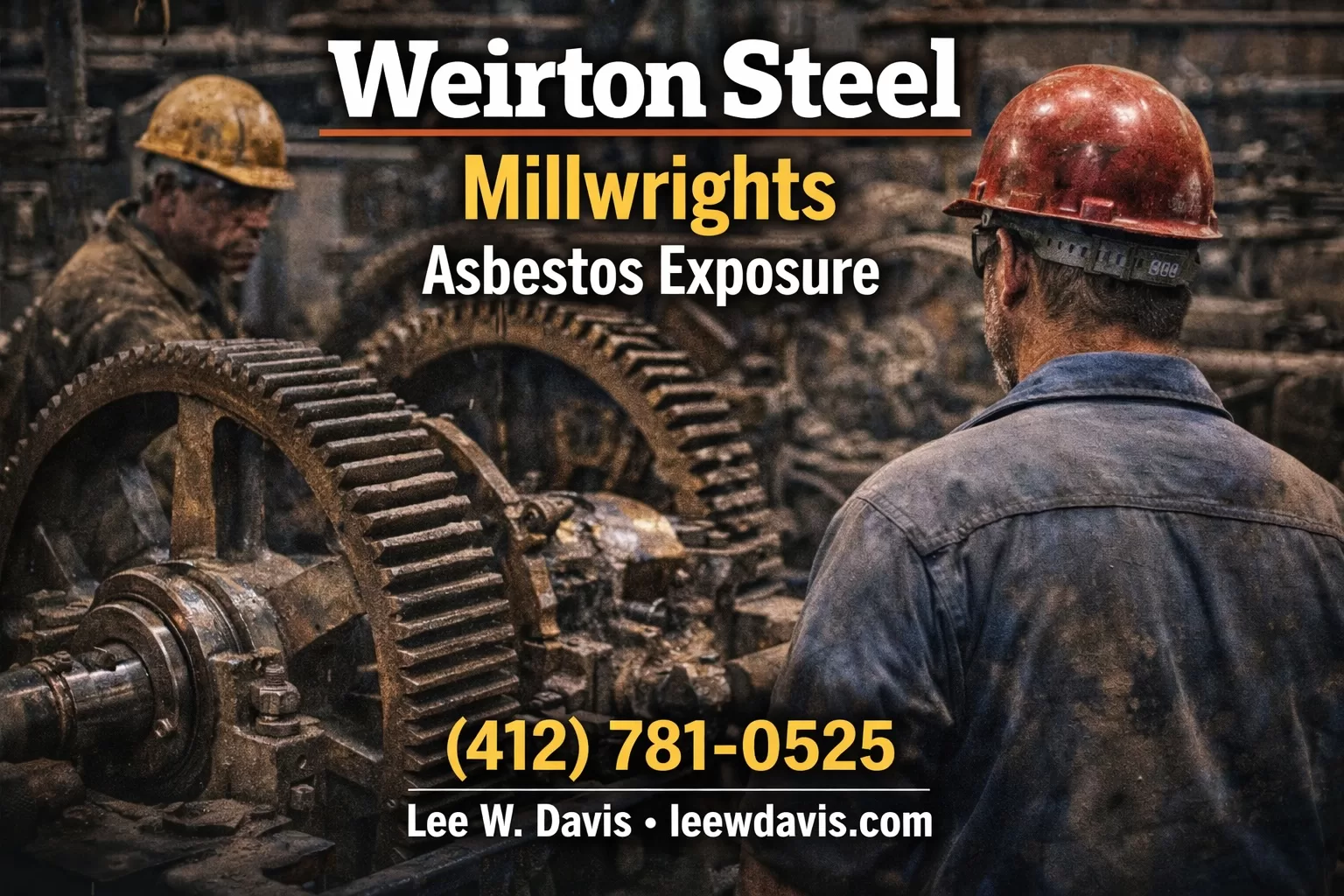
If you worked as an in-house millwright at Weirton Steel and you’ve been diagnosed with mesothelioma, your trade placed you at the heart of the plant’s maintenance operations across every department and every production area. Millwrights at Weirton Steel kept the machinery running and the machinery that needed keeping ran through environments saturated with asbestos-containing materials.

Why Millwrights Faced Sustained Asbestos Exposure at Weirton Steel

Millwrights at Weirton Steel were the mechanics of the plant — responsible for installing, maintaining, aligning, and rebuilding the industrial equipment that kept production moving. That work took them into every corner of the facility, from the coke batteries on Browns Island to the blast furnace, the open hearth, the rolling mills, the strip mill, the annealing lines, and the finishing departments.

Mesothelioma/Asbestos Legal Help – WV, MI & PA

Speak directly with attorney Lee W. Davis. No call centers. Free, confidential review.

In each of those environments, the equipment millwrights worked on was surrounded by asbestos-containing insulation. Removing insulation to access equipment for repair or rebuild, then working in the space that insulation had occupied, was a routine part of millwright work at Weirton Steel. Replacing insulation after completing mechanical work was equally routine — and handling asbestos-containing insulation materials directly created significant fiber release.

Gaskets and packing associated with the mechanical systems millwrights serviced added additional exposure. Rebuilding pumps, working on compressors, servicing turbines, and maintaining the drive systems throughout the plant all required disturbing asbestos-containing materials on a regular basis. The cumulative exposure over a millwright’s career at Weirton Steel was substantial.

Specific Exposure Points for Weirton Steel Millwrights

The most significant asbestos exposure points for in-house millwrights at Weirton Steel included:

  • Insulation on and around industrial equipment throughout every department
  • Gaskets and packing in pumps, compressors, turbines, and mechanical drives
  • Refractory and insulating materials in furnace-adjacent mechanical systems
  • Insulation removed and replaced during equipment rebuilds and outage work
  • Dust accumulated in mechanical rooms and confined spaces where equipment was serviced
  • Equipment rebuilds during plant shutdowns when multiple insulation systems were disturbed simultaneously

Shutdown and outage work was particularly hazardous for millwrights. Major equipment rebuilds during outages involved disturbing insulation across large areas simultaneously — creating concentrated dust exposure in confined work environments.


What Evidence Supports a Millwright Asbestos Claim at Weirton Steel

You do not need complete records or perfect memory to begin evaluating your claim. The evidence that matters most includes:

  • Diagnosis records — pathology reports, imaging, treatment summaries
  • Work history at Weirton Steel — job title, years worked, departments and equipment you maintained
  • Memory of the machinery, systems, and areas you worked in throughout the plant
  • Names of coworkers, foremen, or supervisors you remember from your time at Weirton Steel
  • Union records from your millwrights local — referral logs, dues records, benefit statements
  • Social Security earnings records confirming employers and time periods

Descriptions of the specific equipment you maintained and the departments you worked in are often enough to begin identifying the responsible product defendants and building the exposure narrative.

Deep Knowledge of Weirton Steel Asbestos Cases

I first began researching Weirton Steel asbestos cases in 1989, working on the original asbestos mass trials in West Virginia. I have been licensed to practice law since 1996 and have handled mesothelioma cases across Pennsylvania, West Virginia, and Michigan ever since. That includes cases from in-house millwrights whose maintenance work took them through every production and mechanical area of the Weirton Steel complex.

Learn More about West Virginia Mesothelioma Lawyer

When you call, you speak directly with me. No call centers. No case managers.

If you or a family member worked as a millwright at Weirton Steel and has been diagnosed with mesothelioma, time matters. West Virginia’s statute of limitations runs from the date of diagnosis, not from the date of your exposure decades ago.

Call (412) 781-0525 or start your confidential case review online now.

Check If Your Family Was Exposed

Get your free guide instantly + a confidential case review.

🔒 100% Confidential. No obligations.


Frequently Asked Questions

Q: As a millwright at Weirton Steel I worked on equipment in almost every department. Does that plant-wide exposure history help my mesothelioma claim?

A: Yes significantly. A millwright whose career at Weirton Steel took them through the blast furnace, the rolling mills, the strip mill, the annealing lines, and the coke batteries has a multi-department exposure history involving multiple insulation systems and multiple product defendants. Each department and each exposure event adds to the overall picture of your asbestos exposure history and may involve additional defendants whose materials were used in those specific areas.

Q: My most significant exposure as a Weirton Steel millwright came during shutdown and outage work. Is that enough to support a mesothelioma claim?

A: Yes. Shutdown and outage work is among the strongest exposure profiles in millwright asbestos claims. Major equipment rebuilds during outages concentrated exposure by disturbing multiple insulation systems simultaneously in confined work environments. The intensity and duration of that exposure during shutdowns has supported successful mesothelioma claims even when day-to-day exposure was more limited.

Q: How long do I have to file a mesothelioma claim in West Virginia after a diagnosis connected to Weirton Steel millwright work?

A: West Virginia’s statute of limitations runs from the date of diagnosis, not from the date of your exposure at Weirton Steel. Wrongful death claims carry different and sometimes shorter deadlines. Records disappear and witnesses become harder to locate over time — call as soon as a diagnosis is confirmed.
Mesothelioma/Asbestos Legal Help – WV, MI & PA

Speak directly with attorney Lee W. Davis. No call centers. Free, confidential review.

Weirton Steel pipefitters asbestos

Weirton Steel Pipefitters Asbestos Exposure

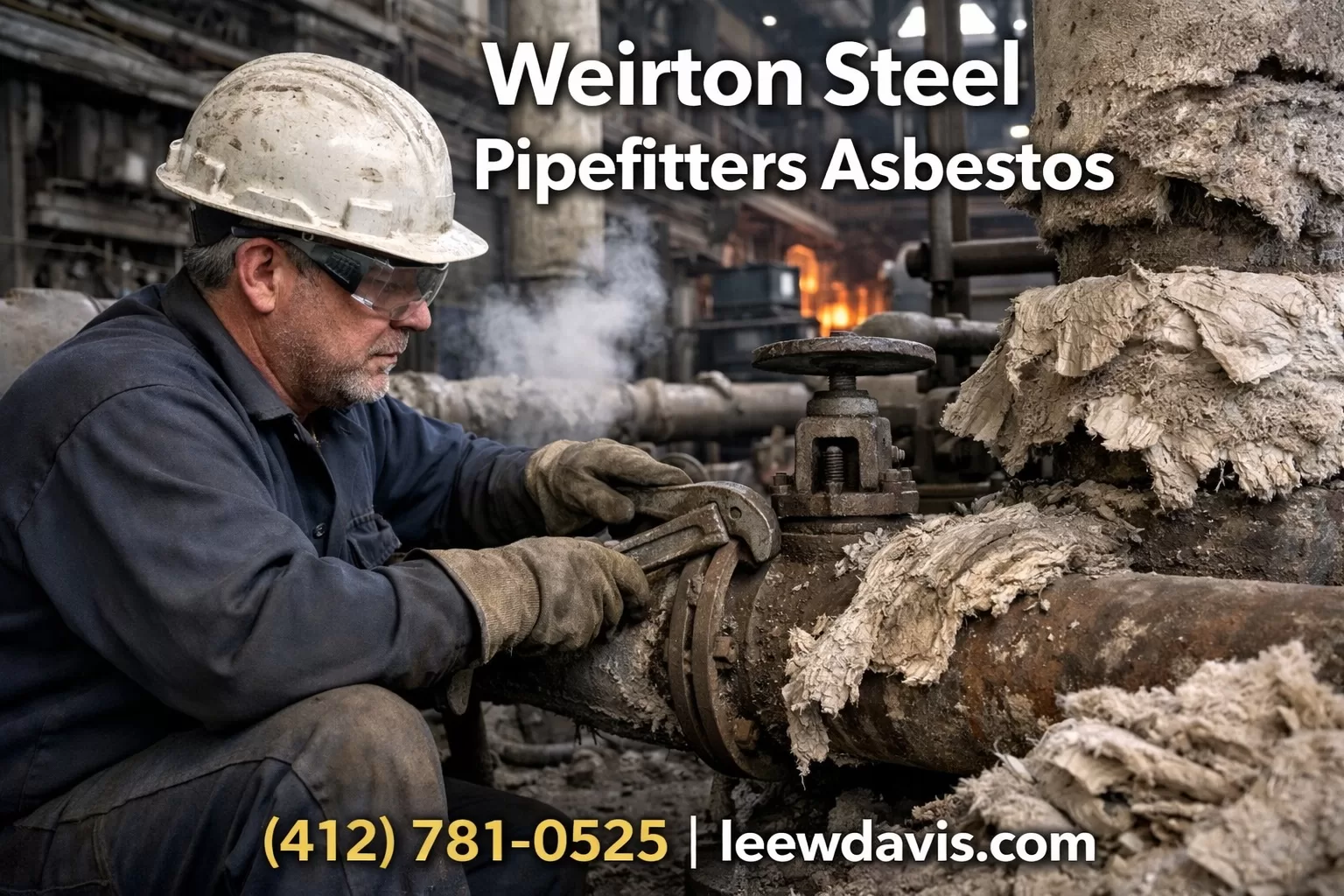
If you worked as an in-house pipefitter at Weirton Steel, pipefitters asbestos exposure was a daily reality across every department in the plant and a mesothelioma diagnosis decades later may be the direct result of that work history.

Why Pipefitters Faced Among the Heaviest Asbestos Exposure at Weirton Steel

Steam and process piping ran through every corner of the Weirton Steel complex — the blast furnace, the open hearth, the coke batteries on Browns Island, the tin mill, the strip mill, the annealing lines, the rolling mills, and the utility and mechanical rooms connecting them. Every one of those lines was insulated, and that insulation historically contained asbestos.

Mesothelioma/Asbestos Legal Help – WV, MI & PA

Speak directly with attorney Lee W. Davis. No call centers. Free, confidential review.

In-house pipefitters at Weirton Steel worked on those lines constantly. Installation of new pipe required cutting and fitting insulation. Maintenance and repair required removing old insulation to access the pipe beneath — and old insulation, disturbed after years of heat cycling, released fibers heavily. Valve, flange, and fitting work required removing and replacing gaskets and packing that contained asbestos. Each of those tasks, performed repeatedly over a career at Weirton Steel, represented sustained and significant asbestos exposure.

The confined spaces where much of this work occurred — pipe chases, utility corridors, mechanical rooms, boiler rooms — concentrated the dust rather than dispersing it. Pipefitters working in those environments breathed asbestos fibers at close range for years.

Specific Exposure Points for Weirton Steel Pipefitters

The most common asbestos exposure points for in-house pipefitters at Weirton Steel included:

  • Thermal insulation on steam lines, process piping, and utility lines throughout the plant
  • Gaskets in flanged connections on high-temperature and high-pressure piping systems
  • Valve packing on steam and process valves throughout every department
  • Pipe covering and block insulation removed during maintenance and repair work
  • Insulation on turbines, boilers, and heat exchangers in the plant’s utility systems
  • Fitting and repair work in confined mechanical spaces where dust accumulated

Every department at Weirton Steel had pipe systems that required regular attention. An in-house pipefitter’s career at Weirton was a career-long asbestos exposure history spanning the entire facility.

What Evidence Supports a Pipefitter Asbestos Claim at Weirton Steel

You do not need complete records or perfect memory to begin evaluating your claim. The evidence that matters most includes:

  • Diagnosis records — pathology reports, imaging, treatment summaries
  • Work history at Weirton Steel — job title, years worked, departments and areas where you worked
  • Memory of the pipe systems, valves, and equipment you worked on
  • Names of coworkers, foremen, or supervisors you remember from your time at Weirton Steel
  • Union records from your pipefitters local — referral logs, dues records, benefit statements
  • Social Security earnings records confirming employers and time periods

Pipefitters union records are particularly valuable because they often document which facilities a worker was dispatched to and what periods they worked there, even when other employment documentation is incomplete.

Deep Knowledge of Weirton Steel Asbestos Cases

I first began researching Weirton Steel asbestos cases in 1989, working on the original asbestos mass trials in West Virginia. I have been licensed to practice law since 1996 and have handled mesothelioma cases across Pennsylvania, West Virginia, and Michigan ever since. That includes cases from in-house pipefitters whose work took them through every department of the Weirton Steel complex.

When you call, you speak directly with me. No call centers. No case managers.

If you or a family member worked as a pipefitter at Weirton Steel and has been diagnosed with mesothelioma, time matters. West Virginia’s statute of limitations runs from the date of diagnosis, not from the date of your exposure decades ago.

Call (412) 781-0525 or start your confidential case review online now.

Check If Your Family Was Exposed

Get your free guide instantly + a confidential case review.

🔒 100% Confidential. No obligations.


Frequently Asked Questions

Q: As a Weirton Steel pipefitter I worked in almost every department over my career. Does exposure across multiple departments strengthen my claim?

A: Yes. A plant-wide exposure history across multiple departments is one of the strongest profiles in mesothelioma claims. Each department, each pipe system, and each maintenance event represents a separate exposure point. Multiple exposures across a career also typically involve multiple product defendants whose insulation, gasket, and packing materials were used in different areas of the plant — and each of those defendants may have liability for your diagnosis.

Q: I replaced gaskets and valve packing throughout my career at Weirton Steel but I didn’t do insulation work directly. Does that support a mesothelioma claim?

A: Yes. Gaskets and valve packing used in high-temperature and high-pressure piping systems at Weirton Steel historically contained asbestos. Removing old gaskets and packing — particularly after years of heat cycling — released asbestos fibers directly into the breathing zone of the pipefitter doing the work. That exposure profile has supported numerous successful mesothelioma claims independent of any insulation work.

Q: How long do I have to file a mesothelioma claim in West Virginia after a diagnosis connected to Weirton Steel pipefitter work?

A: West Virginia’s statute of limitations runs from the date of diagnosis, not from the date of your exposure at Weirton Steel. Wrongful death claims carry different and sometimes shorter deadlines. Records disappear and witnesses become harder to locate over time — call as soon as a diagnosis is confirmed.
Mesothelioma/Asbestos Legal Help – WV, MI & PA

Speak directly with attorney Lee W. Davis. No call centers. Free, confidential review.

Weirton Steel Heavy Construction Asbestos Exposure

Weirton Steel Heavy Construction Asbestos Exposure

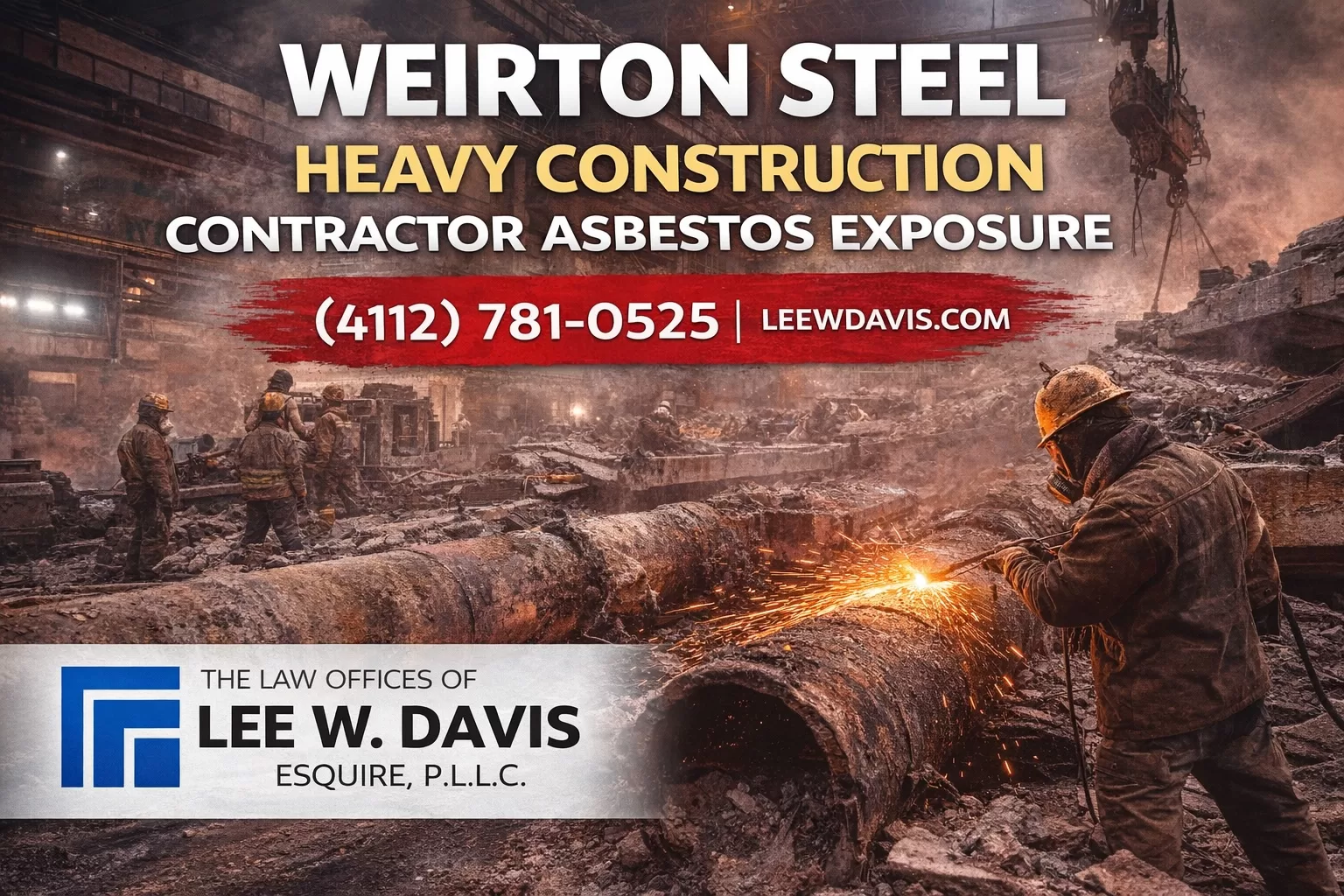
If you worked Weirton Steel as an outside contractor or heavy construction employee and you’ve been diagnosed with mesothelioma, you may not think of yourself as a Weirton Steel worker — but your exposure history at that facility is exactly what matters to your claim. Outside contractors and shutdown crews who worked Weirton Steel heavy construction jobs were among the most heavily exposed workers at the entire plant.

Mesothelioma/Asbestos Legal Help – WV, MI & PA

Speak directly with attorney Lee W. Davis. No call centers. Free, confidential review.

Why Outside Contractors Faced the Worst Exposure

Weirton Steel’s in-house trades kept the plant running day to day. Outside contractors were brought in to tear it apart and rebuild it. That distinction matters enormously for asbestos exposure.

Shutdown and outage work at Weirton Steel involved demolishing and rebuilding the systems most saturated with asbestos like coke batteries on Browns Island, blast furnace linings, open hearth furnace shells, boilers, overhead cranes, pipe systems, and refractory structures throughout the plant. The work required removing old insulation, breaking out refractory, replacing gaskets and packing, and installing new materials in spaces where decades of asbestos-containing products had accumulated.

That demolition and replacement work generated the heaviest asbestos dust of any activity at the plant. And the people doing it were the outside contractors — ironworkers, boilermakers, pipefitters, insulators, carpenters, riggers, and laborers brought in from union halls across the Ohio Valley specifically because this work required skilled trades who could move from job to job as shutdowns were scheduled.

Trades Most Commonly Involved in Heavy Construction Asbestos Claims at Weirton Steel

If your trade brought you to Weirton Steel for shutdown, outage, or construction work, your exposure profile may be among the strongest we evaluate:

  • Ironworkers on structural demolition and rebuild
  • Boilermakers on furnace and boiler tear-out and replacement
  • Pipefitters and steamfitters replacing insulated pipe systems
  • Insulators — direct handlers of asbestos-containing materials
  • Carpenters and laborers on general outage and demolition crews
  • Riggers and crane operators working overhead in dust-filled environments
  • Millwrights brought in for equipment rebuilds during major shutdowns

Even trades that did not directly handle insulation or refractory were exposed through bystander contact — working in the same confined spaces where other trades were generating asbestos dust during tear-out and replacement operations.

You Don’t Have to Have Been a Weirton Steel Employee

This is the point most outside contractors and their families miss. Your paycheck did not come from Weirton Steel. You may have worked there for weeks or months across multiple shutdowns over many years, or for a single major outage. Either way, if your work brought you into contact with asbestos-containing materials at the Weirton Steel facility, your exposure history at that site is the foundation of a potential mesothelioma claim.

The defendants in these cases are typically the manufacturers of the asbestos-containing products used at the facility — not necessarily Weirton Steel itself. Many of those manufacturers have established asbestos bankruptcy trusts that continue to pay claims today.

Wrongful Death Claims for Heavy Construction Workers

Many of the ironworkers, boilermakers, pipefitters, and laborers who worked Weirton Steel shutdowns in the 1960s, 1970s, and 1980s have already passed away. If you lost a family member who worked heavy construction at Weirton Steel and who died from mesothelioma or another asbestos-related disease, a wrongful death claim may still be available to your family.

Wrongful death deadlines in West Virginia are different from personal injury deadlines and can move quickly. If your family member has passed, call as soon as possible to understand what options remain.

What Evidence Supports a Heavy Construction Asbestos Claim at Weirton Steel

Outside contractors often have less documentation than direct plant employees, but that does not disqualify a claim. Evidence that helps includes:

  • Diagnosis records — pathology reports, imaging, treatment summaries
  • Union records — referral logs, dues records, benefit statements from your local
  • Social Security earnings records confirming employers and time periods
  • Memory of the specific jobs, structures, and systems you worked on at Weirton Steel
  • Names of coworkers, foremen, or contractors you remember from Weirton jobs
  • Any company records, pay stubs, or W-2s from the contracting firm that employed you

Union referral records are particularly valuable for heavy construction workers because they establish which job sites a worker was dispatched to even when other documentation is incomplete.

Deep Knowledge of Weirton Steel Asbestos Cases

I first began researching Weirton Steel asbestos cases in 1989, working on the original asbestos mass trials as a paralegal in West Virginia. I have been licensed to practice law since 1996 and have handled mesothelioma cases across Pennsylvania, West Virginia, and Michigan ever since. That includes cases from outside contractors and heavy construction employees who worked Weirton Steel shutdowns — workers whose cases are often overlooked because they didn’t carry a Weirton Steel badge.

Read More: West Virginia Mesothelioma Lawyer

When you call, you speak directly with me. No call centers. No case managers.

If you or a family member worked heavy construction at Weirton Steel and has been diagnosed with mesothelioma, time matters. West Virginia’s statute of limitations runs from the date of diagnosis, not from the date of exposure.

Call (412) 781-0525 or start your confidential case review online now.

Check If Your Family Was Exposed

Get your free guide instantly + a confidential case review.

🔒 100% Confidential. No obligations.


Frequently Asked Questions

Q: I worked Weirton Steel shutdowns for a contractor, not for Weirton Steel directly. Can I still file a mesothelioma claim?

A: Yes. Your employment status as an outside contractor does not disqualify your claim. What matters is your exposure history at the facility. Outside contractors doing shutdown and outage work at Weirton Steel were often more heavily exposed than direct employees because their work involved the tear-out and replacement of asbestos-containing materials. The product manufacturers whose materials caused your exposure are the primary defendants in these cases regardless of who signed your paycheck.

Q: I worked multiple steel mills across the Ohio Valley as a heavy construction contractor. Does Weirton Steel need to be my only exposure site?

A: No. Many heavy construction workers were exposed at multiple facilities across their careers — Weirton Steel, Wheeling-Pitt, other Ohio Valley industrial sites. Each exposure site is a separate thread in your overall exposure history. A mesothelioma claim can be built across multiple sites and multiple product defendants, and your work at Weirton Steel is a significant part of that picture regardless of where else you worked.

Q: My father worked Weirton Steel shutdowns as an ironworker and died of mesothelioma. Is it too late for our family to file a claim?

A: It may not be. West Virginia wrongful death claims for mesothelioma have their own deadlines that run from the date of death, not the date of diagnosis. Those deadlines can move quickly. Call as soon as possible to understand what options remain for your family — the sooner we can evaluate the work history and exposure narrative, the better the chance of preserving a viable claim.

Mesothelioma/Asbestos Legal Help – WV, MI & PA

Speak directly with attorney Lee W. Davis. No call centers. Free, confidential review.

Weirton Steel Rolling Mills Asbestos Exposure

Weirton Steel Rolling Mills Asbestos Exposure

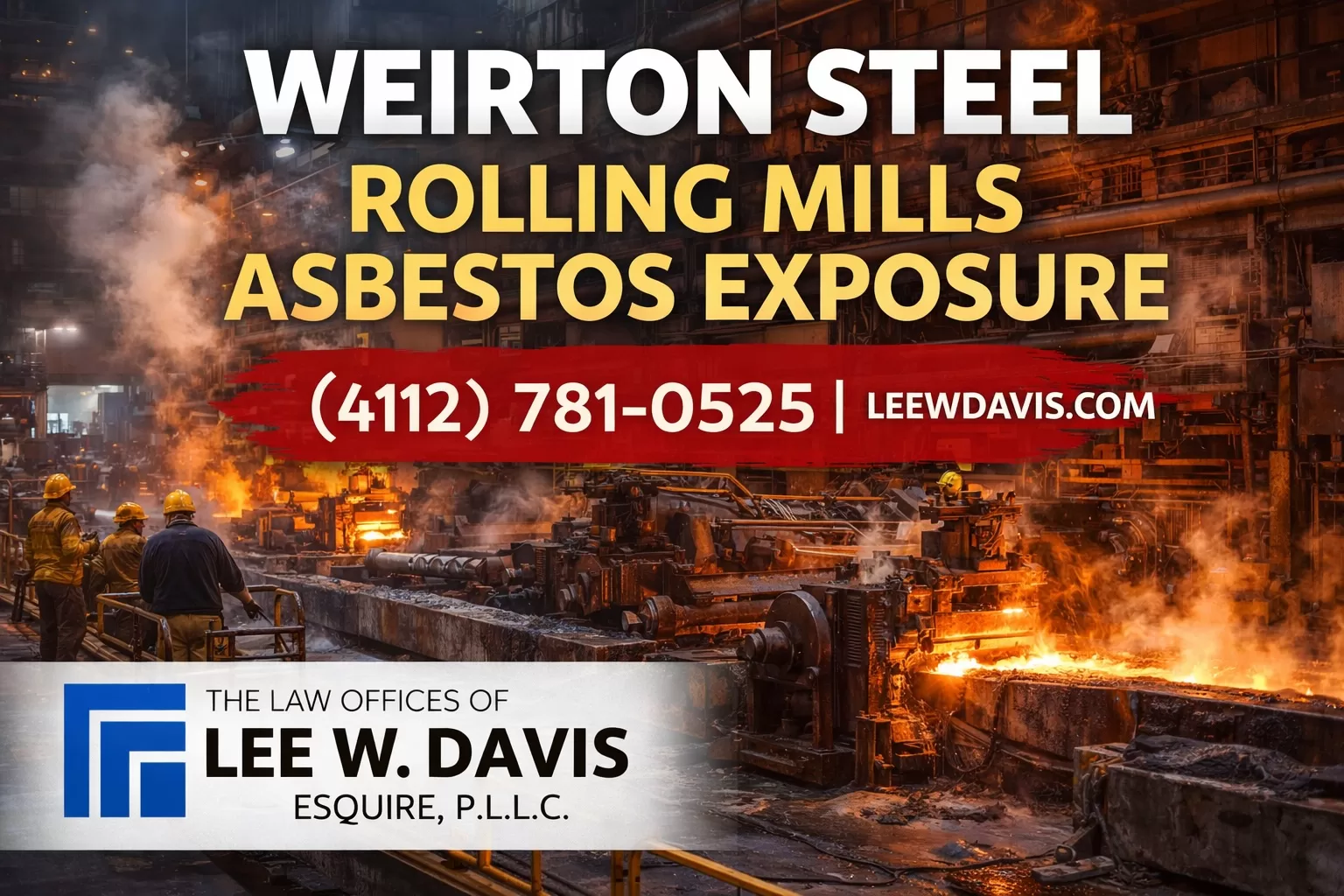
If you worked the Weirton Steel rolling mills and you’ve been diagnosed with mesothelioma, the mechanical intensity of that environment is central to understanding your asbestos exposure. Rolling mill work meant constant heat, constant friction, and constant maintenance and each of those conditions brought workers into contact with asbestos-containing materials on a routine basis.

Mesothelioma/Asbestos Legal Help – WV, MI & PA

Speak directly with attorney Lee W. Davis. No call centers. Free, confidential review.

Why Rolling Mills Generated Significant Asbestos Exposure

Rolling mills reduced steel to finished dimensions through a series of high-pressure, high-heat passes between heavy rolls. That process generated sustained extreme temperatures and continuous mechanical wear on the equipment keeping the lines running. Both conditions required heavy insulation and frequent maintenance — the two primary pathways through which rolling mill workers were exposed to asbestos.

Steam and process piping throughout the rolling mill carried insulation that historically contained asbestos. The drives, bearings, and mechanical systems supporting the rolling equipment were surrounded by insulating materials that required regular service. When that insulation was cut, removed, or replaced during maintenance and outage work, asbestos fibers became airborne throughout the mill.

Gaskets and packing in the valves, pumps, and flanges servicing the rolling lines were disturbed regularly during routine upkeep. Refractory materials in the furnace and reheat sections feeding the rolling mills added another layer of exposure for workers moving between departments or working near those areas during outages.

Trades Most Commonly Involved in Rolling Mill Asbestos Claims

Workers across multiple trades encountered asbestos-containing materials in the Weirton Steel rolling mills:

  • Millwrights maintaining rolling equipment, drives, and mechanical systems
  • Pipefitters and steamfitters on process and utility lines throughout the mill
  • Boilermakers on furnace and reheat section maintenance
  • Electricians working around motors, controls, and high-heat equipment
  • Laborers on teardown, cleanup, and outage crews
  • Outside contractors brought in for shutdowns, rebuilds, and retrofits

Bystander exposure was a consistent feature of rolling mill work. The dust created when insulation was disturbed during maintenance affected everyone working in the area — not only the person doing the insulation work.

What Evidence Supports a Rolling Mill Asbestos Claim

You do not need complete records or perfect memory to begin evaluating your claim. The evidence that matters most includes:

  • Diagnosis records — pathology reports, imaging, treatment summaries
  • Work history at Weirton Steel — department, job title, years worked, specific tasks
  • Memory of the equipment and systems you worked on or around
  • Names of coworkers, supervisors, or contractors you remember from the rolling mills
  • Union records, benefit statements, or Social Security earnings records confirming your employment

If you can describe what you worked on and where in the rolling mills you worked, that is often enough to begin identifying responsible parties and building the exposure narrative.

Deep Knowledge of Weirton Steel Asbestos Cases

I first began researching Weirton Steel asbestos cases in 1989, working on the original asbestos mass trials in West Virginia. I have been licensed to practice law since 1996 and have handled mesothelioma cases across Pennsylvania, West Virginia, and Michigan ever since. That depth of knowledge about the plant, its departments, its contractors, and the product defendants involved in these claims is something I bring directly to every case evaluation.

Learn More about Lee W. Davis

When you call, you speak directly with me. No call centers. No case managers.

If you or a family member worked the Weirton Steel rolling mills and has been diagnosed with mesothelioma, time matters. West Virginia’s statute of limitations runs from the date of diagnosis, not from the date of your exposure decades ago.

Read More about West Virginia Mesothelioma Lawyer

Call (412) 781-0525 or start your confidential case review online now.

Check If Your Family Was Exposed

Get your free guide instantly + a confidential case review.

🔒 100% Confidential. No obligations.


Frequently Asked Questions

Q: I worked multiple departments at Weirton Steel including the rolling mills. Does exposure in more than one area strengthen my mesothelioma claim?

A: It can. Multiple exposure points across different departments over a career at Weirton Steel can support a more comprehensive exposure narrative and may involve additional product defendants whose materials were used in those areas. Each department, each maintenance event, and each product is a separate thread in building the full picture of your asbestos exposure history.

Q: I was a millwright in the rolling mills and worked on equipment rebuilds during shutdowns. Is that the kind of work that supports a mesothelioma claim?

A: Yes. Shutdown and rebuild work is among the strongest exposure profiles in rolling mill asbestos claims. Equipment rebuilds during outages frequently involved removing and replacing insulation, disturbing gaskets and packing, and working in confined areas where asbestos dust had accumulated over years of plant operation. Millwrights doing that work were in a high-exposure environment regardless of whether they personally handled the insulation.

Q: How long do I have to file a mesothelioma claim in West Virginia after a diagnosis connected to Weirton Steel rolling mill work?

A: West Virginia’s statute of limitations runs from the date of diagnosis, not from the date of your exposure. Wrongful death claims carry different and sometimes shorter deadlines. Records disappear and witnesses become harder to locate over time — call as soon as a diagnosis is confirmed.
Mesothelioma/Asbestos Legal Help – WV, MI & PA

Speak directly with attorney Lee W. Davis. No call centers. Free, confidential review.

Weirton Steel Annealing Lines Asbestos Exposure

Weirton Steel annealing lines

If you worked the Weirton Steel annealing lines and you’ve been diagnosed with mesothelioma, the heat-intensive nature of that operation matters directly to your asbestos exposure claim. Annealing was one of the most thermally demanding processes in the finishing side of the plant and high heat meant heavy insulation, which meant asbestos.

Mesothelioma/Asbestos Legal Help – WV, MI & PA

Speak directly with attorney Lee W. Davis. No call centers. Free, confidential review.

Why Annealing Lines Created Serious Asbestos Exposure

Annealing is a heat treatment process that softens steel strip after rolling by raising it to high temperatures and allowing it to cool in a controlled way. At Weirton Steel, the annealing furnaces ran continuously and at sustained extreme temperatures. That operating environment required substantial thermal insulation on the furnaces themselves, on the surrounding piping and mechanical systems, and on the equipment used to move steel through the process.

Read More about Weirton Steel Mesothelioma Lawsuits

That insulation historically contained asbestos. It was present on the furnace shells, on the steam and process lines feeding the furnaces, and on the mechanical components throughout the annealing department. During routine maintenance and especially during outage and repair work when insulation was removed, cut, or replaced asbestos fibers became airborne in the work area.

The annealing lines also used refractory materials in the furnace construction and repair that, like the open hearth and blast furnace, included asbestos-containing blocks, boards, cements, and ramming materials near the shell. Workers involved in furnace maintenance and repair on the annealing lines faced exposure profiles similar in some respects to those on the steelmaking side of the plant.

Read about West Virginia Mesothelioma Lawyer

Trades Most Commonly Involved in Annealing Line Asbestos Claims

Workers across multiple trades encountered asbestos-containing materials on the Weirton Steel annealing lines:

  • Pipefitters and steamfitters on furnace feed and process lines
  • Millwrights maintaining mechanical systems and furnace equipment
  • Electricians working around furnace controls and high-heat systems
  • Boilermakers on furnace maintenance and repair
  • Laborers on teardown, cleanup, and outage crews
  • Outside contractors brought in for furnace rebuilds and retrofits

Bystander exposure was significant. Workers did not need to handle insulation or refractory materials directly to breathe the fibers released when those materials were disturbed during maintenance and repair work nearby.

What Evidence Supports an Annealing Line Asbestos Claim

You do not need complete records or perfect memory to begin evaluating your claim. The evidence that matters most includes:

  • Diagnosis records — pathology reports, imaging, treatment summaries
  • Work history at Weirton Steel — department, job title, years worked, specific tasks
  • Memory of the furnaces, equipment, and systems you worked on or around
  • Names of coworkers, supervisors, or contractors you remember from the annealing department
  • Union records, benefit statements, or Social Security earnings records confirming your employment

If you can describe what you worked on and where in the annealing department you worked, that is often enough to begin identifying responsible parties and building the exposure narrative.

Deep Knowledge of Weirton Steel Asbestos Cases

I first began researching Weirton Steel asbestos cases in 1989, working on the original asbestos mass trials in West Virginia. I have been licensed to practice law since 1996 and have handled mesothelioma cases across Pennsylvania, West Virginia, and Michigan ever since. That depth of knowledge about the plant, its departments, its contractors, and the product defendants involved in these claims is something I bring directly to every case evaluation.

Read about Lee W. Davis

When you call, you speak directly with me. No call centers. No case managers.

If you or a family member worked the Weirton Steel annealing lines and has been diagnosed with mesothelioma, time matters. West Virginia’s statute of limitations runs from the date of diagnosis, not from the date of your exposure decades ago.

Call (412) 781-0525 or start your confidential case review online now.

Check If Your Family Was Exposed

Get your free guide instantly + a confidential case review.

🔒 100% Confidential. No obligations.


Frequently Asked Questions

Q: I worked the annealing lines at Weirton Steel but never touched insulation directly. Can I still have an asbestos exposure claim?

A: Yes. Direct contact with insulation is not required for a viable mesothelioma claim. Asbestos fibers become airborne when insulation is cut, removed, or disturbed — and anyone working in that environment breathes the same air. Bystander exposure on the annealing lines was common and has supported numerous successful claims.

Q: The annealing furnaces I worked on were rebuilt and re-insulated several times during my career. Does that affect my claim?

A: It can actually strengthen it. Each rebuild and re-insulation event was a separate asbestos exposure event. Multiple exposures over the course of a career at the annealing lines can support a more substantial exposure narrative and may involve multiple product defendants whose materials were used at different points in time.

Q: How long do I have to file a mesothelioma claim in West Virginia after a diagnosis connected to Weirton Steel annealing line work?

A: West Virginia’s statute of limitations runs from the date of diagnosis, not from the date of your exposure. Wrongful death claims carry different and sometimes shorter deadlines. Records disappear and witnesses become harder to locate over time — call as soon as a diagnosis is confirmed.
Mesothelioma/Asbestos Legal Help – WV, MI & PA

Speak directly with attorney Lee W. Davis. No call centers. Free, confidential review.

Weirton Steel Strip Mill Asbestos Exposure

Weirton Steel Strip Mill Asbestos Exposure

If you worked the Weirton Steel strip mill and you’ve been diagnosed with mesothelioma, the specific nature of your work in that department is the starting point for building a viable asbestos claim. Strip mill exposure had its own profile and different from the blast furnace, different from the open hearth and identifying exactly where and how fibers were released matters to the strength of your case.

Why the Strip Mill Had Significant Asbestos Exposure

The strip mill at Weirton Steel processed hot rolled steel into thinner, more refined product. That process required sustained high heat, constant mechanical operation, and ongoing maintenance of the equipment that kept the lines running. Each of those conditions created asbestos exposure opportunities.

Mesothelioma/Asbestos Legal Help – WV, MI & PA

Speak directly with attorney Lee W. Davis. No call centers. Free, confidential review.

The rolling equipment itself generated extreme heat and friction, which meant the surrounding insulation — on steam lines, process piping, and mechanical systems throughout the mill — was heavily present and frequently disturbed. When insulation was cut, scraped, or replaced during maintenance and outage work, asbestos fibers became airborne throughout the work area.

Refractory and insulating materials in the furnace and reheat sections of the strip mill were additional exposure sources. Gaskets and packing in the valves, pumps, and flanges servicing the rolling lines were disturbed regularly during routine maintenance. The combination of heat, mechanical wear, and constant upkeep created conditions where asbestos exposure was ongoing rather than isolated to specific events.

Trades Most Commonly Involved in Strip Mill Asbestos Claims

Workers across multiple trades worked in and around asbestos-containing materials in the Weirton Steel strip mill:

  • Millwrights maintaining rolling equipment and mechanical systems
  • Pipefitters and steamfitters on process and utility lines
  • Boilermakers on furnace and reheat section maintenance
  • Electricians working around control systems and high-heat equipment
  • Laborers on teardown, cleanup, and outage crews
  • Outside contractors brought in for shutdowns and retrofits

Bystander exposure was significant throughout the strip mill. Workers did not need to handle insulation or refractory materials directly to breathe the fibers released when those materials were cut, removed, or disturbed nearby.


What Evidence Supports a Strip Mill Asbestos Claim

You do not need complete records or perfect memory to begin evaluating your claim. The evidence that matters most includes:

  • Diagnosis records — pathology reports, imaging, treatment summaries
  • Work history at Weirton Steel — department, job title, years worked, specific tasks
  • Memory of the equipment and systems you worked on or around
  • Names of coworkers, supervisors, or contractors you remember from the strip mill
  • Union records, benefit statements, or Social Security earnings records confirming your employment

If you can describe the type of work you did and where in the strip mill you did it, that is often enough to begin identifying responsible parties and building the exposure narrative.

Deep Knowledge of Weirton Steel Asbestos Cases

I first began researching Weirton Steel asbestos cases in 1989, working on the original asbestos mass trials in West Virginia. I have been licensed to practice law since 1996 and have handled mesothelioma cases across Pennsylvania, West Virginia, and Michigan ever since. That depth of knowledge about the plant, its departments, its contractors, and the product defendants involved in these claims is something I bring directly to every case evaluation.

When you call, you speak directly with me. No call centers. No case managers.

If you or a family member worked the Weirton Steel strip mill and has been diagnosed with mesothelioma, time matters. West Virginia’s statute of limitations runs from the date of diagnosis, not from the date of your exposure decades ago.

Call (412) 781-0525 or start your confidential case review online now.

Check If Your Family Was Exposed

Get your free guide instantly + a confidential case review.

🔒 100% Confidential. No obligations.


Frequently Asked Questions

Q: I worked the Weirton Steel strip mill as an outside contractor during shutdowns. Can I still file a mesothelioma claim?

A: Yes. Outside contractors and shutdown crews are among the most common sources of viable asbestos claims from the strip mill. Outage and retrofit work often involved direct contact with insulation and refractory materials being removed or replaced. Your status as a contractor rather than a direct Weirton Steel employee does not disqualify your claim — your exposure history does.

Q: I worked the strip mill decades ago and don’t have any paperwork. Is it too late to build a case?

A: Not necessarily. Many successful mesothelioma claims are built without complete employment records. Union records, Social Security earnings histories, coworker testimony, and your own detailed work history can establish the exposure narrative even when formal documentation is incomplete. The earlier you begin preserving that information, the stronger your case will be.

Q: West Virginia’s statute of limitations — when does the clock actually start for a Weirton Steel strip mill mesothelioma claim?

A: In West Virginia, the statute of limitations for mesothelioma runs from the date of diagnosis, not from the date you were exposed at Weirton Steel. Wrongful death claims carry different and sometimes shorter deadlines. Either way, delay works against you as records disappear and witnesses become harder to locate. Call as soon as a diagnosis is confirmed.
Mesothelioma/Asbestos Legal Help – WV, MI & PA

Speak directly with attorney Lee W. Davis. No call centers. Free, confidential review.

Weirton Steel Tin Mill Asbestos Exposure

Weirton Steel Tin Mill Asbestos Exposure

If you worked the Weirton Steel tin mill and you’ve been diagnosed with mesothelioma, your exposure history is specific to that department — and the details of where and how asbestos appeared in the tin mill matter significantly to building your claim.

What Made the Tin Mill a Distinct Exposure Environment

The tin mill at Weirton Steel was a finishing operation, which means its asbestos exposure profile is different from the steelmaking side of the plant. Workers in the blast furnace or open hearth were exposed primarily through furnace repair materials. In the tin mill, the exposure pathways ran through the mechanical and thermal systems that kept the finishing lines running and through the maintenance work required to service them.

Mesothelioma/Asbestos Legal Help – WV, MI & PA

Speak directly with attorney Lee W. Davis. No call centers. Free, confidential review.

The annealing furnaces in the tin mill used high heat to soften steel strip before further processing. The insulation on those furnaces, and on the steam and process piping throughout the department, historically contained asbestos. Gaskets and packing in the valves, pumps, and flanges of the pickling lines were additional exposure points. When those materials were cut, removed, or replaced — during routine maintenance or during outages — asbestos fibers became airborne.

The workers closest to that dust were not always the ones doing the insulation work. Millwrights maintaining the rolling equipment, pipefitters on the steam systems, electricians working around the annealing furnaces, and laborers assigned to cleanup and teardown were all in the exposure zone regardless of their specific task.

Trades Most Commonly Involved in Tin Mill Asbestos Claims

The workers involved in Weirton Steel tin mill asbestos claims include:

  • Pipefitters and steamfitters on process and utility lines
  • Millwrights maintaining rolling and finishing equipment
  • Electricians working around annealing furnaces and control systems
  • Laborers on teardown, cleanup, and outage crews
  • Outside contractors brought in for shutdowns and retrofits

Bystander exposure was common throughout the tin mill. You did not have to handle asbestos-containing materials directly to breathe the fibers they released during maintenance and repair operations nearby.

What Evidence Supports a Tin Mill Asbestos Claim

You do not need perfect documentation to begin building your case. The evidence that matters most includes:

  • Your diagnosis records — pathology reports, imaging, treatment summaries
  • Your work history at Weirton Steel — department, job title, years worked, specific tasks
  • Memory of the equipment and systems you worked on or around
  • Names of coworkers, supervisors, or contractors you remember from the tin mill
  • Any union records, benefit statements, or Social Security earnings records confirming your employment

If you can describe the type of work you did and where you did it in the tin mill, that is often enough to begin identifying the responsible parties and building the exposure narrative.

Deep Knowledge of Weirton Steel Asbestos Cases

I first began researching Weirton Steel asbestos cases in 1989, working on the original asbestos mass trials in West Virginia. I have been licensed to practice law since 1996 and have handled mesothelioma cases across Pennsylvania, West Virginia, and Michigan ever since. That depth of knowledge about the plant, its departments, its contractors, and the product defendants involved in these claims is something I bring directly to every case evaluation.

Read More: West Virginia Mesothelioma Lawyer

When you call, you speak directly with me. No call centers. No case managers.

If you or a family member worked the Weirton Steel tin mill and has been diagnosed with mesothelioma, time matters. West Virginia’s statute of limitations runs from the date of diagnosis, not from the date of your exposure decades ago.

Call (412) 781-0525 or start your confidential case review online now.

Check If Your Family Was Exposed

Get your free guide instantly + a confidential case review.

🔒 100% Confidential. No obligations.

FAQ – Weirton Steel Tin Mill Asbestos Exposure

Q: I worked the tin mill at Weirton Steel but I was a contractor, not a direct employee. Can I still file a mesothelioma claim?

A: Yes. Some of the strongest asbestos claims come from outside contractors and shutdown crews who worked the tin mill during outages and retrofits. Bystander exposure during insulation removal and replacement affected contractors and direct employees equally. Your employment status does not determine whether you have a viable claim — your exposure history does.


Q: I don’t remember the names of the specific products or insulation materials I worked around in the tin mill. Does that disqualify my claim?

A: No. Most mesothelioma claimants don’t remember product names and aren’t expected to. What matters is that you can describe the type of work you did, the equipment you worked on or around, and the department you worked in. Product identification is part of what an experienced asbestos attorney does when building your case.


Q: How long do I have to file a mesothelioma claim in West Virginia after a Weirton Steel tin mill diagnosis?

A: West Virginia’s statute of limitations for mesothelioma runs from the date of diagnosis, not from the date of your exposure at Weirton Steel. Wrongful death claims have different and sometimes shorter deadlines. Either way, delay works against you — records disappear and witnesses become harder to locate. Call as soon as a diagnosis is confirmed.