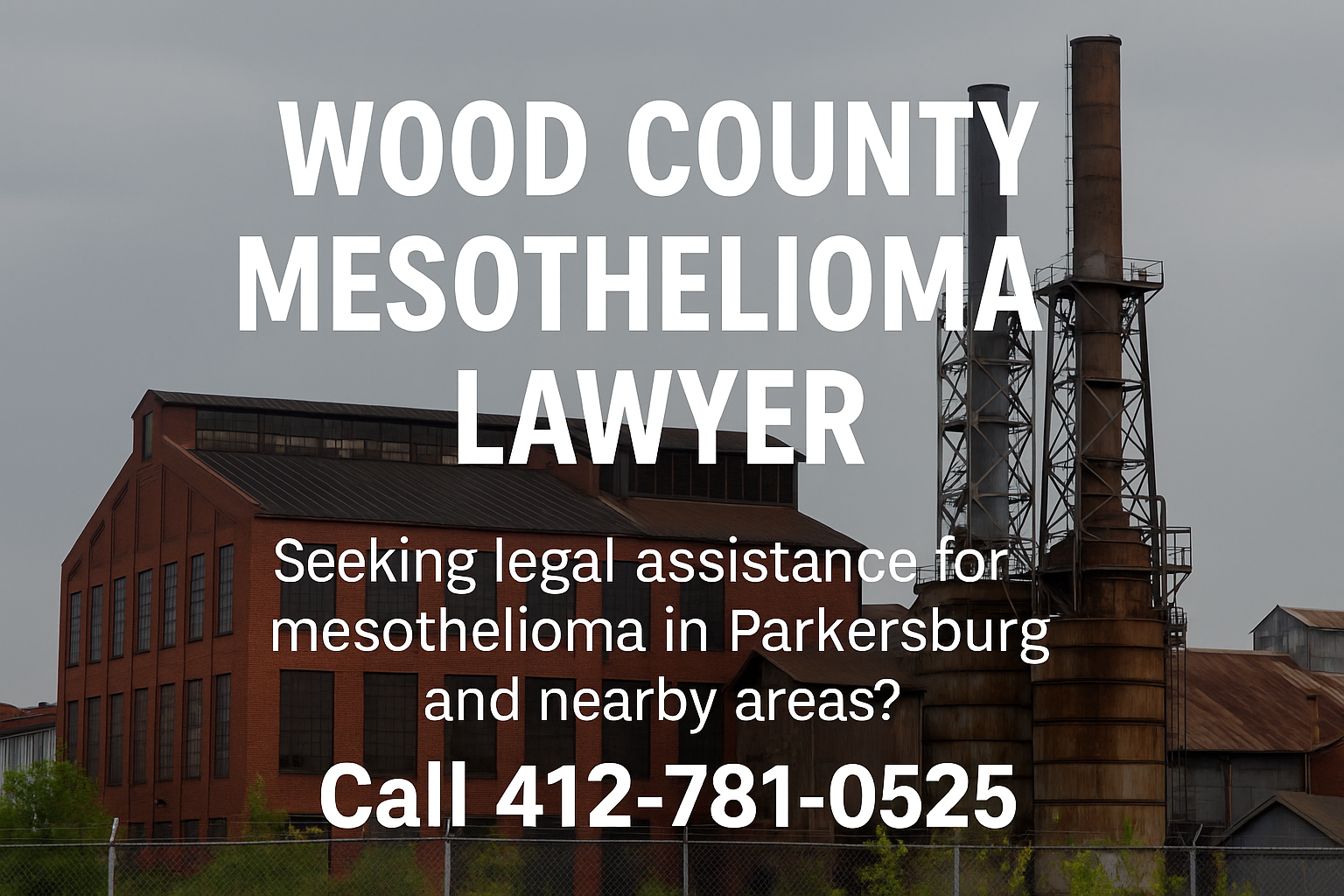
A Wood County mesothelioma lawyer can help you if you or a family member were exposed to asbestos in Parkersburg or elsewhere in Wood County, West Virginia. Workers at local job sites and their families are still developing asbestos-related diseases like mesothelioma decades after exposure.
Asbestos Exposure in Parkersburg, WV
Parkersburg, located in Wood County, was home to multiple heavy industrial employers where asbestos was widely used. Known exposure sites include:e:
- DuPont Washington Works
- BorgWarner
- GE Plastics
- Union Carbide
- Area shipyards, power plants, and construction projects
🏠Learn more: West Virginia Mesothelioma Lawyer
Take-Home Asbestos Exposure in Wood County
Spouses and children of industrial workers were also put at risk. Asbestos dust clung to clothing and was unknowingly brought into family homes. West Virginia law permits lawsuits for these take-home exposure cases, especially when mesothelioma is diagnosed.
❓ Frequently Asked Questions – Wood County Mesothelioma Lawyer
Q: Who qualifies to file a mesothelioma lawsuit in Wood County, WV?
A: Anyone diagnosed with mesothelioma after asbestos exposure in Wood County—whether through work at a facility like DuPont or secondhand exposure at home—may qualify to file a claim. A Wood County mesothelioma lawyer can help determine your eligibility.
Q: Can I file a lawsuit for a family member’s asbestos-related death in Parkersburg?
A: Yes. West Virginia law allows surviving family members to file wrongful death claims for loved ones who died from asbestos diseases like mesothelioma. These cases can recover medical costs, lost income, and more.
Q: What are common job sites in Wood County linked to asbestos exposure?
A: Major asbestos exposure sites include DuPont Washington Works, BorgWarner, GE Plastics, Union Carbide, and multiple construction and energy-related employers in Parkersburg.
Q: How long do I have to file a mesothelioma claim in Wood County?
A: West Virginia’s statute of limitations generally allows two years from the date of diagnosis or death. However, early action strengthens your case. A local Wood County mesothelioma lawyer can guide you through the filing process.
Q: What if the exposure happened decades ago?
A: Mesothelioma often develops 20–50 years after exposure. You can still file a claim today, even if the job site shut down long ago or the company no longer exists.
👨⚖️ Legal Help from a Local Attorney Who Knows the History
Lee W. Davis has handled asbestos litigation since 1988, starting as a paralegal during the original West Virginia asbestos trials. With deep roots in the state and a solo practice dedicated to mesothelioma and serious injury cases, Lee offers personalized, aggressive legal representation—not call center referrals.
📞 Get a Free Case Review Today
If you’ve been diagnosed with mesothelioma or believe a loved one’s illness was caused by asbestos exposure in Wood County, call now for a free consultation.
🗂️ No fee unless we recover. Home visits available.
Check If Your Family Was Exposed
Get your free guide instantly + a confidential case review.
🔒 100% Confidential. No obligations.