DuPont Washington WV Asbestos Exposure: What Workers and Families Need to Know

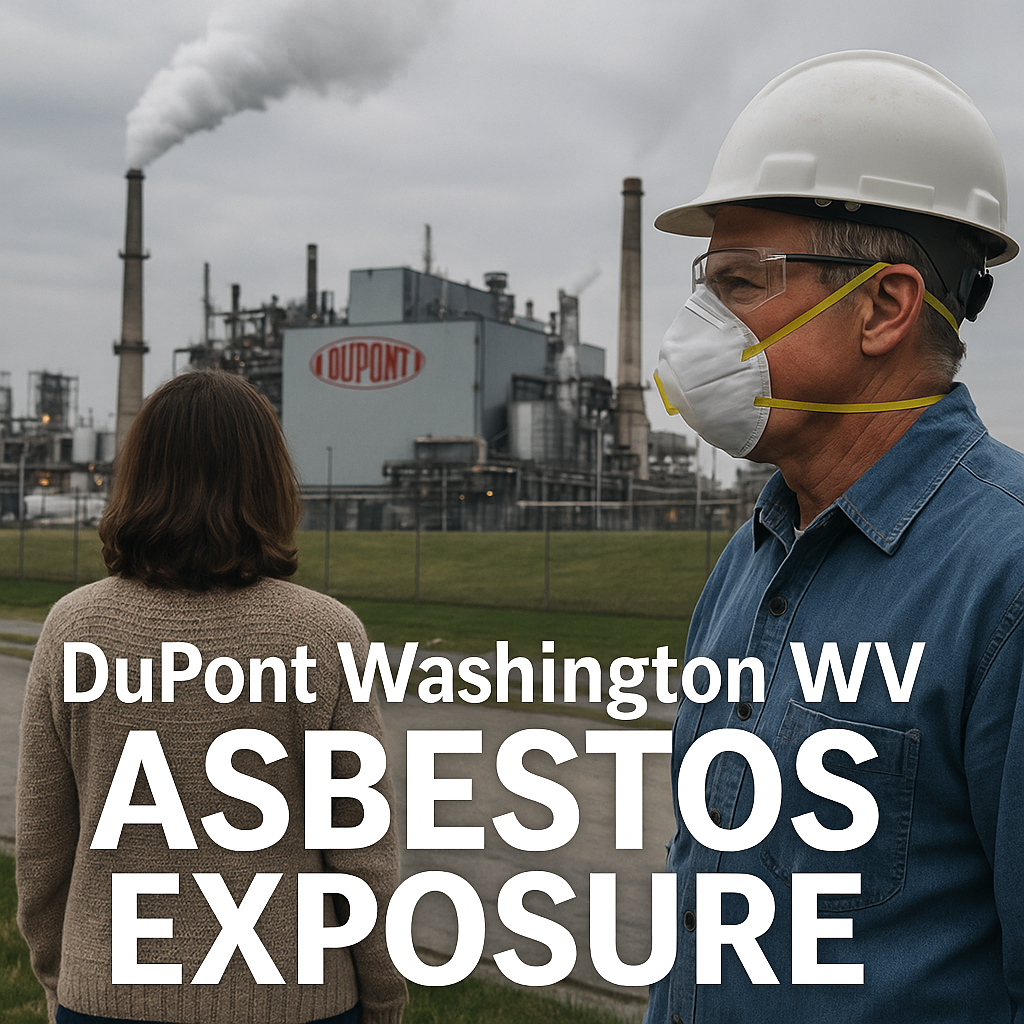
DuPont Washington WV Asbestos Exposure

If you or a loved one worked at the DuPont plant in Washington, West Virginia, you may have been exposed to deadly asbestos fibers without even knowing it. For decades, this facility used asbestos in insulation, pipe coverings, pumps, and protective equipment. The danger didn’t stay inside the plant. DuPont Washington WV asbestos exposure extended beyond the gates and into workers’ homes, affecting spouses, children, and others.

Asbestos is a known carcinogen. It causes mesothelioma, asbestosis, and lung cancer. Many former DuPont employees — and their family members — are only now being diagnosed, years after the initial exposure.


🏭 DuPont’s Use of Asbestos in Washington, WV

The DuPont Washington Works facility was a major employer in the Mid-Ohio Valley. It produced Teflon and other industrial chemicals, and at one time, used asbestos-containing materials (ACMs) to insulate pipes and equipment that operated at high temperatures.

Workers in maintenance, production, and boiler operations were particularly at risk. So were contractors, electricians, and insulators who performed shut-down work during outages. But perhaps the most overlooked risk came from take-home asbestos exposure — when fibers clung to clothing and were unknowingly brought home to loved ones.


👨‍👩‍👧‍👦 Family Members Were Also Exposed

DuPont Washington WV asbestos exposure didn’t end with the shift whistle. Many spouses recall shaking out dusty work clothes or doing laundry by hand. Children remember hugging their father as he walked through the door — unaware that the dust on his uniform could someday kill.

If you were diagnosed with mesothelioma or another asbestos disease and someone in your home worked at the DuPont plant, you may be eligible to file a take-home exposure claim.


⚖️ Legal Help for Washington WV Asbestos Victims

Our law firm has represented asbestos victims in West Virginia since 1988. We understand the documentation needed to link your illness to job sites like DuPont’s Washington Works. We’ve handled claims involving:

  • Maintenance crews
  • Chemical technicians
  • Pipefitters and welders
  • Laboratory workers
  • And family members exposed secondhand

Even if your loved one has passed away, we can help you pursue justice.


📞 Don’t Wait — Get Legal Help Now

If you believe you or someone in your family was affected by DuPont Washington WV asbestos exposure, contact us today. We offer free consultations, and there is no fee unless we recover compensation for you.

You may be entitled to compensation if you or a family member were exposed to asbestos at the DuPont Washington Works plant.

Your time to file a claim may be limited. Don’t wait.

We’ve helped West Virginia families since 1988 — and we’re ready to help you too.

📞 Call (412) 781-0525 Now

💼 Free consultation. No fee unless we win.


🔗 Read more asbestos exposure DuPont

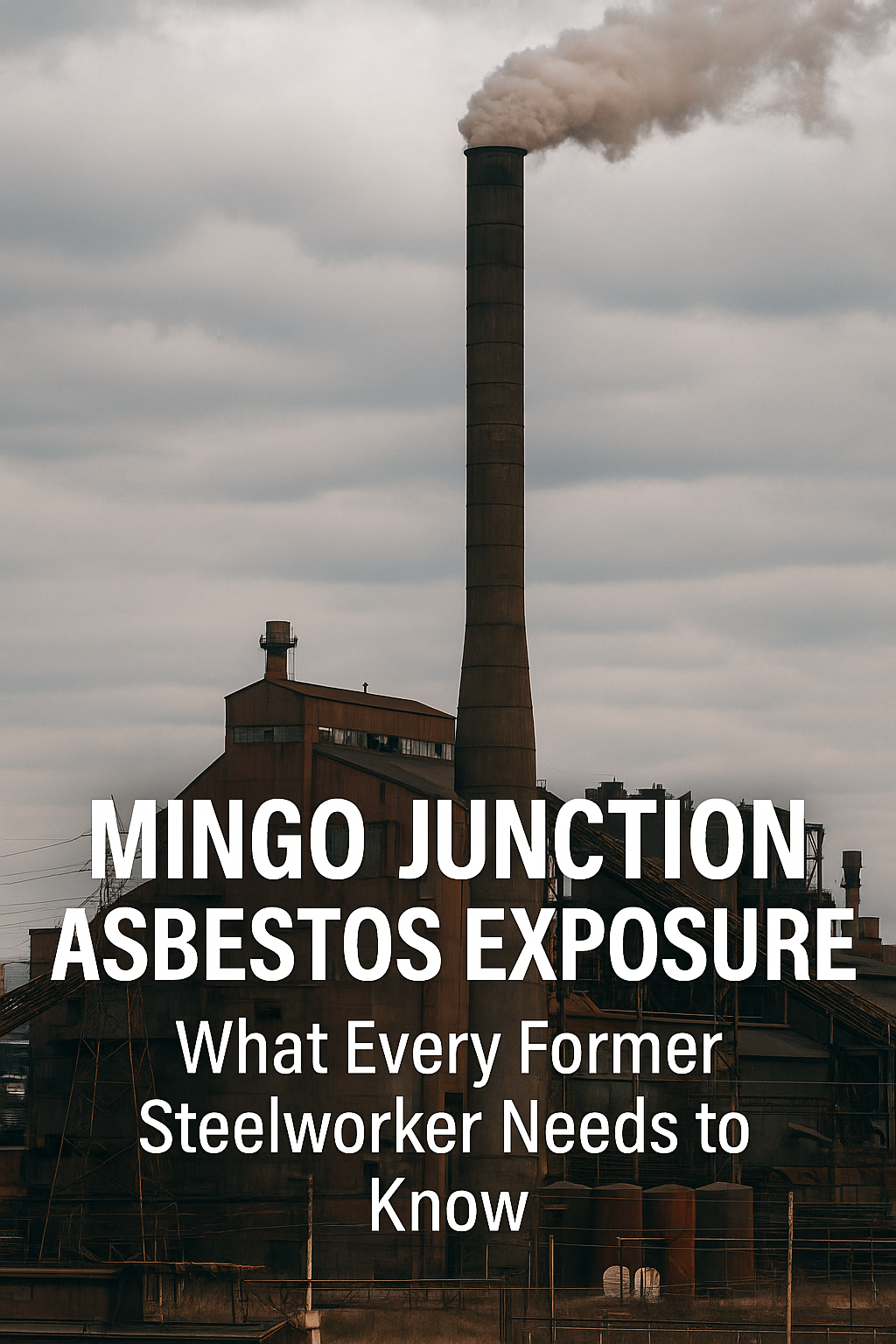
Mingo Junction Asbestos Exposure: What Every Former Steelworker Needs to Know

Mingo Junction Asbestos Exposure

Mingo Junction asbestos exposure was a hidden danger at one of Ohio’s most iconic industrial job sites. The Wheeling-Pittsburgh Steel mill in Mingo Junction operated for decades as a cornerstone of America’s steel industry. Yet beneath the towering furnaces and rugged machinery lurked a lethal material: asbestos.

🔥 Why Mingo Junction Asbestos Exposure Was So Dangerous

Steel mills like Mingo Junction used asbestos for its heat-resistant qualities. Workers handled it in:

  • Pipe insulation
  • Furnace linings
  • Steam turbines
  • Boilers and ladles

Unfortunately, those same workers — including millwrights, pipefitters, welders, and insulators — often had no idea of the long-term risks. There were no masks. No warnings. Just dust.

Many developed:

  • Mesothelioma
  • Asbestosis
  • Lung cancer

Even worse, Mingo Junction asbestos exposure didn’t stop at the mill gates.


🧺 Families Faced Take-Home Risk

Check If Your Family Was Exposed

Get your free guide instantly + a confidential case review.

🔒 100% Confidential. No obligations.


The risk followed workers home. Asbestos fibers clung to work clothes, gloves, and boots. Wives often inhaled fibers while shaking out laundry. Children were exposed during hugs or while playing.

These are called take-home asbestos cases, and the law increasingly recognizes them as legitimate claims.


⚖️ What You Can Do If You Were Exposed

If you or a loved one was affected by asbestos exposure, you may qualify for compensation. Claims can be filed against:

  • Product manufacturers
  • Employers (in some cases)
  • Asbestos bankruptcy trusts

Attorney Lee W. Davis has worked on asbestos cases since 1988, including the original West Virginia mass trials. He knows the Mingo Junction site and the companies responsible.


🧑‍⚖️ Why Trust Lee W. Davis?

  • Over 35 years of asbestos litigation experience
  • Direct knowledge of Wheeling-Pittsburgh Steel sites
  • No fee unless we win
  • Local service with national resources

📞 Call (412) 781-0525 or visit

👉 leewdavis.com/mingo-junction-asbestos-exposure

for a free, no-obligation case review.


🔗 Also read: Wheeling-Pittsburgh Steel Mesothelioma Lawyer

Asbestos Exposure from Mill Work Clothes: Families Still Paying the Price

Mill Work Clothes Asbestos

They never worked in a steel mill — but they folded the clothes, made the dinner, and kissed their husbands goodnight. Mill Work Clothes Asbestos Exposure is real.

For thousands of families, asbestos exposure from mill work clothes wasn’t just possible — it was deadly. These cases, called take-home exposure claims, are tragically common in places like Pennsylvania and West Virginia, where industrial jobs were part of daily life.

🧺 How Did the Exposure Happen?

Steelworkers came home from grueling shifts with asbestos dust in their hair, on their boots, and embedded in their uniforms. For decades, workers handled pipe insulation, refractory bricks, boilers, and brake parts containing asbestos — all without warning labels or protective protocols.

At home, spouses and children handled those clothes:
• Shaking them out before laundering
• Carrying them in baskets or cars
• Hugging their fathers or spouses upon return

Over the years, these small exposures added up — and for many, they led to mesothelioma, an aggressive and incurable cancer.

Check If Your Family Was Exposed

Get your free guide instantly + a confidential case review.

🔒 100% Confidential. No obligations.

📜 What Makes This a Legal Claim?

Courts have increasingly recognized that asbestos manufacturers and suppliers had a duty to warn about secondhand risks. These are not workers’ comp cases — they are personal injury or wrongful death claims based on negligence and product liability.

If your loved one:
• Was diagnosed with mesothelioma or asbestosis
• Never worked directly with asbestos
• Lived with someone who did…

…you may qualify for significant compensation.

💰 Can Families Still File a Claim?

Yes. Even if:
• The original worker is deceased
• The company shut down
• The exposure happened 40 years ago

Lee W. Davis has recovered compensation from asbestos trust funds and active defendants for families across the region. Many claims settle without trial. And there are no fees unless we win.

🧑‍⚖️ Over 35 Years of Advocacy

Lee W. Davis was on the front lines of asbestos litigation in the late 1980s. As one of the original West Virginia asbestos trial paralegals, he understands the job sites, the exposures, and the legal strategy better than anyone in the region.

👉 Call (412) 781-0525 or contact us now to discuss your potential take-home asbestos exposure claim.

Aliquippa Works and the Hidden Asbestos Danger: What Steelworkers and Their Families Should Know

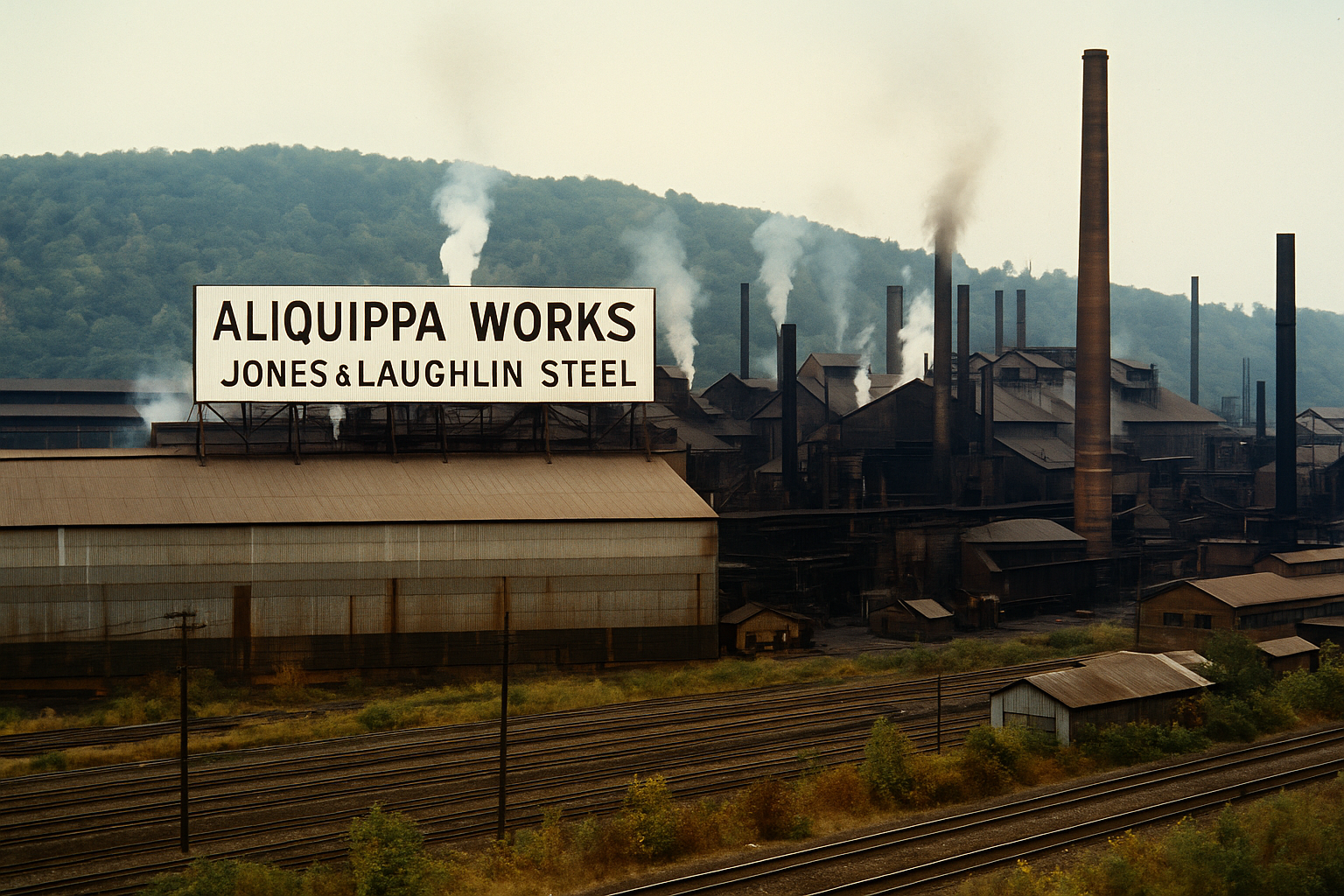
Aliquippa Works steel mill in the 1970s, where many workers were exposed to asbestos insulation and dust.


For decades, Aliquippa Works asbestos exposure put thousands of steelworkers and their families at risk—often without their knowledge. Operated by Jones & Laughlin Steel and later LTV, the sprawling plant in Aliquippa, Pennsylvania, was a cornerstone of American industry. But behind the smoke and steel was a hidden danger: widespread use of asbestos in equipment, insulation, and machinery. Today, many former employees and their loved ones are facing the devastating consequences, including mesothelioma and other asbestos-related illnesses.

The Truth About Asbestos at Aliquippa Works

Asbestos was used in countless areas of the Aliquippa plant, from insulation around furnaces and pipes to brake linings and protective clothing. Workers in the coke works, open hearth, blast furnace, and maintenance departments faced especially high risks of inhaling asbestos fibers during daily operations.

Over time, exposure to these fibers can lead to serious diseases—most notably mesothelioma, a rare and aggressive cancer that often takes decades to develop. By the time symptoms appear, it’s often too late for treatment to reverse the damage.

Families Were at Risk to Aliquippa Works Asbestos Exposure, Too

Asbestos fibers weren’t just a danger inside the mill. Many workers unknowingly brought the dust home on their clothes, exposing spouses and children. This “take-home exposure” has led to numerous cases of mesothelioma in people who never set foot inside Aliquippa Works.

Your Legal Rights

If you or a loved one worked at Aliquippa Works and have been diagnosed with mesothelioma or another asbestos-related disease, you may be entitled to significant compensation. These cases are not about blame—they’re about justice and accountability.

At the Law Offices of Lee W. Davis, we’ve helped steelworkers and their families recover compensation for decades. We understand the job site, the exposure pathways, and how to prove your case.

What To Do Next

There’s no cost to speak with us, and we never charge unless we win your case. Even if the mill shut down years ago, your legal rights may still be active.

📞 Call now or fill out the form below to get started.


🔗 Read More:Asbestos Job Sites in Pennsylvania

Diagnosed Too Late: The Truth About Latency in Mesothelioma Cases

Mesothelioma Latency Period

Mesothelioma doesn’t appear right away. It often takes 20, 30, even 50 years after asbestos exposure before the first signs of the disease show. This long Mesothelioma Latency Period is one of the most tragic parts of mesothelioma — and one of the most confusing for families.

You may be wondering:

  • How did this happen so long after the exposure?
  • Can we still file a legal claim if the exposure was in the 1970s or ‘80s?
  • What if the company responsible is gone?

Here’s what you need to know.


⏳ What Is the Mesothelioma Latency Period?

The mesothelioma latency period is the time between a person’s first exposure to asbestos and the onset of symptoms. For most people, that’s between 20 and 50 years.

During that time, asbestos fibers can remain embedded in the lining of the lungs, chest, or abdomen. Over decades, these fibers cause inflammation, cell damage, and eventually — cancer.

This delayed onset means that many people diagnosed today worked in mills, plants, or shipyards before 1990 — and had no idea their exposure decades ago would lead to a terminal diagnosis.


Check If Your Family Was Exposed

Get your free guide instantly + a confidential case review.

🔒 100% Confidential. No obligations.

🏭 Common Exposure Sources

  • Pipe insulation in steel mills
  • Boiler rooms and power plants
  • Shipyards and naval vessels
  • Brake linings, gaskets, and packing materials
  • Hot top and refractory insulation in foundries

Even family members exposed through take-home asbestos can develop mesothelioma years later.


🧾 What If the Employer No Longer Exists?

You can still file a claim. Most liability falls on the manufacturers of asbestos products, not your employer. Many of these companies went bankrupt and established asbestos trust funds — which are still paying claims today.

Even if a loved one has passed, families may still qualify for a wrongful death claim or trust recovery.


📞 Don’t Assume It’s Too Late

Attorney Lee W. Davis has been helping families affected by mesothelioma for more than 30 years. He knows how to trace exposure, document claims, and navigate the latency issue that confuses so many victims.

👉 Call (412) 781-0525 or message us today.

There’s no fee unless we win — and no reason to wait.


🔗 Related Post: Mesothelioma from Industrial Insulation

Mesothelioma from Industrial Insulation

Mesothelioma from industrial insulation

Mesothelioma from industrial insulation is not a distant risk — it’s a harsh reality for many former mill workers across Pennsylvania, West Virginia, and Ohio. For decades, asbestos-containing insulation was used in steel mills, power plants, oil refineries, and chemical facilities without warning workers of its dangers.

Industrial insulation was applied to high-temperature equipment, piping, boilers, and furnaces to prevent heat loss and protect infrastructure. But that protection came at a deadly cost. The moment insulation was installed, removed, or disturbed, microscopic asbestos fibers became airborne. Workers in the vicinity inhaled these fibers, unaware that each breath brought them one step closer to mesothelioma.

Many of these workers were not insulators themselves — they were pipefitters, electricians, crane operators, or general laborers who worked near the source. That’s why so many mill workers today are receiving mesothelioma diagnoses decades after their last shift.

⚠️ Who Was Most at Risk?

  • Pipefitters and maintenance crews working around steam lines
  • Electricians cutting through insulated conduit
  • Boiler workers scraping and replacing lagging
  • Laborers sweeping insulation debris
  • Even supervisors simply present on the floor during insulation work

🧬 The Latency Problem

Mesothelioma takes decades to develop — 20 to 50 years in most cases. That’s why many workers who retired in the ‘80s or ‘90s are only now facing symptoms: shortness of breath, persistent coughing, chest pain, or unexplained weight loss.

Sadly, even spouses and children were exposed through fibers brought home on work clothes, putting entire families at risk.


✅ You May Still Have a Case for Mesothelioma from industrial insulation

Even if your employer no longer exists, the manufacturers of asbestos insulation — companies like Owens Corning, Johns-Manville, and Pittsburgh Corning — funded asbestos bankruptcy trusts that still pay claims today.

You don’t need to file a lawsuit. In most cases, we file directly with the trusts. And we only get paid if you do.


Was your loved one exposed to industrial insulation and later diagnosed with mesothelioma? Don’t wait. Help is still available.

📞 Call 412-781-0525 now or submit your free claim review.

We’ve helped thousands of workers and families — let us help you next.

There’s no fee unless we win — and deadlines still apply.

🔗 Related Reading: Mesothelioma in Steelworkers

Asbestos Exposure in Steel Mills: What Every Former Worker Needs to Know

Asbestos Exposure in Steel Mills

Asbestos exposure in steel mills was widespread and hidden for decades. From the 1940s through the late 1980s, thousands of workers were exposed daily to asbestos dust in mills across Pennsylvania, West Virginia, Ohio, and beyond — and most were never told.

Today, many of those same workers are being diagnosed with mesothelioma, asbestosis, and asbestos-related lung cancer. These diseases develop slowly, often appearing 30 to 50 years after exposure. By the time symptoms show, it’s often too late for treatment — but not too late for justice.


Check If Your Family Was Exposed

Get your free guide instantly + a confidential case review.

🔒 100% Confidential. No obligations.


🔧 How Asbestos Exposure in Steel Mills Happened

Steel production involves high heat, friction, and massive equipment — and asbestos was used in nearly every stage:

  • Pipe insulation around steam and water lines
  • Furnace linings and ladle insulation
  • Hot tops and pouring pit materials
  • Crane brakes, gaskets, and valves
  • Protective aprons, blankets, and gloves

You didn’t have to be in maintenance to be exposed. Just working on the floor — near furnaces or conveyors — meant you were breathing in asbestos fibers released into the air.


⚠️ The Companies Knew

The manufacturers of these products — not the steel mills themselves — knew the health risks of asbestos as early as the 1930s. Yet they continued to sell toxic materials to America’s largest industrial employers without warnings, masks, or training.

As a result, workers and their families are now bearing the cost. Many never knew where their cancer came from — until they learned how common asbestos exposure in steel mills actually was.


💼 Can You Still File a Claim for Asbestos Exposure in Steel Mills?

Yes. You may still qualify for compensation if:

  • You worked in a steel mill before the 1990s
  • You’ve been diagnosed with an asbestos-related illness
  • A loved one passed from mesothelioma or lung cancer

Even if the mill is long closed or the company declared bankruptcy, asbestos trust funds exist to pay valid claims — no lawsuit required.


📞 Take the First Step Today

Attorney Lee W. Davis has been helping asbestos victims since the early 1990s. He understands how steel mills operated — and how to trace exposure to specific products.

👉 Call (412) 781-0525 or message us now.

There’s no fee unless we win — and deadlines still apply.


🔗 Related Reading: Mesothelioma in Steelworkers

Asbestos Exposure at PPG Natrium Plant in WV

PPG Natrium asbestos exposure

Asbestos exposure at PPG Natrium plant, located along the Ohio River in Marshall County, West Virginia, was once considered a cornerstone of regional industry. But for many workers and their families, it’s remembered for something far more dangerous — asbestos exposure.

For decades, PPG used asbestos in a wide range of applications: pipe insulation, pumps, gaskets, boilers, and valves throughout the plant. Many workers were never told the full risks of breathing or handling asbestos dust, especially during maintenance, equipment teardown, or construction inside the facility.

What’s even more alarming is how that risk didn’t end at the gates. Mechanics, electricians, pipefitters, and chemical workers at PPG often brought asbestos fibers home on their clothing, boots, or lunch pails. This so-called “take-home exposure” has been linked to mesothelioma in spouses and even adult children decades later.

You didn’t need to work at the plant to be exposed.

If your family lived in the Moundsville, New Martinsville, or Natrium area and a loved one worked at the PPG site, you may have unknowingly been put at risk.

Even today, some former PPG workers and their families are only now being diagnosed with mesothelioma, a rare and aggressive cancer caused by asbestos. It’s a disease with a long latency period — sometimes 30 to 50 years between exposure and diagnosis. Any member of your family can suffer from PPG Natrium asbestos exposure.

If this sounds familiar, you are not alone. We have represented families across West Virginia who were exposed in exactly this way.

📄 Download our Take-Home Asbestos Exposure Guide (PDF)

📞 Call (412) 781-0525 for a free consultation

🌐 Visit our West Virginia Mesothelioma Lawyer page

You don’t need to know exactly when the exposure happened. We’ll help investigate the job site history, products used, and your family’s legal rights.

Memorial Day: Asbestos Trust Claims for Veterans and Workers

Memorial Day Asbestos Trust Claims

As Memorial Day comes to a close, we remember those who died in service to our country. But many others — veterans and working-class families — came home from service or the jobsite carrying something invisible and deadly: asbestos.

Decades later, too many are facing mesothelioma, lung cancer, or asbestosis because of exposure that happened on Navy ships, in steel mills, shipyards, and power plants. They were never warned. And now their families are left paying the price.


How Memorial Day Asbestos Trust Claims Work

Over the years, dozens of companies that made or sold asbestos products have gone bankrupt. As part of that process, courts required them to create asbestos bankruptcy trusts to compensate victims.

There are more than 60 active asbestos trust funds today — totaling billions of dollars.

Veterans, steelworkers, and their families may qualify for compensation if they can show:

  • Proof of diagnosis (like mesothelioma or asbestos-related lung cancer)
  • Proof of exposure (jobsite, ship, or product history)
  • Relationship to a qualifying worker (if the victim is deceased)

These are no-fault systems — you don’t sue, and you don’t have to go to court.


Why It Matters on Memorial Day

As a country, we owe a debt to those who served. But we also owe something to the working men and women who were exposed to asbestos without any warning. They wore the uniforms. They ran the mills. And today, they suffer in silence while billion-dollar companies hide behind bankruptcy paperwork.


📞 We Help Families Access These Trusts — Without Delay

Attorney Lee W. Davis has helped asbestos victims and their families in Pennsylvania, West Virginia, and Ohio for more than 30 years.

👉 Call (412) 781-0525 or message us today.

There’s no fee unless we win. And there’s still time to file, even if your loved one passed years ago.


🔗 Learn more about how asbestos affected steelworkers:

➡️ Mesothelioma in Steelworkers

Memorial Day and Mesothelioma: Honoring Those Who Served — And Those Who Were Exposed

Memorial Day mesothelioma awareness

Memorial Day mesothelioma awareness. Memorial Day is a time for reflection. We honor those who served in uniform and paid the ultimate price. But today also reminds us of another sacrifice — one that happened off the battlefield and often without warning.

Steelworkers, shipbuilders, mechanics, and even veterans came home from service only to be exposed to something just as deadly as combat: asbestos.

For decades, asbestos was used across military bases, naval vessels, steel mills, power plants, and shipyards. The men who served their country, and the men and women who built it at home, were rarely told of the danger. And now, too many face the devastating diagnosis of mesothelioma — a rare, aggressive cancer that can take 30–50 years to appear.


Asbestos: A Hidden Legacy

From the 1940s through the late 1980s, asbestos was everywhere:

  • Insulation in boiler rooms and ships
  • Brake pads and gaskets in military vehicles
  • Pipe wrapping in mills and foundries
  • Protective clothing for steelworkers

Whether you served in the Navy, worked at Weirton Steel, or spent 30 years in a Pittsburgh union shop — your exposure risk was real.

And for many, it wasn’t immediate. Mesothelioma sits silently for decades before symptoms begin.


Memorial Day Mesothelioma Awareness Means Accountability, Too

While we honor the fallen, we also owe it to the living to hold accountable the companies that sold these products, even after they knew the risks.

If your father, spouse, or loved one was diagnosed with mesothelioma and worked in an asbestos environment — even years ago — you may still be eligible to file a claim or seek justice.

Asbestos trusts and legal action are available to compensate victims and families.


You Served. You Worked. You Weren’t Warned.

Attorney Lee W. Davis has represented steelworkers, veterans, and mill families for over 30 years. He understands the job sites, the exposures, and the systems that still deny responsibility.

On this Memorial Day, we remember those lost. And we fight for those still here.

📞 Ready to Talk? No Fee Unless We Win.

You served. You worked. You weren’t warned. Now you deserve answers.

Attorney Lee W. Davis has helped steelworkers, veterans, and families across the Ohio Valley and Western Pennsylvania hold asbestos manufacturers accountable.

👉 Call (412) 781-0525 or send a message today.

Want to learn more about how asbestos exposure happened in steel mills?

➡️ Read: Mesothelioma in Steelworkers: What They Never Told You on the Job

We fight for those still here — and we never charge unless we win.